
Diagnostics and plant protection of ornamental pot crops in a greenhouse
6 min read
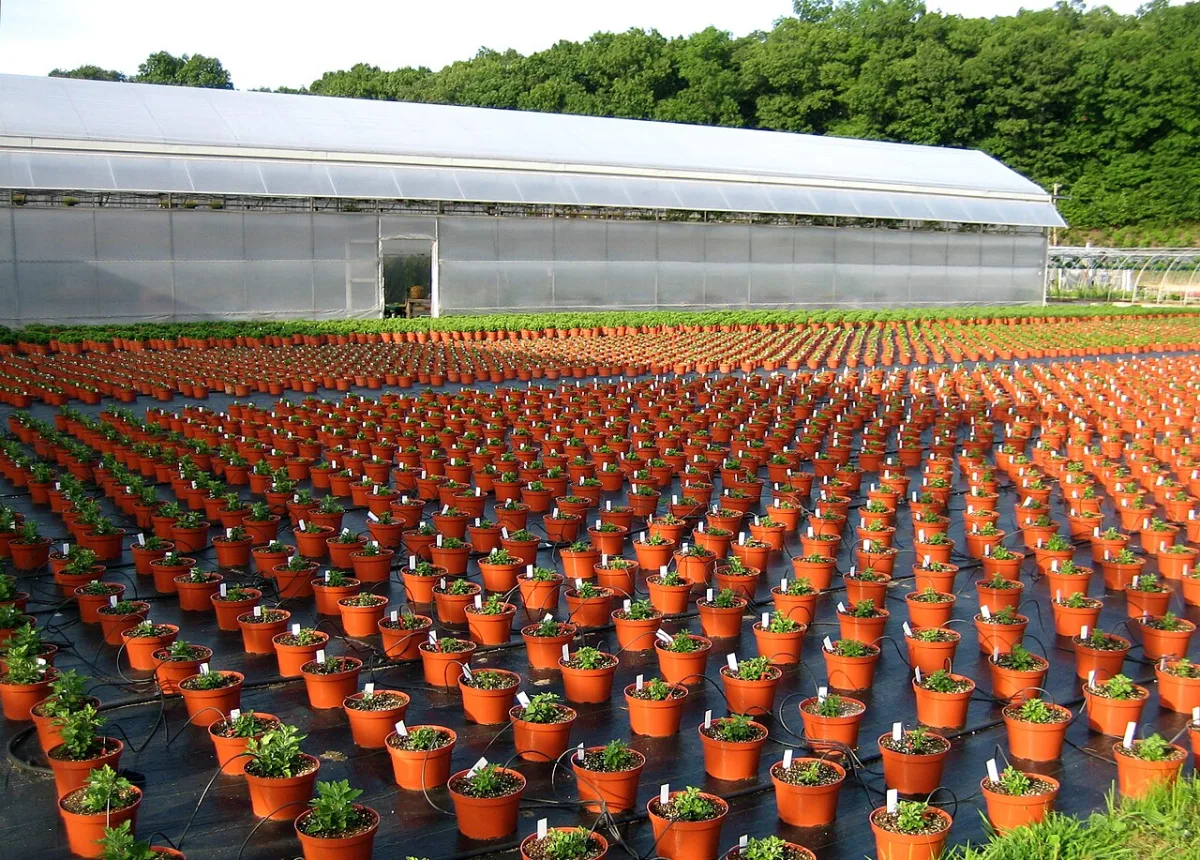
Diseases of cissus, celosia, collinsia and other pot crops
When growing ornamental pot crops in a greenhouse, an agronomist faces a complex of fungal and bacterial pathogens. To protect cissus, it is important to timely recognize the symptoms of root rot (Rhizoctonia solani) and powdery mildew (Oidium sp.). On mechanically damaged leaf tissues, leaf spot caused by Pestalotiopsis sydowiana also often develops. There are no effective chemical control methods for these diseases in cissus.
Pythium rot develops on the roots of celosia, and spots with distinct but uneven edges appear on the stems (pathogen Sclerotinia fasciata). Over time, the spots on aging tissues become zonal, and fungal sporodochia form on them. The pathogen persists in the soil and is spread by air. There is no data on the efficacy of fungicides against this pathogen, however, related fungal species are suppressed by benzimidazoles.
Significant damage to collinsia is caused by stem rot (Poma species), which affects the base of the stem. The damaged tissues are covered with pinhead-sized pink sporulations, after which the stem rots and the plant dies. The pathogen spores are spread by wind and water splashes during irrigation, and no chemical control measures have been developed. For relatively resistant species of pot plants, root rots (Pythium species, Thielaviopsis basicola) and rhizoctonia pose a danger, which must be controlled using clean compost and healthy mother plants.
When infected with root rot (Pythium sp.), plant growth slows down, but obvious symptoms appear with a significant delay. Leaf spot (Cercospora) produces rusty angular spots ranging from 5 to 20 mm along the veins, especially noticeable on mature leaves. The spores of this pathogen are spread by air and water splashes. To control cercosporosis, it is necessary to reduce Relative humidity of the air" target="_blank">relative humidity of the air and spray the plantings with benzimidazoles.
Protection of cyclamen and dieffenbachia from rots and bacterioses
- Size of cercosporosis spots — from 5 to 20 mm
- Outbreak temperature of dieffenbachia bacteriosis — 25 °C
- Development temperature of cyclamen rot — 20 °C and above
Cyclamen is affected by root rots caused by Pythium sp., Phytophthora parasitica and Thielaviopsis basicola, which leads to dichotomous branching of roots and yellowing of the lower leaves. At the same time, dry hard rhizome rot caused by Rhizoctonia solani develops at the soil level. Another dangerous disease is fusarium wilt (Fusarium spp.), which affects the roots and leads to the death of the entire plant. Since fusarium lives in the soil, cyclamen must be grown only in an infection-free substrate.
Grey mold (Botrytis cinerea) affects the petioles in the center of the rosette and causes spotting on the petals during flowering. Bacterial rot (Erwinia carotovora var. carotovora) enters through wounds and leads to complete rotting of the rhizome at temperatures from 20 °C. To protect the plants, it is important to control humidity, protect tubers from pest damage, and remove withered parts in a timely manner. The use of benzimidazoles only suppresses the symptoms of fusarium, but does not stop the wilting.
Cyclamen cultivars with decoratively colored silvery leaves are more resistant to grey mold (Botrytis cinerea) than cultivars with uniformly green leaves.
- Regularly remove all wilting tissues from the center of the cyclamen rosette.
- Carry out preventative spraying with fungicides against grey mold.
- Rotate the fungicides used to prevent the development of resistance in the Botrytis cinerea pathogen.
Dieffenbachia in pot culture is affected by bacterial leaf spot (Xanthomonas dieffenbachiae), which manifests as small transparent spots on the leaves, merging into watery zones with an orange-yellow border. The infection spreads by water droplets, and the optimal temperature for an epiphytotic outbreak is 25 °C. Stem rot (pathogens Erwinia chrysanthemi pv. dieffenbachiae and Erwinia carotovora var. carotovora) affects stems above and below the soil level, as well as leaves. The affected parts of the stem first become watery and grey, then turn a rusty color and develop distinct borders. The spots on the leaves in this disease are watery, small, light brown, with a diffuse yellow halo.
Chemical treatments against bacterial leaf spot and stem rot of dieffenbachia are ineffective. The only way to contain the infection is to completely eliminate overhead irrigation (spraying water during irrigation) and reduce the temperature in the greenhouse.
To prevent the spread of bacterial stem rot of dieffenbachia, it is critical to work with clean material. The infection persists in diseased mother plants and is easily transmitted during vegetative propagation. Since chemical treatments against this pathogen are ineffective, protection is based on strict hygiene and microclimate control in the greenhouse.
- Promptly remove and destroy all plants showing signs of wilting or rot.
- Regularly disinfect knives used for cutting stem cuttings.
- Maintain optimal temperature and humidity conditions, avoiding stagnant moisture.
High temperature and air humidity in the greenhouse also provoke the development of fungal leaf spots on Dieffenbachia. They are caused by fungi of the genera Leptosphaeria, Glomerella, and Cephalosporium, which actively spread via water splashes during irrigation. To protect plants from these pathogens, preventive and curative spraying with dithiocarbamates, particularly mancozeb, is effective.
- Brown leaf spot (causative agent Leptosphaeria sp.) manifests as circular lesions with a brown center and an orange-yellow border.
- Cephalosporium leaf spot (causative agent Cephalosporium sp.) affects young, unopened leaves with small yellow or reddish-brown concentric circles.
- Tissue rot is often caused by the associated fungus Glomerella cingulata, which forms concentric circles of sporogenous mycelium on affected areas.
Mosaic virus of Dieffenbachia affects mother plants, causing growth stunting, leaf variegation, and asymmetry. The virus's host range is limited to the Araceae family, but the disease is also dangerous for Anthurium, Philodendron, and Zantedeschia. To prevent infection, it is necessary to use only healthy mother stock.
Aphids are vectors for viral particles. Regular insecticidal treatments against this pest are the only effective way to contain the spread of mosaic in the greenhouse.
- Size of brown leaf spots — 1–10 mm
- Size of phyllosticta leaf spots — 1–5 mm
- Length of mosaic virus particles — 700–800 nm
Protection of Dracaena from rots, leaf spots, and fluorosis
When growing Dracaena, agronomists often have to deal with root rots and leaf spots. Root decay is caused by the fungi Pythium sp. and Fusarium oxysporum. With phyllostictosis (causative agent Phyllosticta dracaenae), irregular spots with a brown center and a yellow halo form on the leaves, capable of leading to the death of the entire leaf blade. Similar symptoms are produced by infection with the fungus Macrophoma draconis.
Spores of leaf spot pathogens mature in pycnidia and spread actively with water droplets. To suppress these diseases, it is necessary to change the irrigation technology to prevent the appearance of surface moisture on leaves. As a chemical protection measure, spraying with mancozeb is conducted.
Besides pathogens, the quality of irrigation water poses a serious threat to Dracaena. The crop is extremely sensitive to the fluorides it contains. Even at low concentrations of this element, elongated brown spots with a white border appear along the edges of the leaf blades. As they expand, pronounced marginal necrosis develops on the plant.
Completely exclude irrigation of Dracaena with water containing fluorides. This requirement is especially critical to observe during the crop propagation period.
Read next
Plant protection For agronomists
Diseases and pests of gynura, ivy, and hydrangea in greenhouses
Plant protection For agronomists
Diagnosis and prevention of root rots in ornamental potted crops
Plant protection For agronomists