
Diseases and pests of gynura, ivy, and hydrangea in greenhouses
4 min read
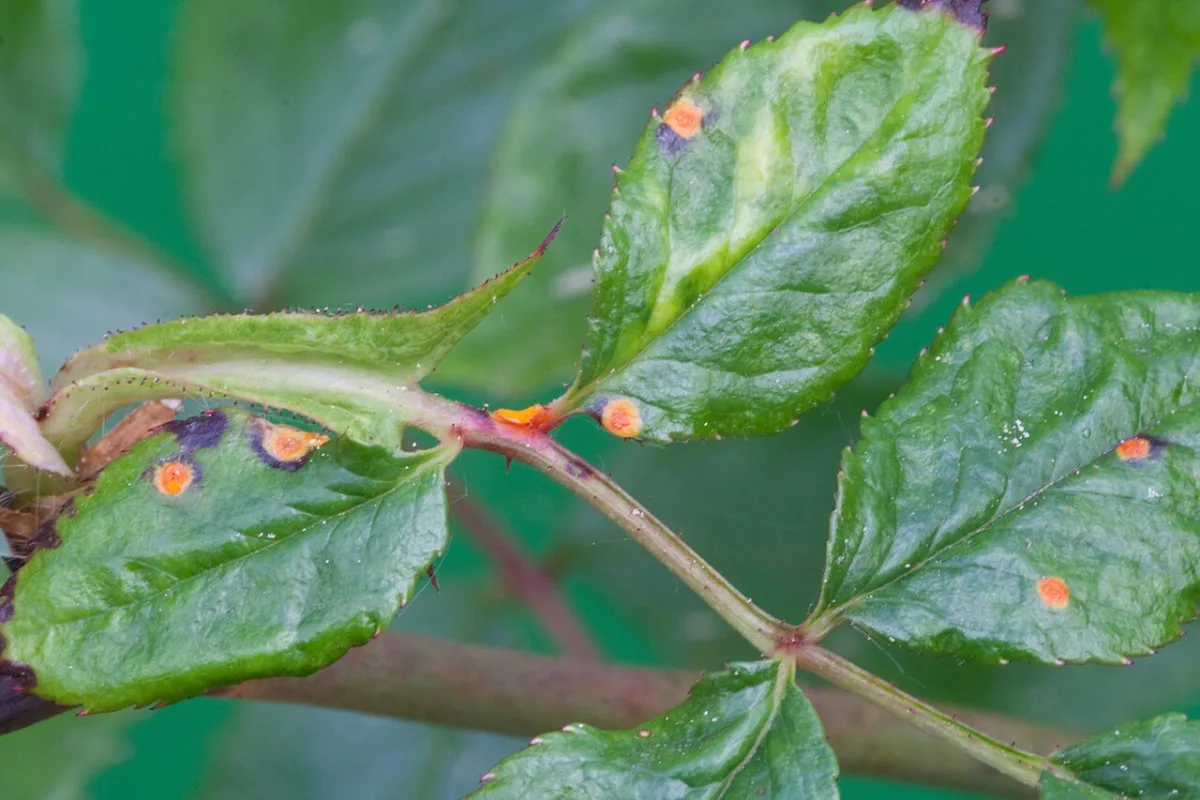
Cuttings of this plant are very susceptible to stem rot caused by a species of Rhizoctonia. In addition, Gynura roots are affected by Pythium rot.
Ivy root rots are caused by Pythium and Phytophthora species. One of the most harmful diseases is bacterial leaf spot (causative agent Xanthomonas hederae).
Fig. 17.7. The pathogen of gray mold Botrytis cinerea on gloxinia; the lesion develops at the soil level, leading to stem rot and plant death. Small dark round spots with a watery halo gradually enlarge, reaching 4–5 mm in diameter, turn black, and sometimes become angular. A brown coating appears around some affected areas, possibly dried bacterial exudate. The leaves do not wilt or dry out, but black spot reduces plant quality.
Fig. 17.8. Bacterial leaf spot of ivy (causative agent Xanthomonas hederae).
The bacterium spreads easily with water splashes; in a warm and humid environment, the disease can grow into an epiphytotic. To suppress the spread of infection, it is necessary to maintain the correct regime. Obtaining cuttings from healthy mother plants plays a major role. There are no chemical methods to combat already developed spot, although spraying with copper-containing preparations slows down its rate of spread. Unfortunately, these preparations leave an undesirable residue on the leaves.
Very similar symptoms occur when ivy leaves are affected by the fungus Phyllosticta hedericola, but the spots are somewhat lighter and covered with pycnidia. Fungal spores are also carried by water splashes. High-volume spraying with benzimidazoles is effective against leaf spot, but at the same time, such treatments contribute to the spread of the bacterial pathogen. Therefore, accurate diagnosis of the disease is of great importance.
The fungus Colletotrichum acutatum causes rot of ivy leaves and petioles, which is much more severe than both of the above pathogens. Treatment with benzimidazoles also helps suppress this pathogen.
Outgrowths are common in ivy, especially on the underside of leaves. Gradually, small galls become corky. HYDRANGEA
Basal and root rots caused by Rhizoctonia solani and Phytophthora sp. can lead to stunted growth, wilting, and plant death. Hydrangeas are widely affected by powdery mildew (causative agent Microsphaera polonica) and gray mold (Botrytis cinerea), which develop on leaves and inflorescences.
Control of hydrangea diseases and viral infections
For both cuttings and adult plants, leaf Ascochyta spot (spot) (Ascochyta sp.) is harmful. Spots on the leaves are large (over a centimeter in diameter), with a dark brown center and many pycnidia. Appearing on the underside and upper side of the leaves, they are arranged in concentric circles.
There is no data on effective control of this disease, although fungicides from the dithiocarbamate group, for example mancozeb, should suppress the infection spreading with water droplets.
Hydrangea mother plants are often completely infected with hydrangea ringspot virus (ringspot) (Hydrangea ringspot virus). Large (up to several centimeters in diameter) yellow spots and rings appear on aging leaves. The disease has little effect on the growth of affected plants, but with strong symptom expression, flower quality decreases. By the end of summer, signs of ringspot often disappear, but redevelop the following year.
Mycoplasmal and specific hydrangea infections
Sometimes hydrangeas placed outdoors for a while are affected by green petal. This is a disease of mycoplasmal etiology, transmitted by leafhoppers. Affected plants must be culled.
Outgrowths can develop on the underside of leaves and on hydrangea stems.
Read next
Plant protection For agronomists
Diagnostics and prevention of diseases in Peperomia, Pilea, and Poinsettia
Plant protection For agronomists
Specific diseases of ornamental pot crops and protection methods
Plant protection For agronomists