
Threshing and separation technologies in CLAAS combine harvesters
5 min read
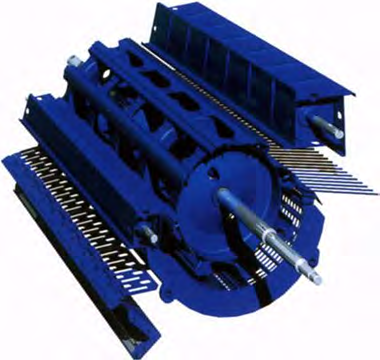
Development stages Threshing means not only separating grains from the ears, but also separating them from the straw. Both tasks are excellently solved under any harvesting conditions by the classic CLAAS threshing mechanism. The width of the threshing drum determines the thickness of the straw layer; the operating width of the threshing mechanism, which is 1.58 m for the MEDION 330 and 1.32 m for the MEDION 320 and MEDION 310, ensures high separation productivity. Versatility is the basis for the highest seasonal productivity, for which every model in the MEDION range is programmed. Different mesh sizes allow for high-quality processing of any crop, even legumes. To reduce the time required for adjustments when harvesting specific types of plants, the MEDION is equipped with a universal MULTICROP sectional concave.
The MULTICROP concave is divided into three parts, which allows for very easy replacement of the segments used. Thus, a significant reduction in machine preparation time provides an additional contribution to increasing the profitability of the MEDION. Universal adjustment. Replacing the three concave sections does not take much time. It only takes a few minutes to prepare the MEDION for harvesting crops with different grain diameters. Excellent access. Excellent access to the threshing mechanism is provided from the front, through the inclined conveyor, and from both sides, through two large side HATCHES.
Highly reliable drives. All drive mechanisms, and especially the threshing drum drive, have a large margin of safety, which ensures high reliability even in the most difficult harvesting conditions and has always been considered the benchmark for high-productivity machinery. A distinctive feature of the latest generation of these combines is the increased potential for productivity and performance built into the machine by the designers.
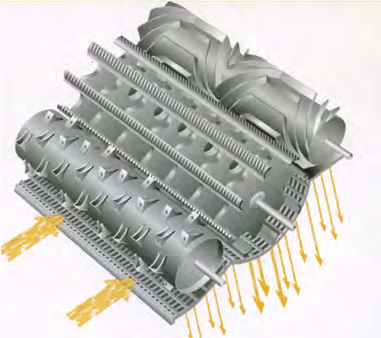
The ARS threshing system of the combines, with its extremely large separation area, is the basis for the highest throughput and a guarantor of productive threshing. The combination of an accelerator that optimizes the plant flow, the threshing drum, and the beater works flawlessly and with a high separation coefficient even in the most adverse conditions, handling the grain gently (Appendix 6). Optimal mass delivery. Thanks to the accelerator, the plant mass is untangled before the threshing drum, and its flow becomes absolutely uniform. High speed creates high centrifugal force, and therefore optimizes the grain separation process. Below the accelerator is the primary concave, through which already separated grains are deposited. Thus, the load on the threshing drum concave is reduced. The accelerator installed in front of the threshing drum fundamentally changes the threshing geometry. Now, compared to the conventional layout where the threshing drum is located behind the inclined conveyor, engineers have the opportunity to significantly increase the main concave, bringing the wrap angle up to 151°, which significantly exceeds this indicator of any other threshing system. This means gentler threshing due to increased mesh sizes and reduced operating speed of the threshing drum, as well as lower fuel consumption.
Highly reliable drives. All drive mechanisms, and especially the threshing drum drive, have a large margin of safety, which ensures high reliability even in the most difficult harvesting conditions.
Fast adaptation. When switching to harvesting other types of grain, it is required to replace only the multi-section accelerator concave without touching the main concave. This work is performed in a matter of minutes, which contributes to further minimization of equipment downtime.
Absolutely parallel to the threshing quality. Thanks to the new original single-screw adjustment system, the concave can be adjusted with absolute precision from both sides simultaneously. This innovative parallel concave control guarantees the highest possible threshing quality. Integrated hydraulic overload protection allows for operation at the machine's peak capacity while simultaneously protecting the threshing mechanism from damage by foreign objects.
Combinability. CLAAS is the first and still the only manufacturer of the tangential ARS threshing system combined with a rotary mechanism for residual grain separation. Thanks to the interaction of these two adjustable and independent units, it has been possible to reach a level of productivity that no machine with a conventional straw walker can surpass.
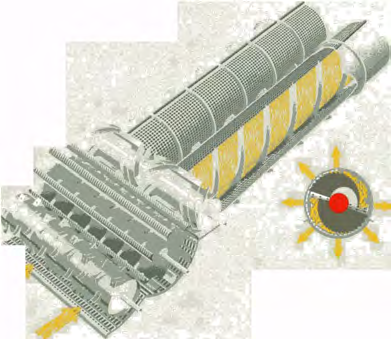
Optimization of automatic machine settings is achieved through an on-board information system, which also regulates the rotor speed. will extract the last remaining grains from the straw. The rotary residual grain separation system of the combine develops significant centrifugal force in a compact unit, thereby ensuring high cleaning efficiency.
The reversing drum of the ARS threshing mechanism pre-divides the straw into two flows and leads them to the rotary separators. Thanks to the spiral shape of the rotor, the mixture of straw and grain is transported further, and the grains stuck in the straw fall out under the action of high centrifugal torque. The counter-rotation of the rotors and the large concave wrap angle guarantee uniform filling of the sieve unit.
Optimal plant crop flow. Typical for
Threshing quality and straw integrity depend directly on the uniform distribution of plant mass. In CLAAS systems, a reversing drum splits the incoming flow of stalks exactly in half and directs both parts to the separator rotors. Further movement of the mass occurs within the rotor housing between the blades of the universal rotor and the conveyor slats.
The rotors rotate towards each other and are installed in an eccentric pattern. Thanks to this, the plant mass moves in a spiral, and the straw layer is intensively loosened. As a result, residual grain is effectively separated from the straw without damaging its structure. This ensures gentle handling of the non-grain portion of the harvest and high versatility of the combine in any conditions.

Flexible separation settings for harvesting conditions
To increase operating efficiency, the combine can be equipped with a device for changing the rotor separation area. This function allows the operator to reduce the open separation surface area in steps directly from their workstation using electrically controlled plates. The adjustment reduces the volume of grain heap delivered for cleaning.
Changing the rotor separation area ensures maximum extraction of residual grain at any moisture level and field weediness.
The rotor speed is adjusted from the cab using a standard variator. Adjustment is performed steplessly and is independent of the concave speed, allowing the machine to be adapted promptly right during harvesting.
- Minimum rotor speed — 350 rpm
- Maximum rotor speed — 1010 rpm
- Speed adjustment type — stepless
Precise selection of rotor operating parameters ensures:
- rapid adaptation of the operating speed to different types of grain, harvesting conditions, and straw properties;
- optimization of machine productivity.

Read next
Farm machinery For agronomists
Design features and advantages of double-drum threshing units of Yenisei combine harvesters
Farm machinery For agronomists
Influence of design and power parameters on the operation of a combine harvester threshing unit
Farm machinery For agronomists