
Technology of growing pepper transplants for greenhouse and open soil
8 min read
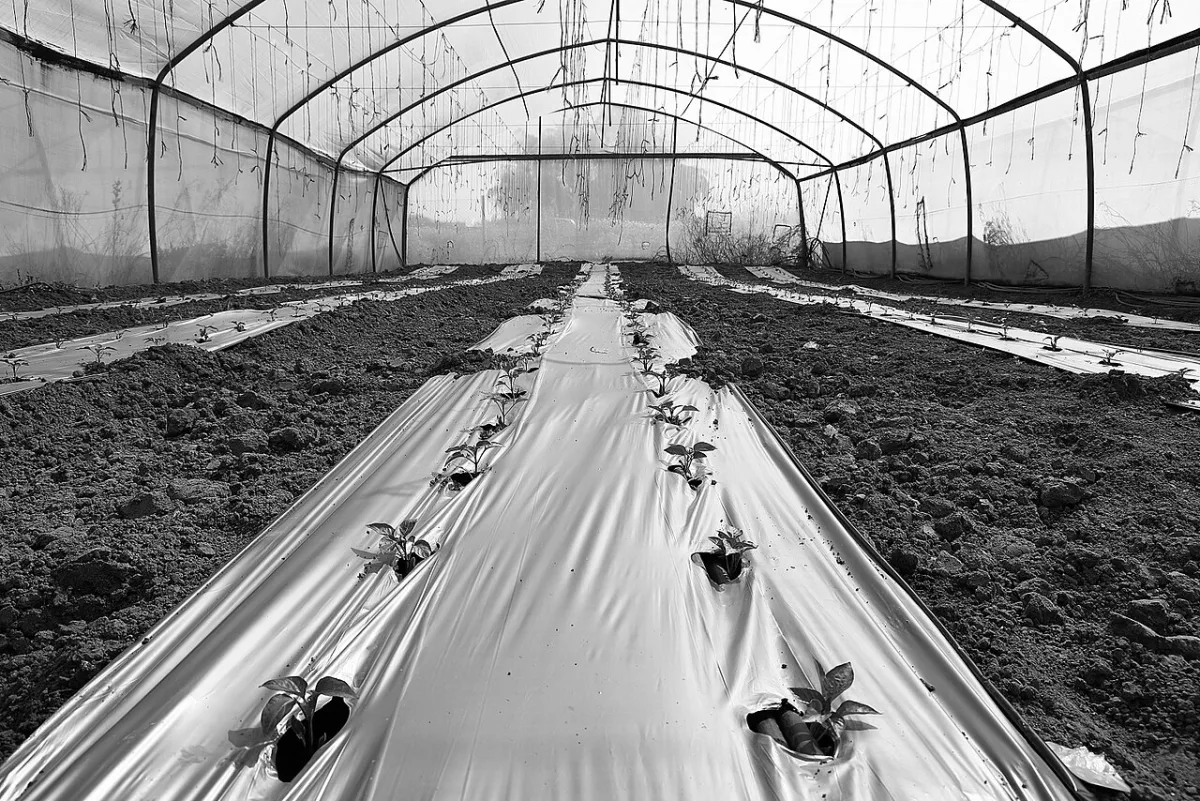
Seed preparation and transplant cultivation
Pepper is a heat-loving crop with a long growing season of 120 to 140 days. Due to long seed germination and slow growth in the initial stage, it is impossible to grow it by direct sowing in our climate. High-quality seed should be dense, full-weight, bright yellow in color, and harvested in a dry, sunny year. This crop is much more demanding of humidity and soil fertility than tomatoes.
- Sowing for greenhouses — February 17–27
- Sowing for soil — March 2–10
- Growing season — 120–140 days
- Seed germination — 8–14 days at 18–25 °C
- Transplant age for planting — 60–70 days
- Disinfection: treat the seed with a 1% potassium permanganate solution for 20 minutes.
- Stimulation: soak the seed for 2–3 days or bubble for 18–24 hours in an ash infusion using snow water, calculated at 2 matchboxes per 1 l of water (aloe juice can be added if desired).
- Sowing: water the rows with warm snow water, sow the seed at a depth of 1–1.5 cm with a distance of 1.5–2 cm between them and 3–4 cm between rows.
- Germination: before emergence, cover the tray with glass to prevent the soil from drying out.
- Pricking out: when 2–3 true leaves appear (approximately after a month), transplant the seedlings into cups 6–7 cm in diameter, preferably two plants per container.
When growing transplants directly in a greenhouse, sowing is carried out in March or later. The seed is distributed thinly over moist compost, covered with a thin layer of soil, and covered with glass and newspaper. During germination, the temperature is maintained at 21 °C and the glass is turned daily. The grown seedlings are pricked out into peat or plastic pots 7–8 cm in diameter with a nutrient mixture based on compost, regularly applying liquid fertilizer top dressing.
10–12 weeks after such sowing, the transplants are moved into pots 20–25 cm in diameter, placing them at a distance of 45 cm from each other. In heated greenhouses with a temperature of 15–18 °C, planting can be carried out as early as March. In unheated structures, planting is delayed until at least mid-April. When using standard polyethylene bags with a nutrient mixture, three plants are planted in each bag.
Planting in a permanent location and crop care
Transplant age at planting in the soil should be 60–70 days from the moment of sowing. A plant ready for planting reaches a height of 25–30 cm, has 8–12 leaves, and formed buds. It is necessary to plant pepper in the soil strictly at the same level at which it grew in the cup. Unlike tomatoes and most other crops, the pepper stem must not be buried during planting.
Pepper is extremely sensitive to temperature and soil moisture. If the temperature drops below 15 °C, as well as if the soil dries out or moisture stagnates, the plant sheds flowers and fruit set. Never irrigate the plants with cold water (below 18 °C).
For pepper, choose the sunniest, wind-protected areas with loose, moist, and nutrient-rich soil. In unfavorable climatic conditions, the crop is grown under plastic tunnels or in hotbeds with high side walls. In beds, pepper can be placed both separately and as a filler between widely spaced tomatoes. To support the stems in greenhouses, twine is stretched, and in open soil, stakes are used.
| Strip planting scheme parameter | Distance, cm |
|---|---|
| Between strips | 60 |
| Between rows in a strip | 40 |
| Between plants in a row | 20 |
The main organic fertilizer is applied before planting at a rate of 100 g/m². 5–6 weeks after planting, a second top dressing is applied at a rate of 50 g/m² or one switches to weekly irrigation with liquid fertilizer. During the summer, it is recommended to top-dress the plants with a mixture of humus or sod soil with ash. With a lack of moisture, pepper stems quickly become woody and the fruits become smaller, so irrigation must be regular.
The root system of pepper is located at a depth of only about 10 cm. Perform any loosening extremely carefully and shallowly, and after irrigation, be sure to ventilate the greenhouses for disease prevention.
Sweet pepper is a bush plant. When the plants reach a height of 15 cm, their apical growth points are removed. This promotes increased branching. If necessary, the plants are tied to a trellis or bamboo poles. Peppers grown in unheated greenhouses and in open soil are usually short, up to 60 cm tall. In heated greenhouses, significantly larger plants grow.
Sweet peppers do not have many diseases. Due to a lack of soil moisture, certain areas on the surface of the fruit turn gray-brown and become sunken. Later, they soften and may become covered with gray mold. Therefore, it is important to irrigate peppers timely and thoroughly, especially if the plants are grown in containers—bags or pots.
*) Throughout the growing season, if aphids or spider mites appear on the plants, they should be treated with rapidly decomposing insecticides, such as carbophos.
In July and onwards (starting from August in open ground), green fruits are harvested from the plants as needed. If left on the plants for another 2-3 weeks, they will acquire a red color.
Top dressing at the beginning of growth: with poultry manure (1:15) or cow manure (1:10) with the addition of 10 g of urea, 30 g of superphosphate, and 20 g of potassium sulfate per bucket of water. In the flowering phase, the last three components are added in a ratio of 7:40:30, and in the fruiting phase, 15:30:40. During the fruiting phase, you can also use a nitrophoska solution (3 tablespoons per bucket of water at a rate of 1 liter per plant). Peppers respond well to top dressing with wood ash at any time; apply 1 tablespoon per plant. A foliar top dressing with urea and potassium permanganate (1 matchbox of urea per bucket) is useful during the growth period.
During mass flowering and fruit set, you can conduct a foliar top dressing with an ash infusion (1—2 cups per bucket of water) applied to the flowers and leaves. Such top dressing can be replaced with micronutrient fertilizers applied according to the instructions.
When growing peppers in a greenhouse or under a cover, ensure that the air temperature does not rise above 35 °C; otherwise, flowers and fruit set will drop; irrigate at least once every 2 days in sunny weather.
Protecting the roots from overheating can be achieved by mulching with peat, sawdust, hay, etc., by covering the soil with a layer of 5—10 cm. This also reduces soil drying (irrigation can be done 2—3 times less frequently), weed growth, and fluctuations between day and night temperatures. Throughout the summer, it is recommended to close the greenhouses at night and open them (at the ends) during the day. To avoid excessive overheating in the greenhouse, it is useful to place containers of water.
Harvesting begins when the fruits of the first tier have reached their maximum size and the color characteristic of the given cultivar. Pepper shoots are fragile, so harvest the fruits very carefully using scissors or a sharp knife. Fruits should be cut with the pedicel. In a warm room, the fruits will reach biological maturity within 20-25 days. It is recommended to harvest the fruits every 4—5 days.
To obtain seed, select the most productive bush that is characteristic of the given cultivar. Fruits for seed production (no more than two or three pieces) should be left in the third tier from the bottom and kept on the plant until they are as fully ripe as possible; do not harvest these fruits until the end of summer. At the same time, make sure to remove other fruits and growing fruit set every week, otherwise, the seed-bearing fruits may not ripen. Once the seed-bearing fruits have reached biological maturity on the plant (as indicated by their size and color), cut them off and keep them in paper bags until completely dry (in a perfectly dry place), the sign of which is the sound of the seeds when shaking the fruit. Then, cut open the fruit, collect the seeds in a paper bag, and indicate the cultivar name, characteristics, and the harvest time of the seed-bearing fruit on it. The obtained seeds should be stored in a dry place at room temperature. Normal germination is maintained for three years. Pepper is a self-pollinating plant, but if you want the seeds to fully retain the cultivar characteristics and prevent cross-pollination, do not plant peppers of a different cultivar closer than 2 m from the seed-bearing bush.
Read next
Greenhouses and covers For agronomists
Technology for growing and preparing tomato transplants for planting in a greenhouse
Greenhouses and covers For gardeners
Sowing and growing technology of tomato transplants for greenhouses
Greenhouses and covers For gardeners