
Technology for growing and preparing tomato transplants for planting in a greenhouse
19 min read
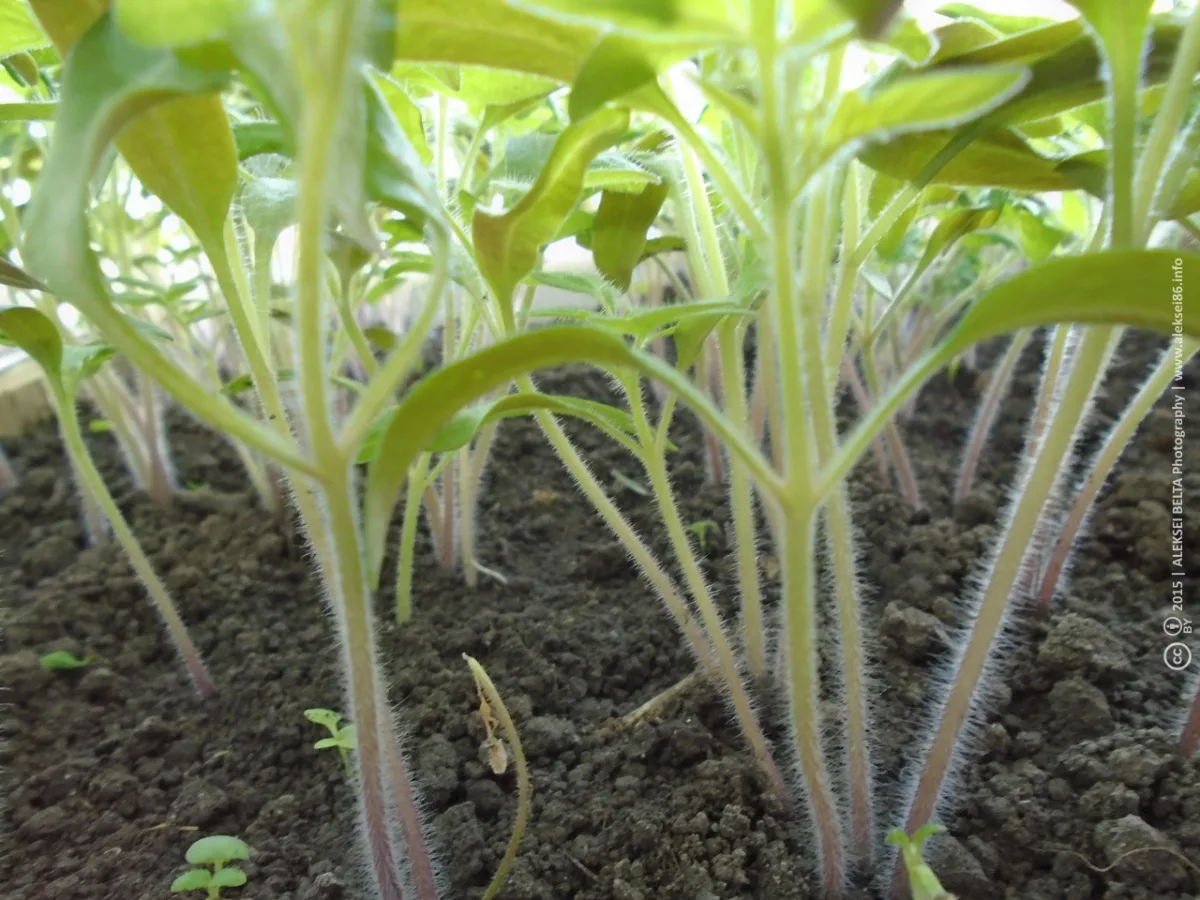
Growing transplants: temperature regime and nutrition
High-quality transplants lay the foundation for the future tomato harvest in greenhouse conditions. For heated greenhouses, seed sowing is performed no later than mid-January, and the seedlings must be provided with supplemental lighting. In the initial stages, it is important to strictly control the nutritional area of plants and the temperature regime of the soil and air.
- Sowing date for heated greenhouses — until mid-January
- Nutritional area for 50-day transplants — 10x10 cm
- Nutritional area for 65–80-day transplants — 14x14 cm
- Air humidity in the greenhouse during the day — no higher than 60–65%
During the period from sowing to emergence, soil temperature is maintained within 23–25 °C. Immediately after emergence, the seedlings are hardened for 4–7 days: at 12–15 °C during the day and 7–8 °C at night. Subsequently, for 50-day transplants, the temperature is kept at 20–25 °C during the day in sunny weather (17–19 °C on cloudy days) and 12–13 °C at night. When growing 65–80-day transplants, the night temperature is kept at 7–8 °C until flowering, and from its beginning, it is raised to 12–13 °C.
For growing transplants, pots or plastic containers with a diameter of 14 cm and a height of 10 cm are used. Containers with a diameter of 10 cm provide a similar agronomic effect, but after the leaves close and before flowering begins, they must be spaced out every other row. Remember that the soil temperature should be 1–2 °C lower than the air temperature.
Tomato transplants require an increased level of phosphorus-potassium nutrition, so top dressing is carried out regularly. Greenhouses are systematically ventilated for plant protection against fungal diseases and to prevent flower drop. Irrigation should be moderate but without drying out the soil ball. In sunny weather and as the transplants grow, they are watered at least once every two days. Just before planting, the transplants are watered, fertilized, and given preventive treatments against diseases.
| Top dressing stage | Timing | Ammonium nitrate, g | Superphosphate, g | Potassium sulfate, g | Solution consumption per 1 m² |
|---|---|---|---|---|---|
| First top dressing | 8–12 days after pricking out | 3–5 | 30–40 | 15–20 | 10 l of solution |
| Second and third top dressings | Before transplanting | 5–10 | 50–60 | up to 30 | 10 l of solution |
Planting in the greenhouse and bush formation
The timing of transplanting plants to a permanent location determines the volume of the early harvest and the overall profitability of the crop. In plastic greenhouses with emergency heating, transplants are planted at the beginning of spring field works, when the outdoor air temperature exceeds 5 °C and the soil under the plastic reaches a temperature of at least 12 °C by 8 a.m. Without emergency heating, planting begins only after the average daily air temperature exceeds 10 °C. In heated structures, planting is carried out earlier if optimal microclimate parameters are established.
Do not delay tomato transplanting. Every 10 days of delay from the optimal planting dates reduces the yield of early produce by 1.8–2 kg/m², and the total harvest — by 0.8–1 kg/m².
Planting dates for greenhouses with emergency heating are tied to climatic zones: in Polesie, this is the third five-day period of April; in the forest-steppe zone — the second; in the steppe zone — the first; and in Crimea — the third decade of March. For spring heated greenhouses, the planting norm is considered to be the third decade of March for Polesie, the end of the second to the beginning of the third decade of March for the forest-steppe, and the end of February or early March for Crimea.
Modern tomato hybrids E, Bohun, E, KDS-1, E, KDS-5, E, Kniazhych, E, Pobratym, E, Shafer, E, Evo, E, Dobrodii, E, Barvinok, E, Imperator Kyivskyi are planted according to the 70–80 x 30 cm scheme. At the same time, in heated greenhouses, the nutritional area is made larger, and in non-heated ones — smaller. 7–10 days after planting, the bushes are tied to a trellis. Indeterminate cultivars are trained strictly to a single stem, pinching the top a month before the end of the growing season; on a two-meter trellis, they form up to 12 clusters over 5 months.
Determinate hybrids are formed based on the planned fruit harvesting period. The agronomist can choose one of the options:
- in a single stem until natural growth limitation;
- in a single stem, leaving 2–3 side shoots with one cluster;
- pinching the stem above the 4th–5th inflorescence and diverting fruiting to side shoots.
In non-heated greenhouses with a short (up to 2 months) fruiting period, dense planting of super-determinate hybrids or early open-field cultivars is effective, using 7–8 or 10 plants per 1 m² with a limit of 3–4 clusters per bush. The trellis height in this case is only 30–40 cm. This method requires a larger number of transplants and labor costs, but ensures a high early yield.
Suckers are regularly removed, preventing them from growing longer than 3–5 cm. The frequency of this operation depends on weather and nutrition: in a damp, overcast summer and with an excess of nitrogen, side shoots grow more intensively. It is best to perform pruning at the earliest stages, using the "rolling out" technique for the sucker. High photosynthetic productivity of tomato is achieved through precise control of microclimate, irrigation, and nutrition. Plants work efficiently if, 50–60 days after planting, the mass of the fruit exceeds the mass of the leaves by 1.5–2 times, and by the beginning of fruiting — by 5–6 times.
Microclimate management: temperature, humidity, and irrigation
For high tomato productivity, air temperature is more important than soil temperature. The best results are provided by greenhouses with combined air heating and soil heating; however, if necessary, one can limit oneself to air heating only. Growing a crop in greenhouses with soil heating exclusively is unacceptable: this disrupts the necessary temperature balance.
- Air temperature (clear) — 22–26 °C
- Air temperature (night) — 16–18 °C
- Soil temperature — 20–22 °C
- Air humidity — 60–65%
- Soil moisture — 70–80% FMC
The influence of the temperature regime on obtaining an early harvest is confirmed by practical observation data:
| Regulated parameter | Temperature change | Early yield increase per 1 m² |
|---|---|---|
| Soil temperature | Increase by 1 °C (within the range of 14–16 °C to 19–20 °C) | 0.3–0.4 kg |
| Air temperature | Increase by 1 °C at night and morning (within the range of 12 °C to 16 °C) | 0.75 kg |
Do not allow the soil temperature to exceed the air temperature by more than 3 °C. If the soil is warmer than the air by 6 °C (which often happens when only the soil is heated), plants begin to rapidly increase vegetative mass at the expense of fruit formation, and the early yield drops sharply.
Preferential soil heating also leads to an increase in relative humidity of the air. If it rises to 70–75%, ideal conditions are created for the development of dangerous fungal and bacterial diseases: brown spot, Septoria leaf spot, leaf mold, gray mold, bacterial stem rot, and late blight.
To reduce humidity in plastic greenhouses, it is necessary to organize cross-ventilation using both top and bottom side vents simultaneously. In prolonged overcast weather, when the risk of disease spread is maximal, greenhouses must be heated and ventilated at the same time.
To improve air circulation in the near-ground zone, at the beginning of tomato ripening, lower leaves under the first cluster are removed — 2–3 leaves per week. This operation is carried out in the morning hours, after which the greenhouse is immediately ventilated intensively.
Tomatoes should be irrigated rarely but abundantly, using 15–20 l of water per 1 m². The temperature of the irrigation water should not be below 20 °C. The most important rule: only the soil should be moistened, leaving stems, leaves, and air dry. For this, drip irrigation, subsurface irrigation, or furrow irrigation is used, covering the furrows with dry soil immediately after water absorption. Any disruptions in moisture cause flower and fruit set abscission, fruit cracking, and also provoke blossom-end rot (especially when the calcium level in the fruit drops below 0.7%).
Mineral nutrition, mulching, and conditions for pollination
Tomatoes require regular nutrition: mineral top dressing is applied every 12–15 days. Fertilizers are applied for the first time 10–15 days after planting transplants in their permanent location. All preparations are dissolved in 10 l of water and distributed over 1 m² of the planting area.
| Top dressing period | Ammonium nitrate, g/m² | Superphosphate, g/m² | Potassium sulfate, g/m² |
|---|---|---|---|
| First top dressing | 15 | 50 | 10 |
| Second and third top dressing | 30 | 80 | 30 |
| Mass fruiting period | 40 | 40 | 30 |
Soil mulching significantly simplifies the care of the plantings. A mulch layer 15–20 cm thick protects the soil from crust formation and excessive evaporation, suppresses weeds, and eliminates the need for constant loosening. In cold periods, mulch retains heat in the root zone; in hot weather, it protects roots from overheating and saturates them with oxygen. Furthermore, it serves as a clean bed for the filling fruits, isolating them from the moist ground, and upon gradual decomposition, it enriches the soil with humic acids.
With early transplanting dates, a lack of sunlight combined with high air humidity prevents normal flower pollination. This can lead to the loss of the first and second fruit clusters.
- Reduce the relative air humidity in the greenhouse to the optimal 50–60%.
- Perform mechanical pollination: gently shake the plant trellises or use special hand vibrators.
- Immediately after pollination, briefly increase air humidity so that the pollen germinates faster on the stigma of the pistil.
It is strictly forbidden to use chemical fruit set stimulants. The application of such physiologically active substances leads to tomato deformation: fruits form with a characteristic elongated "nose," contain internal voids, and lack seed. The use of these preparations is prohibited by sanitary regulations due to their proven carcinogenicity.
1. Container technology: how to save on heating and accelerate fruiting
With standard growing technology for tomatoes in heated greenhouses, the yield averages 10–17 kg/m², and with optimal care, it reaches 25 kg/m². However, heating costs can be significantly reduced by using the container culture method. Restricting the growth of the root system at early stages prevents plants from "over-vegetating" (lush growth) and directs nutrients towards fruit formation. As a result, photosynthesis at the beginning of fruiting works 2.5 times more efficiently than with conventional planting.
Be careful with chemical growth regulators such as 2,4-D (dichlorophenoxyacetic acid). In microdoses, this preparation stimulates the growth of fruit sets without seed formation, but in high concentrations, it turns into a dangerous herbicide that destroys broadleaf weeds.
The essence of the container method lies in growing 80–85-day-old transplants in special polyethylene bags measuring 320x250 mm with a substrate depth of 240 g/m². The side seams of the film are heat-sealed, and the bottom seam is sewn with thread. 2–3 weeks after moving to the permanent location, the thread rots away, and the roots penetrate the main greenhouse soil without obstruction.
- Grow transplants using the standard method in 10 cm diameter pots until they are 60 days old.
- Transplant them into the film containers and keep them in the nursery section at a density of 16–20 plants per 1 m² until they reach the age of 80–85 days.
- Place the containers in their permanent location in the spring greenhouse using a 70x30 cm spacing pattern, without burying them in the soil.
Container-grown plants require more frequent irrigation, as the limited volume of substrate dries out faster. Postponing the planting of 80–85-day-old transplants by 20–25 days later than the usual schedule allows for achieving the same early and total harvest, while significantly saving heat during the coldest spring weeks. If plants still begin to over-vegetate, limit their growth by reducing soil moisture or increasing the concentration of salts in the root zone.
- Early harvest increase in containers — 2 times
- Total harvest increase in containers — 30%
- Soil temperature for planting transplants — not lower than 12 °С
- Air humidity for tomato — less than 65%
- Air humidity for cucumber — more than 90%
2. Companion growing of tomato and cucumber in small film greenhouses
Growing a high-quality harvest of tomatoes and cucumbers in a single small greenhouse of 6 m² is a complex task due to the opposing humidity requirements of these crops. Tomatoes need dry air (less than 65%), while cucumbers require high humidity (more than 90%). The microclimate can be separated through effective ventilation and proper plant placement. For this, use a dense film with a thickness of at least 150 microns and provide for four doors located opposite each other.
To enrich the air with carbon dioxide during the growing season, place a bucket of fermenting manure in the greenhouse — this is a simple and effective way to increase the productivity of both crops.
Tomatoes are placed in a well-ventilated zone near the open doors, creating a constant draft. Cucumbers are planted in the wind-protected half of the greenhouse with doors closed, and the crops are swapped the following year. For disease prevention in autumn, be sure to disinfect greenhouse structures with a 2% formalin solution or lime, and remove the top 5 cm layer of soil. An alternative method for surface thermal treatment is scorching with a blowtorch.
Planting of tomato transplants of the F1 Bogun hybrid and the Efemer cultivar (2–3 bushes for early harvest) is carried out in mid-April, when the soil at a depth of 10 cm warms up to 12 °С by 8 a.m. At least 4–5 liters of humus and 2 tablespoons of nitroammophoska are added to each hole. Tomatoes are trained to a single stem, removing shoots when they reach a length of 1–3 cm. Dry air and good wind circulation reduce humidity to 40%, at which Phytophthora conidia perish. Nearby, parthenocarpic cucumbers of the F1 Muravey, F1 Matreshka, F1 Kuznechik, F1 Slobozhansky, and F1 Ksana hybrids are planted, ensuring the soil is mulched with mowed grass.
This small greenhouse, which grows 6 cucumber plants and 8 tomato plants, provides for the needs of our small family thanks to the high productivity of the plants. Additionally, for pickling, I grow a few tomatoes in the open field.
Specifics of growing tomatoes under plastic covers Before moving on to specific recommendations for growing early tomatoes under plastic covers, I would like to admit that this was my first serious scientific work, which culminated in the defense of my PhD thesis.
Early cultivars are used, mainly determinate ones for open ground: Efemer, bred by G. G. Kostenko, as well as a number of cultivars created at the Ukrainian Scientific Research Institute of Vegetable and Melon Growing (UNIIOB) and the State Enterprise "Scientific-Production Agro-Combine 'Pushcha-Vodytsia'": Kremenchutskyi, Myt, Irishka, Atlasnyi, Lasunchyk, Prynadnyi, Oksamyt, and others. Promising ones are super-determinate cultivars, for example, Leopold and Druzhok from the Russian company "Gavrish". The Efemer cultivar, created by G. G. Kostenko, is distinguished by high plasticity, earliness, synchronous ripening, prolonged fruiting, and tasty fruits weighing 30—50 g, and on a high agricultural background with directional bush training — up to 200 g. The early-ripening Kremenchutskyi cultivar bred by UNIIOB is a unique combination of large fruit size (120—150 g), earliness, and high taste and market qualities.
The earliest, short-stemmed, tasty, small-fruited Irishka cultivar is the most resistant to late blight and is high-yielding. The original early-ripening Myt cultivar has elongated plum-shaped fruits with high taste qualities.
Very attractive for plastic covers and open ground is the new determinate cultivar Eleonora by A. Kuzemensky, distinguished by synchronous, early fruiting and high taste and market qualities of the fruits. The fruits are round, uniform, smooth, firm, weighing 80—90 g. The color is uniform, red, without a green spot at the peduncle.
The new early-ripening Oksamyt cultivar, bred by V. Kravchenko, has large fruits weighing 150—180 g and high ripening synchronicity.
To obtain a high early harvest of tomatoes, one should first of all take care of increasing soil fertility.
In autumn, the plot is fertilized with humus at a rate of 10—20 kg per 1 m² and mineral fertilizers: 40—60 g of superphosphate, 20—30 g of potassium sulfate; in spring — 20—30 g of ammonium nitrate per 1 m² — and dug up.
Transplants grown in 10-centimeter pots are planted at the age of 60—65 days with flowers on the first inflorescence in the second ten-day period of April, when the soil temperature at 8 a.m. at a depth of 10 cm is not lower than 10 °C. The optimal planting time in the Kharkiv region is April 15—20. As can be seen from Table 6, at this planting date, the first fruits ripen as early as mid-June. If delayed by 10 days, the harvest will arrive a week later. The planting time is one of the most powerful agronomic practices. When planting pot-grown transplants under plastic covers on April 15—20, by July 20 you can obtain 6 kg of tomatoes per 1 m². If planting is delayed by 10 days, the early harvest decreases by 2 kg per 1 m². During early planting periods, a temperature regime is formed — a harmonic optimum, which is lower than the physiological optimum, which contributes to the fastest growth. It is this that ensures the direction of plastic substances to the fruits, increasing the so-called economic productivity of photosynthesis.
10 days before planting, covers are installed for better soil warming. Very often at this time, the limiting factor for planting is not so much the low temperature as the wet soil, moreover, to such an extent that it is impossible to till it. Tillage of soil in such a state leads to its strong compaction and loss of structure for a long time. To warm up and dry the soil under the covers, it must be ventilated in such a way as to create drafts. Table 6 Tomato harvest and dates of availability depending on growing methods Method Planting Harvest (kg/m²) Beginning time Total of fruiting 1. Planting of non-pot 15—20 May 3rd ten- 0.3 4 July transplants in open ground day period 2. Planting of pot 1—5 May 2nd ten- 2 July transplants in open ground day period 3. Planting of pot 25—30 April 1st ten- 0.5—0.7 3 July transplants in open ground day period 4. Planting of pot 25—30 April 3rd ten- 2 June transplants under plastic covers day period 5. Planting of pot 15—20 April 2nd ten- 10 June transplants under plastic covers day period When planting in a hole, it is mandatory to apply fertilizer. Local application is the most economical and powerful. The new fertilizers "Biocom" and "Biogumus" are applied at 100 g in each hole. This not only enriches the soil with organic matter and supplies nutrients but also increases the immunity of plants due to the content in them of such physiologically active substances as auxins, vitamins, humic acids, and others.
If humus is available, it is recommended to apply 200 g of the following mixture into the holes for tomatoes: 10 kg of humus, 30 g of ammonium nitrate or 20 g of urea, 80 g of superphosphate, 40 g of potassium salt or potassium magnesia. Gardeners need to have the listed set of fertilizers, since in the widely used nitroammophoska, nitrogen, phosphorus, and potassium are in equal proportions, while for tomatoes it is necessary to have a predominance of phosphorus-potassium both to accelerate fruiting and to increase resistance to diseases.
It is highly recommended to add 1 tbsp of wood ash into the planting hole. This is not only an excellent fertilizer but also an antiseptic that protects the plant from diseases and pests. The specifics of application are such that the ash must be applied separately from other fertilizers, having mixed it with the soil. When applied together, nitrogen may volatilize, and the availability of phosphorus and calcium decreases.
Intensive cultivation method for an early harvest
To get the most out of film covers and grow the earliest possible harvest, it is advisable to use an intensive method of crop management. Unlike growing plants in an open field, in protected soil they are planted densely — up to 7–10 plants per 1 m². With such a planting scheme, directed bush formation is mandatory.
To prevent late blight, it is desirable to reduce the number of plants.
Read next
Greenhouses and covers For agronomists
Specifics of growing transplants in hotbeds and film greenhouses
Greenhouses and covers For gardeners
Agrotechnology for growing early tomato cultivars in protected soil
Greenhouses and covers For agronomists