
Technology for growing melon and watermelon in protected soil
18 min read
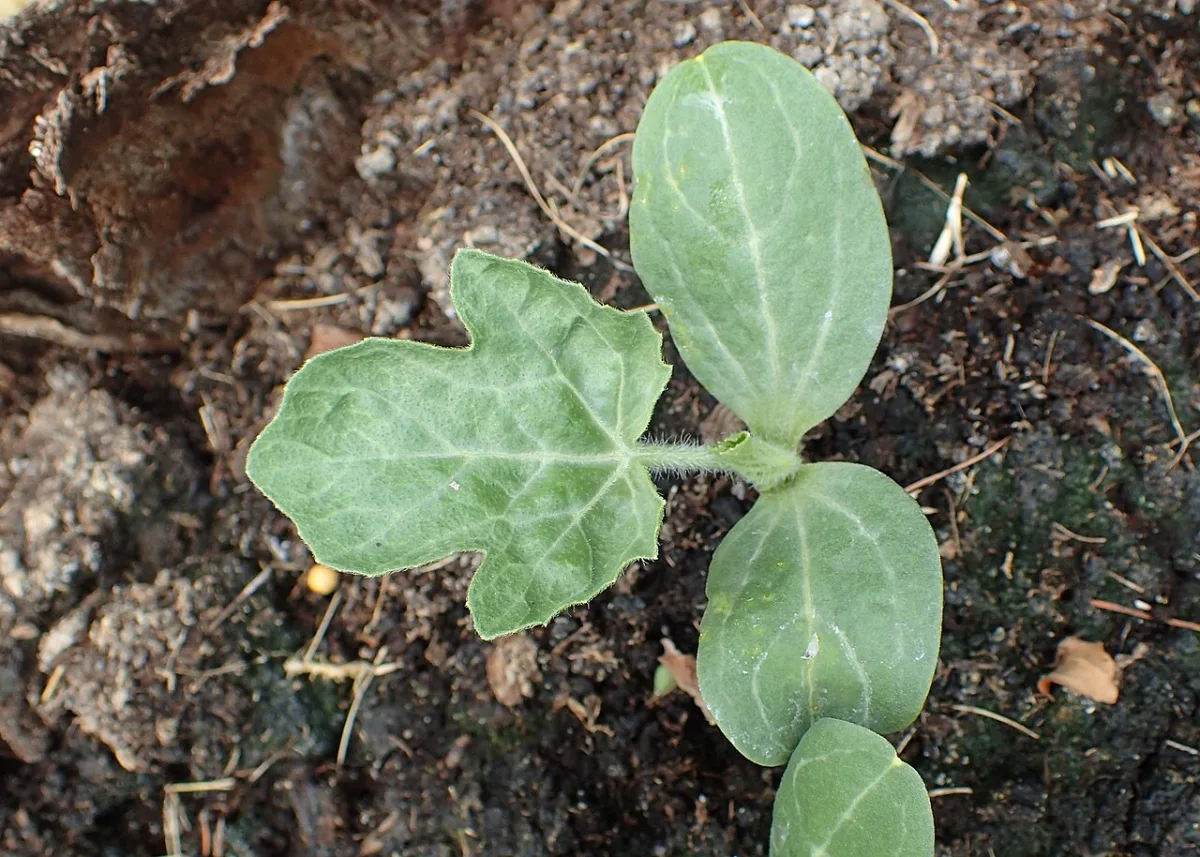
Sowing conditions and installation of plastic covers
For a successful start of heat-loving cucurbit crops, it is critically important to control soil and air temperature during the initial stages of the growing season. Early sowing in unheated soil leads to delayed emergence and massive loss of seedlings due to pathogenic microorganisms. The use of temporary plastic covers allows for earlier sowing dates and accelerates the maturation of the harvest.
The critical period for watermelon and melon is emergence and the formation of two to three true leaves. At this time, plants are most sensitive to heat deficiency. In cold soil, seeds are affected by pathogens and rot.
Seed sowing begins after the air temperature has stably reached 12–14 °С. Under plastic covers, which increase the temperature by 10–12 °С, seeds are sown in the third ten-day period of April, and transplants are planted in early May. For small volumes, a cut plastic bottle with holes can be placed over each planting hole: this will not only increase the soil temperature by a few degrees but also protect seedlings from the leaf beetle (Lethrus apterus).
- Soil for melon — 14–16 °С
- Soil for watermelon — 16–18 °С
- Melon emergence — in 8–9 days
- Watermelon emergence — in 8–10 days
- Acceleration of ripening — by 2–3 weeks
Various structures are used for setting up covers: from simple cross-shaped vine arches under plastic to tunnel structures, which create the most favorable microclimate. As a frame, one can use soil mounds or water bottles — they act as heat accumulators, heating up during the day and releasing heat at night. A frame made of four bricks placed on edge around the planting hole, with one brick in the center, is also effective.
Sowing is carried out using the local method. A tablespoon of ash is added to each planting hole, mixed with the soil, then one or two handfuls of humus and a teaspoon of nitroammophoska are added. Such targeted application increases yield by 20% compared to broad distribution of fertilizers. The soil on top must be mulched with humus.
Planting patterns for cucurbit crops:
- single-row: 100 x 50–70 cm;
- double-row ribbon: (140 + 70) x 50–60 cm.
3 seeds are placed in each planting hole. The sowing depth for watermelon is 3–6 cm, for melon — 2–4 cm, which is 1–2 cm less than when sowing in open ground.
Crop maintenance, irrigation, and microclimate regulation
Cucurbit crops are extremely demanding regarding lighting, so after thinning, strictly one strongest plant is left in each hole. Overcrowding will inevitably lead to smaller fruits. Plants are kept under plastic until early June, until the threat of late frosts has completely passed, paying special attention to regular ventilation to avoid overheating.
Remove the plastic gradually and only in cloudy weather to prevent sunburn. A sudden change in microclimate weakens the plants. Place early and main plantings in isolation from each other to protect against the spread of infections.
To ensure fruit set under covers, the first flowers are pollinated by hand. In the morning, pick a male flower, remove the petals, and carefully touch the anthers to the female flower. To attract bees, plant honey plants nearby or spray the crops with a weak sugar or honey solution.
Irrigate the cucurbits under covers as the soil dries out, following the rule: moderate irrigation increases the sugar content of the fruits. In open ground, irrigation is completely stopped at the beginning of fruit set, based on the condition of the soil.
Loosening the soil is carried out to improve aeration, taking into account the growth rate of the root system. For watermelon, by the time of emergence, the taproot goes 15–20 cm deep, and in the tent phase, it reaches a depth of 1.5 m and a diameter of 60–70 cm. Tillage is performed according to the following scheme:
- The first loosening is carried out to a depth of 12–14 cm immediately after emergence.
- The second loosening in the 5–7 leaf phase is done to a depth of 10 cm, and directly in the rows — to 6–8 cm.
- In the vine spreading phase, the plants are no longer disturbed. The vines are carefully covered with moist soil to stimulate the growth of additional roots.
In protected ground, melon is systematically fertilized every two weeks. To do this, a working solution is prepared: 15–20 g of ammonium nitrate, 40–50 g of superphosphate, and 10–15 g of potassium sulfate are dissolved in 10 liters of water. For the first top dressing, 1 liter of solution is used per plant, for subsequent ones — 1.5 liters. High efficiency is achieved by two-fold dusting with a nutrient mixture of 50 parts humus, 50 parts sod soil, and 1–2 parts poultry manure.
Melon fruit ripening proceeds better in dry air. In unheated greenhouses, melon yield is 4–6 kg/m², and in heated structures, it increases to 8–10 kg/m².
To accelerate the formation of the melon harvest, yield regulation is carried out by pinching the main shoot above the 5th–6th leaf, which leads to the acceleration of side shoots, on which the harvest is formed. In watermelon, on the contrary, the harvest is formed primarily on the central shoot, as well as on the first-order shoot. Therefore, with watermelon, you can pinch off all excess shoots without touching the central and first-order shoots. It is advisable to remove fruit sets and fruits that do not have time to ripen. During the growing season, 1–2 top dressings are carried out. The first is in the two-leaf stage after weeding with fermented chicken manure in a 1:10–1:12 dilution, the second — in the four-leaf stage with mineral fertilizers in doses adopted for greenhouse crops. 2–3 liters of solution are applied per plant. Fertilizers are applied at a distance of 20 cm during the first top dressing and 40 cm from the plant during the second.
To accelerate the ripening of watermelon, it is recommended to turn the fruit so that the side lying on the ground faces the sun. This can be done only once, as turning it two or three times leads to a reduction in yield.
Diseases and pests, as well as control measures for them in watermelon and melon, are basically the same as in cucumber.
Harvesting For local consumption, watermelon and melon fruits are harvested in a state of full maturity. A ripe melon is immediately visible: by the change in color, the appearance of a net, and in some cultivars, the peduncle detaches and a specific aroma appears.
Things are not so simple with watermelon. Most often, people look at the drying of tendrils, and experienced gardeners notice a peculiar bloom on the rind and a change in color intensity. When flicked, a ripe watermelon makes a dull sound, and when squeezed, it crackles. It is important to harvest fruits in dry and clear weather, no less than 3–4 days after rain.
The spot on the side of a mature watermelon should be yellow, not white. On a mature watermelon, the top layer of the rind can be easily removed by scratching it slightly with a fingernail.
The melon harvest, subject to the specified agricultural practices, can amount to 3–4 kg, and watermelon — 4–5 kg per 1 m².
6 frameless film covers The method of growing watermelons and melons in frameless film covers is mechanized. Special machines cut soil ridges 25–30 cm high. The distance between their peaks is 80 cm, and between the bases — 30 cm. A row of plants is planted between the ridges every 50 cm with row spacing of 180 cm. Then, a film-laying machine covers two ridges at once with a 180 cm wide perforated film. 20–25-day-old transplants are planted under them in the forest-steppe zone on May 10–15. The film is removed 3–4 weeks after planting. In this case, the melon and watermelon harvest ripens 2–3 weeks earlier than in the field, melon yield increases by 15–20%, and watermelon — by 10–30%.
Crop rotation system of cultivation structures (crop sequences). A crop sequence is a rational alternation of crops in one area throughout the year (taking into account the plants' need for natural light, the design and technical equipment of the structures), aimed at maximum output per unit area within optimal time frames. Crop sequences are developed in accordance with plans for growing transplants for open ground, protected ground, and early vegetables, as well as according to scientifically based standards of their consumption and agro-economic efficiency. CROP SEQUENCES IN VEGETABLE GREENHOUSES. Solar insolation is the main climatic factor determining the growing periods, the set of vegetable crops by period, and the magnitude of the early and total yield in a specific zone. Based on data on the minimum amount of PAR (photosynthetically active radiation) required for growing cucumber and tomato, and average data on PAR input into greenhouses, both the earliest planting dates for these crops under conditions of a specific zone and the most rational type of crop sequence are determined.
Table 7. Crop sequences in winter glass greenhouses of the forest-steppe zone of Ukraine. Cleaning and preparation of greenhouses. Cleaning and preparation of greenhouses.
It should be taken into account that in the Polissya region in winter and spring, the dates for planting transplants occur 5–10 days later, and in the steppe zone — 10 days earlier than in the forest-steppe zone. In the autumn in the Polissya region, transplants are planted 5–10 days earlier, and in the steppe zone — 10 days later than in the forest-steppe zone.
Winter greenhouses, equipped with robust heating systems, are primarily used for the production of main, high-value crops — cucumber and tomato. In European countries, this also includes pepper and lettuce. Greenhouses are also used to cultivate leafy greens.
In plastic greenhouses, provided there are sufficiently powerful heating systems, cucumber is planted at times close to those in glass-glazed ones. In this case, plastic greenhouses are used year-round. But most often, heated plastic greenhouses are used from February to November. Main crops S A 0 ^ 6
ch24 725 t. 2 2 (cucumber, tomato, pepper, watermelon, melon) are planted in mid-March, i.e., under conditions of the most effective use of solar energy and optimal light levels. Before planting the main crop in spring and autumn, leafy greens are grown. Spring unheated greenhouses are generally used in one rotation: from April to July–August. In autumn, they can also be used to grow leafy greens. This work begins at a time when the plastic cover is already removed, so that the harvest is obtained in the spring during the warm-up period, before the main crop is planted. Table 8 Crop rotation in plastic vegetable greenhouses rotation = transplants harvest Parsley, celery 25—30.12 05—10.02 Beijing cabbage...
Crop rotation patterns in transplant-vegetable greenhouses
Transplant-vegetable crop rotations must address several practical tasks for an agronomist simultaneously. They ensure optimal conditions for raising transplants and allow for maximum use of energy capacities during the second rotations. Sound planning helps coordinate the arrival dates of vegetables and melons with the overall supply system of the farm, increasing the total economic efficiency.
- Minimum profitability of crop rotation — 30–40%
- Winter growing period for leafy greens — December — February
- Harvesting period for melons in the second rotation — 10–15.08
Using transplant greenhouses in the second rotation yields excellent results with the correct selection of follow-up crops. Experience shows that after harvesting early cabbage transplants, it is most profitable to grow cucumber and tomato. If areas are vacated after early tomatoes or mid-season cabbage, it is advisable to plant tomato and melon on them. After the mass exit of tomato transplants for open field, the vacated areas are allocated for melon, and some volumes are occupied by pepper.
In the autumn period, unheated transplant greenhouses are sown with leafy greens. They should enter winter before harvesting, overwinter, and in the spring, after the greenhouses are covered with plastic, quickly grow and provide a harvest before the main crop is planted. In heated greenhouses, it is profitable to allocate a portion of the area to chrysanthemums in autumn, as the plastic-induced microclimate is ideal for them at this time of year. Also, free areas in the second rotation can be used for the production of greenhouse vegetable seeds.
| Structure type and rotation option | Crops | Sowing or planting dates | Harvesting or clearing dates |
|---|---|---|---|
| Heated greenhouses (Option III, two rotations) | Beijing cabbage, melon, watermelon, pepper, eggplant | 20–22.03 | 10–15.08 |
| Chrysanthemums or radish | 12–15.09 | 20–30.11 | |
| Spring unheated greenhouses (Option I) | Leafy greens | 02.09 | 15.04 of the following year |
| Spring unheated greenhouses (Option III) | Melon, watermelon, pepper, eggplant | 20–30.04 | 20–25.08 |
| Leafy greens | 21–25.09 | 25.04 of the following year |
Transplant-vegetable plastic greenhouses serve as an important source of early produce. In December — February, when only cucumber and tomato transplants are being planted in glass-glazed winter greenhouses, plastic structures are already providing a supply of leafy greens.
Phytosanitary control and alternative directions
Intensive use of greenhouses inevitably leads to the accumulation of pathogens. Traditional crop rotation works less effectively here, as most greenhouse plants are affected by widely specialized pathogens. To keep the infection level under control, it is necessary to focus on reducing the level of accumulated infection by the end of the growing season. To do this, high-level agrotechnics are combined with regular preventative and exterminatory treatments.
Since most protected ground crops are affected by the same widely specialized pathogens, simple plant rotation is not enough. It is necessary to combine high-level agrotechnics with timely preventative and exterminatory measures to reduce the level of infection by the end of the growing season.
As an alternative direction, farms can consider mushroom cultivation. They are distinguished by high nutritional value, contain proteins, fats, carbohydrates, vitamins, mineral salts, and extractive substances. The mineral salts and amino acids in their composition support the acid-base balance in the body. Mushrooms contain salts of iron, potassium, magnesium, phosphorus, as well as vitamins A, C, D, group B, and PP.
The main biological characteristic of fungi is their heterotrophic type of nutrition. They lack chlorophyll; therefore, they are incapable of photosynthesis and absorb only pre-formed organic substances. Based on the mode of nutrition, edible fungi are divided into three groups:
- Humus saprophytes (mycelium spreads in the upper layers of the soil) — mushroom (agaricus), wine cap, puffball, shaggy mane.
- Xylotrophs (wood-decaying fungi that feed on wood) — oyster mushroom, velvet shank, sheathed woodtuft, shiitake.
The fresh matter of a mushroom contains 86% water, 6.4% protein, 3.6% carbohydrates, 0.5% fats, 2% fiber, and 1.5% ash. At the same time, xylotrophs and mushrooms can be grown year-round. Specialized enclosed cultivation facilities are used for their production.
Read next
Greenhouses and covers For agronomists
Agricultural techniques for bush training and microclimate of tomatoes in film greenhouses
Greenhouses and covers For gardeners
Cultivation technology for asparagus lettuce and radish in protected soil
Greenhouses and covers For agronomists