
Cultivation and benefits of watermelons and melons in home gardening
19 min read
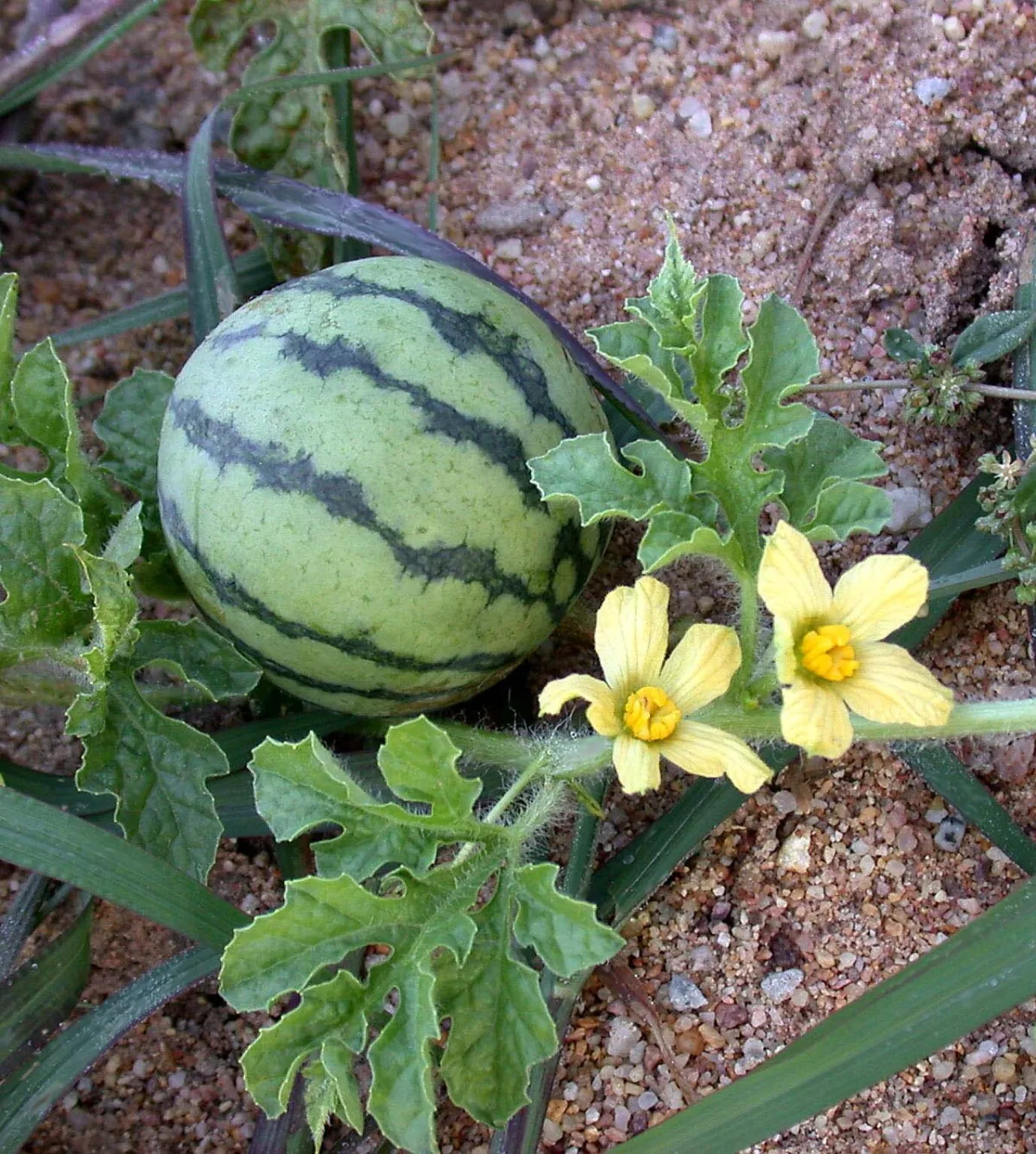
Watermelon. The homeland of the watermelon is Southern Africa, as well as India and Egypt. As the Bible testifies, the watermelon was known as early as 1500 BC. An image of a watermelon was found in ancient Egyptian tombs. This fruit, as Virgil writes in his poems, was popular in Ancient Rome. And in China, they even held a festival in honor of the watermelon.
Note that Peter I issued a decree on growing watermelons — where would you think? — in Chuhuiv, Kharkiv Governorate, although not in the open field, but under cover.
Over time, this tradition was not only preserved but also actively developed. In greenhouses, albeit in small volumes, watermelons and melons are grown both in winter-spring and spring-summer rotations. At the same time, cucurbit crops gained particular popularity when they began to be grown in open soil.
The climate is changing, and the range of crops in our gardens is expanding. Watermelons and melons have become not exotic plants, but traditional crops in the Kharkiv region. And perhaps, based on new achievements in breeding, improvement of agricultural techniques, and the use of warmed soil, we will be able to revive melon growing?
A home-grown watermelon is not only tastier than imported ones, which we verify year after year, but it is also safe for health. The fact is that the watermelon is prone to accumulating nitrates, which entrepreneurs may abuse when growing produce for sale, especially for early harvest. Thus, watermelons and melons are capable of accumulating up to 500—600 mg/kg of nitrates, while the permissible concentrations are 60—90 mg/kg. If we consider that for human health, a nitrate content of more than 6—7 mg per 1 kg of body weight per day is excessive, then the cases of frequent poisoning from store-bought (especially early) watermelons become quite explainable. Increased nitrate accumulation in cucurbit products also occurs from excessive fertilizer doses and the treatment of fruits with pesticides.
The watermelon is a versatile and delicious healer. It is especially valuable that every gardener can arrange a real home resort at their dacha for two months (and even more).
A connoisseur of traditional medicine, M. A. Nosal, wrote: "Watermelons are the kind of food-medicine that always helps and never harms, even in large doses." Watermelon is useful for everyone — both healthy and sick — as a source of magnesium, potassium, easily soluble iron, folic acid, easily digestible sugars, a large amount of biologically active water, and other valuable substances. That is why it is so beneficial for diseases of the kidneys, liver, cardiovascular system, salt metabolism disorders, and diabetes. In terms of iron content, watermelon is second only to lettuce leaves and spinach. That is why it is useful for patients with iron deficiency anemia. Pectin substances, combined with a small amount of fiber in the watermelon, optimize intestinal microflora without causing flatulence. The so-called kidney cleansing using a watermelon diet is especially popular among the population. It consists of a person's diet consisting only of watermelons and black bread for two weeks.
For people suffering from obesity or gout, nutritionists recommend watermelon fasting days.
For general rejuvenation of the body, it is advisable to drink tea made from fresh and dried watermelon rinds. Women should take note that watermelon rejuvenates and improves complexion, and gives the skin elasticity. Watermelon rinds and juice are used for this purpose.
Melon. At the word "melon," many immediately imagine a southern bazaar in Ashgabat, Tashkent, Samarkand, Khiva, or Bukhara. I was lucky enough to visit there. Mountains of fruits, rice, dried apricots, raisins, savory and specially salted eggplants, cabbage, and carrots. But the most important thing in this abundance is the queen melon. It is here, in Central Asia, that its homeland lies.
The melon has been valued in all ages. For its sweet, aromatic, and tender flesh, it was called one of the fruits of paradise in ancient times. The melon appeared in Europe in the 12th–13th centuries, and in Russia, it began to be grown in hotbeds under Peter I. We love the melon very much as an excellent delicacy, but we know little about its high dietary and especially medicinal properties. After all, it is not for nothing that it was a staple food in the diet of Muslims during the fast before the great holiday of "Ramadan."
The medicinal properties of the melon were used even by Egyptian pharaohs. In terms of the amount of sugars, vitamins, and potassium salts, the melon surpasses the watermelon. It has a diuretic and mild laxative effect. For people with hypertension, gout, kidney and gallbladder diseases, or anemia, doctors recommend special fasting days.
=> 255) days you need to eat 1.5 kg of melon in 5 servings). Melon has a beneficial effect on the intestines and promotes the removal of toxins. There are many ways to cleanse the body of toxins that poison it. And one of the most pleasant is a melon diet, although there are some nuances here. Melon should be an independent product. It is best to eat it 2—3 hours after lunch. The point is that melon is digested immediately, and if eaten with other foods, it stays in the stomach and causes fermentation.
It is valuable that melon fruits, just like watermelon, contain folic acid, which plays a very important role in normalizing metabolic processes and the activity of hematopoietic organs. A lack of folic acid leads to the development of anemia and malignant tumors.
Modern medicine recommends consuming melon for the prevention of atherosclerosis.
Melon is also widely used in cosmetics. By the way, the Egyptian queen Cleopatra used melon pulp for facial masks.
Biological characteristics of watermelon and melon Since both watermelon and melon originate from hot countries (let us recall: watermelon — from South Africa, and melon — from Central and Western Asia), these crops have correspondingly high requirements for heat and light (only under optimal conditions can they achieve high sugar content and flavor). Watermelon is the most heat-loving among melons and gourds; its seeds begin to germinate at a temperature of 15 °C, which is 2—3 °C higher than for squash and pumpkin; the optimal temperature is 25—35 °C. The best conditions for flowering and fertilization are 18—20 °C in the morning and 20—25 °C during the day. When the temperature drops to 20 °C, fruit growth is delayed. At temperatures below 15 °C, stigmas do not mature, fertilization does not occur, buds and flowers fall off, and at 3—5 °C, plants stop growing altogether and may die.
Melon and gourd crops, especially watermelon, are quite drought-resistant due to their powerful root system, leaf pubescence, or waxy coating on them. The need for increased soil moisture applies to the period of seed swelling, the beginning of emergence, and fruit formation.
It is best to allocate sandy loam soils on southern and southwestern slopes, which warm up well, for melon and gourd crops. It is desirable to protect these areas from winds. Soils with a heavy texture, those that are too moist, or have a high water table are not very suitable for growing watermelons. The growth of watermelon and melon is more influenced by the soil texture than by soil fertility. A powerful root system allows for the extraction of a sufficient amount of nutrients even from relatively poor soils. Melon is more demanding of soil fertility than watermelon and responds well to the application of fertilizers. The highest yields of watermelon and melon are obtained after perennial grasses. An important factor for growing high-quality watermelon and melon fruits is the soil reaction. It should be neutral. From personal experience, I am convinced that acidic, uncultivated, heavy-textured soil leads to very small watermelon fruits, which crack while still green. This happened in the first years of developing the vegetable garden. After prolonged soil cultivation, the addition of lime, humus, mineral fertilizers, and the introduction of crop rotation with perennial grasses, despite all the vagaries of the weather, I began to receive excellent watermelon and melon harvests (Zolochiv district, Kharkiv region).
Watermelon and melon cultivars Ukrainian breeders have created a large assortment of watermelon and melon for cultivation in open ground, which allows for obtaining produce from one's own vegetable garden for two months or more. Many early open-ground cultivars are successfully grown in plastic greenhouses.
I will dwell on the characteristics of the watermelon cultivars that allow me to harvest fruits in the garden from the end of July (in unfavorable years — from mid-August) to the end of September.
First of all, I will name the cultivars bred by the UKRSRIIVH (Ogonjok, Borchansky, Chornohorei, Harnyi, Shyroninskyi), created by breeders A. G. Kononenko and I. A. Kharchenko.
In recent years, I have tested a collection of Kherson-bred watermelon cultivars: Holoprystanskyi, Pervachok, Krasen, Kakhovskyi, Niko, which I can recommend to gardeners of the Kharkiv region.
Thanks to their good plasticity, resistance to diseases and adverse conditions, and high economic value, they have gained a wide distribution area and deserve to receive "citizenship" in the gardens of the Kharkiv region as well.
Ogonek. An early-maturing cultivar, cold-resistant, withstands low light levels, and provides a uniform harvest. The flesh is carmine-red. The rind is thin, the fruit weight is 1.6—2.2 kg, sometimes 6—7 kg; the flesh is tender, grainy, very juicy, and sweet. Harvesting must not be delayed, as the fruits overripen quickly. This is the oldest cultivar, which has been zoned since 1960.
Borchansky. Early, cold-resistant, productive, transportable. The fruit skin color is green with dark green, spiny narrow stripes. Weight — 2.5—3 kg. The flesh is bright red, grainy, tender, and sweet. The seed are large and dark. Resistant to powdery mildew.
Holoprystansky. One of the earliest-maturing cultivars. The skin color is light green with green thread-like stripes. The flesh is bright red, tender, and juicy. The seed are black and medium-sized. Due to its disease resistance, it can fruit throughout the summer. The transportability of the fruit is satisfactory. 0 = ‚ А > и, 242
Krasen. One of the earliest-maturing cultivars, obtained by crossing Ogonek and Super Sweet. The fruits are black in color, with a weight of 3—4 kg. The flesh is tender and bright red; the seed are black and small; it is transportable and fruits for a long time due to its disease resistance.
Pervachok. Is the standard for early maturity. It meets market requirements: small dark seed, bright flesh color, weight — 3—4 kg. Resistant to disease. Transportability is satisfactory.
Chornohorei. Mid-season; fruits are black-green, the flesh is bright red and sweet every year. Weight — up to 4 kg. The seed are large and brown. Transportable, resistant to disease, and retains its flavor qualities for 3—4 weeks after harvesting. It tolerates drought and temperature fluctuations well. Resistant to disease.
Shyroninsky (autumn). Mid-season. Fruits are white with a light lettuce-green shade, with a pattern in the form of lettuce-green stripes. The flesh is pink-raspberry, grainy, and sweet. The fruit weight is 3.4—4.5 kg. Relatively resistant to drought and anthracnose. Transportable, stores well for 30—40 days.
Harny. Mid-season, fruits are spherical, weight — 2.5—3 kg. The flesh is dark orange, dense, and juicy. Resistant to drought, low temperatures, and fusarium wilt. The fruits are sweet in any weather. Transportable, stores well for 10—15 days.
Kakhovsky. Similar to Astrakhansky, but early, resistant to disease. Fruits weigh 3—4 kg, spherical. Green with dark green wide spiny stripes. The flesh is juicy, bright red, and sweet. The seed are black, medium-sized. Good transportability of the fruits.
Niko. Obtained as a result of multi-stage hybridization of the early-maturing cultivar Orfey and the mid-season Melitopolsky-60. Fruits weigh 5—6 kg, are spherical and blunt-elliptical, light green with dark green spiny stripes. The flesh is of medium density, juicy, raspberry-colored, sweet, and does not overripen for a long time. 52° З 32> 5 эр >35 77 The seed are black, larger than average size. Transportability is good.
This is by no means a complete list of watermelon cultivars that have the right to "citizenship" in Ukraine. I would like to note the ultra-early cultivar Pivnichne Syayvo, created by Zinoviy Dionisovich Sych, Doctor of Agricultural Sciences, a talented scientist from the Dnipropetrovsk Experimental Station. The cultivar is very cold-resistant, the fruit is round, green, weighing 1—2 kg, and the flesh is pink, juicy, and sweet. It is good for growing not only in open soil but also in greenhouses.
A comparative trial of domestic and foreign watermelon cultivars in my garden showed that domestic cultivars are better adapted to local conditions.
In plastic greenhouses, one can grow early-maturing open-soil cultivars: Ogonek, Pivnichne Syayvo, Borchansky, Pervachok, Krasen, and others. Ukrainian breeders are taking the first steps in creating greenhouse cultivars. V. A. Kravchenko bred the early-maturing hybrid E, Mishutka, which ripens 65—70 days after mass emergence. The fruit weighs 4.5—5.5 kg, the flesh is intensely red, sweet, and tender. The yield in plastic greenhouses is 16—18 kg per 1 m².
The OKS-2 cultivar is early-maturing, fruits weigh 4—4.5 kg, are round in shape, and the flesh is sweet, red in color with a high sugar content. In plastic greenhouses, it yields 10—12 kg per 1 m².
The Tiger cultivar is early-maturing, the fruit weighs 3.6—3.8 kg. The flesh is sweet and pink. In plastic greenhouses, it yields 10—11 kg per 1 m².
In Ukraine, the breeding of greenhouse melons has begun. I will dwell on the characteristics of the following selection of melon cultivars, which produce fruit in my garden from the second half of July through September, and some cultivars even keep until November.
Liinyeva. Ripens two weeks earlier than Kolkhoznitsa. The fruits are spherical, less often short-oval, segmented with elements of netting and without it. The fruit weight is from 0.8 to 2.5 kg, the color ranges from lemon-yellow to yellow-orange. The flesh is white with a faint r 244 orange shade, melting, tender, aromatic, very thick — 4—6 cm. The cultivar is drought-resistant. Transportability and storability are average.
Titovka. An ultra-early cultivar. The fruit is round or short-oval, yellow-orange with segments of coarse netting, 1.5—2 kg. The flesh is thick, white, tender, sweet, aromatic, and slightly fibrous. Weakly affected by bacteriosis and aphids.
Zlata. A mid-season high-yielding cultivar. It always ripens after Titovka; fruits are round, yellow-orange with elements of netting. Weight 1.7—2 kg, the flesh is very sweet. It is an early Ineya. The cultivar is noted for good storage life, transportability, and resistance to anthracnose and fusarium wilt.
Ineya. National standard. A mid-late cultivar, fruits are yellow or orange with netting, weighing 1.3—1.8 kg, transportable, with good storage life. The flesh is white, tender, very sweet. Relatively resistant to bacteriosis and aphids.
Berehynia. A mid-season cultivar, large-fruited, up to 4 kg. Similar to Tashkent melons. The flesh is tender, white, buttery, sweet, juicy, suitable for transport. Can be stored for 15—30 days. Resistant to powdery mildew.
Krynychanka. An early-maturing cultivar, fruits are oval, yellow-orange, weighing 2—2.5 kg. Gardeners value it for its lack of demanding growing conditions and uniform harvest yield. Fruits should be harvested slightly under-ripe, as overripe ones may crack, and the flesh loses juiciness.
E, Rada — a novelty. An ultra-early hybrid designed for cultivation in open and protected soil, including plastic greenhouses. The fruit is oval, yellow-orange, partially with netting, medium-sized (weight 1—1.8 kg). The flesh is creamy, very juicy, sweet, tender, and aromatic. The hybrid is relatively resistant to fusarium wilt and anthracnose, outperforming cultivars in uniform fruit ripening. Recommended for obtaining ultra-early production.
The listed cultivars were bred by the Dnipropetrovsk Experimental Station of the Ukrainian Research Institute of Vegetable and Melon Growing (only Krynychanka was bred by this institute, while the E, Rada hybrid was bred by the Donetsk Experimental Station). Some ripen in our garden and satisfy the most discerning taste. We should be grateful for the creation of such wonderful melon cultivars to Richard Yuganesovich Tomason, an Estonian by origin, who worked for many years at the Dnipropetrovsk Experimental Station.
In spring greenhouses, one can grow early-maturing melon cultivars: Lipneva, Titovka, Krynychanka, E, Rada, Holianka, Trydattyadenka.
V. A. Kravchenko specifically created the early-maturing melon cultivars Kiyanka and Borivchanka for plastic greenhouses, which are resistant to powdery mildew and root rots.
The Kiyanka cultivar ripens in 60—65 days from the emergence of mass seedlings. Fruits are oval, weighing 2.5—3 kg. The flesh is sweet, creamy, tender, thick, and the skin is tender. Provides a yield of 9—10 kg per 1 m².
The Borivchanka cultivar ripens in 75—80 days, has large fruits weighing 5.5—6.5 kg, oval-elongated. The flesh is thick, sweet with a pineapple flavor. Yield is 11—12.5 kg per 1 m².
Watermelon and melon crop in plastic greenhouses. Watermelon and melon are grown primarily in plastic greenhouses. Their ripening in plastic greenhouses with solar heating in the forest-steppe zone begins on June 15—20, while the first fruits from the field arrive only at the end of the third ten-day period of July — early August. By the beginning of fruit ripening in the field, one can obtain 2.5—3.2 kg of melons and 4.6—6 kg of watermelons per 1 m² of plastic greenhouses. When greenhouses are reused after growing transplants of heat-loving crops for open soil, the importance of these crops in plastic greenhouse vegetable production increases even further. The profitability of growing melons after transplants for mass planting dates of tomatoes (May 20) is 154%, while the profitability of cucumbers and tomatoes during this period does not exceed 72—99%. Growing watermelon
In the autumn, 10—15 kg of humus, 15—20 g of ammonium nitrate, 40—50 g of superphosphate, and 10—15 g of potassium sulfate are applied per 1 m².
Loosening materials such as peat and chopped straw are highly effective. Sawdust deserves special attention, as it suppresses the development of fungi of the genus Fusarium, which are very dangerous for watermelons in unheated greenhouses.
For sowing, full-weight seeds are selected. 20 days before sowing, the seeds are soaked for 16 hours in a 0.05% potassium permanganate solution (5 g per bucket of water), followed by drying. Germination of watermelon seeds begins 2—4 days before sowing. They are sown in 10x10 cm pots at a depth of 2—3 cm, 30—35 days before planting the transplants. It is best to use a mixture of three parts of humus and one part of soil.
During seed germination, the temperature should be 20—30 °C. Upon emergence of seedlings, it is reduced for 3—4 days to 16—18 °C. In the subsequent period, the optimal temperature is 20—25 °C during the day and 16—18 °C at night. Transplants are watered with moderately warm water (22—25 °C). Transplants are fed with a solution of mineral fertilizers (10—15 g of ammonium nitrate and potassium sulfate, 40—50 g of superphosphate per 10 l of water for 70—100 plants).
Before planting, especially in unheated greenhouses, transplants must be hardened; for this, ventilation of the greenhouses is increased, and the temperature is lowered to 17—18 °C. Transplants are planted in plastic greenhouses after the formation of the 3rd or 4th leaf, when the soil temperature at a depth of 10 cm reaches 15—16 °C in the morning hours. In the Kharkiv region, this occurs in the third ten-day period of April. It is desirable in the first period, to improve the temperature regime, to install tunnel covers inside the greenhouse. In heated greenhouses, depending on their capacity, transplants are planted earlier.
Feeding area — 70х70 cm, 70х100 cm. The plants are tied to a trellis, and the fruits are placed in a net. Watermelon vines are not pinched at an early age, as the fruits grow at their ends; only weak shoots are removed. A mandatory practice is the regulation of the number of watermelon fruits. 2—3 fruits are left on one plant. This operation is performed when the fruit set reaches 5—7 cm in diameter. In case of delay in fruit regulation, ripening dates are delayed. To accelerate the growth of the remaining fruits, the vines are pinched, leaving 5 leaves above the fruit.
It is necessary to attract pollinating insects to the greenhouse by placing bouquets of aromatic crops or spraying plants with sugar syrup. During prolonged cloudy weather, the plants must be pollinated by hand. It is best to place a beehive with bees in the greenhouse.
Overheating is more dangerous for watermelon than for melon. Therefore, special attention is paid to the ventilation of film greenhouses when growing watermelons. The optimum daytime temperature is 25— 30 °C. Watermelon is watered infrequently, as abundant irrigation reduces sugar content, leads to thickening of the rind and the appearance of fungal diseases. Watermelons are top dressed every two weeks with poultry manure, alternating the top dressing with mineral fertilizers. For this purpose, 10—15 g of ammonium nitrate, 40—50 g of superphosphate, and 20—30 g of potassium sulfate are taken per 10 l of water. The fruits are cut, not plucked. The total yield is 6—8 kg per 1 m² in unheated greenhouses, 15—17 kg in heated ones.
As a rule, three first-order shoots are tied to the trellis, and the others are directed over them. During the care of the melon, special attention is paid to the temperature. During the day, before fruit set formation, it should be at least 20—30 °C, after formation — 30—40 °C, and at night — at least 18 °C. The optimum soil temperature is 24—26 °C. The melon is watered regularly, necessarily with warm water, every 3—4 days at a rate of 10 l of water per 1 m²; less frequently in cloudy weather, more often in sunny weather. Water carefully, wetting only the soil and leaving the stem dry (for this, it is convenient to pour water along furrows). After each watering, it is advisable to loosen the soil. During the ripening period, the number of waterings is reduced. During flowering, it is useful to carry out refreshing waterings. In hot weather, it is advisable to water every other day.
Read next
Greenhouses and covers For agronomists
Biological value of tomatoes and specific features of the crop cultivation in greenhouses
Soil and tillage For students
Influence of soil structure and composition on capillary moisture transfer
Soil and tillage For students