
Agricultural techniques for bush training and microclimate of tomatoes in film greenhouses
13 min read
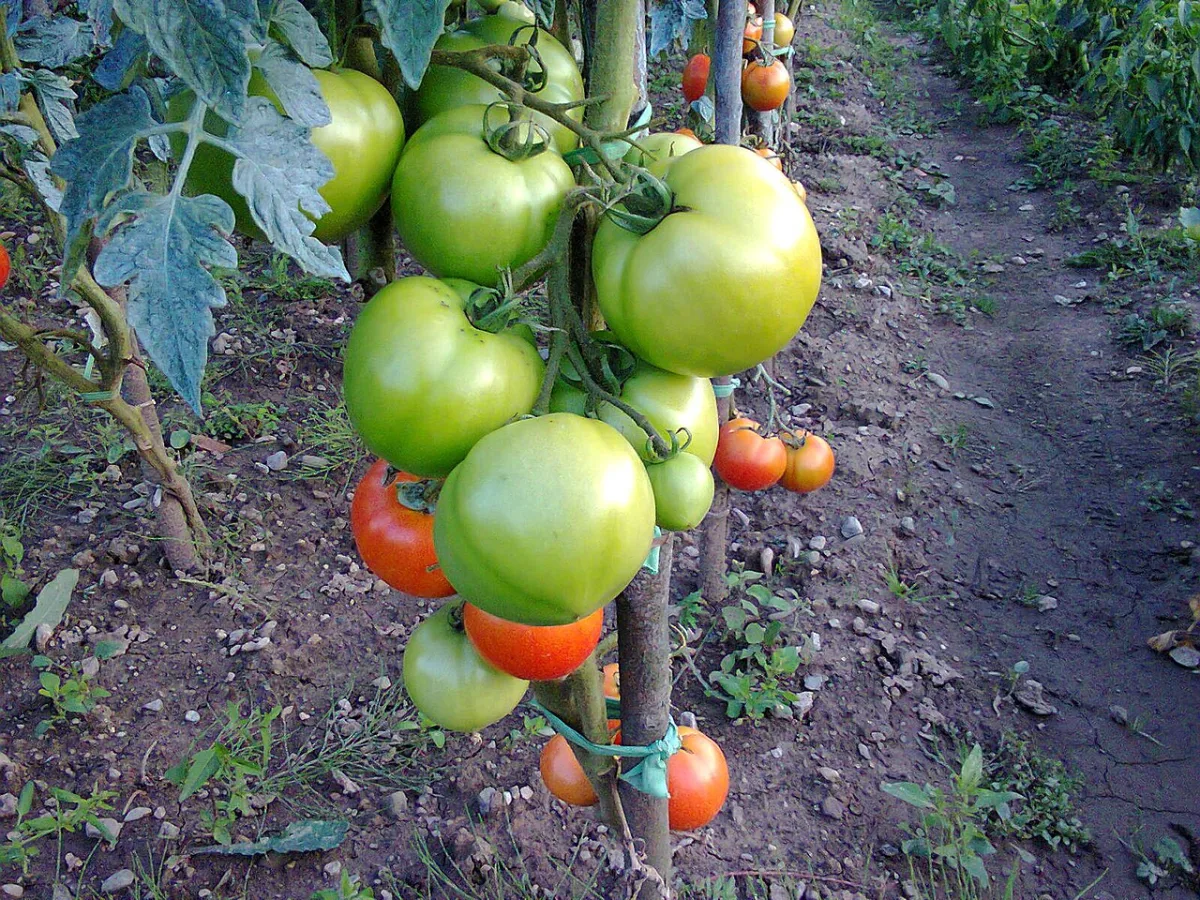
Tomato plant training and planting density
Regulating planting density is a key factor in tomato yield in protected ground. As the number of plants per unit area increases, the individual productivity of each plant decreases. The agronomist's task is to find a balance where the total yield per square meter grows faster than the yield per individual plant declines. This is achieved through proper suckering, pinching, and timely tying.
Suckering prevents the unproductive waste of plastic substances. Lateral shoots are pinched as soon as they reach a length of 1–2 cm. Special attention should be paid to the removal of suckers in cloudy weather, as well as during abundant nitrogen nutrition, when the vegetative mass grows most actively.
When growing super-determinate hybrids (E, Leopold, E, Druzhok, E, Semko Sindbad) with 2–3 stems, one should not remove absolutely all suckers. If removed completely, only 2–3 inflorescences will remain on the main stem, which will lead to the loss of the main part of the harvest.
Pinching the top of the main stem is carried out after the formation of 3–4 inflorescences. Two leaves must be left above the top inflorescence so that the assimilates produced during photosynthesis are directed directly to fruit filling. To maintain a vertical position, the plants are tied to a horizontal wire stretched at a height of 60–70 cm. This improves lighting, facilitates ventilation, and prevents contact of the fruit with the ground, reducing the risk of late blight development.
- Planting density for 2–3 stems — 3.2 plants/m²
- Density when removing all suckers — 6–7 plants/m²
- Height of the tying wire — 60–70 cm
- Poultry manure dilution — 1:10–1:12
- Potassium permanganate dosage — 2–3 g / 10 l
Microclimate, irrigation, and mineral nutrition schemes
Ventilation of plastic greenhouses directly affects pollination and fruit set. Stagnant air and temperature rises above the critical point must be avoided. In the absence of automatic ventilation, perforated film is used, and after the threat of frost has passed, one of the greenhouse ends is left open at night.
Do not allow the air in the greenhouse to overheat above 25 °C. High temperatures lead to pollen sterility, flower drop, and loss of fruit set on the first cluster. Also, ensure that leaves do not touch the film to avoid burns and frostbite.
| Time of day | Optimal temperature range, °C |
|---|---|
| Day | 20–25 |
| Night | 16–18 |
The film is removed from the greenhouses at the end of May or beginning of June. 4–5 days before this, the plants are hardened and adapted to open-ground conditions. Preparation is carried out according to a clear scheme to minimize stress on the plantings.
- Leave ventilation openings open all night.
- Remove the cover only in cloudy weather or in the second half of the day.
- Carry out preventive plant treatments against infections immediately after dismantling the film.
Irrigation of tomatoes under film must be more frequent than in open ground, as their root system lies in the surface layer. Uneven moisture disrupts calcium transport and causes blossom-end rot on the first clusters. To eliminate the deficiency, irrigation is normalized and calcium-containing fertilizers are applied. Before frosts, the soil under the film is heavily watered: the evaporating moisture settles as condensate on the inner side of the dome and protects the plants from freezing.
For top dressing, organic and mineral fertilizers are used. In the first phase of the growing season, the focus is on phosphorus-potassium nutrition for better fruit setting, and during the filling period, on nitrogen. The first application is carried out 10–15 days after planting the transplants. Subsequent mineral top dressing is calculated according to strictly defined application rates of active ingredients per unit area.
| Top dressing sequence | Ammonium nitrate, g/m² | Superphosphate, g/m² | Potassium sulfate or potassium magnesia, g/m² | Volume of water, l/m² |
|---|---|---|---|---|
| First top dressing | 15 | 50 | 10 | 10 |
| Second and third top dressing | 30 | 80 | 30 | 10 |
| During the fruiting period | 40 | 40 | 30 | 10 |
For growth stimulation, acceleration of ripening, and increasing sugar content and resistance to late blight, potassium permanganate is added to the irrigation water. Foliar treatments with a mixture of microelements also help to increase plant immunity: boron, magnesium, copper, and iron are applied at 2 g each per bucket of water, adding 5 g of urea and ash infusion. As a base for spraying instead of plain water, it is effective to use an infusion of fermented weeds. All treatments are carried out early in the morning, after which the greenhouse is thoroughly ventilated.
Agrotechnical methods for late blight prevention
Late blight is one of the most dangerous tomato diseases in plastic greenhouses. It can be recognized by gray-brown spots of irregular shape on leaves and stems, as well as by white bloom on the underside of the leaf blade. On the fruits, the infection manifests itself in the form of dark brown spots. Unlike early blight, the spots in late blight do not have a concentric character.
The disease pathogen is extremely sensitive to microclimate. The fungus develops actively in warmth and high humidity but dies quickly in a dry environment. The primary source of infection is most often affected potato tubers, plant debris, seed, and infected transplants from hotbeds.
- Optimal temperature for the fungus — 20–24 °С
- Air humidity for development — not lower than 75 %
- Conidia death in dry air (20–40 % humidity) — within 1–3 hours
- Return interval for Solanaceae in crop rotation — at least 4 years
- Spatial isolation from potatoes — up to 500 m
- Age of transplants for ultra-early crops — 60–65 days
To reduce the risk of infection, tomatoes are placed in well-ventilated areas, avoiding lowlands with stagnant cold air and high soil moisture. In a greenhouse, it is strictly monitored that plant stems remain dry and well-lit; overcrowding of plantings and contact of lower leaves with the soil are not allowed. Spatial isolation is maintained between potato and tomato plantings, or shelterbelts of corn, sunflower, or sorghum are planted. It is also important to maintain hygiene: do not switch from a potato field to a tomato field wearing the same clothing and footwear, especially in damp weather.
To increase plant immunity, biocompost or humus is applied locally into the planting hole; microelements and increased doses of potassium-phosphorus fertilizer are also used. Practitioners also use the method of inserting a copper wire into the root collar of the bush immediately after the transplants have taken root.
Before sowing, it is essential to disinfect the seed material. This allows for the destruction of the pathogen on the seed surface before the growing season begins. The procedure is performed in a strictly defined sequence.
- Prepare a 1% potassium permanganate solution by dissolving 1 g of the preparation in 100 ml of water.
- Keep the seed in the prepared solution for 20 minutes.
- Thoroughly rinse the seed with clean water and dry before sowing.
If signs of infection still appear on adult plants, it is necessary to immediately take measures to save the harvest. Infected leaves are pruned, and fruit are harvested prematurely. To prevent decay of the collected tomatoes, thermal treatment is performed.
- Collect fruit from the bushes at the first signs of disease and remove infected leaves.
- Immerse the picked tomatoes in water at a temperature of 60 °С for exactly 2 minutes.
- Thoroughly dry the treated fruit.
- Place the tomatoes for ripening in a bright room at a temperature of 25 °С.
Chemical and biological plant protection
The first preventive spraying is carried out 15–20 days after planting the transplants. For this, a 0.7% Bordeaux mixture or a 0.1% copper sulfate solution is used before the hardening of the plants begins. Subsequent treatments are planned based on the weather forecast, using a 1% solution of Bordeaux mixture. The application must be finely dispersed, and the working solution should be applied to both the top and bottom of the leaves.
When using various fungicides, pre-harvest intervals are strictly observed. This ensures the safety of the finished product for the consumer. The final treatment is conducted with a buffer period before the start of harvesting.
| Fungicide | Waiting period before harvesting, days |
|---|---|
| Quadris | 5 |
| Tanos | 7 |
| Bordeaux mixture | 8 |
| Tattu, Ridomil, Cuprosil | 14 |
| Copper oxychloride, Acrobat, Dithane, Ecopam, Junker | 20 |
As an alternative to Bordeaux mixture, Burgundy mixture can be prepared. For this, 30 g of copper sulfate and 35 g of soda ash are dissolved in water in separate containers. Then the solutions are mixed in a three-liter jar, the volume is brought up to 10 liters with water, and 50 g of soap is added.
For treating transplants, the systemic fungicide Previcur 607 SP is recommended, as it penetrates plant tissues. Some agronomists use it in combination with Ekolist. To reduce the fungicide dose and increase effectiveness, growth stimulants, such as Immunocytophyte or Emistim S, are added to the working solution. Immunocytophyte can also be used independently to improve the overall resistance of plants to disease.
Exclusive use of systemic fungicides quickly causes the fungus to adapt to the preparations. It is recommended to alternate treatments with systemic and contact agents (Bordeaux mixture, copper oxychloride, Cuprosil), starting the protection scheme with contact preparations. Remember that copper sulfate is a class I hazardous poison.
In tomato protection practices, traditional methods that increase resistance to infection are often used. These include adding decoctions of wormwood, celandine, tansy, or yarrow to the working solution of Bordeaux mixture. Good results are also provided by spraying plants with a solution of potassium permanganate with microelements or an iodine mixture at a rate of 40 drops of iodine and 30 g of potash fertilizer per 10 liters of water.
Alternative and folk plant protection remedies
In the system of protecting tomatoes from late blight, in addition to chemical and biological preparations, alternative remedies based on plant and organic raw materials are actively used. They help contain the development of the pathogen and reduce the pesticide load on plants in the greenhouse. Most of these solutions are prepared immediately before application and require precise adherence to proportions.
For spraying transplants and growing tomatoes, a garlic infusion is prepared: 150–200 g of crushed garlic is infused in 1 l of water for two days, strained, and diluted with water to a volume of 10 l. Against late blight, polypore extract is also used, for which 200 g of crushed mushroom is poured over with 2 l of boiling water. This solution is suitable for seed treatment, processing transplants before planting, and two sprayings of bushes during the growing season. Before placing fruits for ripening, they are wiped with a cotton swab soaked in this extract and sprinkled with the dry mushroom residue.
An ash extract is prepared from 5 cups of wood ash, poured over with boiling water for a day, followed by dilution to 10 l and the addition of 50 g of soap. As an antiseptic in plantings, a Trichopolum solution is used, as well as infusions of plants that repel insects, for example, ragweed. For disinfection of bushes and tree trunk circles, a nettle infusion is effective: 1.5 kg of fresh crushed leaves are kept in a bucket of warm water. At the first symptoms of infection, bushes are sprayed with a 10% solution of table salt.
During the growing season and harvesting, treatment with whey is useful: 2 l of whey and 200 g of sugar are dissolved in 10 l of water. Lactic acid bacteria actively suppress late blight pathogens without leaving dangerous chemical residues. The "Polesie" mixture is prepared from boric acid, potassium permanganate, and copper sulfate (2 g of each substance) with the addition of 20–30 g of urea. The components are first dissolved in 1 l of hot water at a temperature of 90–95 °C and then diluted in 5 l of cold water.
Good results are obtained by using a cow manure infusion with ash, which acts as a protective agent and foliar top dressing. This composition activates the immune system of tomatoes and increases their overall disease resistance. Preparation and application are carried out according to the standard scheme.
- Fill a third of a bucket with fresh cow manure and add 2–3 cups of ash.
- Fill the bucket to the brim with water, mix thoroughly, and strain the resulting mixture.
- Spray the plants (a whisk can be used) at least 3 times during the growing season, starting immediately after transplanting.
Since the cow manure infusion contains organic livestock waste, strictly observe hygiene when harvesting. Collected fruits must be washed thoroughly before consumption, and if eaten raw, peeled.
- Kombucha infusion consumption — 6 l/are
- Salt solution concentration — 10%
- Trichopolum dosage — 1 tablet per 1 l
- Water temperature for "Polesie" — 90–95 °C
- Fresh nettle consumption — 1.5 kg/bucket
Microclimate regulation and harvest processing
The main factor limiting the spread of late blight in a greenhouse is active air circulation. To prevent moisture stagnation, tomatoes are planted sparsely and raised beds (ridges) are used. Good results are obtained with forced ventilation: double daily airing of plants using ventilation systems allows for the complete prevention of the disease. Growing tomatoes under a plastic cover remains a reliable, environmentally friendly protection.
Of particular importance is compliance with the irrigation regime based on the biological characteristics of the plants. Spores of the late blight pathogen germinate through the open stomata of a moist leaf in just 1 hour. In the evening, tomato stomata are open, and during the day they are closed. Therefore, irrigation is carried out exclusively during daylight hours so that moisture does not penetrate leaf tissues. In folk practice, plantings were sprayed with milk to mechanically close the stomata with a thin film.
Using a plastic greenhouse is the most reliable and environmentally friendly way to protect tomatoes from late blight by isolating the plantings from precipitation and fog.
The tomato harvest grown in a greenhouse is used for fresh consumption and various types of processing. In practice, several proven methods of preserving and salting fruits are used. They differ in the method of preparing raw materials, preparation time, and the composition of the brine.
- Quick salting: fruits are placed in a container with or without spices, filled with cold raw spring or well water with the addition of salt (600 g per 10 l of water), covered with a polyethylene lid smeared with mustard, and kept in a cold place. The product is ready in 1–1.5 months.
- Classic canning: in a 3-liter jar, add 2 tbsp of salt, 1 tbsp of sugar, and 1.5 spoons of vinegar (apple vinegar is better), pour boiling water over, drain after 20 minutes, pour fresh boiling water, and seal. Instead of vinegar, you can add 2–3 sliced wedges of Antonovka apples.
- Georgian-style green tomatoes: fruits are stuffed with a mixture of carrots, white roots, and garlic, layered with parsley and celery, and filled with cold brine (60–70 g of salt per 1 l of water) under pressure. Keep in a warm place for several days, then move to a cold place.
- Stuffed tomatoes for winter: stuffed fruits placed in jars are filled with boiling brine, adding a non-full (up to the finger) 100-gram cup of salt, sugar, and vinegar per 3-liter jar. The jars are sterilized for 10 minutes and sealed.
Spicy ketchup. 5 kg of tomatoes, 300 g of onion, and 3 Antonovka apples are ground in a meat grinder, then 1 cup of sugar and 1 tbsp of salt are added. Boil for 2—3 hours until the mass is reduced by half. Then pass through a colander and boil again for 30 minutes, adding 1 tsp of cinnamon powder, cloves, and ground black pepper. 10 minutes before the end of cooking, add 100 g of apple cider vinegar and seal in jars.
The combination of cinnamon and cloves gives this ketchup its piquancy.
Hot ketchup. Ingredients: 5 kg of tomatoes, 2 kg of sweet pepper, 300 g of hot pepper, 500 g of garlic, 1 kg of onion. Salt, sugar, and vinegar — to taste. Boil for 3 hours. Add garlic just before it is ready.
Read next
Greenhouses and covers For agronomists
Technology for growing melon and watermelon in protected soil
Greenhouses and covers For agronomists
Effective heating systems and thermal insulation methods for greenhouses
Greenhouses and covers For gardeners