
Application of magnesium sulfate fertilizers in modern crop production
5 min read
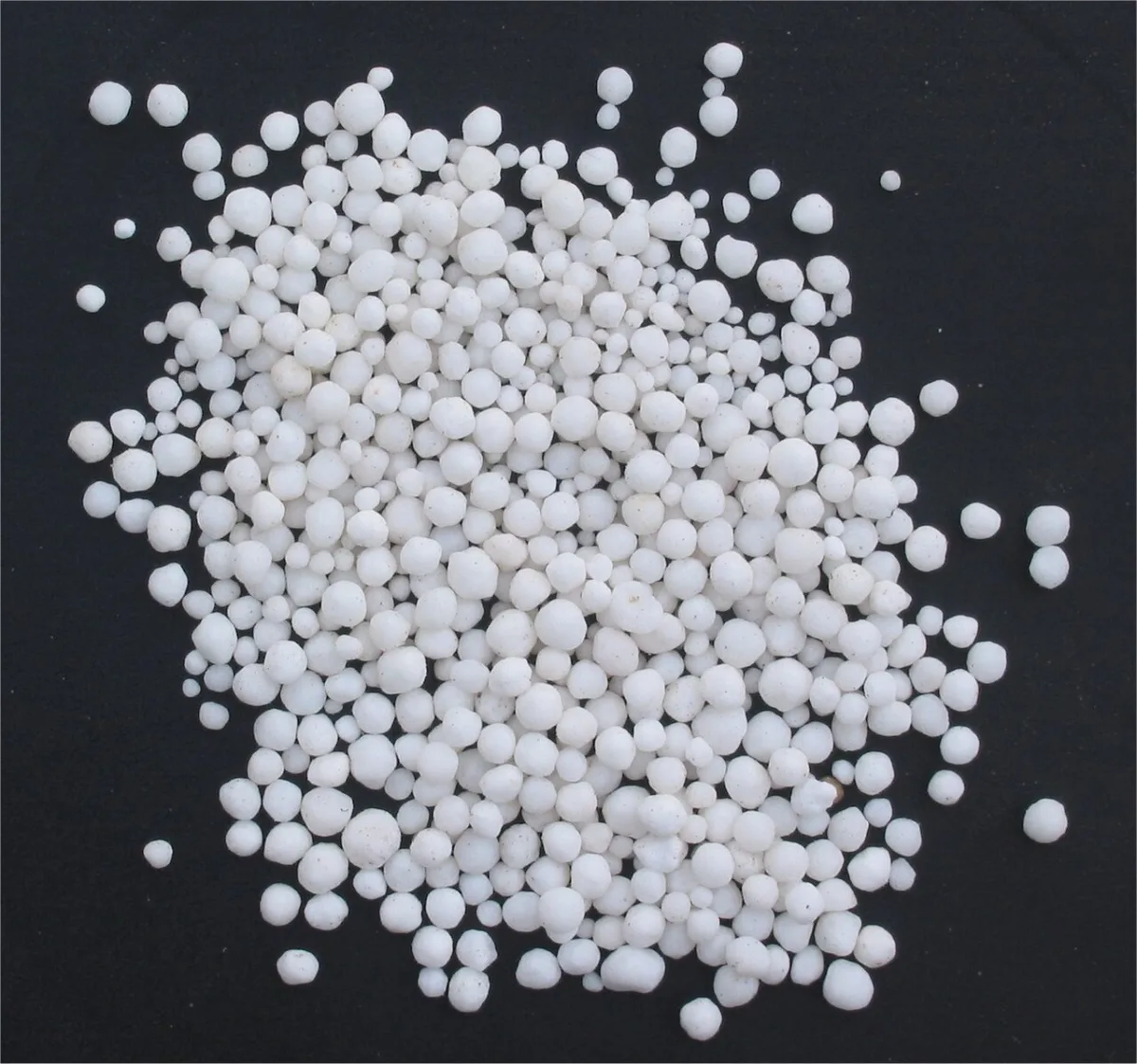
Water-soluble forms: magnesium sulfate fertilizers
Fast-acting magnesium fertilizers based on sulfates ensure high mobility of the element and its prompt uptake by plants. Upon application to the soil, magnesium from the soil solution quickly transitions into an exchangeable state. In light sandy soils, there is a risk of the element leaching into groundwater, so these forms are applied in the spring immediately before sowing.
Epsomite (bitter salt, MgSO4·7H2O) is a natural sedimentary mineral containing common impurities, including nickel. The fertilizer is produced in the form of a white crystalline powder containing no more than 8% and no less than 84% MgSO4·7H2O and 13.7% MgO. The product is highly water-soluble, does not cake during storage, and ensures uniform sowing by agricultural machinery.
The chemical industry also produces pure magnesium sulfate salt, which contains 17% magnesium and 13.5% sulfur. The fertilizer is used for pre-sowing application during primary tillage together with nitrogen and phosphorus fertilizers, as well as for planned top dressing during the growing season.
- Content of elements in magnesium sulfate — 17% Mg and 13.5% S
- Solution for root top dressing — 25 g / 10 L of water
- Solution for foliar top dressing — 15 g / 10 L of water
- Interval of root top dressing — 15–20 days
When applying for tillage">primary tillage of the soil, the following magnesium sulfate application rates are followed:
- for cucumbers and tomatoes: 7–10 g/m²;
- for other vegetable and ornamental crops: 12–15 g/m²;
- for fruit trees: 30–35 g/m² of the trunk circle.
For foliar top dressing during the growing season, prepare a working solution at a rate of 15 g of magnesium sulfate per 10 L of water. The application volume depends on the type and age of the crops being treated.
| Crop or group of plants | Working solution application rate |
|---|---|
| Vegetable and annual floral crops | 1–1.5 L/m² |
| Raspberries, currants, and other shrubs | 1.5–2 L/m² |
| Fruit trees (young) | 2–3 L |
| Fruit trees (adult) | 5–10 L |
Kieserite (MgSO4·H2O) contains 25–30% magnesium and is similar to epsomite in its physical and chemical properties. Its application is most effective in intensive farming on slightly acidic and neutral soils under conditions of magnesium deficiency. Kieserite is used in open-ground vegetable growing, greenhouse facilities, and on intensive meadows. Most of the magnesium from the fertilizer quickly transitions into an exchangeable form, which allows for effective elimination of visually observable acute deficiency of the element using foliar treatments.
Slow-release and carbonate forms: soil conditioners and local fertilizers
Slow-acting magnesium forms are used primarily on acidic soils. They perform a dual function: they reduce the acidity of the soil solution and provide plants with magnesium for a long period. Unlike soluble salts, these minerals release nutrients gradually under the influence of soil acids.
Dunite contains 41–47% MgO, 35–39% SiO2, and 3–8% FeO. The mineral is practically insoluble in water but decomposes under the action of organic acids of the soil complex, simultaneously enriching the soil with silicon. Dunite interacts with the soil adsorption complex more slowly than lime. It is applied on acidic soils at a rate of 500–1000 kg/ha under winter ploughing. Preliminary mixing of dunite with acidic peat increases its solubility in the soil. Fertilizer application is most appropriate for potatoes, flax, and lupine.
Serpentinite (magnesium serpentine, Mg3H4Si2O9) contains 32–43% MgO and belongs to poorly soluble compounds. It is used in finely ground form on acidic soils. Compared to fertilizers containing more mobile forms of magnesium, serpentinite requires application at higher rates, which is why it is considered a local fertilizer.
Dolomite flour (CaCO3·MgCO3) is a product of grinding dolomite, containing about 20% MgO and 28% CaO with a sum of calcium and magnesium carbonate salts of at least 65% and a bulk density of 1.5 g/cm³. Based on grinding fineness, class A (residue on a 0.25 mm sieve of no more than 32%) and class B (residue of no more than 60%) are distinguished. Application of dolomite flour at a rate of 1.5–3 t/ha during the liming of acidic soils saturates the soil with magnesium in a volume sufficient for plant nutrition during 1–2 cycles of crop rotation. Transportation of the fertilizer is carried out in bulk by all types of transport.
Magnesite (MgCO3) is a carbonate rock with impurities of quartz and talc, ranging in color from white to black. It is applied on acidic soils at a rate of 60–120 kg/ha of active ingredient. Products of thermal processing of dolomite are also used in agriculture. Half-calcined dolomite (CaCO3·MgO) contains about 27% MgO, 2% CaO, and 57% CaCO3 and has high magnesium availability for plants. Calcined dolomite is a byproduct of metallurgical production, where calcium and magnesium are in the form of oxides, hydroxides, and carbonates. Due to its good water solubility, it is suitable for surface application under grasses.
Burnt dolomite must absolutely not be mixed with ammonium fertilizers. Their chemical interaction leads to localized nitrogen losses due to ammonia volatilization.
Magnesium oxide (calcined magnesia, MgO) is obtained by calcining high-grade magnesite. Caustic magnesite is produced in three grades with an MgO content of at least 87, 83, and 75%, respectively. The product is packed in water-resistant bags placed inside rubberized fabric containers or other moisture-proof materials, transported in bulk in covered railcars, and stored exclusively in dry facilities. All varieties of magnesium oxide are suitable for use as fertilizer and reduce soil acidity.
Although magnesium oxide dissolves in water and neutralizes acidity, it is not recommended for basic liming: the application of high doses of magnesium on light sandy soils induces calcium deficiency in plants.
Read next
Agrochemistry For students
Characteristics and application features of simple potash fertilizers
Agrochemistry For students
Magnesium fertilizer application strategy in modern agriculture
Agrochemistry For students