
Characteristics and application features of amide nitrogen fertilizers based on urea
5 min read
- Nitrogen content — 46 %
- Granule size — 1–2.5 mm
- Solubility at 20 °C — 51.8 g per 100 cm³ of water
- Neutralization rate on acidic soils — 0.8 centners of CaCO₃ per 1 centner of fertilizer
- Maximum biuret content according to GOST — no more than 1 %
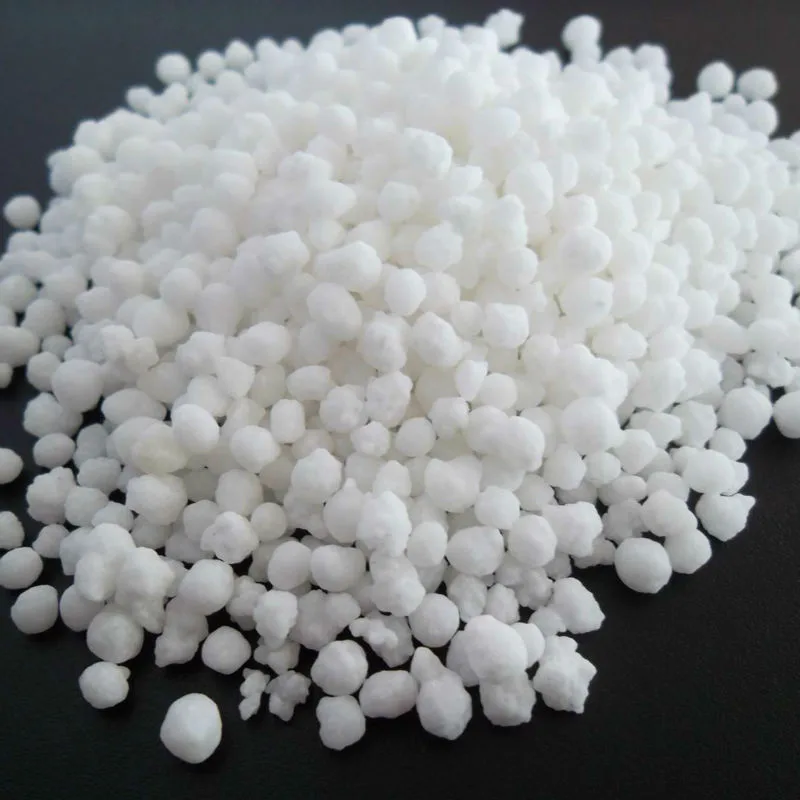
Urea is the most concentrated solid nitrogen fertilizer, containing 46 % nitrogen in amide form. It is an organic substance with a crystalline structure, high water solubility, and a tendency for aqueous solutions to become supersaturated. In production, the fertilizer is obtained by synthesizing ammonia and carbon dioxide at a temperature of 180 °C and a pressure of 100 atm. The process proceeds through the formation of ammonium carbamate with its subsequent thermal decomposition into urea and water. The finished product is evaporated and granulated into white granules sized 1–2.5 mm.
When storage conditions are met, granular urea resists caking and retains satisfactory flowability. However, during evaporation and granulation under high temperature, a byproduct called biuret is formed from two urea molecules with the release of ammonia. An increased concentration of biuret reduces seed emergence, stunts growth, and inhibits crop productivity. When the content is below the critical threshold, the toxicity of the substance does not manifest, and the standard effective in the RF strictly limits its share in the fertilizer to 1 %.
| Crop | Critical limit of biuret content, % |
|---|---|
| Barley, wheat | 3.0–4.6 |
| Tobacco | 2–5 |
| Mulberry | 2–3 |
| Millet | 5.5 |
| Rice | 6.8–10.2 |
Urea behavior in soil and acidity changes
In the soil, under the action of the enzyme urease secreted by uro-bacteria, urea hydrolyzes to form ammonium carbonate. On cultivated humified soils with favorable temperature and humidity, this process takes 2–3 days. On low-fertility sandy and waterlogged soils, ammonification proceeds significantly slower. At the stage of ammonium carbonate formation, the fertilizer temporarily alkalizes the soil solution.
The resulting ammonium is partially absorbed by the soil adsorption complex, and after exchange displacement by cations, it becomes available to roots. Urea can be absorbed by plants directly through roots and leaves before conversion into ammonium carbonate. However, until the amide form undergoes ammonification, it is weakly held by the soil and can be leached into lower horizons.
During the nitrification of ammonium carbonate, bacteria oxidize it into nitric and carbonic acids, which leads to soil acidification. In terms of physiological acidity, urea acts more mildly than ammonium sulfate or ammonium nitrate. If the soil is saturated with calcium and other bases, a neutral salt — calcium nitrate — is formed instead of free acid.
When applying urea on acidic soils, it is necessary to add 0.8 centners of CaCO₃ per each 1 centner of fertilizer to fully neutralize its potential physiological acidity.
Application practice and fertilizer blending
In terms of agronomic efficiency, urea is not inferior to ammonium nitrate, and for rice crops, it is equivalent to ammonium sulfate. The fertilizer is used as a base application and for top dressing for all crops on all soil types. Urea is indispensable for foliar top dressing of vegetable and fruit crops, as well as for late treatments of winter and spring wheat to increase the protein mass fraction in the grain.
Unlike other nitrogen fertilizers, working solutions of urea, even at high concentrations (>5 %), do not cause leaf surface burns and are effectively absorbed by the plant.
For surface application, urea must be immediately incorporated into the soil. Ammonium carbonate easily decomposes in the air with the release of gaseous ammonia, which leads to significant nitrogen losses. The risk of volatilization is especially high on alkaline and carbonate soils, as well as during surface top dressing of meadows and pastures due to the high urease activity of the sod.
Before application, urea is thoroughly mixed with other components to ensure uniform distribution over the field area. When preparing fertilizer mixtures, follow the procedure:
- Check the dryness and flowability of all mixed components.
- On the day of sowing, prepare a mixture of urea with superphosphate and potassium chloride if necessary.
- For long-term storage or combined application, mix urea with phosphate rock or precipitate.
- Thoroughly mix the blend until homogeneous immediately before loading into the spreader or seeder.
Read next
Agrochemistry For students
Characteristics and features of ammonium sulfate application in agriculture
Agrochemistry For students
Characteristics and application rules of ammonium nitrate in agronomy
Agrochemistry For students