
Classification of nitrogen fertilizers and specific features of their application to the soil
8 min read
Six groups of nitrogen fertilizers and their availability for plants
Nitrogen fertilizers are the main tool for increasing effective soil fertility. Depending on the chemical form of nitrogen, all mineral fertilizers are divided into six main groups. Plants can absorb this element in three forms: nitrate (NO3–), ammonium (NH4+), and amide (NH2).
- Nitrate (calcium nitrate, sodium nitrate) — contain nitrogen in an oxidized form as salts of nitric acid.
- Ammonium (ammonium sulfate, ammonium chloride) — nitrogen is present as an ammonium ion bound to an acid.
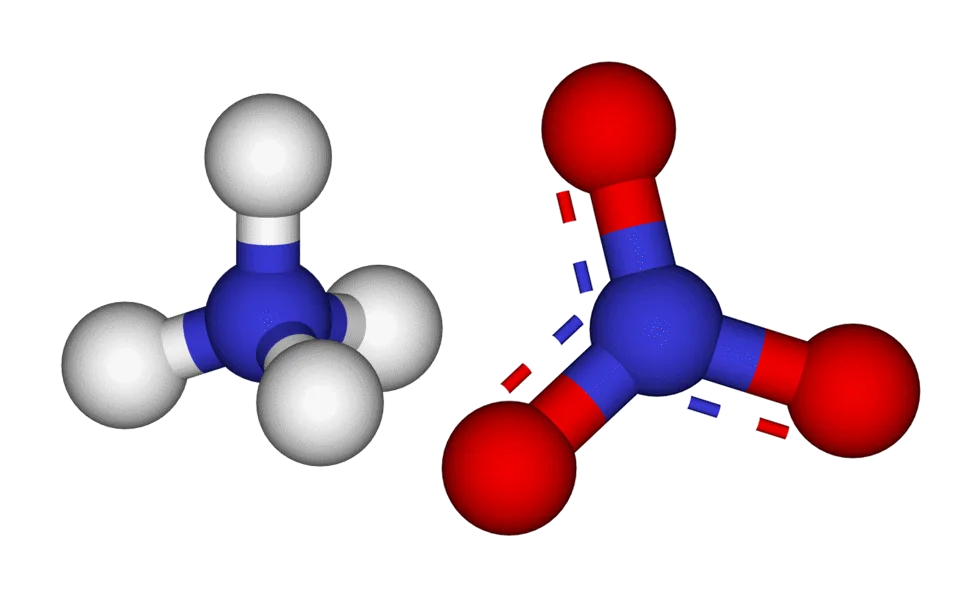
- Ammonium-nitrate (ammonium nitrate) — contain nitrogen in both ammonium and nitrate forms simultaneously.
- Amide (urea, calcium cyanamide, urea-formaldehyde fertilizers) — nitrogen is in the amide form.
- Ammonia (aqueous ammonia, anhydrous ammonia) — nitrogen is contained mainly in the form of free ammonia.
- Urea-ammonium-nitrate (urea-ammonium nitrate solution — UAN).
The choice of a specific fertilizer depends on the biological characteristics of the crop and the soil type. For direct amino acid synthesis, the plant uses only ammonia (NH3). Nitrates, on the other hand, undergo an enzymatic reduction process in root and leaf tissues following the scheme: NO3– (nitrate) → NO2– (nitrite) → H2N2O2 (hyponitrite) → NH2OH (hydroxylamine) → NH3 (ammonia).
- Optimal pH for ammonium nitrogen — 7.0
- Optimal pH for nitrate nitrogen — 5.5
- Forms of nitrogen plant nutrition — 3
Behavior of nitrogen in soil and application rules
Nitrate nitrogen (NO3–) does not bind to the soil and is freely found in the soil solution. It quickly penetrates into the roots, outpacing the absorption of harmful chloride anions (Cl–), and accumulates in tissues without harm to the plant. However, due to its high mobility, nitrates are easily leached by precipitation and irrigation from the topsoil layer.
The mobility of nitrates creates a risk of their loss. During heavy irrigation, they quickly move into lower soil horizons, which leads to inefficient use of fertilizers and environmental pollution.
Ammonium nitrogen (NH4+) is absorbed by plants just as quickly as nitrate. At the same time, it is immediately involved in the synthesis of amino acids without prior reduction, which saves plant energy. However, an excess of free ammonia is toxic to plant tissues, especially in the event of a carbohydrate deficiency.
Do not apply ammonium and ammonia fertilizers in large doses before sowing for crops with low carbohydrate reserves in their seeds. For example, beet does not tolerate an excess of ammonium well, whereas potato, which is rich in carbohydrates, handles high doses without consequences.
The efficiency of nitrogen uptake depends directly on the soil environment reaction and accompanying ions. Sodium and potassium promote better absorption of nitrates, while magnesium and calcium help to assimilate the ammonium form. In low-buffer soils, an excess of monovalent ammonium disturbs the nutrient balance; therefore, the presence of divalent calcium and magnesium cations in the solution is necessary to neutralize it.
Influence of ammonium and nitrate forms on the balance of elements in the plant
Ammonium and nitrate nitrogen affect the absorption of accompanying nutrient elements in different ways. Ammonium nitrogen reduces root absorption of potassium and increases the intake of phosphates. This shifts the ratio of calcium to potassium and potassium to phosphorus toward a potassium deficiency, which inhibits metabolism and plant growth. By regulating the composition of the nutrient solution, the action of ammonium and nitrate ions can be balanced.
The efficiency of ammonium nutrition depends directly on potassium. With a good potassium background, redox processes and protein synthesis are accelerated in the plant. If there is not enough potassium, nitrogen assimilation slows down, and free ammonia accumulates in tissues to a toxic level.
In the event of a potassium deficiency, ammonium forms of nitrogen quickly accumulate in plant tissues in toxic quantities, causing poisoning.
To work with nitrate forms of nitrogen, plants require more phosphorus, which increases the reductive potential of cells. It is also important to consider the mobility of nitrates in the soil — they are easily leached in areas not occupied by plants. In dry and cool weather, nitrate fertilizers show themselves to be more effective than ammonium ones.
Nitrogen nutrition in greenhouses: choosing a form by season
In greenhouse conditions, the form of nitrogen is selected strictly according to the season. In winter, due to a lack of light, greenhouse vegetables slow down the synthesis of carbohydrates necessary for processing ammonium. During this period, it is not allowed to apply high doses of ammonium nitrogen and urea, otherwise, the plants will suffer from ammonia poisoning. Urea in the soil quickly turns into ammonium carbonate, so its application is also moved to the warmer season.
In greenhouses, it is recommended to apply urea exclusively during the spring and summer months.
For winter top dressing in greenhouses, nitrate forms are suitable: calcium, potassium, and sodium nitrates. However, calcium and sodium nitrates are physiologically alkaline, as the nitrate ion is absorbed faster than the accompanying cations. The accumulation of sodium and calcium in the soil solution leads to the alkalinization and salinization of the soil. Sodium is hardly used by plants, and calcium is supplied in huge quantities via irrigation water.
- Irrigation water consumption in greenhouses per season — 700–900 l/m²
- Calcium content in irrigation water — 50–150 mg/l
- Calcium input with irrigation water per season — 50–130 g/l per 1 m²
- Calcium removal with harvest — about 40 g/m²
In spring and summer, ammonium fertilizers can outperform nitrate fertilizers in efficiency in greenhouses. Ammonium nitrogen is immediately incorporated into amino acid synthesis without additional energy expenditure for reduction. Furthermore, it is firmly held in the root zone and does not leach out.
When working with ammonium forms, consider their physiological acidity. Ammonium sulfate and ammonium chloride acidify the soil solution, as the ammonium cation is absorbed faster than sulfate and chloride ions. For the spring-summer period in greenhouses, it is better to choose ammonium sulfate. Ammonium chloride should not be used in protected ground, as it triggers salinization.
A more versatile fertilizer, unlike urea and other fertilizers containing nitrogen in nitrate or ammonium forms, is ammonium nitrate. Half of the nitrogen in it is contained in the ammonium form, which is capable of being absorbed by the soil, and the other half in the nitrate form, which has high mobility in the soil solution. This allows for widely differentiating the methods, application rates, and timing of ammonium nitrate application depending on the properties of the soil, climate, and biological characteristics of the fertilized crops. It can be used for vegetable crops in greenhouses at any time of the year. The only thing that needs attention is that ammonium nitrate is classified as a physiologically acidic fertilizer. From an ammonium nitrate solution, plants absorb the NH4+ cation faster than the NO3– anion. With systematic application on acidic and especially on low-buffer sandy soils, the physiological acidity of ammonium nitrate can be quite noticeable. However, the physiological acidity of this fertilizer on loamy soils is slightly weaker than that of other ammonium fertilizers.
Read next
Agrochemistry For students
Characteristics and application features of amide nitrogen fertilizers based on urea
Agrochemistry For students
Characteristics and features of ammonium sulfate application in agriculture
Agrochemistry For students