
Characteristics and application rules of ammonium nitrate in agronomy
7 min read
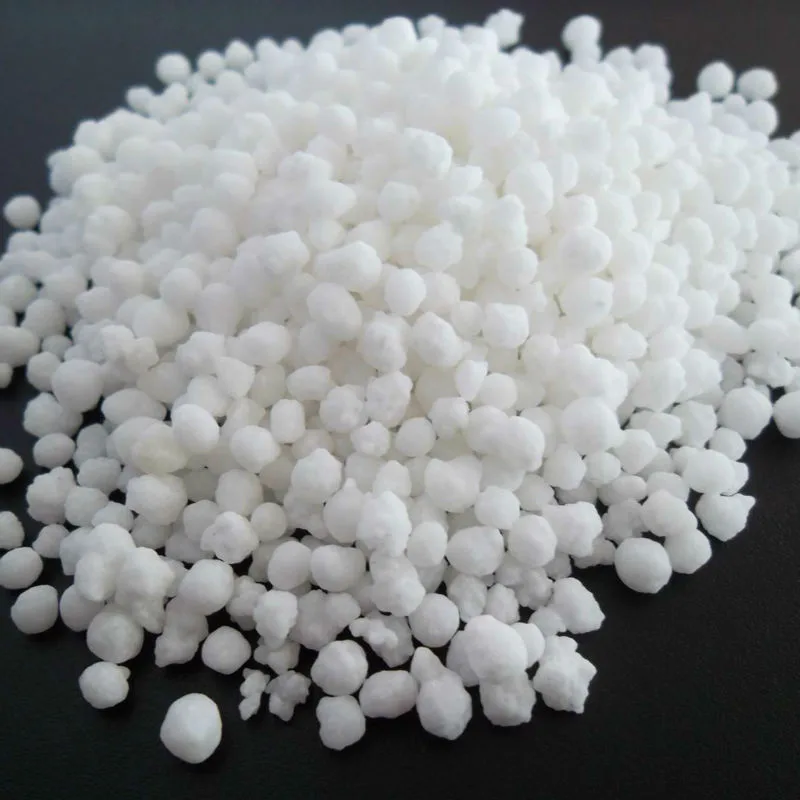
Ammonium nitrate (NH4NO3) is a highly effective, versatile nitrogen fertilizer. It contains 34.6% nitrogen, with half present in the readily available nitrate form and the other half in the sustained-release ammonium form. This combination ensures an immediate start for the crop and subsequent stable nutrition.
- Nitrogen content — at least 34.6%
- Ratio of ammonium to nitrate nitrogen — 1:1
- Maximum granule humidity — 0.3%
- Granule diameter — 1–3 mm
- Bulk density — 0.85 t/m³
Physicochemical properties and storage requirements of the fertilizer
In production, ammonium nitrate is obtained by neutralizing 45–58% nitric acid with gaseous ammonia, releasing 145.8 kJ of heat. The resulting solution is evaporated to a concentration of 99.6–99.8% and sprayed at a temperature of 174–176 °C in a granulation tower, where the droplets cool to form durable granules. The solubility of the fertilizer in water is extremely high: at 20 °C, 192 g of ammonium nitrate dissolves in 100 cm³ of water, and at 100 °C, as much as 871 g.
The main drawback of ammonium nitrate is its high hygroscopicity. In the open air, the granules quickly become damp, and upon drying, they cake into dense blocks. To restore the fertilizer to a granular state before application, it must be crushed and sieved through 2–3 mm meshes. To prevent caking, manufacturers add magnesium nitrate or ammonium sulfate, or coat the granules with limestone dust and phosphate rock flour (the content of insoluble impurities in this process does not exceed 0.1%).
Ammonium nitrate is flammable and explosive under detonation. When heated to 200–270 °C, the nitrate decomposes, releasing oxygen that supports combustion. Store the fertilizer only in moisture-proof bags in dry warehouses with a capacity of up to 500 tons, isolated from combustible materials. Do not stack bags in high piles, otherwise, the weight of the upper rows will quickly compress the nitrate at the bottom.
Behavior of ammonium nitrate in soil and impact on acidity
Upon reaching moist soil, the nitrate dissolves instantly. Plants absorb the NH4+ cation more actively than the NO3- anion, which is why the fertilizer is physiologically acidic, although it acidifies the soil less than ammonium sulfate. In acidic podzolic soils with calcium deficiency, an exchange reaction occurs: [SEC]H + NH4NO3 ⇄ [SEC]NH4 + HNO3. The released nitric acid temporarily increases the acidity of the soil solution, but this effect disappears as the nitrates are assimilated by the roots.
When the nitrate is applied unevenly, local hotspots of high acidity form in the soil, which suppress germinating seeds and hinder the early development of seedlings. On low-buffer sod-podzolic soils, regular fertilizer application causes persistent acidification, reducing its efficiency. In this case, soil liming or neutralization of the nitrate with lime or dolomite in a 1:1 ratio is necessary. In chernozems and sierozems, no acidification occurs even with systematic application of high doses.
Ammonium nitrogen in the soil is gradually converted into nitrate by bacteria (nitrification): 2NH4NO3 + 4O2 = 4HNO3 + 2H2O. This process also produces a temporary acidic effect. During this time, part of the nitrogen is lost as gases due to denitrification. Biological denitrification proceeds through sequential stages: nitrate (HNO3) → nitrite (HNO2) → hyponitrite (H2N2O2) → nitrous oxide (N2O) → molecular nitrogen (N2). Bacteria break down nitrogen compounds according to the following equations:
- C6H12O6 + 6NO2 = 6CO2 + 6H2O + 3N2
- C6H12O6 + 6HNO3 = 6CO2 + 9H2O + 3N2O
- C6H12O6 + 8HNO3 = 6CO2 + 10H2O + 8NO
Nitrogen losses in the form of oxide (NO) and dioxide (NO2) also occur through chemical pathways under high acidity of the medium (pH ≤ 5.5). In such conditions, unstable nitrous acid decomposes according to the formula: 3HNO2 = 2NO + HNO3 + H2O. Additionally, reactions occur with decomposition intermediates and organic matter:
- 3NH2OH (hydroxylamine) + HNO2 = 5H2O + 2N2
- CH2NH2COOH (glycine) + HNO2 = CH2OHCOOH (hydroxyacetic acid) + H2O + N2
When applying ammonium nitrate, nitrogen losses are inevitable: 15 to 30% of the active ingredient escapes into the air as gaseous products (via the reaction 2NO + O2 = 2NO2). In the first year of the growing season, crop plants assimilate about 40–50% of the nitrogen from the fertilizer. The remaining portion is partially bound by soil microorganisms: 10–20% of nitrate nitrogen and 20–40% of ammonium nitrogen are converted into organic form (immobilized). In the second year after application, plants receive no more than 10–15% of this volume, which accounts for only 2–3% of the initially applied dose.
The immobilization process is particularly intense if you plough cereal straw and other plant residues with high carbon content and nitrogen deficiency into the soil. However, the applied nitrogen activates the soil microflora, which mobilizes the soil's own nitrogen reserves and converts them into a form available to plants. This phenomenon allows for a significant increase in the overall utilization rate of nitrogen nutrition in the field.
Ammonium nitrate remains one of the most effective nitrogen fertilizers, suitable for all types of soil and crops. It is applied at all main timings: for winter crops in autumn, in spring before sowing, directly at sowing in rows, and as top dressing during the growing season. Split application helps to regulate the nitrogen plant nutrition at key stages of development.
- Nitrogen uptake in the first year — 40–50 %
- Gaseous nitrogen losses — 15–30 %
- Immobilization of nitrate nitrogen — 10–20 %
- Immobilization of ammonium nitrogen — 20–40 %
- Nitrogen release in the second year — 2–3 %
Half of the nitrogen in ammonium nitrate is in the nitrate form, which is easily leached through the soil profile. On light, well-drained soils under conditions of heavy rain or artificial irrigation, apply the fertilizer strictly during the phases of highest nitrogen consumption by plants to prevent it from leaching below the root zone.
Properties of Calcium Ammonium Nitrate and Ammonium Sulfate Nitrate
Calcium ammonium nitrate (NH4NO3 · CaCO3) is produced by melting or mixing ammonium nitrate with chalk, lime, or dolomite. The resulting fertilizer is physiologically neutral, practically does not cake, and has reduced hygroscopicity, which allows it to be stored in stacks without strict requirements for humidity. It is a valuable soil amendment and a source of nutrition for acidic soils, where plants suffer from calcium deficiency. However, on neutral or alkaline soils, calcium ammonium nitrate has no advantages over the standard form.
Ammonium sulfate nitrate [2NH4NO3 · (NH4)2SO4] is a double salt of ammonium nitrate and ammonium sulfate, grayish in color. Depending on the production technology at plants, this fertilizer is called Leunasalpeter or Montansalpeter. In terms of nitrogen content, ease of transport, and acidifying effect, this double salt occupies an intermediate position between conventional ammonium nitrate and ammonium sulfate. In terms of efficiency in the field, all three fertilizers are approximately equivalent.
Ammonium sulfate nitrate is obtained by the following methods:
- by mixing dry ammonium sulfate and ammonium nitrate;
- by introducing dry ammonium sulfate into a concentrated solution of ammonium nitrate;
- by simultaneous production of the double salt in a single solution.
Montansalpeter is prepared directly from a saturated solution of ammonium sulfate and ammonium nitrate.
| Fertilizer | Nitrogen content (N), % | Content of accompanying components, % |
|---|---|---|
| Calcium ammonium nitrate (grade A) | 26 | 17 (calcium carbonate) |
| Calcium ammonium nitrate (grade B) | 22 | 27 (calcium carbonate) |
| Ammonium sulfate nitrate (Leunasalpeter) | 25–27 (18–19 in ammonium form, 7–8 in nitrate form) | — |
| Montansalpeter | 25–27 | About 65 (ammonium sulfate), 35 (ammonium nitrate) |
On acidic sod-podzolic soils, ammonium sulfate nitrate causes further acidification of the medium. When working with it on such plots, be sure to neutralize the fertilizer and perform liming of the soil according to the same rules as for ammonium sulfate.
Read next
Agrochemistry For students
Classification of nitrogen fertilizers and specific features of their application to the soil
Agrochemistry For students
Characteristics and application features of amide nitrogen fertilizers based on urea
Agrochemistry For students