
Diagnostic methods for the mineral fertilizer requirements of grapes
28 min read
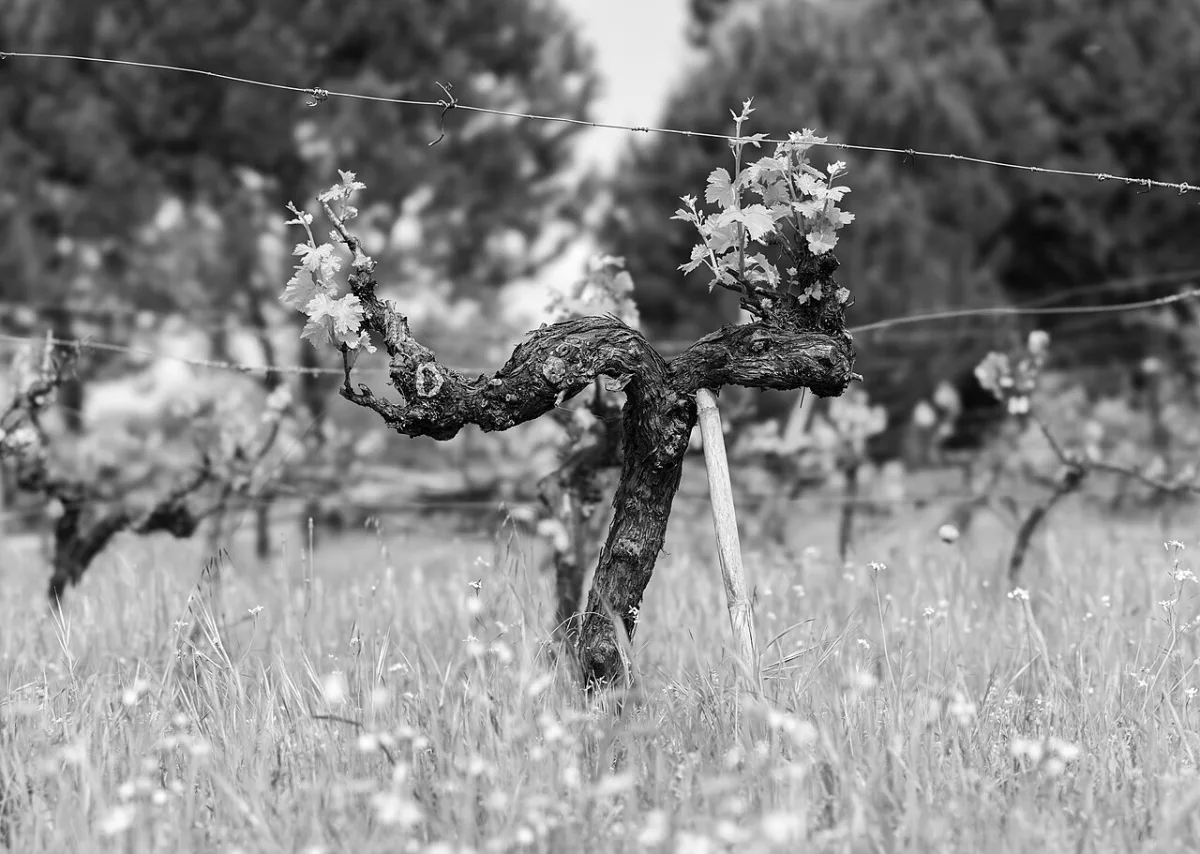
The level of plant nutrition and fertilizer requirements are determined by various methods.
By external morphological and biological signs: changes in the color of leaves, shoots, their shape, rates of growth and maturation of shoots, and harvest ripening (visual method) — the availability of individual nutrients to plants is assessed. This method serves as a guideline for evaluating the nutrition level. The drawback of this method is that external signs appear only upon a severe disruption of metabolism, which is often difficult to correct at that stage.
The injection method can be used for monitoring and diagnosing nutrient deficiencies. In this process, solutions of specific substances are injected into the leaf petiole or shoot, and based on the plant's reaction on the 7th day, the deficiency of nutrients is determined.
The microbiological method using indicator microorganisms is used to determine soil nutrient availability. Despite its simplicity, this method is rarely used in viticulture, as it is not yet sufficiently developed.
The vegetation method for assessing the level of plant nutrition is also rarely applied because there are certain operational difficulties, and the results of experiments cannot always be extrapolated to the great variety of soil and other conditions. In this method, plants are grown in containers filled with soil or its substitutes, with fertilizers added in strictly regulated doses and specific forms. Then, the nutrition level is determined based on growth and fruiting. This method is most often used in scientific research.
Based on the chemical composition of soils, the presence of mobile and assimilable forms in them, the nutrition level of grape plants is assessed in the USSR, the FRG, and Switzerland. This method has been improved and named the bio-ecological method. In this case, fertilizers are applied taking into account indicators of soil nutrient availability, shoot growth indices, harvest yield, and soil moisture. However, these indices and criteria for soil nutrient and moisture availability are not sufficiently studied for vineyards in different zones. One should also consider the statement by D. N. Pryanishnikov that the presence of nutrients in the soil does not yet allow for an accurate assessment of their content in plants due to varying absorption capacities under different conditions.
Grouping of soils by nitrogen, mobile phosphorus, and exchangeable [potassium] availability
H u m u s
. % O r a n g e S o i l a v a i l a b i l i t y < 1 v e r y l o w 1 l o w 1 — 2 m e d i u m 2 — 3 h i g h 3 — 4 v e r y h i g h > 4
Based on the removal of nutrients with the harvest and the mass of vegetative organs of grapes, the fertilizer requirement is established in the USSR, Austria, Switzerland, the FRG, and others. This method is called the calculation method. The biological removal of nutrients depends on numerous factors: cultivar, mass of vegetative organs, yield, soil type, and environment. In various viticulture zones, it varies from year to year. In our country, recommendations have been developed and approved for the application of fertilizers using the calculation method based on nutrient removal with the harvest, taking into account soil nutrient availability, yield magnitude, and its quality. They are based on the same indices mentioned above, which need to be refined for specific regions.
In the USSR and some other countries, despite the labor-intensity and high costs, the field method has gained the widest acceptance, according to which, after fertilizer application, the optimal nutrition levels are judged by the plant's reaction (shoot growth, harvest yield, and its quality). Long-term experiments on testing doses, timing, frequency, ratios, and forms of fertilizers have been established in research institutes, scientific-production associations, and universities. Based on these, recommendations for production have been developed.
In each farm, using these recommendations, a fertilizer system is compiled taking into account the following factors:
- soil properties;
- its nutritional regime;
- mechanical composition;
- moisture conditions;
- cultivar and age of plantings;
- intended use of the produce.
On irrigated vineyards, fertilizer doses are higher than on non-irrigated ones.
Fertilizer doses calculated depending on the yield magnitude, quality, and soil nutrient availability, kg per 1 t of planned yield:
| Harvest and its quality | N | P | K |
| High yield, high quality | — | — | — |
| High yield, medium quality | — | — | — |
| High yield, low quality | — | — | — |
| Medium yield, high quality | — | — | — |
| Medium yield, medium quality | — | — | — |
| Medium yield, low quality | — | — | — |
| Low yield, high quality | — | — | — |
| Low yield, medium quality | — | — | — |
| Low yield, low quality | — | — | — |
Potassium, zinc, mg per 100 g of soil: K (P 2 O 5) according to the method (K 2 O) according to the method M O a ch n ig i a na n i < < 1. 1 5 5, —, —, — — 1, > 6– 7 3 0 3, 4, 4, 6, >
Fertilizer rates in fruit-bearing vineyards, kg/ha (Republican):
| Republics / ha | P 0 S — F 3 S 0 R U 2 S 0 S — R 4 M 4 |
| Moldavian SSR | 0 — 6 0 |
| Georgian SSR | A 1 0 — 2 0 |
| Armenian SSR | A 0 0 — 4 0 |
| Azerbaijani SSR | K — Kyrgyz SSR |
| Turkmen SSR | T — Tajik SSR |
| Uzbek SSR | K — Kazakh SSR |
Plant diagnostics to evaluate the nutrient level of grape plants is used in the USSR, France, certain US states, Algeria, and other countries. In this process, the chemical composition of leaf blades, petioles, and other grapevine organs is used to judge the intensity of nutrition (i.e., the relative accumulation of individual elements) or its balance (the ratio of elements). It has been revealed that a correlation exists between the level of soil fertility and the content of nutrients in plants. Furthermore, all factors (meteorological conditions, cultivar, growth, yield, fertilizers) are interrelated and influence the chemical composition of leaves.
Indicators of the optimal quantity of NPK in leaves, according to various authors, vary significantly, which indicates a deficiency or excess of nutrients in different regions. The plant diagnostics method allows for determining the selective capacity of roots and the accumulation of nutrients in leaves under different conditions. When interpreting data, the intensity of growth and productivity of grape plants are taken into account. It is important that the chemical composition of leaves can be determined at different phases of the growing season.
The best methods are those that more fully reflect the fertilizer—soil—plant relationship. These relationships are reflected in the chemical composition of leaves. In comprehensive studies of substance content in soil and leaves, taking into account plant yield and shoot growth, the need for specific nutrients is established more accurately, which allows for the rational use of fertilizers.
Fertilizer forms. Both organic (manure, liquid manure, peat, composts, poultry manure, feces, waste from various industries) and mineral fertilizers are used in vineyards. The latter can be simple or complex. Simple fertilizers include nitrogenous (nitrate, ammonium, amide), phosphorus (superphosphate, Thomas slag, phosphorite meal), and potash (potash salt, sylvinite, kainite). Complex or compound fertilizers, which contain several elements, include nitrophoska, ammophos, diammonphos, ammonium polyphosphate, carboammophos, and liquid complex fertilizers (LCF) based on polyphosphates. Ash can be classified as a complex fertilizer, as it contains nitrogen, phosphorus, potassium, and calcium. On light soils, especially for top dressing plants in a nursery, mixed organomineral fertilizers are used.
Indicators of the optimal content of total NPK in grapevine leaves, % Continued
N u t r i t i o n b a l a n c e Re g i o n Fr a n c e Cz e c h o s l o v a k i a S 1 S 2 S R A 4 r, m A r m e n i a n S S R G e o r g i a n S S R Uk r a i n i a n S S R > 6 » M o l d a v i a n S S R « 4
, R S F S R R o s t o v r e g i o n Ch e c h e n - I n g u s h A S S R
N u t r i t i o n i n t e n s i t y Re g i o n Fr a n c e ± 0
, Cz e c h o s l o v a k i a S S R A r m e n i a n S S R d = 0, 0 5 G e o r g i a n S S R ± 0, 9 7 Uk r a i n i a n S S R ± 0, 8 2 > 3 », ±, M o l d a v i a n S S R « 2 >,
, R S F S R R o s t o v r e g i o n Ch e c h e n - I n g u s h A S S R
Content of total nitrogen, phosphorus, and potassium in grapevine leaves from bud burst to the end of the growing season, % (according to Bondarenko, 1984)
Along with macro-fertilizers (nitrogen, phosphorus, potassium, calcium, etc.), micro-fertilizers are used in the form of solutions or salts of zinc, molybdenum, sulfur, boron, etc. Industrial waste in the form of frits, polymicro-fertilizers, etc., is also used.
In some cases, to stimulate the activity of microorganisms, bacterial fertilizers are applied, most often phosphorobacterin and, less frequently, azotobacterin. Excessively acidic soils undergo liming.
In regions with sufficient moisture and mild winters, green manures (green fertilizers) are used by ploughing in the green mass of annual or biennial crops, mainly legume herbs and their mixtures with cereals.
Application of fertilizers. In the technological complex of grape cultivation, fertilizers are applied in the following areas:
- in mother plantations of regionalized cultivars and rootstock cultivars;
- when growing nursery plants in nurseries;
- in production grape plantings — before deep ploughing, during planting, in young plantings, and in fruiting vineyards.
Fertilizers are applied at full rate annually or once every 2–5 years (complete, or basic fertilizer) and 2–4 times a year by soil application (root top dressing) or by spraying the aerial part of the vine (foliar top dressing). This allows for regulating the nutrient level at all stages of ontogenesis and within the short annual cycle of grapevine development, which facilitates the establishment of plantings that enter fruiting early and are characterized by high productivity, vigorous vines, longevity, and resistance to unfavorable environmental conditions.
З Д о не н й а от ра о сп п ус т ка и н м ия а гл л аз ь ко н в о г о п и т а н и я 10 5
An effective fertilization system for grapes is always built according to the specific conditions of the farm. When planning nutrition, the regional climate, soil type, biological characteristics of the cultivar, and the ultimate intended use of the harvest are taken into account. Based on these parameters, a prospective nutrient scheme is drawn up for each plot.
Nutrition of mother plantations and nurseries: how to grow high-quality planting material
In mother plantations of scion and rootstock cultivars, the agronomist's main task is to obtain the maximum quantity of high-quality, well-matured vines with a high reserve of nutrients. The fertilization system here differs from the nutrition of fruiting vines. Phosphorus, potassium, and zinc fertilizers actively stimulate root formation and improve graft union, so their dosages are increased. For example, in the conditions of Ukraine and Moldova, 10–20 t/ha of manure is applied to rootstock cultivar mother plantations together with nitrogen (60–120 kg/ha), phosphorus (60 kg/ha), and potassium (60 kg/ha). This allows for an increase in the yield of standard cuttings by 15–35%.
- Increase in cutting yield in mother plantations — 15–35%
- Organic fertilizers in the nursery — 20–60 t/ha
- Nitrogen fertilizers (active ingredient) in the nursery — 140 kg/ha
- Phosphorus fertilizers (active ingredient) in the nursery — 130 kg/ha
- Potassium fertilizers (active ingredient) in the nursery — 100 kg/ha
In the nursery-school, to grow strong nursery plants with developed roots, fertile soils are used and crop rotation is strictly observed. Before deep ploughing, organic matter and mineral fertilizers are applied, with doses adjusted based on soil analysis results. Additionally, during the growing season, top dressing is performed in combination with irrigation. In the first half of the season, liquid manure (1:10) or poultry manure (1:3–5) with nitrogen is used, and in the second half — phosphorus and potassium at 10–30 kg/ha of active ingredient. Also, during the summer, 2–3 foliar treatments with a mixture of macro- and micro-elements are carried out.
Site preparation before planting and care for young vines
The main soil dressing is performed before deep ploughing to a depth of up to 70 cm, where the bulk of the grapevine roots will develop. Deep fertilizer application improves soil structure, its water-air regime, and provides the vines with nutrients for a period of 2 to 10 years. Application rates depend on the soil type and its humus content.
- Distribute organic and mineral fertilizers evenly over the soil surface using specialized machinery.
- Incorporate the fertilizers with a plough with a jointer during deep ploughing, moving them into the lower soil horizons.
If the farm lacks organic fertilizers, sow green manure crops before deep ploughing: peas, vetch, rapeseed, or field peas (on sandy soils — lupine). Ploughing in 40–60 t/ha of green mass compensates for the organic matter deficit, but the application rates of mineral fertilizers must be increased accordingly.
Fertilization at planting stimulates the survival rate of nursery plants and provides them with nutrients at the start. When planting in holes, 2–5 kg of manure or humus, 10–20 g of ammonium nitrate, 20 g of superphosphate, and 10–25 g of potash salt are applied per bush. If planting is carried out using a hydro-drill, a nutrient solution of nitrogen, phosphorus, and potassium fertilizers is prepared. For 100 l of water, 80 g of the active ingredient of each element is used (or 15–20 kg of ammonium nitrate, 15 kg of phosphorus fertilizers, and 10–15 kg of potash fertilizers) and applied during hole punching at a rate of 7 m3/ha, which is 2 l per nursery plant.
Avoid direct contact of the nursery plant roots with the concentrated fertilizer solution. High salt concentration in the root zone inhibits the plant and worsens the survival rate.
In young vineyards, fertilizers are necessary for rapid growth and bush formation. Every 2–3 years, 15–70 t/ha of organic matter is applied in the row spacings. Also, the bushes are top-dressed 2–3 times per growing season with nitrogen (strictly during the spring-summer period before irrigation or simultaneously with it), phosphorus, and potassium (throughout the entire growing season) at a dose of 20–80 kg/ha of active ingredient.
| Organic (100 t/ha and more) | Phosphorus (P 2 O) | Phosphorus (dose 12 2 0) | Phosphorus (dose 13 2 0) | Phosphorus (dose 14 2 0) | Potassium (dose 15 1 0) | Potassium (dose 16 1 0) | Potassium (dose 17 1 0) | Potassium (dose 18 1 0) |
|---|---|---|---|---|---|---|---|---|
| 10 2 0 | P 2 O | 12 2 0 | 13 2 0 | 14 2 0 | 15 1 0 | 16 1 0 | 17 1 0 | 18 1 0 |
High yields of quality grapes are impossible without a systematic approach to bush nutrition. An agronomist needs a long-term fertilization plan for each plot. It clearly specifies the frequency of treatments, the number of top dressings, as well as the forms, doses, timing, and methods of nutrient application.
- Organic fertilizer dose — 20–60 t/ha
- Phosphorus and potassium placement depth — 25–60 cm
- Nitrogen application depth — up to 25 cm
- Organic matter application frequency — once every 2–5 years
Application depth and soil preparation
Phosphorus and potassium fertilizers are not very mobile and are firmly held by soil colloids. To deliver them directly to the absorbing roots, granules must be placed at a depth of 25–60 cm. To protect the root system from frequent mechanical damage, deep application of phosphorus and potassium is carried out once every 2–5 years, combining it with trench renovation, chiseling, cultivation, or autumn ploughing.
Broadcasting fertilizers for shallow cultivation is ineffective. With this method, the active ingredients remain in the top layer of the soil (up to 20 cm), where there are practically no grapevine roots. As a result, the nutrients are consumed by weeds and bound by the soil.
Nitrogen behaves differently: it is easily leached into the deeper layers of the soil. During the growing season, the vineyard absorbs up to 30% of the applied nitrogen, so nitrogen fertilizers are applied annually to a depth of up to 25 cm. In arid irrigated regions, nitrogen top dressings are divided into 2–3 applications during the season.
Organic fertilizers are applied at doses ranging from 20 to 60 t/ha. The frequency of their application directly depends on the rate of decomposition of organic matter in different soil types.
| Soil type | Organic mineralization period |
|---|---|
| Sandy, light, and dry | 1–3 years |
| Heavy, clayey, and moist | 4–5 years |
When drawing up a nutrition system, it is important to provide not only for the main application but also for root and foliar top dressings. They are linked to critical phases of plant development, strictly controlling the ratio of elements.
Regional schemes and nutrition cycles
Fertilization schemes are adapted to the specific soil and climatic conditions of the region. For example, a two-year nutrition cycle for vineyards is adopted in Moldova. In this case, organic fertilizers on light soils and terraces are applied once every 2–3 years, and on heavy clay and loamy soils — once every 4–5 years.
The work schedule for this cycle is as follows:
- In the first year, vegetation top dressings are carried out, and organic matter is applied in the autumn.
- In the second year, they are limited only to top dressings.
- In the spring of the third year, the main mineral fertilizer is applied.
On Moldovan chernozems, once every 2–3 years, the vineyard is additionally provided with microelements:
| Micro-fertilizer | Application dose |
|---|---|
| Boron fertilizers | 2–3 kg/ha |
| Zinc fertilizers | 2 kg/ha |
| Molybdenum fertilizers | 2–3 kg/ha |
| Manganese fertilizers | 2 kg/ha |
In other viticultural zones, their own nutrition schemes are applied:
- In the Don conditions: a three-year cycle is recommended. Organic matter is applied once every 3–6 years depending on soil characteristics and farm capabilities.
- On sandy soils of temperate latitudes: a two-year cycle is in effect. Every two years, up to 30 t/ha of manure or peat, superphosphate, and potash salt (120 kg/ha each) are applied. Nitrogen is given annually at 400 kg/ha.
- In the southern regions of the Russian Federation (Stavropol, Kuban): the main complex of organic and mineral fertilizers is applied once every 4–6 years. Root and foliar top dressings are carried out annually during the flowering and berry ripening phases.
- According to the recommendations of the specialized research institute: a three-year nutrition cycle is used on standard soils, and a summer cycle is adopted for sandy soils.
- In the conditions of Uzbekistan: organic matter is applied once every 3–4 years. Phosphorus and potassium fertilizers are placed annually in the autumn between rows, and the main dose of nitrogen is given in the spring. Top dressings are carried out 10–20 days before flowering and 20 days after it.
Timing and methods of application for basal fertilizers
The efficiency of basal fertilizer directly depends on its application depth and the type of soil in the vineyard. The root system of the bushes must develop in deep layers where the humidity regime is more stable. It is important to set the application depth differentially, focusing on the planting depth, rootstock characteristics, soil moisture, and cultivation technology.
Surface or shallow application of fertilizers stimulates root growth in the top layer of the soil. This critically reduces the drought resistance and winter hardiness of the vineyard during the winter period.
The choice of season for fertilizer application is dictated by soil and climatic conditions. According to field trial data, on clay and loamy soils, organic and phosphorus-potassium fertilizers show maximum efficiency with autumn application. On brown forest, podzolic, sandy soils, and sierozems, spring application is optimal, as winter precipitation leaches away nutrients. The absorptive capacity of soils decreases in the following order: sierozems, chernozems, podzols, and gravelly sandy soils.
For the application of dry organic and mineral mixtures in vineyards, UOM-50 and PUKH-2 units are used. Granulated and liquid compositions are distributed by the band method using the MPV-1 attachment and the PRZh-2 top dresser. To avoid injuring the root system of mature bushes, the spot method is used, in which liquid or dry mixtures are supplied with a hydraulic drill or injector into 5–6 holes 60–80 cm deep around the bush.
- Application depth by UOM-50 unit — up to 50 cm
- Productivity of UOM-50 — 0.7–1.6 ha/h
- Application depth by PUKH-2 machine — 10–50 cm
- Productivity of PRZh-2 top dresser — 0.98 ha/h
Regulations and dosages for root top dressing
Root top dressing during the growing season supplements the basal fertilizer applied during the vine's dormancy period. They are planned in advance, but in case of drought, hail, frost, or signs of nutrient deficiency, unscheduled treatments are carried out. Application timing is linked to the development phases of the grape to specifically stimulate physiological processes.
In viticulture practice, top dressing is most often carried out twice a season: 10–20 days before flowering begins and immediately after it. When planning work, one should focus on the following plant development phases:
- At the beginning of shoot growth in spring — to activate the growing season and the formation of inflorescences.
- 10–20 days before flowering — to stimulate flower development, improve fruit set, and reduce shedding.
- On the 10th day after flowering (berry growth phase) — to enhance the growth of shoots, clusters, and the initiation of embryonic inflorescences in the buds.
- In the harvest ripening phase — to increase berry mass, accelerate ripening, and improve fruit quality.
- After harvesting — for the accumulation of nutrient reserves in perennial wood and shoots, which increases their winter hardiness.
For root top dressing, liquid manure (10 t/ha), poultry manure or excrement solutions (300–500 kg/ha), and ash (300 kg/ha) are used. Mineral nitrogen is applied strictly during the spring-summer period.
When calculating mineral nutrition, standard dosages of active ingredients per hectare of planting are used. The exact consumption rates of the main elements and micronutrients are given in the table below. These values are adjusted taking into account the current state of the vine.
| Fertilizer / Active ingredient | Dose per 1 ha |
|---|---|
| Nitrogen | 10–40 kg |
| Phosphorus | 15 kg |
| Potassium | 15–30 kg |
| Boron | 1 kg |
| Manganese | 3 kg |
| Zinc | 1 kg |
| Molybdenum | 0.25–0.5 kg |
For even distribution of liquid fertilizers along the inter-row spaces, units with 2–5 supply pipes are used. In dry or dissolved form, the top dressing is incorporated to a depth of 15–25 cm using the PRVM-14000 attachment to the PRVM-3 plough. Also, fertilizers are applied in spots with a hydraulic drill to a depth of 20–30 cm in 3–5 spots near the bush.
Root and foliar top dressing: application rules
The grape root system absorbs nutrients most efficiently if they are applied in liquid form or immediately before irrigation. In irrigated areas, dry fertilizers are incorporated into irrigation furrows at the time they are cut. In drought conditions, as well as on light sandy soils, switch to fractional nutrient application.
The efficiency of root top dressing directly depends on the preservation of the root system. Perform each subsequent fertilizer application at a shallower depth so as not to damage the newly grown absorbing roots.
Foliar top dressing is helpful during critical phases of bush development and in unfavorable seasons. When spring is cold and summer is dry, roots sharply reduce their activity. Under such conditions, spraying leaves with macro- and micronutrient solutions becomes the only way to quickly support the plants. Sprayings are planned for specific tasks of the growing season:
- before flowering or immediately after it — to improve berry fruit set;
- at the beginning of harvest ripening — for rapid mass gain and improvement of berry quality;
- when preparing bushes for winter — for vine maturation, increasing winter hardiness, and eliminating symptoms of element deficiency.
Perform treatment strictly during morning or evening hours. Under the sun, drops dry out quickly without being absorbed, and leaf burns may occur. To improve the retention of the solution on the leaf blade, be sure to add surfactants (e.g., OP-7) to the tank mixture.
The main advantage of foliar application is the direct delivery of nutrition to the tissues. You can combine foliar top dressing with scheduled treatments against diseases and pests. Ground sprayers or aircraft are used for the operation.
- Working solution consumption during spraying — 400–1000 l/ha
- Period of phosphorus action via leaves — 4 weeks
- Absorption of 25% of applied phosphorus — on the 2nd–5th day
- Increase in grape yield — by 8–35%
- Increase in berry juice sugar content — by 0.3–2.2%
- Green mass yield of green manures — 20–60 t/ha
When preparing planting material in a nursery, foliar treatments also yield results. Spraying with a 0.01% boron solution during stratification and cutting cultivation significantly improves the quality of graft union.
| Fertilizer / Microelement | Working solution concentration, % |
|---|---|
| Ammonium nitrate and ammonium sulfate | 0.1–0.3 |
| Urea (carbamide) | 0.2–0.8 |
| Superphosphate | 5 |
| Potassium chloride or sulfate | 0.3–1 |
| Manganese | 0.05–0.1 |
| Zinc | 0.03–0.1 |
| Magnesium | 0.01–0.06 |
| Boron (for foliar top dressing) | 0.03–0.05 |
| Boron (for cutting treatment in nursery) | 0.01 |
Green manure in the vineyard: choice of crops and nutrient balance
Green manures (green fertilizers) are a reliable way to restore soil fertility, improve its structure and thermal regime. In vineyards, green manure crops also act as living mulch and protect slopes from water and wind erosion. Depending on the climate and goals, sowing is carried out in the spring-summer, summer-autumn, or autumn-winter periods.
- Before sowing green manures, apply mineral fertilizers at a rate of 80–100 kg/ha of active ingredient. This will increase the green mass yield by 1.5–2 times.
- Sow green manure crops adapted to your region. In case of severe drought, be sure to provide irrigation for seedlings.
- After mowing, determine the purpose of the biomass: it can be shredded and ploughed into the soil, left on the surface as mulch, or used as feed for livestock.
The choice of crops depends on the soil and climatic conditions of the farm. With high-quality agricultural practices, green manures can produce up to 60 tons of green mass per hectare. The following plants and their mixtures are used in vineyards:
- Legumes (nitrogen fixers): yellow and blue lupine, field pea, vetch, grass pea, chickpea, fava bean, clover, serradella, sweet clover.
- Grasses (for soil structuring): oats, rye, barley, vetch-oat and vetch-rye mixtures, alfalfa with crested wheatgrass.
- Crucifers and brassicas: oilseed radish, spring rapeseed, mustard.
Tall green manures, especially lupine, shade young low-trunk bushes and actively compete with grapes for moisture and nutrients. In addition, they create a humid microclimate in the near-ground zone, which provokes downy mildew outbreaks.
On sandy and light soils, green manures reduce evaporation, increase cohesion, and activate beneficial microflora, while on heavy soils, they contribute to deep loosening. Ploughing in green mass enriches the soil with humus, increases the concentration of water-soluble compounds, and improves the overall nutrition of the grapes. In properly fertilized areas, roots penetrate to a greater depth, and their total mass and absorption capacity increase.
However, remember the law of the minimum: it is important to maintain a strict balance of all nutrients, rather than simply increasing the doses of individual fertilizers. A deficiency of even one element will limit the effectiveness of the entire nutrition system, reduce photosynthesis, and slow down the development of the bush.
A competent vineyard fertilization system directly affects the physiological activity of the bushes and the quality of the future harvest. The application of nutrients activates oxidation-reduction enzymes (oxidoreductase, peroxidase) and increases the content of ascorbic acid. The amount of chlorophyll and starch increases in the leaves, improving the productivity of photosynthesis and carbohydrate metabolism. Plants tolerate drought better: the volume of bound water increases in the tissues, and the intensity of transpiration decreases.
Physiological changes are reflected in the productivity of plantations. The mass of vegetative parts and the leaf surface area increase, as do the fruit-bearing coefficients and the average bunch weight. Furthermore, the zone of inflorescence initiation in the buds expands along the entire length of the shoots.
| Efficiency indicator of fertilizer application | Value |
|---|---|
| Increase in grape yield | 10–50% |
When planning top dressing, consider cultivar characteristics. Grapes of different cultivars and rootstocks absorb nutrients selectively, which directly affects the final condition of the berries.
How individual nutrients affect grape quality
Nitrogen in optimal doses stimulates the growth of bushes and increases the mass of berries and bunches without sacrificing harvest quality. However, an excess of this element is detrimental to berry conditions.
One-sided excessive feeding of grapes with organic and mineral nitrogen fertilizers stimulates shoot growth too vigorously. An excess of protein fractions accumulates in the berries, acidity decreases, and the content of aromatic phenolic substances in the juice drops, which impairs the quality of fresh grapes and their processed products.
Other nutrients allow for balancing the vine development and correcting berry quality:
- Phosphorus accelerates harvest ripening and stimulates the accumulation of sugars and phosphorus compounds in berries.
- Potassium increases the resistance of berries to rot and accelerates their ripening. At the same time, the sugar content, juice extractability, and the amount of phenolic substances increase. The application of potassium fertilizer at double the rate helps to neutralize excess juice acidity in berries.
- Calcium accelerates the rates of ripening and sugar accumulation, and also enhances the aroma and color intensity of berries (especially in white cultivars).
- Trace elements accelerate enzymatic processes and harvest ripening, improve flavor quality, and contribute to the accumulation of sugars, coloring, and aromatic substances.
Read next
Viticulture For agronomists
Biological principles and rejuvenation methods for aging grapevines
Viticulture For agronomists
Grapevine pruning for canopy formation and plantation rejuvenation
Agrochemistry For students