
Basics of pruning and canopy formation of fruit trees
5 min read
Pruning of fruit">Pruning fruit trees is not an isolated technique, but part of a unified care system. Without high-quality tillage, timely irrigation, and balanced nutrition, pruning shears will not help. Against a background of poor agricultural practices, intensive pruning will only weaken the trees and harm the orchard. However, completely abandoning it for fear of losing the harvest is also not an option.
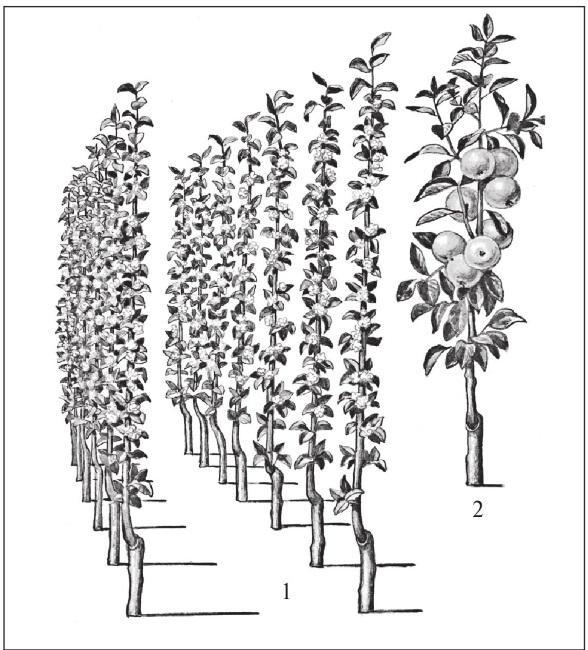
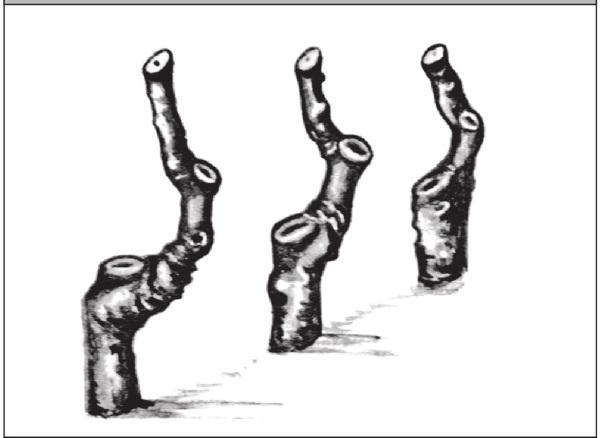
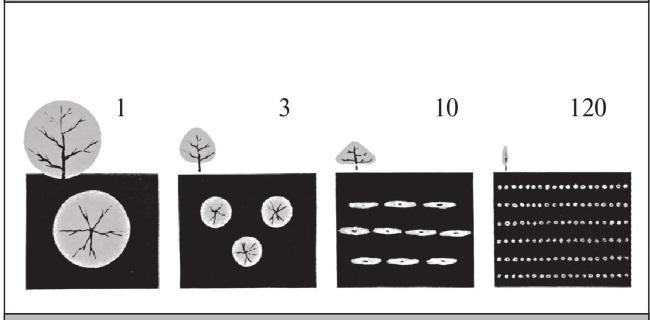
Without regular training, a tree canopy quickly deforms. In some cultivars, branches stretch out into spindly whisks, while in others, the periphery becomes densely overgrown with a completely bare center. As a result, the entire fruiting zone shifts to the edges of the canopy, and the fruits become smaller and lose their flavor. Refusing to regulate growth and fruiting leads to serious problems:
- alternating fruiting and deterioration of fruit quality;
- weakening of tree winter hardiness;
- formation of narrow crotches and breakage of branches under the weight of the harvest;
- shifting of the fruiting zone to the canopy periphery and rapid dieback of branches inside it.
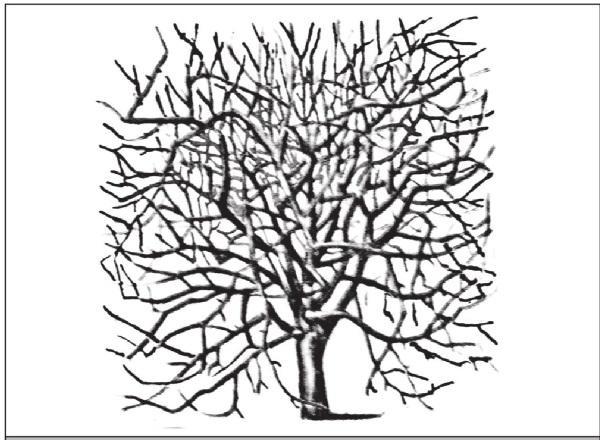
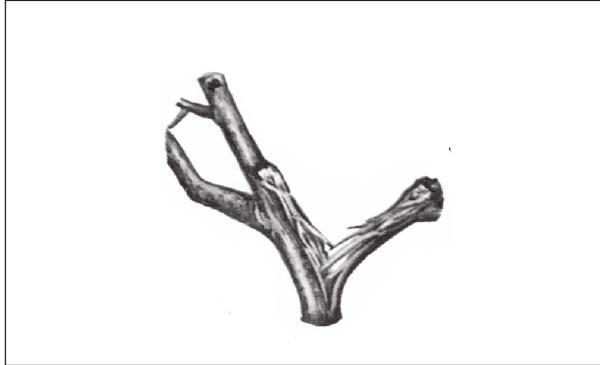
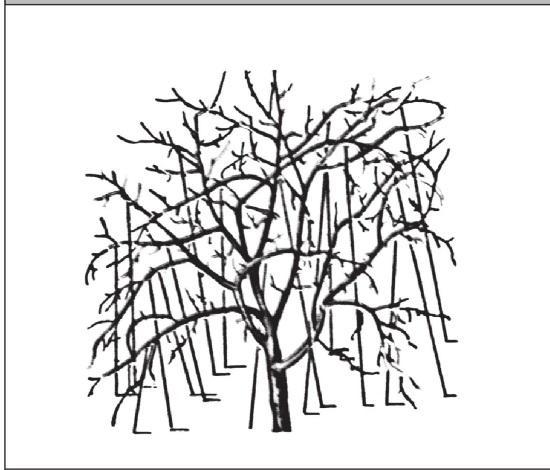
Narrow crotches are the main reason for branch breakage under the weight of fruits. An improperly formed tree will require enormous labor costs from you to install supports before the harvest ripens.
- First mentions of the technique — 3rd century BC
- Support consumption for a deformed canopy — 1 unit per 10–15 kg of harvest
- Load on a tree without supports with a correctly formed canopy — 500 kg of fruit or more
How a correct tree skeleton protects against breakage
Historical debates about the effectiveness of this technique have been going on for centuries. As early as the 3rd century BC, authors recommended removing dry and obstructive branches, and Roman treatises claimed that pruning encourages trees to fruit. At the end of the 19th century, experts were still arguing about the correct approaches to training. However, modern practice has proven: only the creation of a sturdy skeleton guarantees the longevity of the tree and allows it to withstand record harvests without the risk of breakage.
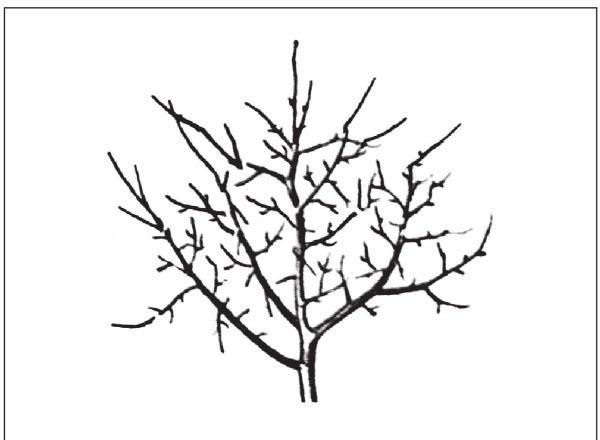
Pruning is a rigorous surgical intervention in the life of a plant. A gardener with pruning shears in hand determines the fate of each branch: to leave it as a skeletal branch, convert it for fruiting, or remove it entirely. Correcting training errors made in the first years of the orchard's life will take a very long time. Restoring balance and fixing the canopy framework will require years of painstaking work.
Avoid template recommendations for pruning strictly to two-, three-, or five-year-old wood. Such an approach is effective only under ideal conditions on trees that have been trained annually and flawlessly. In neglected or aging orchards, blindly following this rule will not yield results.
A template approach to pruning is a direct path to losing the harvest. If you transfer a scheme designed for cultivars with weak bud break to trees with a tendency toward rapid canopy thickening, you will get the opposite effect. Instead of thinning and shaping the tree, rapid and chaotic growth of vegetative mass will begin. It is important for an agronomist to start from cultivar biology and the type of rootstock rather than copying someone else's technological charts.
Forget about "by-the-book" pruning. It is harmful to use recommendations where all cut parameters are given strictly in centimeters. Each living tree in the orchard requires an individual assessment, so blindly copying rigid schemes will only harm the plantings.
Main technological goals of pruning
The gardener's tasks change as the orchard grows, but they are always subordinate to the overall crop production technology. Pruning helps manage tree development at all stages of its life. Properly executed work solves several key tasks in the orchard at once:
- Strong framework. Uniform distribution of branches in space makes the canopy resistant to strong winds and the weight of the harvest.
- Early fruiting. Proper training accelerates the formation of flower buds and helps the tree transition to fruit production faster.
- Canopy size control. Branches are kept within the strict limits of the planting scheme so that garden machinery can pass through the aisles without obstruction.
- Light exposure. Sunlight must penetrate freely into all zones of the canopy; otherwise, the fruits will not ripen uniformly.
- Physiological balance. Regular pruning maintains the balance between shoot growth and fruiting throughout all age periods.
- Commercial fruit quality. Timely load regulation allows for obtaining fruits of the required size and high quality.
No guide, even the most detailed one, can foresee all variations of branch development directly in field conditions. The agronomist's task is to understand the general laws of canopy formation and how exactly the plant reacts to a cut. This knowledge will allow for making correct decisions right on the spot, based on the condition of a specific tree.
Read next
Pruning and training For gardeners
The influence of pruning time of fruit trees on their growth and fruiting
Pruning and training For agronomists
Main types and purposes of pruning fruit trees in the garden
Pruning and training For gardeners