
The impact of plant diseases on the development of reproductive organs and harvest quality
8 min read
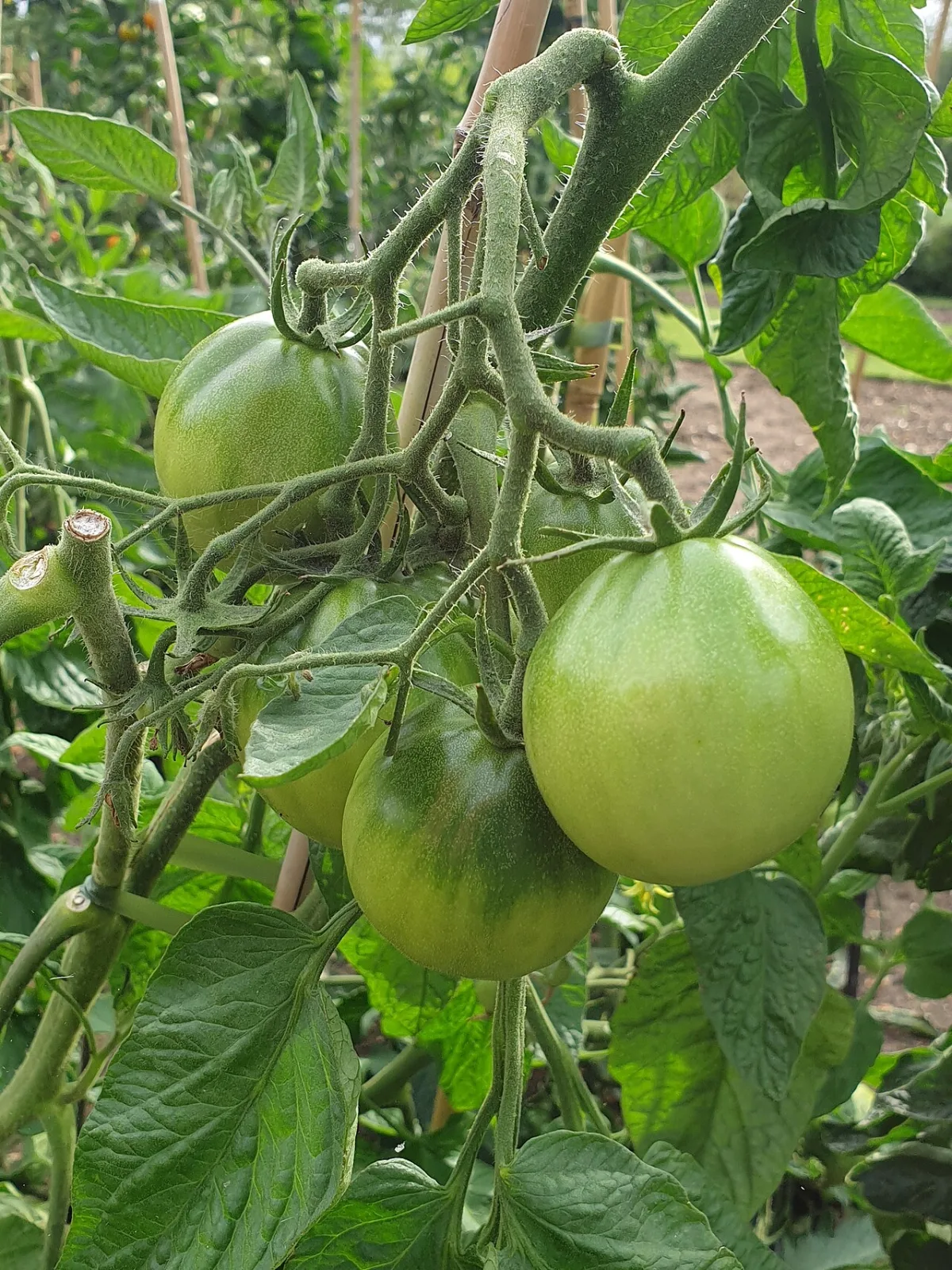
The effect of diseases on the generative organs of plants
Seeds are formed as a result of fertilization, which takes place in the flower. The primary biological function of a flower is to maintain the existence of the species. Pollination and fertilization are vital processes for the successful cultivation of tomato, but not for cucumber, where unfertilized female flowers produce seedless fruits. Many flower crops in greenhouses are also sterile; they are grown solely for their stunning beauty. Diseases on such crops reduce the quality of the final product.
Symptoms appearing on flowers include:
- changes in color and size, for example, when chrysanthemums are infected with tomato aspermy virus and chrysanthemum stunt viroid, respectively;
- spotting of petals, for example, during the development of on cyclamen;
- complete necrosis, for example, flower rot of .
The quality of fruits is equally compromised. Botrytis spotting on tomato fruits and low-temperature damage to cucumber fruits lead to a loss of their marketability and an overall reduction in harvest quality.
Fruit rots, for example in cucumber, are caused by pathogens such as and . Internal discoloration of tomato fruits, although without rotting, occurs when infected with the tomato mosaic virus. Seeds in such fruits sometimes turn black and shrivel, and their germination energy declines. Similar fruit discoloration and damage occur in tomatoes and peppers due to blossom-end rot.
Various seed-borne diseases affect greenhouse crop transplants, appearing on seedlings after they emerge from seeds, even though the seeds themselves appear healthy externally.
Diseases and yield reduction
We have already demonstrated that diseases affect the most important functions of plant organs, thereby weakening their development and reducing yields. Furthermore, symptoms of diseases on flowers and fruits often directly affect the quality of the produce obtained. Sometimes (but not always) the harvest depends on the quantitative spread of the disease.
| Harvest losses | Quantity | Quality | Death |
| Rotting | Deformations | Stunting | Damping-off |
| Fruit root rots | Fruit and flower spotting | Root (rotting) | Rots |
| Severe root rot | Stem lesions | Flower rots | Fruit deformations |
| Stem lesions | Flower rots | Vascular wilt | Leaf damage |
| Cap rot (mushroom) | Leaf and stem infestation | Galls on ornamental plants | Gall formation |
Fig. 3.2. The effect of diseases on the size and harvest quality.
For instance, there may be a positive correlation between the degree of root rot OR foliage damage and yield reduction. However, the interpretation of both indicators is complicated by a number of factors, including pathogen-host interaction, the rate of plant colonization by the pathogen and its spread, the timing of the disease outbreak relative to crop maturity, the compensatory effect of healthy plants in the planting, and various environmental and agrotechnical factors affecting the development of an epiphytotic. Some examples of the relationship between diseases and harvest size are discussed in more detail below.
Interaction in the pathogen-host system
Under extreme conditions, the pathogen causes the death of the host almost immediately after infection. In one case of pathogen-host interaction, this occurs at any phase of plant growth; in others, the pathogen's activity depends to a certain extent on the plant's age. For example, during the development of wilt in carnations caused by two vascular pathogens — Р#а/орйога стегезсет$ or Еизайит охузрогит, plants die a few days after the primary infection. Harvest losses from these diseases are directly related to the number of infected plants. If a single focus of Phialophora appears in a 1.25 m wide carnation bed with a total area of 19 m², at 10 months after transplanting, the losses from this area will be approximately 11% of the total flower output. Similar losses are caused by Fusarium infection. However, wilt diseases almost never occur in isolated foci, and in some cases, the crop dies completely over a two-year period, which is accompanied by significantly larger harvest losses.
When stems are affected, the damage to the crop is no less severe, although there may be significant differences here. Both Рйуюрйога тсойапае and ЮШгосюща зат cause collar rot in tomato transplants just planted into the soil, where even a single spot can lead to the death of the plant. However, as a rule, these diseases develop on tomatoes during the first six weeks after transplanting into the soil, and later they become less harmful.
Infection of tomato stems by the fungi Didymella lycopersici and Botrytis cinerea causes very similar symptoms but produces different results: when the first pathogen develops on the stem, a constriction is formed and the plant dies, while the second rarely leads to death. Indeed, the data below * show that yield losses during the development of B. cinerea on stems are quite difficult to determine:
Number of infected areas on the stem of one plant 2 4 5 16 Yield, kg/plant 3.15 3.06 3.1 3.3
Fungal pathogens of the mushroom attack the caps, making them unsuitable for sale. For example, according to Fletcher et al., white mold (causative agent Mycogone perniciosa) reduces mushroom yields by more than 12 %. Similarly, the marketability of chrysanthemums is lost due to petal wilt or gray mold. Conversely, botrytis spotting does not worsen the external appearance of tomato fruits but significantly affects their quality.
* According to Pegg, Schoneveld (1976), Annals of Applied Biology, 82, 529—586.
HOST COLONIZATION AND PATHOGEN SPREAD Pathogens that quickly colonize host tissues and have effective mechanisms of spread reduce yields much more significantly than pathogens that develop slowly. However, it has been proven that vascular pathogens can cause significant losses, although their spread from plant to plant often occurs very slowly and depends on contact between the roots of neighboring plants. Such diseases as tomato mosaic virus and cucumber green mottle mosaic are characterized by rapid development because both pathogens are highly infectious. If all plants in a planting are infected with these viruses (at early growth stages), yield losses can reach up to 25 %, although such a situation is considered exceptional. Usually, both types of mosaic spread in the crop within 2—3 months, gradually covering all plants and causing a yield reduction of 10—12 %.
Root rot pathogens generally have a progressive negative effect but rarely lead to plant death. Some pathogens colonize disinfected soil very slowly, while others spread extremely quickly, and this difference determines significant fluctuations in their root rot and corky root of tomato, which usually appears 10 weeks after the planting of transplants. The disease develops slowly but progresses, and the longer the growing season of the crop, the higher the degree of root infection. For example, in one experiment, 8 weeks after planting tomato transplants in non-disinfected soil, symptoms of infection were noted on approximately 8 % of the total root area, after 16 weeks the infection zone was already 40 %, and after 23 weeks — 50 %. As a result of such infection, yield losses can exceed 20 %. According to Ebben, the degree of root infection 16 weeks after planting transplants correlates with the final yield reduction.
If there is a difference in the initial concentration of inoculum, brown root rot develops with varying degrees of intensity. During long-term tomato cultivation, root rot usually reaches a sufficiently high level of development by the end of the season even with an initially low concentration of inoculum in the soil. In this case, there is a clear interrelation between the final degree of tomato infection and the yield size. The more effective the method of soil disinfection, the less root rot spreads throughout the crop, but even then it is often very difficult to establish a relationship between tomato infection by the end of the season and the yield obtained from this crop. The fungus Phomopsis sclerotioides, the causative agent of cucumber black root rot, quickly affects plant roots even in disinfected soil, as it easily colonizes it again. In an experiment where the substrate for cucumbers was free from infection but placed on soil with a high concentration of inoculum (the control served as 3.1. INTERRELATION BETWEEN THE DEVELOPMENT OF BROWN ROT AND CORKY ROOT, SOIL TREATMENT AND YIELD* Soil treatment | Infection by the end of the season (%) | Yield, kg/plant Control (without treatment) 70 1.5 Formalin 72 2.3 Chloropicrin 10 3.2 Steam 2 3.6 * According to Last, Ebben (1963), N. A. A. S. Quarterly Review, 62, 68—75. 3.2. INTERRELATION BETWEEN PLANTING DATES, SUBSTRATE CONDITION AND CUCUMBER YIELD * Number of fruits per plant Number of days after planting in a substrate infected with black root rot pathogen in a healthy substrate 30 1.5 1.75 60 5 15 90 9 22 * According to Wisbey, Simpson (1969), Plant Pathology, 18, 71—77.
infected substrate), the difference in yield could be determined as early as the first cucumber harvest, although by the end of the growing season the degree of root infestation was the same in both variants-
Read next
Plant protection For agronomists
Diagnosis and prevention of black leg in cucumber seedlings in greenhouses
Plant protection For agronomists
Effective control methods for gray mold on chrysanthemums in greenhouses

Plant protection For agronomists