
The effect of scab on potato tuber storage quality
17 min read
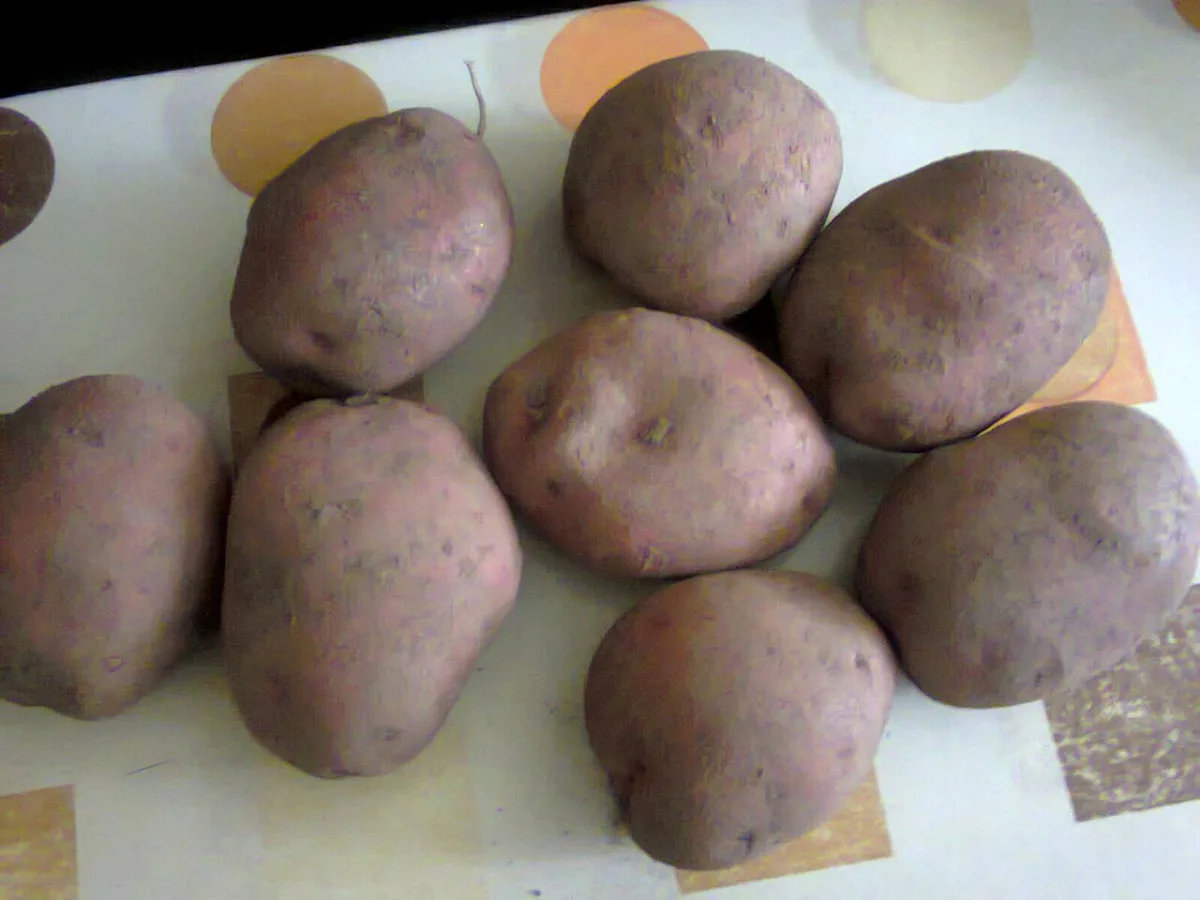
Three types of scab: how disease reduces harvest and damages tubers
Potato tubers serve as a favorable environment for the accumulation and preservation of pathogens. Among soil-borne tuber infections, scab pathogens are the most prevalent; they manifest on the skin in the form of ulcers, spots, and warts. During the growing season and storage, potato growers face three types of this disease annually: silver scurf, common scab, and black scurf (Rhizoctonia).
- Harvest reduction from silver scurf — 8.6–14.2 %
- Weight loss during storage from silver scurf — 4.0–14.0 %
- Decrease in emergence from common scab — 10.0–12.0 %
- Harvest losses during common scab epiphytotic — up to 40.0 %
- Plant loss due to Rhizoctonia — up to 25.0 %
Silver scurf (pathogen Helminthosporium solani Durieu & Mont.) reduces potato yield in the field, and during storage leads to additional tuber weight loss due to moisture evaporation through the damaged skin. The infection is transmitted through the soil and planting material, and symptoms appear already in storage. According to research results, the spread of the disease is facilitated by air humidity of more than 90.0 % at temperatures above 3.0 °C, while optimal conditions for the pathogen are 85.0–100 % humidity and a temperature of +20...+25 °C. Tubers affected by silver scurf lose their natural barrier and are more susceptible to dry Fusarium rot, wet rot, late blight, and Phoma rot.
Common scab (pathogen Actinomyces spp.) affects young tubers with tender skin and continues to develop throughout their growth. It reduces plant productivity by 25.0–30.0 % and triggers the development of secondary infections: late blight, Phoma rot, Fusarium rot, bacteriosis, and nematodes. As a result, potato losses from rot during storage increase to 30.0 %. During the epiphytotic development of the disease, starch content in tubers drops by 5.0–30.0 %, and the general prevalence of common scab on tubers ranges from 2.0 to 90.0 %.
Common scab is most damaging in dry and hot years during the tuberization period. Optimal conditions for it: air temperature 25.0–30.0 °C, soil pH 6.0–7.5, sandy or sandy loam soil types, and excessive liming. The disease manifests in flat, raised, netted, or deep forms, with the deep form causing the most damage to the commercial appearance and taste of the potato.
Rhizoctonia, or black scurf (pathogen Rhizoctonia solani J.G. Kühn), manifests as black sclerotia, pitted spots, netted necrosis, or deep cracks on tubers. The pathogen attacks underground organs: stem death can reach 14.3 %, roots — 48.2 %, and stolons — 71.2 %. As a result, potato yield and marketability drop by up to 30.0 %. The infection develops best at a soil temperature of 17.0 °C and moisture content of 60.0–70.0 % of full water-holding capacity; the disease is more damaging on heavy loamy soils.
The danger of Rhizoctonia lies in its latent course. Results of phytopathological analyses show that the pathogen can persist asymptomatically in the tissues under the eyes of outwardly healthy tubers.
Phytosanitary control: sampling methodology and examination results
Assessing the phytosanitary status of seed material at the end of storage is a mandatory procedure before planting. Chemical tuber treatment effectively suppresses the development of black and silver scurf, but its feasibility is determined by analysis results. To accurately assess the quality of a potato lot, it is necessary to take a sample correctly.
- From a potato lot weighing 10 tons, take a sample of at least 200 tubers from 10 different spots.
- For every subsequent 10 tons of the lot, additionally take 50 tubers from at least 4 spots.
- Collect tubers at a depth of 20–30 cm consecutively, without selection.
- Thoroughly wash the collected sample and visually assess the degree of skin damage for each tuber.
Phytosanitary examination of domestic and foreign potato cultivars after winter storage showed a ubiquitous presence of scab in all agroclimatic zones. The frequency of disease occurrence was calculated as the ratio of the average prevalence of a specific pathogen to the total prevalence of all infections. The results of long-term monitoring of potato lots confirm a consistently high level of infection pressure.
| Research year | Number of cultivars studied, units | Share of cultivars affected by common and silver scurf, % |
|---|---|---|
| 2016 | 20 | 100 |
| 2017 | 27 | 100 |
| 2020 | 30 | 100 |
| 2021 | 38 | 100 |
| 2022 | 36 | 100 |
| 2023 | 39 | 100 |
This indicates that signs of infection by silver and common scab pathogens were detected on tubers of all analyzed cultivars, the number of which in the years studied amounted to 47 and 143 units. Visible signs of Rhizoctonia were also established on the tubers of most examined samples. Thus, on average for 2016–2017, the number of cultivars with disease symptoms totaled 41 units or 86.9 %, and for 2020–2023 – 137 units or
96.5 % of their total quantity. Moreover, in the period from 2020 to 2023, an increase in the share of affected cultivars was noted, varying across the republic's agroclimatic zones from 75.0 to 96.8 %. The number of cultivars with signs of black scurf on tubers in 2016–2017 was lower and ranged from 62.5 to 87.5 %. Perhaps such a trend is due to the sample size of potato specimens involved in the studies, the quantity of which was 3 times larger in the latter period. Table 1 – Infection of potato cultivar tubers with scab-type diseases (route surveys)
Number of cultivars, % infected with scab
Year Agro-climatic zone Common Silver Black (pieces) (pieces) % (pieces) % (pieces) %
Northern 6 6 100 6 100 6 100 2016 Central 6 6 100 6 100 6 100
Southern 8 8 100 8 100 5 62.5
Northern 8 8 100 8 100 7 87.5 2017 Central 12 12 100 12 100 12 100
Southern 7 7 100 7 100 5 71.4 Average for 2016–2017 47* 47* 100 47* 100 41* 86.9
Northern 10 10 100 10 100 10 100 2020 Central 16 16 100 16 100 15 93.8
Southern 4 4 100 4 100 4 100
Northern 1 1 100 1 100 1 100 2021 Central 28 28 100 28 100 27 96.4
Southern 9 9 100 9 100 9 100
Northern 2 2 100 2 100 2 100 2022 Central 31 31 100 31 100 30 96.8
Southern 3 3 100 3 100 3 100
Northern 7 7 100 7 100 7 100 2023 Central 24 24 100 24 100 23 95.8
Southern 8 8 100 8 100 6 75.0 Average for 2020–2023 143* 143* 100 143* 100 137* 96.5 * Total cultivars, pcs.
As a result of the monitoring, annual infection of tubers with scab-type diseases was revealed, regardless of the crop cultivation zone.
Table 2 – Types of scab on potato tubers at the end of the storage period (route surveys)
Tuber diseases, % Agro-climatic zone Common scab Silver scab Black scab Development Prevalence Development Prevalence Development Prevalence
2016 Northern 19.7 49.5 39.6 87.5 1.6 6.9 Central 11.6 38.9 57.0 98.6 12.5 48.6 Southern 13.7 40.7 30.4 77.4 2.1 8.1 Average 15.0 43.0 42.3 87.9 5.4 21.2
2017 Northern 22.9 66.9 44.6 90.1 6.7 22.7 Central 18.4 63.7 56.7 99.0 6.8 28.0 Southern 9.3 38.9 41.8 88.0 3.7 15.3 Average 16.9 56.5 47.7 92.4 5.7 22.0 Average for
15.9 49.8 45.0 90.1 5.6 21.6 2016–2017
2020 Northern 3.1 13.7 36.7 95.8 12.5 43.5 Central 4.7 18.8 30.1 77.7 7.2 29.4 Southern 5.0 22.3 43.8 99.0 15.8 53.9 Average 4.3 18.3 36.8 90.8 11.8 42.2
2021 Northern 10.8 47.0 9.8 37.0 4.2 18.0 Central 9.0 33.9 17.0 47.6 9.0 32.5 Southern 12.2 38.4 22.9 56.5 10.9 39.0 Average 10.6 39.8 16.6 47.0 8.0 29.8
2022 Northern 39.8 75.4 35.6 82.0 24.0 58.2 Central 17.1 46.6 31.0 70.9 11.4 37.4 Southern 21.5 56.4 39.0 84.7 17.1 49.9 Average 26.1 59.5 35.2 79.2 17.5 48.5
2023 Northern 15.8 55.4 32.5 84.6 14.7 53.3 Central 17.9 56.4 33.0 76.1 9.5 35.2 Southern 10.9 41.6 36.3 72.5 11.8 35.0 Average 14.8 51.1 33.9 77.7 12.0 41.2 Average for
| 14.0 | 42.2 | 30.6 | 73.7 | 12.3 | 40.4 | 2020–2023 |
Especially towards the end of storage, silver scab manifested itself en masse. Over the years of research, disease development on average across the republic varied from 16.6 to 47.7%, and the prevalence fluctuated from 47.0 to 90.8%. The obtained data are consistent with previously conducted studies by Belarusian scientists, testifying to the annual and widespread infection of tubers with the disease. Moreover, it was noted that during potato storage, the development of silver scab on tubers is observed even if they were without external signs at harvesting, as the pathogen can remain in a latent form for a long time.
At the same time, the averaged values of the infection and the degree of silver scab development on tubers by agro-climatic zones for 2016–2017 were 1.5 and 1.2 times higher than for 2020–2023, amounting to 45.0 and 90.1% versus 30.6 and 73.7%, respectively.
It is not possible to explain the obtained results, since pre-planting tuber treatment with various chemical preparations was carried out in all the analyzed farms, but no connection between the applied seed treatments and the intensity of the disease infection was established. Since the pathogenesis of silver scab is influenced by a number of factors, among which can be distinguished:
- soil and climatic conditions;
- soil solution pH;
- temperature and relative air humidity during storage;
- storage method;
- presence of skin lesions caused by other phytopathogens;
- tuber resistance to the disease, which is obviously associated with the increased harmfulness of silver scab.
Of the complex of scab species, Rhizoctonia turned out to be the least common, the infection of tubers with which on average across the republic varied from 5.4 to 17.5%, and for the period 2016–2017 and 2020–2023 amounted to 21.6 and 40.4%, respectively. At the same time, starting from 2020, an increase in the contamination of tuber material with R. solani fungal sclerotia was revealed. Disease development on average over the 4-year period 2020–2023 was 2.2 times higher compared to the 2-year period 2016–2017 and amounted to 12.3 and 5.6%, respectively.
Rhizoctonia threat and field protection measures
Potato Rhizoctonia (black scurf) is becoming increasingly aggressive. The disease pathogen now affects plantings not only in regions with a cool and humid climate. The pathogen also develops actively in hot conditions, when common scab intensely manifests on the tubers. The resulting ulcers serve as entry points, facilitating the penetration of the Rhizoctonia pathogen into the internal tissues.
Combating Rhizoctonia is complicated by the fact that new anastomosis groups of the fungus are transferring to potatoes from other crops. There are no cultivars with complete stem and stolon immunity to this disease, so one has to rely only on the relative resistance of tubers in individual cultivars.
Since there are no chemical agents for combating common scab in the lists of registered preparations, protective measures are based on adherence to agricultural technology and cultivar selection. To contain the complex of other potato diseases, tuber treatment is carried out before planting.
Preparations based on the following active ingredients are used for pre-planting seed treatment:
- fludioxonil;
- mancozeb;
- carbendazim;
- thiabendazole.
Do not delay harvesting after vine destruction. The longer the interval between desiccation (or mowing) and potato digging, the more heavily the tubers become infested with Rhizoctonia sclerotia.
Tuber infection with common scab fluctuates greatly depending on the year and soil-climatic conditions. For example, according to field trial data in 2016–2017, disease development on tubers remained stable and averaged 15.0% and 16.9% per year. The dynamics of the prevalence and development of the disease in other seasons are reflected by experimental data.
| Year | Infection level, % | Prevalence, % |
| 2020 | 4.3 | 18.3 |
| 2022 | 26.1 | 59.5 |
Development of diseases during tuber storage
By the end of storage, various types of scab become dominant among all recorded infectious diseases of potato. Depending on the season, their total incidence ranges from 65.1% to 97.2%. At the same time, the pathogens show no antagonism: against the background of common scab ulcers and rhizoctonia sclerotia, the intensity of silver scab manifestation does not decrease.
- Incidence of scab species by the end of storage — 65.1–97.2%
- Development of silver scab on tubers — 16.6–47.7%
- Development of rhizoctonia on tubers — 5.4–17.5%
- Development of common scab on tubers — 4.3–26.1%
Silver scab accounts for the main share in the structure of diseases, its prevalence by the end of storage reaching 47.0–90.8%. Tubers are least affected by rhizoctonia. Common scab also maintains high harmfulness: in 3 out of 6 studied years, its prevalence exceeded 50.0%.
The ratio of the main pathogens in the structure of infectious diseases of potato by the end of the storage period is presented in the table.
| Disease | Incidence in the structure of diseases, % |
| Silver scab | 34.7–58.6 |
| Rhizoctonia (black scurf) | 8.6–27.0 |
In addition to scab, rots of fungal, bacterial, and mixed etiology are recorded on tubers by the end of storage. In most seasons, their incidence remains low — within the range of 2.8–10.5%. However, under unfavorable conditions, the share of rots among infectious diseases can increase to 34.9%, as occurred in 2017.
Khyutti, A. V. Common scab of potato / A. V. Khyutti, A. M. Lazarev, V. K. Chebotar // S.-kh. vesti. – 2021. – No. 2. – P. 56–57.
Khyutti, A. V. Rhizoctonia of potato: meeting it fully armed / A. V. Khyutti, A. M. Lazarev // S.-kh. vesti. – 2019. – No. 1. – P. 10–11.
V. I. Khalaeva, I. G. Volchkevich, A. V. Patrakeeva RUE «Institute of Plant Protection», Priluki, Minsk region
SCAB INFESTATION OF POTATO TUBERS DURING
Annotation. The article presents data on the incidence of tubers with scab species at the end of the potato storage period. It was found that, regardless of the crop cultivation conditions, the incidence of common scab and silver scab in the variety samples was 100 %, and rhizoctonia was 86,9–96,5 % of the total number of those analyzed.
On average in the republic, the distribution of scab types on tubers was as follows:
- silver scab — up to 90,8 %;
- common scab — up to 59,5 %;
- rhizoctonia — up to 48,5 %.
The development of diseases varied in the following ranges:
| Type of disease | Level of development, % |
| Silver scab | 16,6–47,7 % |
| Common scab | 4,3–26,1 % |
| Rhizoctonia | 5,4–17,5 % |
In the structure of infectious diseases, silver scab dominated among scab species, with its incidence on tubers amounting to 34,7–58,6 %.
Key words: potato, tubers, soil-tuber infection, scab, prevalence, development, pathogen, incidence, infestation.
Read next
Agrochemistry For students
The effect of mineral fertilizer application on starch accumulation in potato tubers
Storage and processing For students
Botanical characteristics and chemical composition of potato tubers
Plant protection For agronomists