
Botanical characteristics and chemical composition of potato tubers
18 min read
Potato is a valuable food product and raw material for the food industry.
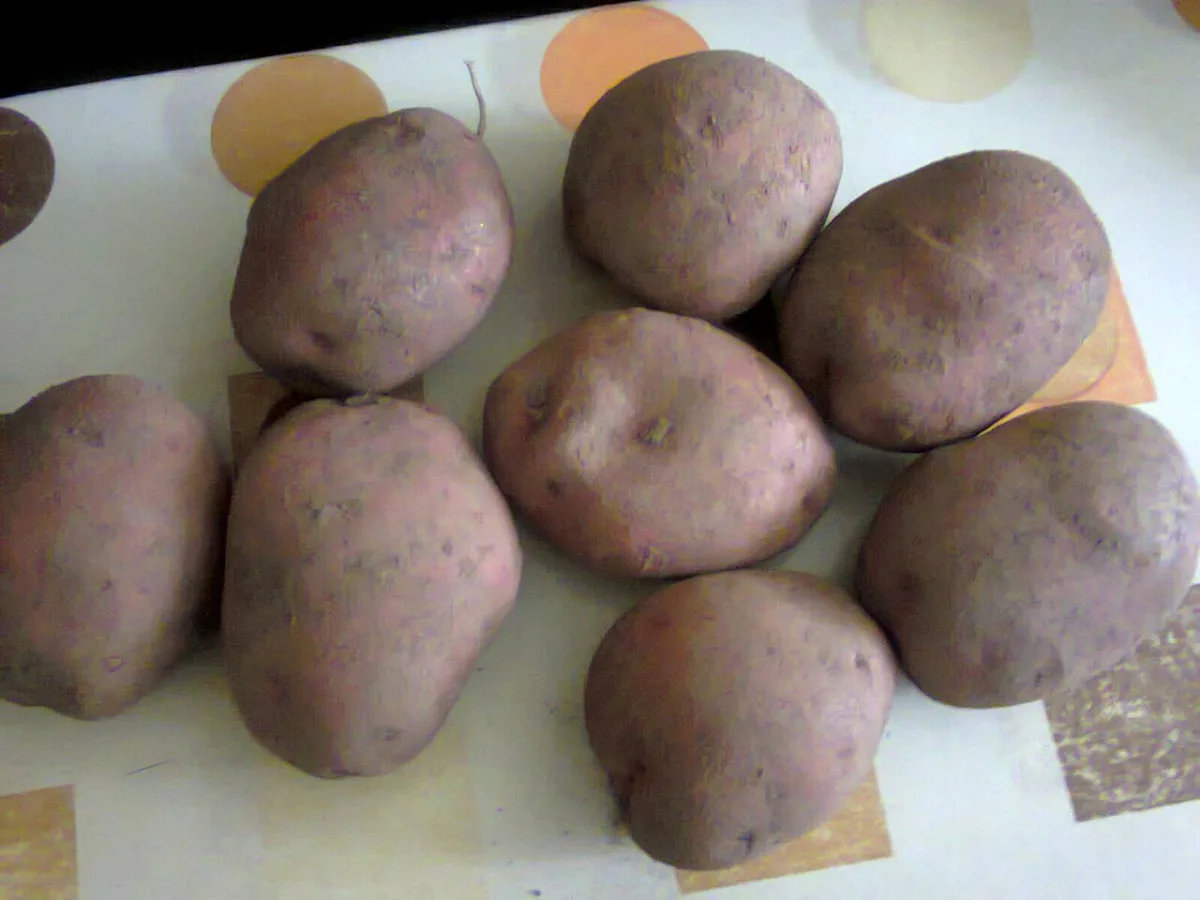
Potato tubers are formed at the lower ends of colorless shoots (stolons). Young tubers are covered with a thin skin - the epidermis, which is replaced by a durable periderm as the tubers mature. The dense cork tissue of the periderm protects the tuber from external influences and loss of moisture. The skin contains eyes or growth points of the tuber; each eye usually has 3-4 dormant buds. They contain a small volume of embryonic tissue; during germination, biochemical processes intensify, and cell volume increases. The outer part of the tuber flesh is rich in starch, while the inner part is more watery, with a lower starch content.
On average, a potato tuber contains (%): water - 75.0; starch - 18.2; protein - 2.0; sugars - 1.5; fiber - 1.0; fats - 0.1; organic acids - 0.1; minerals - 1.1; pectin - 0.6; phenolic and other organic compounds - 1.7.
Starch granules up to 100 µm in size are located in the cytoplasm of the cells.
Sugars in potatoes are represented by glucose, fructose, and sucrose. The main protein - tuberin (globulin) - contains essential amino acids. Potatoes are characterized by a wide variety of amino acids in both bound and free forms.
The skin, green tubers, and sprouts contain glycoalkaloids known as solanine. They suppress the development of microorganisms harmful to potatoes but can cause poisoning if the content exceeds 20 mg per 100 g of potato.
Minerals in potatoes are represented by potassium and phosphorus salts; there are also macronutrients - sodium, calcium, magnesium, iron, sulfur, chlorine, and micronutrients - zinc, bromine, silicon, copper, boron, manganese, iodine, cobalt, etc. Organic acids present in small quantities include malic, citric, oxalic, caffeic, and quinic acids.
Potatoes contain 10-18 mg% of Vitamin C; they also contain smaller amounts of B1, B2, B6, PP, pantothenic acid, and carotene.
Carotenoids in tubers with yellow flesh amount to 0.14 mg%, with white flesh - about 0.02 mg%.
Potato is a food, industrial, and forage crop.
Food-grade cultivars have tubers with good taste, cook quickly, contain average amounts of starch, and have shallow eyes. Potatoes of food-grade cultivars can have either firm or mealy, soft-boiling flesh, fine-grained or coarse-grained, non-darkening or darkening.
Industrial cultivars are used for the production of starch and alcohol, so they must have a high starch content. For the production of dried and concentrated potato products, potatoes should not darken when cut.
Forage cultivars contain more dry matter and are not characterized by high taste qualities.
Harvested and marketed food potatoes are divided into: early and late.
Marketed potatoes, depending on quality, are divided into two grades: select and common. Among late potatoes, "select" high-value cultivars are singled out separately.
The quality of potato tubers is assessed by the following indicators: appearance, smell, taste, size.
Standards allow deviations from nominal values of appearance and size. Produce with defects exceeding the standards is classified as non-standard produce.
Tubers with a green surface covering more than 1/4 of the tuber are not allowed and are considered waste. Withered, crushed, rodent-damaged, frostbitten, scalded, suffocated, or rotten tubers are not allowed, nor are those with organic and mineral impurities (straw, haulm, stones, etc.).
Biological features of the potato as a storage object:
After harvesting, potato tubers remain in a state of physiological dormancy for a certain period (from 1 to 3 months). The cells of the plant's unified organ - the tuber - become isolated from each other, so the intensity of vital processes decreases to a minimum.
Ability to renew protective tissue at sites of mechanical [damage].
With the correct choice of harvest dates, maintaining a temperature of 10-18°C during the first two weeks of storage, relative humidity of 90-95% , and intensive ventilation, the formation of new protective tissue occurs successfully.
Process of interconversion of starch into sugar and the reverse reaction.
In mature tubers under normal storage conditions, there is on average 15-18% starch and 0.5-1.5% sugars. When the temperature drops, especially below "plus" 3°C, intensive accumulation of sugars occurs due to the saccharification of starch
- for respiration. At the same time, the reverse conversion of sugars into starch takes place. At low temperatures, the rate of this process slows down to a much greater extent than the saccharification of starch, which is the reason.
The potato storage process is conditionally divided into three periods:
The curing period creates conditions for the maturation of tubers and the healing of mechanical injuries.
The most favorable temperature for tuber ripening and the healing of mechanical damage is 16-18°C. The duration of the curing period at 15-18°C is 10 days, at 10-15°C - 14-30 days, while at 5°C, no healing of tuber tissue damage occurs. Relative humidity">Relative humidity during this period is 90-95%.
After the curing period ends, cooling of the potato mass to the optimal temperature begins. For this purpose, it is ventilated during the cold hours of the day. The temperature of the supplied air should be at least 2°C lower than the temperature of the potato mass, but not lower than 0.5°C.
During the main storage period, early potatoes are stored at a temperature of 1-2°C; mid-season cultivars at 2-3°C, and late ones at 3-5°C. The relative humidity is 90-95%.
At low storage temperatures, sugars accumulate in the tubers. If the exposure to low temperatures is short-lived, then as the temperature rises, most of the sugars convert back into starch. Prolonged exposure to low temperatures leads to physiological disorders of the tubers and suppresses sprout formation; therefore, overcooling seed potatoes below -1°C is especially dangerous.
Potatoes intended for the preparation of semi-finished products (mashed potatoes, granules, flakes) are stored at 7-9°C, for chips - at 4°C, and 1-2 weeks before processing, they are warmed up at 10-15°C.
Preparation period for market or planting: seed potatoes are warmed in the light before planting so that short green sprouts form, which do not break off during planting. This technique ensures early emergence and increases potato yield. Warming of potatoes is carried out in bright rooms at 15-18°C for 2-3 weeks.
Harvesting of potatoes. For harvesting, we use KTN-2V, KST-1.4, UKV2 potato diggers, and KKU-2A, KSK-4 potato harvesters. A week before harvesting, the haulm is mowed with a KIR1.5 mower-shredder; together with the haulm, disease pathogens are removed, and re-infection of tubers does not occur. Also, after mowing the haulm, tuber maturation is accelerated, i.e., their skin toughens, and the degree of mechanical damage during harvesting is reduced.
Sorting. Tuber sorting is carried out at sorting facilities located on pads under a canopy.
KSK-15B sorting station: adhering soil is removed from the tubers, the tubers are separated into fractions (small, medium, large), and damaged tubers are picked out by hand.
Potato storage. In storage facilities with natural ventilation, potatoes are stored in bins 1.5-2.5 m wide. The side walls are made of boards with gaps of 2.0-2.5 cm. The distance between the walls of two adjacent bins is 10-12 cm. The back wall must be 20-25 cm away from the storage wall. The front wall is removable. The bin floor is raised 25-30 cm above the storage floor and is slatted, with a gap of 2-3 cm between the slats. Good quality potatoes are loaded to a height of no more than 1.5 m, and lower quality ones to 0.8-1 m.
In facilities with active ventilation, potatoes are stored in bulk (for food) and in bins (for seed) with solid walls 4-5 m high. Moistened tubers are dried mainly during the day when relative humidity is low.
Storing food potatoes in facilities with active ventilation using the bulk method allows for a 25-35% increase in the useful capacity of the storage and ensures mechanization of labor. In this case, potatoes are loaded over the entire floor area in a solid layer 3-5 m high. Wooden boards are installed at the walls of the storage facility to prevent tuber overcooling in winter. The space between the top of the heap and the ceiling should be 0.7-1 m. To measure temperature and inspect the produce, wooden walkways are placed on top.
Potatoes can also be stored in containers, which helps protect the tubers from mechanical damage and allows for the mechanization of all loading and unloading operations. Containers are loaded in the field during harvesting, transported to the storage facility, and the tubers are sorted.
When loading, containers are filled 5-6 cm below the rim. In the storage facility, they are stacked by cultivar on a 6-8x6-8 m area. The distance between the top edges of the top container and the ceiling should be at least 0.8-1 m. Passageways 0.5-0.7 m wide are left between the stacks and the walls. The ventilation system of potato storage facilities must provide at least 20 air changes per hour and constant air circulation.
Monitoring during potato tuber storage. During storage, the temperature is monitored regularly. At the beginning of the season, the temperature is measured daily, and once the constant regime is established, it is measured once a week.
The condition of potatoes during storage is determined by taking samples and performing tuber analysis, which is carried out 1-3 times every two months.
Leafy vegetables include white cabbage, red cabbage, Brussels sprouts, and savoy cabbage.
The outer wrapper leaves of the head are green and have a waxy coating, while the inner leaves lack chlorophyll. Cabbage contains (%): easily digestible sugars - 2.6-5.3% (mainly glucose and fructose), fiber - 0.6-1.1%, pectic substances - 0.3-2.4%, dry matter - 6.111%, nitrogenous substances - 1.8-5.8%, as well as sulfur-containing substances, various mineral substances - trace elements, vitamins C (1370 mg %), B1, B2, B3, P, PP, K.
According to their ripening time, cabbage cultivars are divided into early, mid-season, and late. Early cultivars have looser heads of smaller mass and size; they are unsuitable for long-term storage as they wilt quickly.
Cauliflower belongs to floral vegetables — it is an unopened inflorescence, which consists of fleshy shortened shoots ending in primordial buds. It is rich in vitamin C (48-155 mg %), sugars (4%), mineral salts (0.8%), and proteins (2.5%).
The quality of cauliflower is influenced by the size and density of the head, color, surface condition, etc.
Kohlrabi represents a thickened stem and belongs to stem vegetables. Chemical composition is similar to white cabbage; the taste is like the stalk of white cabbage, and it has the shape of a root vegetable.
Successful storage of vegetables directly depends on controlling physiological processes in tissues and choosing the correct microclimate parameters. For cabbage and root vegetables, it is critically important to suppress bud dormancy breakage and moisture evaporation, considering their botanical structure. Properly selected technological regimes allow minimizing natural weight loss and maintaining the marketable appearance of the produce.
Technological regimes and stacking methods for cabbage during storage
The market quality of white cabbage is determined by freshness, cleanliness, head density, and the length of the external stalk. Cracked, rotted, or frost-damaged heads, as well as specimens with mechanical damage deeper than 3–5 wrapping leaves and sprouted floral shoots, are immediately classified as waste. For red cabbage, the intensity of color, which depends on the presence of anthocyanins, is additionally evaluated. Its leaves contain sugars (4.7%), vitamin C (60 mg %), carotene, and mineral substances.
The regulatory role in the head's vital activity belongs to the apical bud. By the time of harvesting, it is in the process of active growing season, therefore, storage conditions should be aimed at inhibiting its growth.
- Cabbage storage temperature — from -1 to 0 °C
- Air humidity in the first month — 80–85%
- Air humidity in the subsequent period — 90–95%
- Standard diameter of table beet — from 5 to 14 cm
In storage facilities with active ventilation, food-grade cabbage is placed in three ways. Each cultivar is stacked separately, adjusting the height of the pile depending on the keeping quality of the hybrid. For dense-headed, long-keeping cultivars, stacks are formed with a width of 4 m and a height of 2–2.2 m. For those with lower keeping quality, the height is reduced to 1.5–1.8 m. At the same time, the width of the main aisles is maintained within 2–2.5 m, and the distance between stacks is left at 0.5 m.
Options for placing cabbage with active ventilation:
- In high stacks: height 2.5 m, length 4–8 m, capacity from 20 to 40 tons. Used for simultaneous storage of different cultivars.
- In a continuous stack: height 2.5–3 m, width 6–8 m across the entire length of the warehouse. Suitable for long-keeping cultivars.
- In containers: containers are installed in 3–4 tiers, crates — in 7–8 tiers.
In rooms with natural ventilation, cabbage is stored in bins or small stacks on the floor and shelves. In bins 2–2.5 m wide, the heads are laid in a layer of 1–1.2 m on a slatted floor. With floor or shelf placement in 2–3 tiers, the maximum dimensions of the stack are: width — up to 1 m, height — up to 0.8 m, length — up to 3–4 m. On the first shelf, the stacking height should not exceed 0.5 m, and on subsequent ones — 0.3–0.4 m. All platforms are made with 5 cm gaps and raised 15 cm above the floor.
- At the beginning of the season, measure the air temperature in the storage facility daily.
- Ensure regular control of relative air humidity.
- Carry out selection and analysis of head samples 1 to 3 times every two months to assess their condition.
Biological characteristics and keeping quality of root vegetables
A root vegetable is a thickened fleshy root protected by a skin of cork tissue. Its shelf life is directly influenced by the timing of sowing and harvesting: root vegetables from early sowing are stored better than late ones, and a later harvesting ensures optimal tissue maturation and minimizes losses. The development of root vegetables in light and structural soils also positively affects their subsequent keeping quality.
The deep dormancy period for root vegetables is very short. Differentiation of the apical bud can be completed during growth or in the post-harvest period. To prevent rapid sprouting, it is necessary to immediately create conditions that maintain induced dormancy.
Based on the mechanical strength of their protective tissues and storage capacity, root crops are divided into two groups:
- Coarse: radish, swede, beet, parsnip. They have a tough skin and store well.
- Delicate: carrot, celery, parsley, caraway, turnip. They are characterized by thin skin and low natural storability.
Chemical composition and nutritional value of root crops vary by crop. Carrots contain from 4 to 12% sugars (predominantly sucrose), carotene (up to 19.8 mg%, which determines the orange color), vitamins PP (up to 1.0 mg%), C (5 mg%), B, B2, B6, K, as well as pantothenic and folic acids. Vitamins are distributed unevenly — there is more in the outer layers and in root crops with a more intense red color.
| Carrot cultivar group | Root crop length |
|---|---|
| Short (nantes/chantenay types) | from 3 to 6 cm |
| Semi-long | from 8 to 20 cm |
| Long | from 20 to 45 cm |
Table beet contains from 5 to 12% sugars (mainly sucrose with a minimal amount of glucose and fructose) and from 0.5 to 3.6% nitrogenous substances, including betaine, which provides the red color. The vitamin C content averages 10 mg%, and vitamins B1, B2, PP, and P-carotene are also present. The shape of the beet varies from flat and round to conical. Root crops with a diameter of more than 14 cm are considered overgrown and have a lower grade.
Carrot and beet root crops have the ability to heal small mechanical injuries after harvesting. After harvesting, root crops are kept in storage for 8-12 days at "plus" 10-14 °C.
After harvesting root crops, wilting and freezing must not be allowed - this leads to the development of pathogenic microorganisms and a decrease in storage quality.
Procurement and trade standards apply to carrots and beets depending on their intended use. For all others, general standards apply, without differentiation of quality index values.
General indices for all root crops are:
• appearance (shape, color, surface condition, freshness,
• size (limit and minimum values based on the largest
• permissible deviations (root crops, mechanically damaged, with
Rotten, withered root crops with signs of wrinkling, steamed, and frozen ones are not allowed.
Soil adhering to root crops and foreign impurities are considered waste over 100%.
Features of carrots affecting storage include thin protective tissues and low water-holding capacity, especially of the root tip, which causes carrots to wilt easily during storage and become affected by microorganisms. During storage and wilting, the amount of phenolic compounds increases in carrots, which gives them a bitter taste. Carrot root crops from later harvest dates have better storage quality.
Food-grade root crops are stored at a temperature of "plus" 1°C and a relative humidity of 95%.
In storages with natural ventilation, radish, beet, swede, and turnip are stored in bins. Radish and turnip are loaded to a height of 0.7-1.0 m, swede - 1.5-1.7 m; beet - 1.6-2.0 m.
In storages with active ventilation, the height of the root crop heap can be set up to 2.5-3.0 m.
In storages with active ventilation, table beet and swede are stored successfully just like potatoes.
In storages with active ventilation, root crops are stored in bulk with a loading height of up to 2.5 m. Root crops are loaded and unloaded using STKh-30 and TKhB-20 conveyors. During the loading process, root crops are sprayed with a 30% chalk suspension in water. After this, the produce is dried using active ventilation, and each root crop becomes covered with a thin layer of chalk. Root crops can be dusted with dry chalk (3% of the root crop mass). The alkaline environment formed on the surface of the root crops prevents the development of pathogenic microorganisms. To prevent root crop wilting, active ventilation of root crop storages equipped with an artificial air humidification system, which is supplied to the produce heap, is used.
Onion has a bulb consisting of a shortened stem (basal plate), bulb buds located on it, conical scale primordia, and surrounding thickened leaf bases (fleshy scales). The bulb is covered on top with dry scales.
Succulent scales contain a supply of nutrients; dry scales protect the bulb from water loss through evaporation and from damage; the denser they are, the longer the onion is stored.
Onion on average contains (%): water - 86.0; sugars (mostly sucrose) - 9.0; proteins - 1.7; ash - 1.0; acids - 0.1.
Onion proteins have a diverse amino acid composition. Organic acids include malic, citric, and succinic acid, which possesses antibiotic properties.
The specific smell and pungent taste of onion are due to essential oil (content 20-100 mg %). Onion bulb shapes can be flat, flat-round, round, oval, and elongated.
Small onion has a bulb mass of up to 50 g, medium onion from 60 to 120 g, large onion more than 120 g.
Depending on their taste, onions are divided into pungent, semi-pungent, and sweet cultivars. Pungent ones have better storage properties.
A garlic bulb consists of individual buds-cloves on a flat stem (basal plate). Each clove has a small stem (basal plate), leaf and root primordia, surrounded by a single succulent, closed scale (flesh), covered by a thin, dry scale. The entire bulb is covered by a common tunic.
Garlic contains 6.5% protein, 3.2% sugars, 2% starch, and 1.5% ash. Garlic contains vitamin C (10 mg%), potassium, and phosphorus. The basis of garlic essential oil is alliin. Under the action of the enzyme alliinase and upon exposure to oxygen, alliin decomposes to form allicin, which has a garlicky odor. Garlic essential oil possesses bactericidal properties.
When storing onions, their ability to remain in a state of deep physiological dormancy for a certain time is utilized. Pungent multi-budded onion cultivars possess the longest dormancy period, while semi-sweet and sweet low-budded cultivars have a shorter dormancy period and lower storage potential.
The storage potential of onions largely depends on their ripening. A state of full maturity is characterized by the formation of dry protective scales and the drying of leaves and the neck. Onions intended for long-term storage are harvested in the phase of leaf lodging in 50–80% of plants, when 1–2 dry, well-colored scales have already formed on the bulbs. Such onions store well and losses are minimal.
Under-ripe bulbs do not have time to form protective scales, and the neck and leaves do not have time to dry before harvesting; such bulbs have low storage potential and are highly susceptible to disease.
Under favorable weather conditions, onion harvesting and post-harvest processing can be carried out using several options.
In the first option, onions are harvested manually or with an LTK-1.4 digger with the leaves attached, dried in the field or at a stationary facility, the dry leaves are trimmed manually or removed using an OVL-6 leaf-stripping machine, sorted, and loaded into a storage facility.
In the second option, onions are harvested with the leaves attached, placed into a storage-dryer, and dried and stored there. Leaf removal and commercial processing of the bulbs are carried out after storage before sale or planting in the field.
Mechanical harvesting of onions with simultaneous leaf removal requires mandatory subsequent drying of the heap in the storage facility. This technological technique is especially important during unfavorable weather at the time of harvest, when it is impossible to dry the onions in the field. Artificial drying allows for a rapid reduction in the humidity of external scales and prevents bulb rot.
Artificial drying in a storage-dryer reduces onion storage losses by 2–4 times compared to natural drying in the field.
Technological parameters for drying and processing onions
If weather conditions during harvest are unfavorable, the entire heap is immediately sent to floor-standing dryers with air heaters. The process lasts from 15 to 20 hours, depending on the initial humidity of the raw material. The key task of this stage is to bring the humidity of the protective scales to safe levels, after which thermal disinfection of the heap is carried out.
- Height of the onion pile — 2–2.5 m
- Flow rate of heated air — 400–500 m³/h per 1 t
- Temperature for drying the heap — 25–35 °С
- Humidity of protective scales after drying — 14–16 %
- Heating temperature of bulbs — up to 45 °С
- Heating time for disease prevention — 12–24 h
Heating onions at a temperature of up to 45 °С for 12–24 hours is carried out only after the scale humidity reaches 14–16 %. This is necessary to destroy pathogens of neck rot, downy mildew, and other diseases.
After completing the thermal treatment, the onions are finally prepared for long-term storage. The entire prepared heap is quickly cooled and cleaned of dry leaf residue. The post-harvest processing process consists of several sequential technological operations.
- Harvesting onions with a machine with simultaneous leaf removal, sorting, and placement into a dryer.
- Drying the heap with heated air on floor-standing installations.
- Heating dry onions at an elevated temperature for disinfection.
- Rapid cooling of the processed bulbs.
- Feeding the heap into a leaf-stripping machine to separate dry leaves.
- Sorting by fraction on an SLS7A machine and shipping to an onion storage facility.
Read next
Plant protection For agronomists
The effect of scab on potato tuber storage quality
Crop production For students
Potatoes in global agriculture: forage and industrial aspects
Crop production For students