
Lettuce mosaic virus: symptoms of the disease and methods of plant protection
9 min read
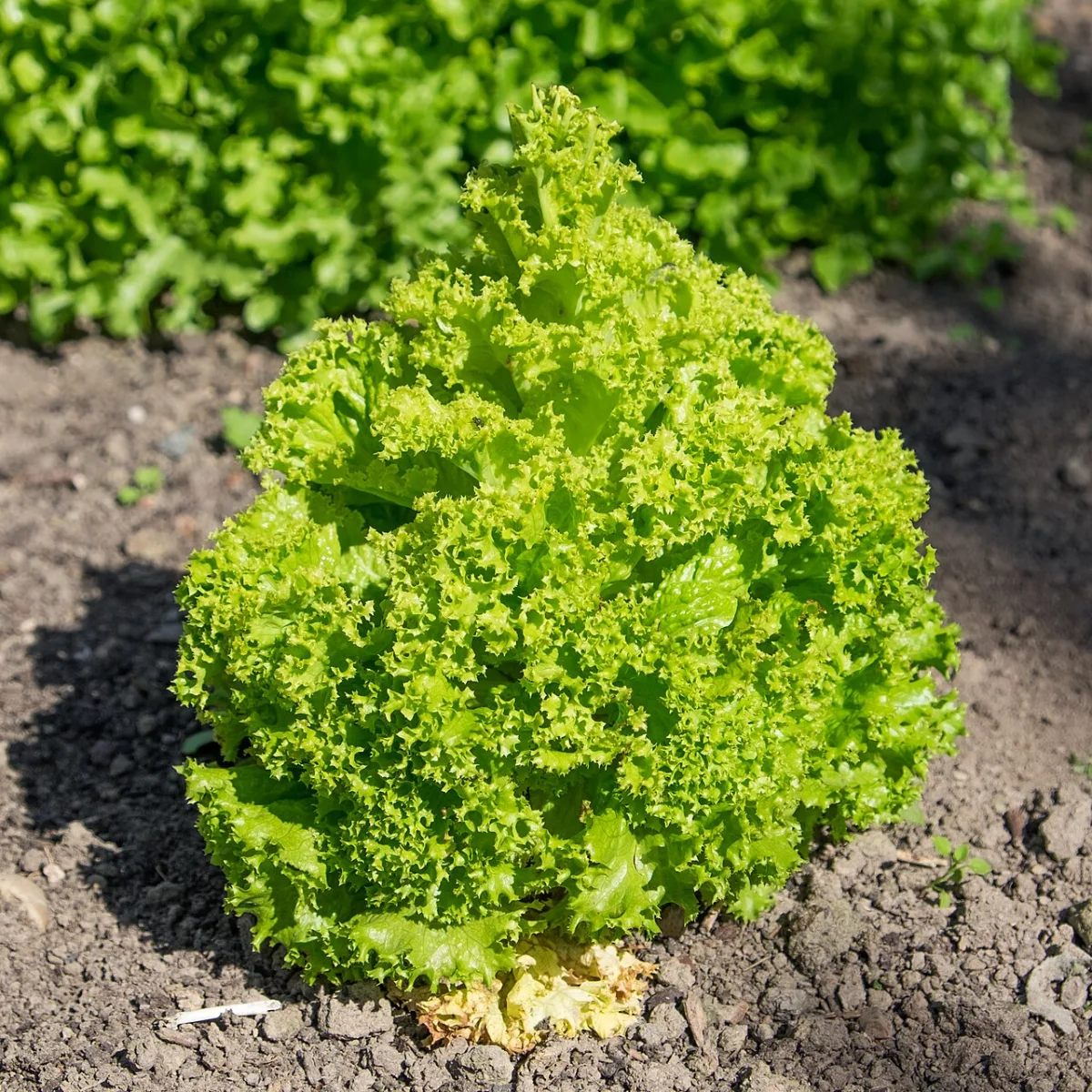
Mosaic lettuce is the most common viral disease of lettuce in both greenhouses and open fields. Developing in a greenhouse crop, the virus reduces both the harvest and its quality. Lettuce is affected by mosaic at any stage of development after seed emergence.
Soon after infection, a light and dark green mottling appears on the youngest leaves with typical mild vein clearing. Mosaic is especially noticeable on heavily affected plants: they become stunted, a rosette of leaves forms, and the head often fails to form. In some cases, severe crinkling is observed, as well as mild necrosis, particularly along the leaf margins.
Symptoms are to some extent cultivar-specific, and the degree of their manifestation depends on the growing season of the lettuce. During winter months, mosaic symptoms can be more pronounced. In general, the earlier the disease develops, the greater its damage to the lettuce.
Mosaic virus is transmitted via seed, which usually serves as the primary source of infection. Aphids, particularly the green peach aphid, also serve as vectors of the pathogen, although the species Mazopola p15-mep is not a vector, despite being the most common on lettuce crops. LMV (Lettuce mosaic virus) is a non-persistent virus; aphids acquire it rapidly during short-term feeding on an infected plant and lose it just as quickly during subsequent feeding.
Some weeds, such as prickly sowthistle (Sonchus asper) and groundsel (Senecio vulgaris), serve as hosts for the lettuce mosaic virus. With continuous lettuce cultivation in infected sections of the greenhouse, mosaic intensifies during the growing season as the virus is transferred from older crops to younger ones. Initially, the spread of the disease is slow, but it accelerates with an increase in the number of vectors, and by the end of the season, the lettuce can be severely affected.
With direct sowing of lettuce in the soil and the presence of no more than 0.1% affected seedlings, harvest losses are insignificant; however, the crops must be isolated from other affected areas, and control of aphids is necessary. It is recommended to use virus-tested seed material, especially in areas of intensive lettuce cultivation with high numbers of aphid vectors.
To protect the crops, a number of measures should be followed:
- Greenhouse sections for lettuce cultivation must be well isolated from each other; this minimizes the possibility of cross-contamination of crops.
- The isolation of nursery areas plays a special role.
- Affected plants are often unsuitable for sale, and since they are a source of infection, they must be culled upon first detection.
Since the virus is transmitted by aphids only during short periods of feeding, insecticide treatment does not protect lettuce from the introduction of infection, but it can weaken the spread of the disease both within the planting and between sections. With a low population density, aphids do not cause direct damage to the crop, but they are sufficient to spread the virus. Control of aphids must be carried out throughout the season, especially during successive cultivation of several lettuce crops over the summer, when the risk level is quite high.
| Process characteristic | Time |
| Virus acquisition by aphids | 15 sec |
| Virus loss by aphids | 30 min |
Greenhouse lettuce cultivars do not possess resistance to the mosaic virus, but some open-field cultivars have shown tolerance to LMV.
Cucumber mosaic virus is quite common in lettuce, but the degree of its damage varies significantly from year to year. Plants affected by CMV become stunted, and yellow mottling or necrotic spotting appears on the leaves; these signs make CMV easily confused with LMV. Symptoms vary depending on the time of infection and the season, the lettuce cultivar, and the pathogen strain. CMV does not affect lettuce seeds, but it can be found in the seeds of some common weeds, such as chickweed (Stellaria media), red dead-nettle (Lamium purpureum), and corn spurry (Spergula arvensis). Many aphid species, including M. persicae, are vectors of CMV. This is a non-persistent virus; aphids become viruliferous after brief feeding (approximately 1 min) and retain the virus for no more than 4 hours. Many plants serve as hosts for CMV, including tomato, cucumber, various ornamental crops, shrubs, and weeds.
Sometimes the same lettuce plant is affected simultaneously by both lettuce mosaic virus and cucumber mosaic virus. In such cases, symptoms of mixed infection (stunting, yellowing, necrosis) are more pronounced than in the case of separate infection by each of the viruses.
Control. To combat LMV (Lettuce Mosaic Virus), the same measures are applied as those used against LMV (except during the seed infection phase). Sufficient spatial isolation of lettuce crops from one another is necessary, along with the destruction of weeds, especially those that spread the infection via seeds. Starting from the seedling stage, insecticide treatments are carried out. Commercial lettuce cultivars do not possess resistance to the cucumber mosaic virus.
This disease is rarely found in greenhouses (with the exception of NFT culture), but it is typical for lettuce in open soil. In terms of symptoms, big vein disease largely resembles a viral disease, although neither viral particles nor other pathogens have yet been isolated from diseased plants. Recently, viral RNA was discovered in the tissues of infected plants, which is presumably considered the causative agent of big vein.
The lettuce big vein agent is transmitted by the soil-borne fungus Olpidium brassicae. This pathogen easily penetrates disinfected soil or compost via untreated tools, plant residues, or wind-blown dust. The resting spores of the fungus and the virus itself are extremely resistant to environmental conditions. The first symptoms of the disease appear on lettuce 4–5 weeks after infection.
Standard crop rotation does not rid the soil of the infection — it remains contaminated for years. Furthermore, the vector fungus has a wide range of host plants: it parasitizes leeks, spinach, peas, rhubarb, as well as weeds such as common plantain (Plantago major) and persian speedwell (Veronica persica).
When using contaminated compost in nurseries or placing blocks on infected shelves, infection occurs already at the seedling stage. The disease is latent, so it is visually possible to identify infected plants only one month after transplanting them to a permanent location. Growing such transplants in flowing hydroponic systems (NFT) leads to the fungus zoospores being quickly spread by the solution and infecting the entire crop.
- Period before the appearance of big vein symptoms — 4–5 weeks
- Temperature for suppressing soil infection — 20 °C
- Aphid feeding time for transmission of yellowing virus — 5 minutes
- Duration of aphid viruliferous state — 29 days
Big vein develops particularly actively at low soil temperatures. Heating the substrate and air in the greenhouse to 20 °C and above completely suppresses the development of the infection.
All lettuce cultivars are susceptible to the disease, but symptoms are most pronounced in romaine lettuce and curled cultivars. Under intensive cultivation, the harmfulness of the disease increases sharply. Most chemical sterilants do not ensure complete cleaning of the soil, but they allow keeping the infection level low. Good results are provided by tillage with methyl bromide, although this method requires significant costs.
- Perform preliminary soil disinfection before planting.
- Grow transplants in containers with pathogen-free compost — this will protect the lettuce from early infection even after planting in an infected field.
- Apply a carbendazim-based fungicide (Bavistin preparation) to the compost when making seedling blocks to reduce infection risks.
- When growing lettuce in an NFT system, add carbendazim together with a wetting agent directly into the nutrient solution.
Beet western yellows and pseudo-yellows of lettuce: control of insect vectors
The beet western yellows virus causes bright yellow interveinal chlorosis on the outer leaves of mature lettuce. The spread of the virus inside the plant occurs via the phloem, and aphids serve as the pathogen vector. Symptoms of infection appear after approximately three weeks. The disease often causes serious damage to lettuce in open soil, but it is rare in greenhouses.
| Aphid viruliferous parameters | Duration |
|---|---|
| Feeding period to acquire viruliferous state | 5 minutes |
| Incubation period for virus transmission | 12—24 h |
| Duration of insect viruliferous state | 29 days |
The host range of the virus includes sugar beet, radish, as well as common weeds — groundsel and shepherd's purse. All commercial lettuce cultivars are susceptible to the beet western yellows virus. Control measures for this infection are similar to the protection against lettuce mosaic virus (LMV); however, the beet western yellows virus is not seed-transmitted.
- Systematically destroy weed plants both inside greenhouses and in the surrounding territory.
- Start insecticide treatments against aphids from the seedling stage and conduct them regularly until the end of the lettuce growing season.
Under greenhouse conditions, lettuce can be affected by pseudo-yellows, the symptoms of which are identical to beet western yellows. The causative agent of the disease is a virus transmitted by the greenhouse whitefly. This pathogen is poorly studied, but it has been established that it also affects greenhouse cucumbers. The only effective method of controlling pseudo-yellows is the complete destruction of the whitefly population in the greenhouse.
Read next
Plant protection For agronomists
Methods of viral infection spread and plant health improvement techniques
Plant protection For agronomists
Main methods of spread and transmission of viruses in crop production
Plant protection For agronomists