
Cucumber mosaic virus diseases, symptoms and prevention of infection
5 min read
Cucumber mosaic viruses: symptoms and risks to the harvest
Cucumber mosaic virus (CMV) and the root rot pathogen act as synergists. If a plant is first infected with root rot, then after the first symptoms of mosaic appear, it wilts completely and dies in just 7–10 days.
Cucumber mosaic virus (CMV) poses the greatest threat in unheated greenhouses and during the second growing season. The disease spreads rapidly and affects a large number of plants, causing the fruit to lose its marketability. Signs of infection include vein mosaic on aging leaves and severe yellowing of young leaves, caused by the CMV yellows strain. To contain the spread of the virus, it is necessary to eliminate weeds in greenhouses in a timely manner and sow other CMV host crops as far as possible from the cucumber planting.
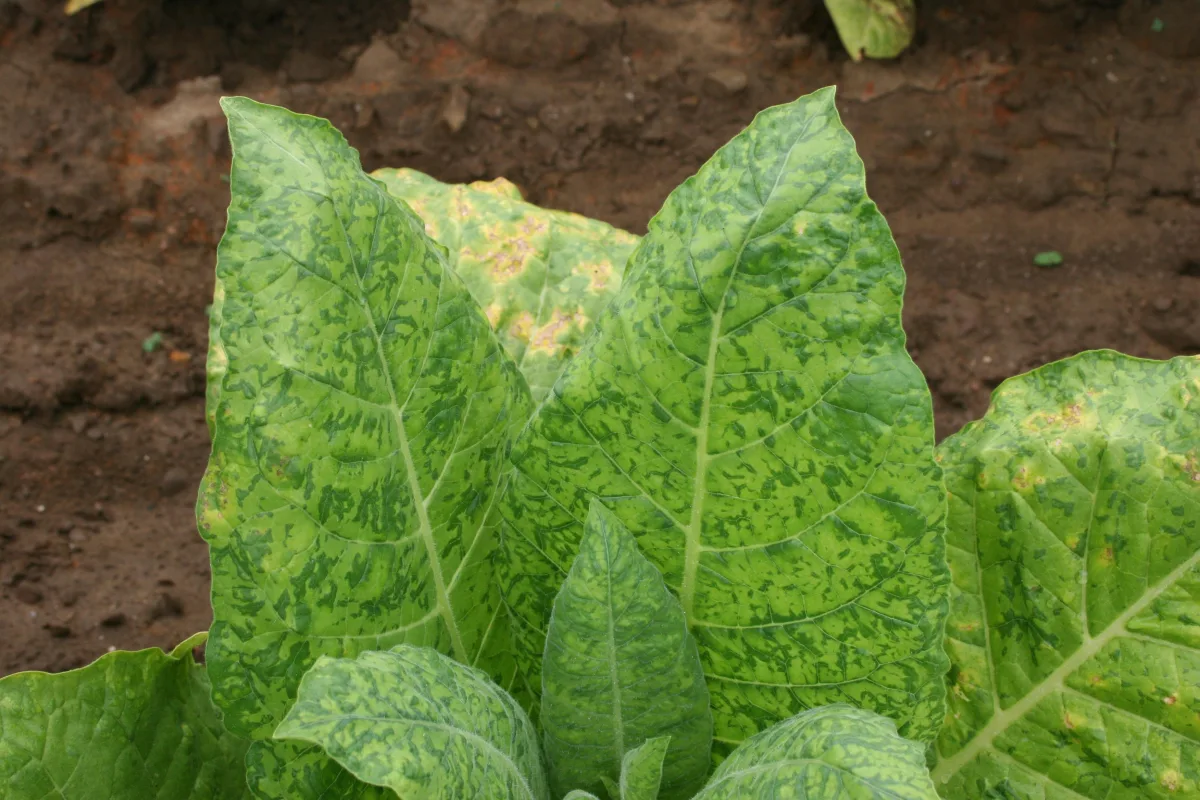
Green mottle cucumber mosaic (caused by the Cucumis virus 2) is less common, but if seedlings are infected early, it can destroy up to 25% of the harvest. The first symptoms appear on the tops of growing shoots, where the 2–3 youngest leaves become covered with light or dark green mottling. In this case, the light areas of the leaf appear flat, while the dark areas are swollen and convex. Depending on the cucumber cultivar, the external manifestation of the disease may vary slightly.
The main source of infection is infected seed, and the virus remains on the seed coat of all seeds from an infected fruit. The pathogen does not penetrate into the embryo, but during the transplanting of seedlings, it easily transfers from the seed coat to the cotyledons. After just 3 weeks, symptoms of mottle mosaic appear on the first true leaves. Subsequently, the infection is instantly spread throughout the greenhouse on the hands, clothing of workers, and blades of knives during plant care.
Natural insect vectors for green mottle mosaic have not been found, and the cucumber is the only host of the virus. However, the pathogen is extremely resilient and can persist on plant residues left on the trellis wire. Water from settling tanks also often becomes a source of infection if diseased plants have been dumped into drainage ditches. When removing diseased bushes from shelves, it is almost impossible to avoid contact of their leaves with neighboring healthy plants, which leads to cross-contamination.
Control measures for mosaic and new viral threats to cucumber
- Harvest losses from green mosaic — up to 25%
- Death when combining CMV and root rot — 7–10 days
- Seed treatment against the virus — 3 days at 70 °C
- Disinfection of pots with cresol acid — 2% solution
- Quarantine zone when removing bushes — 6 plants on each side
When carrying out seed treatment, strictly monitor the temperature. A deviation from the 70 °C regime will either damage the seed material or fail to destroy the virus on the seed coat.
To combat green mottle mosaic, it is necessary to strictly observe sanitary rules. Seedlings with signs of disease are immediately culled. To reduce the risk of the virus transferring between greenhouse sections, workers must use interchangeable overalls. Before beginning grafting work, hands and knives are mandatorily disinfected with a special solution.
- Heat the seed before sowing for 3 days at a temperature of 70 °C to inactivate the virus.
- If diseased seedlings are detected, water the pots with a 2% solution of cresol acid or phenol compounds using a watering can, avoiding direct contact with the plants, and dispose of them.
- If a focal point is discovered in the soil, carefully remove the diseased plants along with the 6 neighboring bushes on each side, moving from the edges of the focus toward its center.
- Before grafting and maintenance, disinfect hands and tools in a trisodium phosphate solution.
A serious danger is a viroid disease of cucumber, recorded in greenhouse farms. Its key sign is the discoloration of the fruit, which take on an unnatural light green or yellow color. It has been experimentally proven that this viroid can also infect tomatoes and eggplants. Infection reservoirs include weeds — spear thistle (Cirsium vulgare) and common groundsel (Senecio vulgaris), although the weeds themselves remain asymptomatic when infected.
Another new threat is pseudo-yellows, the causative agent of which is presumably a virus. On cucumber, the disease causes local uneven yellowing of the tissue between the veins, and the leaf edges curl downward. The pathogen is transmitted by the common greenhouse whitefly (Trialeurodes vaporariorum). The virus also affects common weeds: shepherd's purse (Capsella bursa-pastoris), common groundsel (Senecio vulgaris), perennial sowthistle (Sonchus oleraceus), and dandelion (Taraxacum officinale).
Read next
Plant protection For agronomists
Diagnosis and prevention of rare viral diseases in greenhouse lettuce

Plant protection For agronomists
Viral diseases of crops and their pathogens
Plant protection For agronomists