
Grey and black rot of cucumber in greenhouse conditions
18 min read
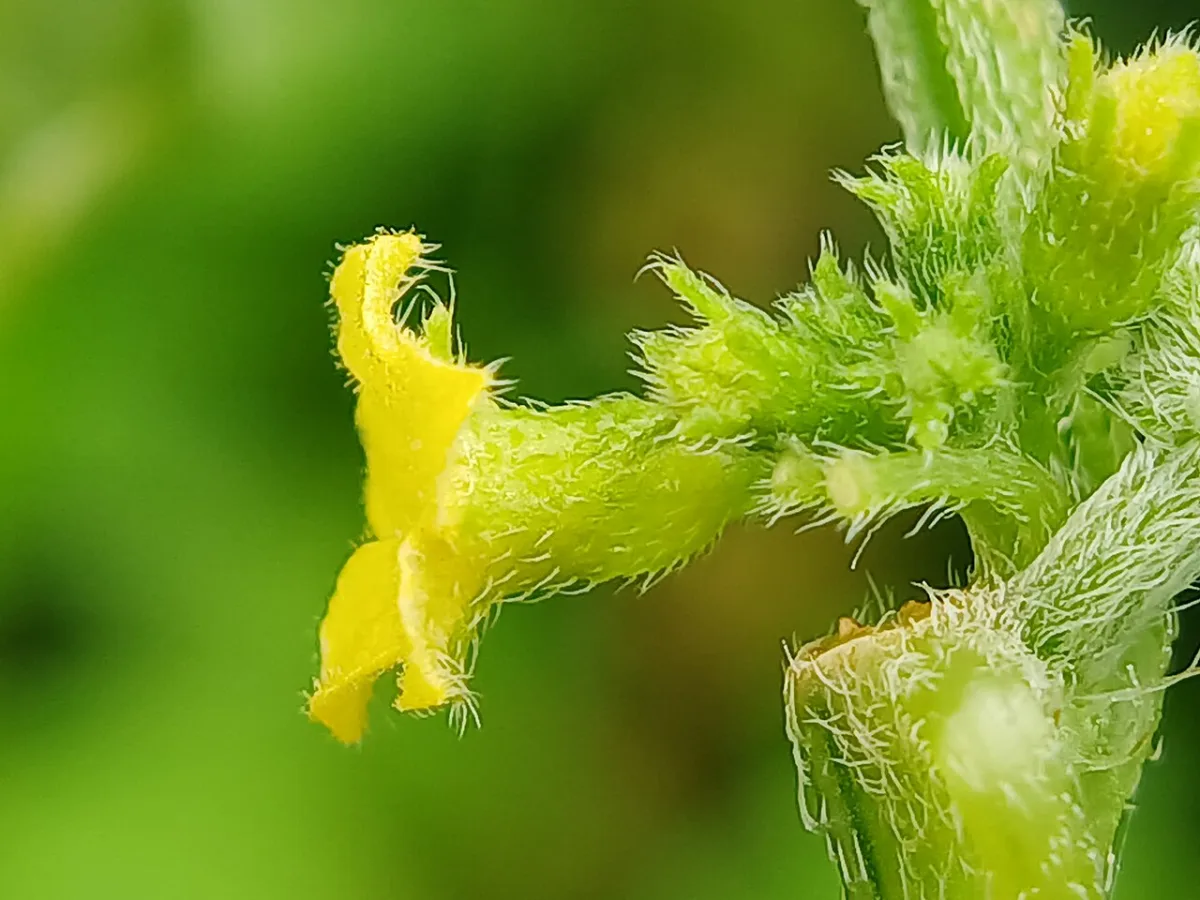
This fungus easily enters plants through aging tissues, wounds, or raw surfaces left after harvesting fruits, removing suckers, or fallen leaves. Once established on a plant, the fungus can infect healthy tissues, especially at the nodes of the main and lateral shoots, which are often covered with a typical grey mold—the pathogen's mycelium. Similar symptoms develop on LEAVES. If ulcers appear on the main shoot, the plant wilts and dies.
The pathogen is often detected on developing fruits, especially during heavy fruiting when some of the fruit sets stop developing. If the disease first appears on fading flowers, mature fruits may also become affected. Soft rot develops at the blossom end of the fruit, often covered with a fluffy grey mold.
In greenhouses, B. cinerea is a common disease of cucumber and many
=” ыы у р | г] ® „ \ вы г \ Я ие 3 ва ыы р <. т: 2 тм к Ее +: м № ч а } рт +4 в 8 ы 5 \ № гори. т о Л щи. ие. ” м А | ы |уъ-а =8. `. д у! \\ Ь ч.; ый ‹ \ 1 * * ‚ у *%. * р ' у -}'А- | › 1 > —й — г „г м к“ р Г Рой ох м | ПР ъ $ ч » у ч.7 в 2.. “ у, } и г = #ё р = = ” 3 8” р - и к ет # — к - Я “ и. У р = ыы ь> о $ „г ай. А я. и 93 с ии $. г A detailed examination of the affected tissue reveals pycnidia and perithecia (bottom), which serve as a diagnostic feature. 7* other crops. With very high relative humidity of the air or prolonged wetting of leaves due to moisture condensation, the disease can reach epiphytotic proportions. Spores are easily carried by the air and populate most plants, but an epiphytotic develops only under conditions favorable to the pathogen.
Control. It is necessary to clear the greenhouse of plant residues and remove dump sites, as dead tissues are often inhabited by the fungus and represent a source of infection. With the first signs of infestation, measures should be taken to reduce the relative humidity of the air within the crop to prevent moisture condensation on the leaves.
Spraying with benzimidazole fungicides or iprodione provides the best effect, although many pathogen isolates are resistant to benzimidazoles.
Black Mycosphaerella stem rot (Didymella bryoniae, syn. Mycosphaerella melonis)
This disease appears frequently, and its symptoms can be found on leaves, stems, and fruits. Like B. cinerea, the rot pathogen is a wound parasite that infects actively developing plants through wounds or aging tissues. Usually, black stem rot appears in April–May; by July–August, it is already widespread. The first symptoms can be detected on wounds, particularly on the "stumps" of removed lateral shoots or leaves. These stumps are colonized by the fungus, and six days after infection, numerous small black perithecia or pycnidia form.
Affected areas expand, and the entire stem begins to be infected. Sometimes the fungus completely colonizes the stem, causing wilting and then the death of the plant.
On leaves, the disease initially manifests as small light-green spots with a yellow halo. Gradually, the center of the spot turns brown and dries out; at this stage, the black fruiting bodies of the pathogen can be found. The tissue at the periphery of the spots becomes diffuse and watery. Spotting is often concentrated along the edges of leaf blades. Young healthy leaves are affected only at high inoculum concentrations and conditions very favorable for the pathogen's development.
Fruit infection apparently occurs during flowering. A soft, wet, grey-green rot initially develops at the blossom end of the fruit. Gradually, the tissue turns black, and the pathogen's pycnidia and perithecia form on it. Sometimes external signs of the disease are absent on infected fruits, but a constriction forms at the end of the fruit, and a longitudinal section of the core shows browning.
Like grey mold, Mycosphaerella rot causes epiphytotics | ‘в, 4 а ы.> ван к # ро х я | А, Я -^ Е УР *у Е д % е 0 $. } | Го * — 47 7% Fig. 8.6. Top — typical arrangement of affected tissue along the edge of the leaf blade; D. bryoniae is characterized by the absence of aerial mycelium and a chlorotic halo around the affected area. Upon detailed examination of the leaf on the affected area, perithecia are usually visible (bottom). in cases of excessively high relative humidity or surface wetting of plants.
Control. The pathogen overwinters in infected plant residues, so they must be removed at the end of the season, as well as the haulm of the previous crop before new sowing. The most effective way to control black stem rot is to reduce the relative humidity of the air, especially from April and in subsequent months, when humidity is almost always very high in the afternoon hours and until late evening.
Fungicides are not particularly effective; among commercially available products, benzimidazoles, iprodione, and imazalil suppress the disease to some extent.
This disease is widespread in greenhouse crops but rarely reaches the level of an epiphytotic. The fungus affects stems, leaves, and fruits. The most typical symptom of this rot is white
S. sclerotiorum is a soil-borne pathogen; its sclerotia persist in the soil for a long time. Upon germination, they form apothecia with ascospores, which are released into the air and, upon landing on a susceptible plant, cause a new outbreak of the disease. The pathogen's hosts include many greenhouse crops and some weeds.
Control. The only effective way to destroy the fungal sclerotia is soil disinfection. The soil surface can be covered with a protective layer, such as polyethylene, which will prevent the release of ascospores into the air. All residues of the affected crop must be carefully collected and removed from the greenhouse so that the sclerotia from the cucumbers do not enter the soil, and burning them is best. Fallen fruits should not be left in the sowing of an affected crop.
Benzimidazoles, iprodione, vinclozolin, and chlorothalonil, applied by the high-volume spraying method, are effective to a certain extent against white rot. Cultivars resistant to S. sclerotiorum have not been developed.
Rusty flowering, slime mold (Physarum serpula)
The myxomycete Physarum serpula is often mistaken for a pathogen causing stem rot. It forms a slimy mass around the stem or on support structures, usually near the soil surface. Gradually, this mass changes, becomes denser, and dries out completely. Its dark reddish-brown clusters can reach 10—15 cm in length, but they crumble into powder when the outer crust is broken.
P. serpula does not penetrate the stem and grows only superficially. It is a non-pathogenic organism that does not affect crop productivity.
Powdery mildew (Sphaerotheca fuliginea and Erysiphe cichoracearum, see page 243) In Northern Europe, the main and widespread causative agent of cucumber powdery mildew is S. fuliginea; in countries with a warm climate and usually low air humidity, E. cichoracearum also appears. The powdery mildew caused by S. fuliginea is described below. Symptoms of infection are round white spots on the surface of mature leaves. These spots can enlarge, multiply, and merge, covering both sides of the leaf blades completely. Severely affected leaves turn brown and die. In addition, the pathogen affects stems. The first signs of the disease are usually detected in early summer; in some cases, powdery mildew also appears in nurseries. Affected plants lag in development, which leads to harvest losses.
Fungal spores are easily carried by air; unlike the spores of many other pathogens, they do not need water for germination, but high relative air humidity (90 %). Spores do not persist long in a greenhouse. Apparently, they serve as the most important source of infection in greenhouse conditions where transplants of a new crop are planted shortly after the harvest of the predecessor.
The pathogen's hosts include some weeds, in particular sow thistle (Sonchus spp.).
Control. Residues of the old crop must be removed from the greenhouse as quickly as possible, and the greenhouse and nurseries must be kept free of weeds.
If biological control of pests, such as the spider mite, is being carried out on cucumbers, only those fungicides that do not have acaricidal properties can be used against powdery mildew; otherwise, the predator population will decrease sharply.
To control powdery mildew, a large number of fungicides are approved; currently, bupirimate and imazalil are considered the most active of the available preparations.
The cultivars VePa and Ueyushch possess resistance to powdery mildew.
This disease posed a serious problem in Lee Valley from 1896 to 1907. In 1903, the resistant cultivar Spencer’s Disease Resister was introduced to England, and its widespread use in production led to the almost complete disappearance of the disease.
The first symptoms of cercosporosis appear on the leaf surface as tiny light-green watery spots. They quickly increase in size and merge, turning gray first, and then reddish-brown. Cercosporosis spots are characterized by distinct outlines and an irregular shape. In cases of severe infestation, leaves wilt and die within two days of infection.
Control. Cercosporosis epiphytotics develop only under conditions of high temperature and humidity; therefore, to suppress the disease, humidity must be kept at a low level. The most effective and economically viable method of controlling cercosporosis is growing resistant cultivars, which include most modern industrial cultivars. Anthracnose (Colletotrichum lagenarium)
Anthracnose is an atypical disease for greenhouse crops, sometimes appearing on transplants, but most often occurring after their... [text fragment intentionally left as is, as per instructions to preserve illegible source text logic if present] ...
Fig. 8.12. Leaf spot caused by Colletotrichum lagenarium.
Leaf and fruit spots of cucumber
When affected by angular leaf spot, light-green watery spots appear on cucumber leaves after planting in the soil. Gradually, they dry out, their center becomes reddish-brown, and a yellow watery border forms around them. Under favorable conditions, the spots merge, causing the leaves to look scorched. Sunken spots appear on stems and petioles, while on fruits they are smaller, look watery, gradually turn pink, and then black. Soft tissues of the stems rot, exposing fibrous vascular bundles.
The pathogen can lead a saprophytic lifestyle on decaying wood or manure bedding. To control this infection, it is sufficient to thoroughly clean the greenhouse of plant residues and avoid high humidity; treatment with fungicides is not required. According to field trials, seed treatment with fungicides is effective against angular leaf spot. Since bacteria spread with water splashes, it is necessary to avoid excessive overhead irrigation.
Other types of spots are rare and do not cause serious damage. For instance, when infected by the fungus Alternaria cucumerina, reddish-brown circular spots appear on the lower leaves, sometimes with concentric rings. When affected by the pathogen Oidium amithii (or O. amithii), leaves are covered with small light spots with a watery dark necrotic rim, sometimes with a chlorotic halo. There are no specific treatment recommendations against O. amithii, but the same fungicides as those used against gray mold, in particular iprodione, are effective.
Downy mildew (peronosporosis), caused by the fungus Pseudoperonospora cubensis, affects only the leaves. Yellow or reddish-brown spots appear on their upper side, while bright red spores form on the lower side in humid weather. The development of the disease is facilitated by a combination of high air humidity and warmth. To control the disease, remove affected leaves and lower the relative air humidity.
- Temperature for spore germination — from 8 to 30 °C
- Optimal germination temperature — from 15 to 20 °C
- Temperature for plant infection — from 16 to 22 °C
Olive leaf spot (cladosporiosis), caused by the fungus Cladosporium cucumerinum, affects a large part of the fruits during severe development. Sticky slime is secreted from small watery spots, around which gray mold grows. Ulcers form on the stems, and spotting sometimes appears on the leaves. Epiphytotics develop only under conditions of low temperature and high air humidity.
Growing resistant cultivars is the most reliable way to minimize economic damage from olive leaf spot. Among available fungicides, benzimidazoles, zineb, and chlorothalonil are the most effective.
Fusarium wilt of cucumber
Fusarium wilt, caused by the soil-borne fungus Fusarium oxysporum f. sp. cucumerinum, affects only cucumber and melon seedlings. At the seedling stage, the pathogen causes pre-emergence seed death and damping-off of seedlings. In the greenhouse, the disease is most damaging within 3–4 weeks after planting transplants into the soil. Initially, the lower leaves wilt, but in the first few days, they recover turgor in the evenings and at night.
Gradually, the entire plant wilts, and the stem vessels near the soil surface darken and may look like silvery-white strands. On a cross-section of the stem in the node area, browned vascular bundles are clearly visible. If the diseased plant is not removed, fluffy white mycelium grows on the stem, which gradually changes color from light pink to red after the cucumber dies. In modern greenhouses, the disease is rare, as many commercial cultivars are resistant to Fusarium.
When red mycelium (the mycelial stage of the fungus) is detected, remove diseased plants extremely carefully. The dusting spores can easily cause a new outbreak of the disease in the greenhouse or contaminate seedling pots and compost.
- Immediately remove the affected plant from the greenhouse and burn it.
- Carefully collect all shoots removed during pinching and plant debris, take them away and destroy them (do not leave them in the aisles).
- With limited spread of wilt, partially replace the contaminated substrate at the end of the season.
All infested soil is thoroughly disinfected (preferably by steaming) and prepared very carefully for planting a new crop; this primarily applies to compost for seedlings, pots, and racks. All structures of the contaminated greenhouse are washed with a 2% formalin solution or fumigated with its vapors. Many modern cultivars possess some resistance to Fusarium wilt.
A highly effective method of protection against Fusarium is grafting the desired cultivar onto a resistant rootstock, for example, Sicyos angulata. The procedure includes the following stages:
- The cultivar seed is sown three days earlier than the rootstock seed.
- Plants are cleft-grafted below the cotyledon leaves of the rootstock.
- Grafting is performed when the first true leaves of both components reach 5—8 cm in size.
- The graft site is bound with a strip of foil, which is easy to remove after the components have healed together.
- The stem of the cultivar is separated gradually (over two weeks).
The graft site should be as high as possible above the soil surface so that the scion does not begin to root. When mulching plants, special care should be taken not to damage the graft.
Verticillium wilt (Verticillium albo-atrum, V. dahliae). The primary symptoms of the infection are similar to those appearing with Fusarium wilt, but Verticillium wilt is significantly less dangerous, and usually only a small number of diseased plants appear in the crop. The infection can be detected at the beginning of the season, usually no later than April. Sometimes, plants affected in the early stages of development recover during the growing season.
Control. It is necessary to disinfect the soil in nurseries and on racks. Irrigations with benzimidazole solutions, especially benomyl, minimize the spread of Verticillium wilt; treated plants sometimes recover.
VIRAL DISEASES. Viral mosaic (Cucumber mosaic virus). The causal agent of cucumber mosaic has a very wide host range. Symptoms on cucumber plants vary depending on environmental conditions and the pathogen strain. Mosaic is widespread in greenhouse conditions, but it causes significant harvest losses only with the simultaneous development of root rots.
Usually, a distinct mosaic pattern of yellow-green color appears on young and aging leaves, as well as on fruits. The nature of the symptoms can also be different on the same plant:
| Type of infection | Description |
| Affected zones | Round and star-shaped |
| Coating | Sometimes silvery is visible |
- bright yellowing sometimes develops along aging leaves;
- on young leaves, chlorosis can be mosaic or ring-shaped.
Usually, the symptoms of infection of CMV (Cucumber Mosaic Virus) are very easy to distinguish from changes associated with plant nutritional disorders by the nature of their distribution on the leaves.
For almost all forms of nutrient deficiency, a clear and uniform distribution of yellowing on interveinal tissues is typical, while with viral mosaic, yellow spots and rings are more often scattered randomly and unevenly.
The causal agent of cucumber mosaic is not transmitted via seed but is spread by aphids, in particular the green peach aphid Myzus persicae, and to a lesser extent, mechanically during manual care of plants and with grafting knives. Potential reservoirs of the virus are numerous weed and crop plants, which pose a danger to the crop.
The BOM does not cause serious damage to early-sown crops, although plants with occasional infestation can be found at the greenhouse entrance.
Read next
Plant protection For agronomists
Effective control methods for gray mold on chrysanthemums in greenhouses
Plant protection For agronomists
Technology of greenhouse lettuce cultivation and methods of disease control
Plant protection For agronomists