
Control of black rot and rhizoctonia during plant propagation by cuttings
5 min read
How to identify cutting rots: symptoms and risks
Black rot (Alternaria blight), caused by the fungus Alternaria dianthi, often affects the base of cuttings shortly after planting. The tissues in the affected area turn black or brown, while leaf spotting develops simultaneously. Severe disease development is usually associated with prolonged cold storage of cuttings before planting. The pathogen produces a vast number of spores that spread rapidly with water droplets during irrigation.
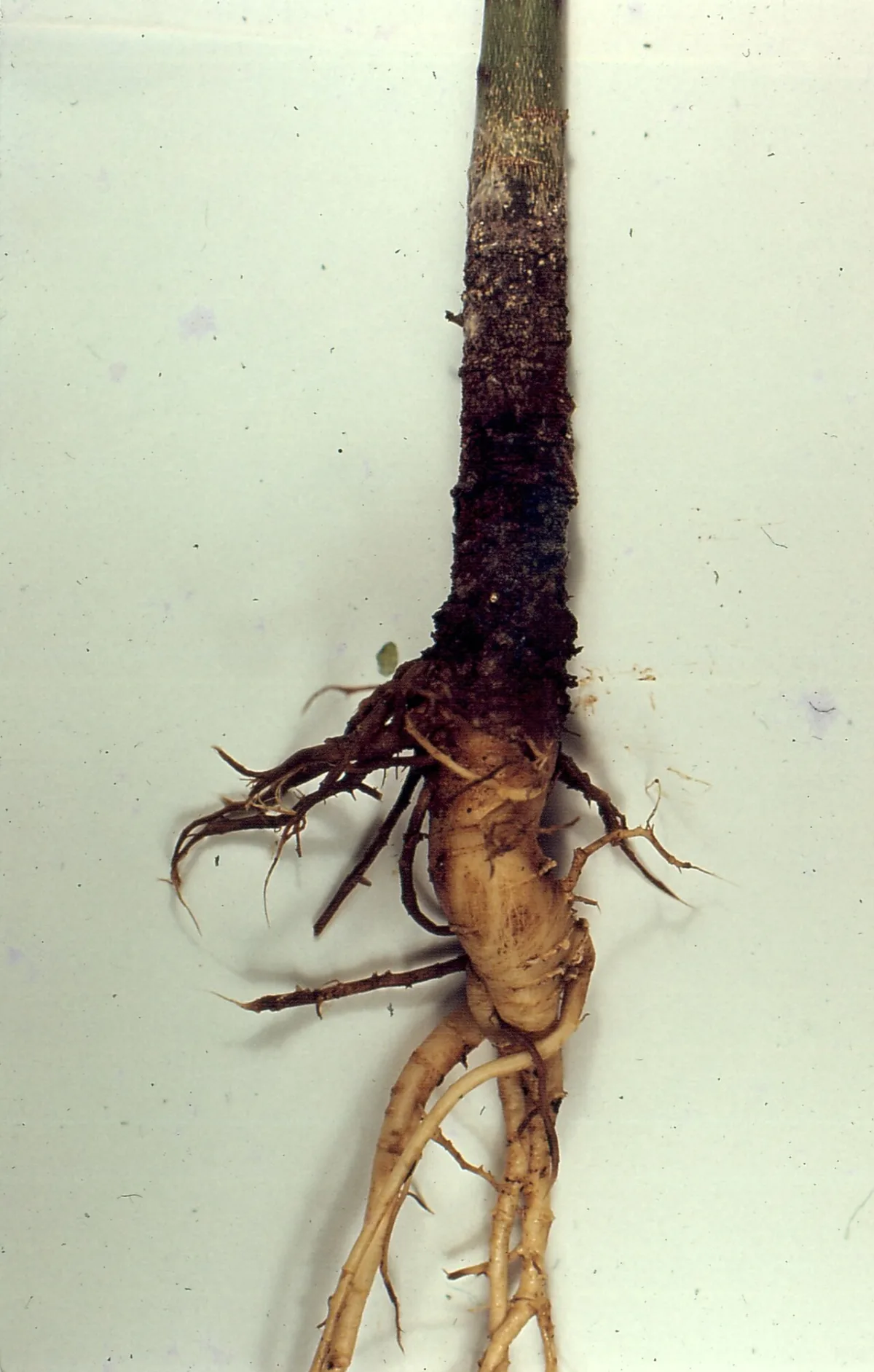
Rhizoctonia stem rot (causative agent: soil-borne fungus Rhizoctonia solani) causes sudden wilting of plants within 1–6 weeks after planting. A dry, light-brown area appears on the stem at or slightly below the soil surface, which may eventually be colonized by secondary microflora and turn into a wet black rot. The primary diagnostic sign of Rhizoctonia is the loss of stem strength in the affected area, making it break easily.
Fusarium basal rot (causative agent: Fusarium culmorum) is a common cause of poor establishment in carnations. The fungus enters through wounds and infects weakened cuttings during the rooting process, moving from the base of the stem up to the first and second node. Affected tissue turns chocolate-colored and is covered with orange-pink sporulation pustules. Unlike Rhizoctonia, with Fusarium, stems rarely break at the soil surface. Other basal rots caused by fungi of the genera Phytophthora and Pythium can also cause wilting of cuttings.
- Manifestation of Rhizoctonia — 1–6 weeks after planting
- Treatment of stock plants — every 7–10 days
- Trimming of the cutting stem — by 0.5 cm at the base
- Interval between treatments after planting — 2 weeks
Protection system: from stock plant to rooting
To prevent losses of cuttings from basal rots, it is necessary to combine chemical treatments and strict adherence to growing technology at all stages of propagation.
- Treatment of stock plants. Spray stock plants with captan or benomyl every 7–10 days. This will prevent the accumulation of infection in the cuttings, even if they have to be stored at low temperatures after cutting.
- Substrate preparation. Before steaming, add peat or other structuring material to the soil. Be sure to disinfect the substrate before planting each new batch of cuttings. To protect against Rhizoctonia, dust the soil with quintozene or perform a high-volume spraying with thiram or iprodione.
- Sorting and preparation of cuttings. Before planting, carefully remove all diseased specimens. If the cuttings could not be planted immediately after cutting, refresh the cut immediately before planting by removing about 0.5 cm of the stem at the base.
- Control of planting conditions. Avoid planting plants too deeply and high concentrations of soluble salts in the soil. Any growth delay in cuttings sharply increases their susceptibility to Fusarium.
- Fungicidal treatments after planting. 2–3 days after planting, perform the first spraying with captan or benomyl. Repeat the treatment 2–3 times at two-week intervals. Weekly treatments with these preparations during the rooting period significantly reduce the risk of infection.
Do not delay treatments against Rhizoctonia. By the time symptoms of wilting are detected, spraying with fungicides is often pointless, as surviving healthy plants have already reached a developmental stage at which they become resistant to the disease.
For Alternaria blight, high-volume spraying with thiram or iprodione helps contain the spread of the infection. However, the disease spreads rapidly after planting, so chemical treatment of stock plants remains the primary element of protection.
Protecting carnation cuttings from Pythium and Phytophthora
When planting carnation cuttings, symptoms similar to those of Fusarium and Rhizoctonia stem rot may appear. However, in such cases, various species of Pythium and Phytophthora are often isolated from the plants. These fungi are pathogenic in wet, poorly drained, and non-disinfected soil.
The infection spreads easily through contaminated personnel hands, working knives, and splashes of water during irrigation.
The pathogen is capable of surviving in the soil, although unlikely for a long period. The main methods of controlling these pathogens are preventing substrate waterlogging and mandatory disinfection. Cuttings from affected stock plants or those infected during propagation will show the symptoms described on page 293.
This disease does not occur in Europe.
- Prevent waterlogging of the soil and ensure good drainage.
- Carry out mandatory soil disinfection before starting work.
- Incorporate etridiazole into the soil before planting cuttings if preliminary disinfection was not performed.
- Water the planted cuttings with a solution of etridiazole if the preparation was not incorporated into the soil before planting.
Read next
Plant protection For agronomists
Diagnostics and control methods for root and stem rots of chrysanthemums
Plant protection For agronomists
Diagnosis and prevention of root rots in ornamental potted crops
Plant protection For agronomists