
The effect of ultramicroelements on the growth and productivity of crops
15 min read
Physiological role of barium, beryllium, and bismuth
Barium is similar to calcium in its effect on metabolism. In ultra-low doses, it stimulates seed germination, increases yield, sugar content in fruits, and their content of ascorbic acid. However, an excess of this element is extremely dangerous for crops: plants become stunted, leaves turn pale, and the overall yield drops.
The absorption of barium by the root system occurs through convective transport and exchange diffusion. The intensity of this process directly depends on the reaction of the environment in the root zone. In acidic soil, the uptake of barium increases sharply, while alkalization blocks its entry into plant tissues.
Beryllium stimulates plant growth and activates beneficial soil microflora. This effect is most pronounced under magnesium deficiency in the nutrient medium, the functions of which beryllium can partially compensate for. The element enters the roots in the form of ions, penetrating laterally along the apoplast. At low concentrations in the soil, roots absorb it actively, while at high concentrations, they absorb it passively.
Exceeding safe concentrations of barium and beryllium causes toxicosis. For barium, the critical threshold is 220–250 mg/kg of ash. Beryllium becomes toxic at a concentration of 1·10⁻⁴–1·10⁻³ M in the solution: it inhibits seed development, blocks the uptake of calcium and magnesium, disrupts phosphorus metabolism, and destroys proteins and enzymes. Signs of beryllium toxicosis include brown, underdeveloped roots and stunted foliage.
Bismuth also positively influences crop productivity, although its average content in dry mass does not exceed 0.02 mg/kg. Microdoses of this element accelerate seed germination, increase leaf blade area, and net photosynthesis productivity. The exact mechanism of its involvement in physiological processes is still being studied, but the pattern of its distribution throughout plant organs is already known.
| Plant organ | Share of bismuth content |
|---|---|
| Roots | Up to 80% |
| Stems and leaves | Smaller portion |
| Generative organs | Smallest portion |
The influence of bromine, tungsten, and cadmium on photosynthesis and metabolism
Bromine is necessary for plants to regulate photosynthesis and stimulate mineral nutrition. It is directly involved in oxygen release by chloroplasts and activates oxidative enzymes. The requirement for bromine is low — about 10 times less is needed than chlorine. Plants easily extract this element from the soil regardless of its type, pH level, or drainage.
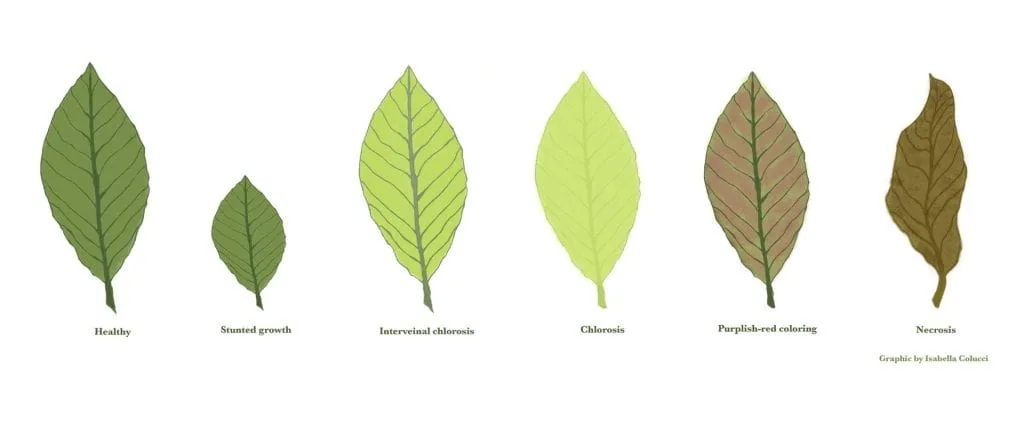
Since bromine can partially replace chlorine, its excess quickly leads to crop poisoning. Symptoms of bromine toxicosis resemble common salt poisoning. First of all, chlorosis develops on the leaves, which eventually turns into tissue necrosis.
Tungsten directly affects energy processes in cells. It participates in cyclic and non-cyclic phosphorylation, helps synthesize plastid pigments, and maintains the functioning of the chloroplast electron transport chain. Plants easily absorb tungsten from the soil solution in the form of cations, and in acidic soil — in the form of Wo₄²⁻ anions, with its total content ranging from 0.001 to 100 mg/kg of dry mass. About one-third of the absorbed element is transported to the above-ground part and accumulates in the stems and leaves.
Cadmium actively participates in nitrogen and protein metabolism. Due to its affinity for sulfhydryl and phosphate groups, it accelerates the synthesis of valuable sulfur-containing amino acids — cystine, cysteine, and methionine. The element is assimilated by both the root system and the leaf apparatus, incorporating itself into rapidly renewing cellular structures. The specifics of its transport to the roots are presented in the table.
| Form of cadmium transport | Share of the total volume |
|---|---|
| Cationic form | Over 90% |
| Organic complexes (via xylem) | About 10% |
In contaminated soils, the level of cadmium in plants can increase 100–400 times compared to the natural background. Since the element is quickly incorporated into metabolism, this requires strict quality control of products.
- Background barium content — 0.01–250 mg/kg
- Natural beryllium level — 0.001–0.4 mg/kg
- Bromine content in dry mass — 0.004–40 mg/kg
- Average tungsten level — 0.15 mg/kg
- Cadmium rate in plants — 0.001–0.1 mg/kg
Cadmium and lithium: balance between toxicity and growth stimulation
Despite the fact that cadmium is classified as an exceptionally toxic element, it is necessary for plants in microdoses. Within its "concentration window," this element acts as a growth stimulant. Microdoses of cadmium increase germination energy and seed emergence, accelerate development, and increase overall crop productivity. However, with systematic excessive intake, the process of toxication begins: decomposition processes start to prevail in the tissues.
- Stimulating cadmium concentration — 10-5 M
- Lithium content in dicots — 1.33 mg/kg
- Lithium content in monocots — 0.85 mg/kg
Lithium is not directly part of the structure of biological compounds, but it is an active regulator of metabolism. Under field conditions, it directly affects nitrogen metabolism, increasing the activity of a key enzyme — nitrate reductase. Lithium regulates the composition of proteins and the activity of enzymes involved in protein-nucleic acid metabolism: glutamate dehydrogenase, aminoacyl-tRNA synthetase, and ribonuclease. By binding to DNA phosphate groups and stabilizing the structure of transfer RNA, the element protects nucleic acids from degradation.
The influence of lithium also extends to carbohydrate metabolism and harvest quality. Under its influence, sucrose synthetase actively breaks down sucrose to form uridine diphosphate glucose and adenosine diphosphate glucose. At the same time, the enzyme phosphorylase accelerates starch breakdown. As a result, the intensity of plant respiration increases, photosynthesis in chloroplasts is activated, and the accumulation of ascorbic acid increases. In alkaloid-bearing crops, lithium stimulates the synthesis of nicotine, atropine, and hyoscyamine.
Lithium ions have the smallest radius among alkali metals, but they are strongly hydrated. Their absorption leads to an increase in the proportion of free and bound water in cells. This changes the colloidal-chemical properties of the protoplasm, increases the water-holding capacity of cells, and significantly increases the drought and heat resistance of the crops.
When working with lithium top dressing, it is important for the agronomist to remember the existence of an absorption barrier in plants. Their physiological response directly depends on the concentration of the element in the soil solution. Exceeding safe dosage rates quickly shifts to a toxic phase and inhibits the crop.
| Type of lithium action | Concentration in nutrient solution, mmol-eq/l |
|---|---|
| Stimulating | 0.018–1.18 |
| Inhibiting | 1.43–11.8 |
Arsenic: impact on microflora and crop resistance
In microdoses, arsenic can have a stimulating effect on plants. On one hand, its compounds act as reducing agents, activating oxidative enzymes in cells and accelerating crop development. On the other hand, the element suppresses the activity of pathogenic microorganisms in the soil. However, a positive effect is observed only at low concentrations.
When growing crops in areas with a risk of contamination, it is important to consider their species-specific sensitivity to arsenic. Chlorophyll-free plants possess the highest resistance to its excess. Other agricultural crops are divided into three groups based on their level of resistance.
| Arsenic resistance group | Agricultural crops |
|---|---|
| Highly resistant | Asparagus, potato, tomato, carrot, tobacco, blackberry, grape, raspberry |
| Moderately resistant | Strawberry, corn, beet, pumpkin, summer squash |
| Low resistance | Onion, pea, cucumber, alfalfa |
Regular application of arsenic-containing compounds leads to the accumulation of the element in the soil and the inhibition of the growth of any crops. Under normal conditions, plants accumulate between 0.009 and 1.5 mg/kg of arsenic in dry matter, whereas in contaminated soils this figure can exceed the critical 6000 mg/kg.
Nickel, rubidium, and titanium: engines of metabolism and photosynthesis
Nickel directly affects nitrogen metabolism and helps plants break dormancy. This element regulates seed germination, the movement of nitrogen through tissues, and the formation of histone proteins. Its presence changes the activity of key enzymes, including urease (which is responsible for the hydrolysis of urea), nitrate reductase, arginase, and peptidase. Furthermore, nickel is a component of polar lipids, stimulating photosynthesis, and accelerates oxidative processes at the cellular level.
Under natural conditions, the nickel content in plants depends on their species and the ecological environment, but average values within families remain stable. Agricultural crops accumulate the element unevenly. Knowledge of these ranges helps to more accurately assess the nutritional value of the harvest.
| Agricultural crop / group | Nickel content, mg/kg dry mass |
|---|---|
| Poaceae | 0.1–0.7 |
| Legumes | 1.2–2.7 |
| Vegetable crops | 0.2–4.0 (average 0.50) |
Rubidium regulates the water regime and the biosynthesis of organic substances by changing the colloidal state of the cytoplasm. The element accumulates primarily in vegetative organs. Plants absorb it very actively: the concentration of rubidium in tissues usually exceeds its content in the soil. In metabolic processes, rubidium can partially replace potassium ions in compounds, although it is not capable of fully replacing potassium.
Titanium acts as a powerful stimulant for energy accumulation. Due to easy transition between valencies (Ti2+ ⇄ Ti3+ ⇄ Ti4+), it participates in vital redox reactions. Titanium accelerates the transfer of electrons through the chloroplast transport chain and activates photophosphorylation. As a result, more carbohydrates and macroergic phosphates accumulate in the leaves, which increases the overall productivity of the crops. At the same time, the biological absorption coefficient of titanium usually does not exceed unity.
- Rubidium content in dry mass — 0.8·10–2–1.2·10–2 %
- Proportion of lead moving from roots to shoots — no more than 3–5 %
- Range of titanium content in dry mass — 0.05–5000 mg/kg
- Average nickel content in vegetables — 0.50 mg/kg
- Natural lead content in plants — 0.001–10.0 mg/kg
Lead and fluorine: absorption barriers and toxin accumulation risks
Lead is not recognized as an essential element, but its ultra-low concentrations in the growth medium can stimulate growth. In most cases, microdoses of lead accelerate seed germination and carbohydrate synthesis. It is curious that when the content of this element in the medium is critically low, inhibition of plant metabolism may be observed.
Plants protect their reproductive organs from the toxic effects of lead with the help of rigid internal barriers. Roots absorb lead passively and bind it firmly in the cell walls in the form of insoluble phosphates. Only a small portion of the element is transported from the root system to the aboveground organs.
The concentration of lead in tissues is distributed acropetally — from bottom to top. In herbaceous crops, it decreases in the order: roots > leaves > stems > fruits (seeds). In woody species, the distribution order looks like this: roots > bark > leaves > wood > fruits (seeds). Thanks to this mechanism, seeds and fruits are protected from the heavy metal most strongly.
| Crop group | Natural lead content, mg/kg of dry mass |
|---|---|
| Cereals | 0.01–7.50 |
| Vegetables | 0.01–1.3 |
| Fruits | 0.03–0.4 |
In soils with an excess of lead, its concentration in plants can exceed the background level by 2–5, and sometimes by 10 times. At the same time, gaseous fluorine in the form of hydrogen fluoride (HF) is capable of penetrating leaves bypassing the roots — directly through the stomata, while solid fluorides are absorbed by the entire surface of the aboveground organs.
Fluorine enters plants not only through the root system but also from the air. Soluble soil forms of fluorine are absorbed by roots passively and easily move with the upward flow of water. From the atmosphere, the element is assimilated in gaseous form through leaf stomata, and in the form of solid dust particles — it is absorbed by the entire surface of the aboveground organs.
| Plant | Fluorine content, mg/kg of dry mass |
|---|---|
| Tea | 75–100 |
| Parsley | 30–35 |
Physiological role of chromium and pathways of its intake
Chromium belongs to ultra-trace elements that are required by agricultural crops in minimal quantities. In optimal doses, it increases the activity of acid phosphatase, participates in electron transfer, and regulates glucose metabolism. This positively affects growth rates, plant development, and their final productivity.
Crops absorb chromium mainly from the soil through the root system, which depends on the presence of soluble compounds of the element. It is also possible for chromium to enter through leaves during foliar application. However, with foliar feeding, the main part of the element remains at the points of contact, and only a negligible amount is transported to the roots. In the dry matter of healthy plants, the chromium content ranges from 0.005 to 0.3 mg/kg.
Interrelation of root nutrition and photosynthesis
Agricultural crops are autotrophic organisms and synthesize organic substances from mineral compounds independently. The accumulation of dry mass occurs due to air nutrition through leaves, which assimilate carbon dioxide, and root nutrition, which provides the supply of water, nitrogen, and ash elements. The stem acts as a connecting link. Through xylem vessels, water and minerals rise upward, and through the sieve tubes of the phloem, the products of photosynthesis go downward to the roots.
The efficiency of photosynthesis directly depends on the availability of nutrients, which serve as building material or catalysts for processes in leaves. Macroelements such as nitrogen, phosphorus, sulfur, and magnesium form the photosynthetic apparatus itself. Other substances — potassium, iron, manganese, and copper — are not directly included in chloroplasts, but they control the synthesis of pigments. It is important for an agronomist to control the balance of these elements, as each of them performs its own unique function:
- Nitrogen is a component of proteins and chlorophyll, stimulating their synthesis, and is also responsible for the formation of amino acids and organic acids;
- Potassium and calcium regulate the colloidal state of the cytoplasm, influencing the intensity of photosynthesis and the accumulation of proteins, carbohydrates, and chlorophyll;
- Phosphorus is part of phosphorylated compounds that ensure the assimilation of carbon dioxide, the regeneration of pentose phosphates, and energy storage in the form of ATP;
- Boron forms complex compounds with sugars, accelerating their outflow from the leaves.
Deficiency of magnesium, iron, zinc, manganese, copper, or cobalt reduces the intensity of carbon dioxide assimilation. As a result, leaf chlorosis develops in crops, which sharply reduces the overall productivity of plants. At the same time, not only deficiency but also an excess of certain elements in the soil or working solution is harmful.
Excess sodium, aluminum, fluorine, and chlorine negatively affect the biosynthesis of plastid pigments and inhibit the process of photosynthesis.
Balanced mineral nutrition stimulates photosynthesis, which, in turn, enhances the absorption capacity of the roots. Organic substances derived from leaves are converted in the roots into amino acids and organic acids, which are necessary for binding new nutrients. Furthermore, the ATP produced during photosynthesis is consumed for the reduction of nitrates and sulfates in the root system.
Plant nutrition is a unified vital process. The assimilation of elements by the roots and photosynthesis in the leaves mutually stimulate and support each other.
Read next
Agrochemistry For students
The role of mineral nutrients in the photosynthetic activity of plants
Agrochemistry For students
The effect of phosphorus fertilizer on soil properties and water bodies
Agrochemistry For students