
Geochemical characteristics and beryllium accumulation in soils
3 min read
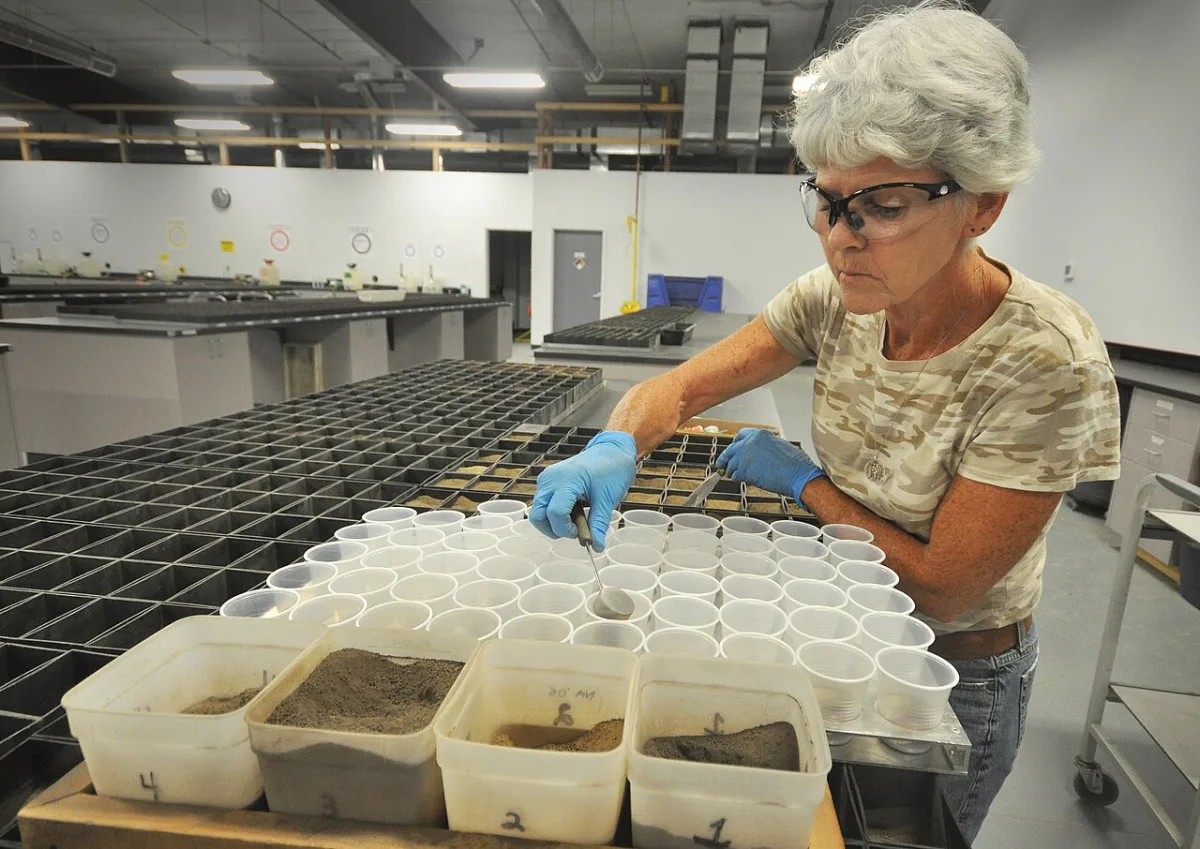
Beryllium belongs to trace elements, and its accumulation in the soil directly affects the ecological safety of the grown crops. The natural beryllium content in soils ranges from 2·10-4 to 1·10-3%, which, under the conditions of the Russian Federation and neighboring countries, amounts to 1.2 to 13.0 mg/kg. This element is firmly held in the upper plough layer, as it is easily bound by humic and fulvic acids. The maximum beryllium concentration is always associated with the humus layer, regardless of the soil type in the field.
- Clarke in soil — 2·10-4 %
- Clarke in plants — 0.12·10-4 %
- Background content in soils — about 1 mg/kg
- Limit for technogenic pollution — 15–50 mg/kg
Geochemical properties of beryllium and risks of its accumulation in soil
In terms of its geochemical properties, beryllium is similar to aluminum; however, the small size of its atoms and high electronegativity complicate its behavior in the soil solution. The element is most often found in the form of a divalent cation Be2+ or oxygen compounds, and in an alkaline environment, it transforms into complex anions Be(OH)CO3- and Be(CO3)22-. Beryllium is capable of replacing aluminum, magnesium, and iron in the crystal lattice of montmorillonite, which is why it is particularly firmly bound by clay minerals.
The primary source of the element is soil-forming rocks. There are 55 known beryllium minerals in nature, among which beryl, phenakite, bertrandite, gelbertrandite, chrysoberyl, helvite, genthelvite, bavenite, euclase, beryllium-bearing margarite, and leucophane are the most common. The distribution of the element in rocks is uneven: maximum concentrations are characteristic of acidic igneous rocks and clays, while minimum concentrations are found in ultrabasic rocks and sandstones.
| Igneous rocks | Beryllium content, mg/kg | Sedimentary rocks | Beryllium content, mg/kg |
|---|---|---|---|
| Ultrabasic | 0.1–0.7 | Clays | 2–6 |
| Basic | 0.3–1.0 | Shales | 2–5 |
| Intermediate | 1.0–1.8 | Sandstones | 0.2–1.0 |
| Acidic | 2.0–6.5 | Limestones | 0.2–2.0 |
In addition to natural factors, human economic activity influences the concentration of the element in the plough layer. Although the overall technophilicity of beryllium is currently estimated to be low, the volumes of its involvement in circulation are growing due to the development of nuclear technology and coal combustion. The risk of excessive accumulation of the element is particularly high for farms located near industrial centers and thermal power plants.
Near metallurgical plants and coal-fired power plants, the beryllium concentration in the soil can increase to 15–50 mg/kg. Furthermore, an elevated level of the element is always observed on lands in areas of its natural deposits.
For a general geochemical assessment, it is also important to consider beryllium clarkes in other environments: in the Earth's crust, it is 3.8·10-4%, in seawater — 8.8·10-12%, and in livestock animals — 0.3·10-6%. The element's thalassophilicity index is 1.5·10-7. In the soil, beryllium can also exist as part of complex ions BeO22-, Be2O32-, BeO46-, and Be2O2+, which determines its mobility when the acidity of the environment changes.
Read next
Agrochemistry For students
The effect of ultramicroelements on the growth and productivity of crops

Agrochemistry For students
The role of molybdenum in soils and patterns of its distribution
Agrochemistry For students