
Production, properties and application specifics of precipitate as a phosphorus fertilizer
21 min read
Precipitate: properties, production, and specifics of application
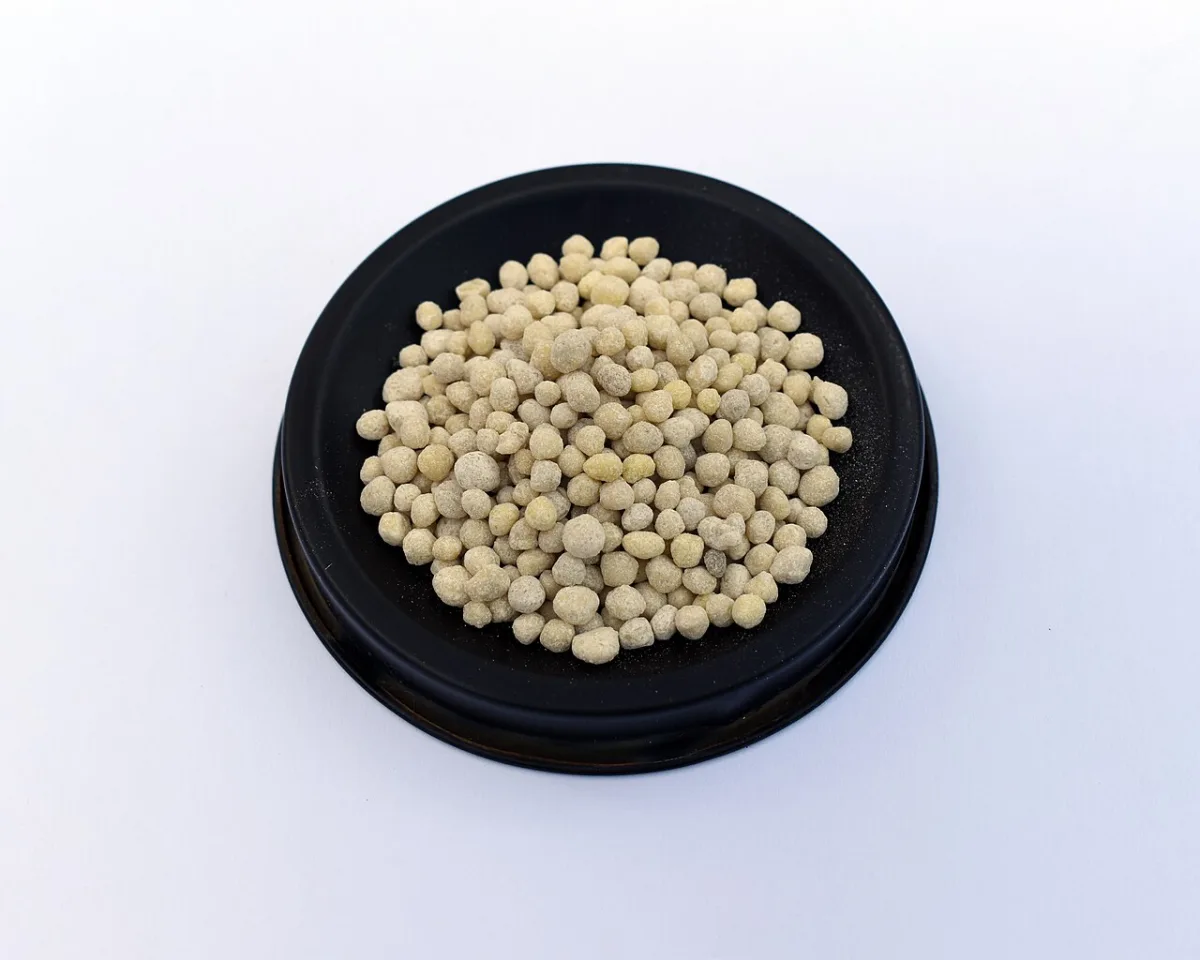
Precipitate (dicalcium phosphate CaHPO4·2H2O) is a concentrated phosphorus fertilizer containing between 25 and 35% citrate-soluble phosphorus available to plants. The fertilizer is produced in the form of a fine white powder with good physical properties: it does not cake, is easy to spread, and can be mixed with any other fertilizers. It is used as a base fertilizer for all crops.
- Proportion of available phosphorus — 25–35%
- Bulk density — 0.8 t/m³
- Number of production stages — 2
In acidic soils, precipitate outperforms superphosphate in terms of its effect on yield. Unlike superphosphate, it is resistant to retrogradation and does not bind into poorly available iron and aluminum phosphates.
The production of precipitate consists of two sequential technological stages:
- Extraction of phosphoric acid from phosphorite. The raw material is treated with sulfuric or hydrochloric acid according to the reactions: Ca3(PO4)2 + 3H2SO4 + 6H2O = 2H3PO4 + 3CaSO4·2H2O or Ca3(PO4)2 + 6HCl = 2H3PO4 + 3CaCl2. With sulfuric acid treatment, ultra-fine grinding of the phosphorite is necessary; otherwise, the resulting gypsum will block the reaction. When using hydrochloric acid, the degree of grinding is not critical, as the resulting calcium chloride is highly soluble.
- Precipitation of phosphoric acid. The acid is neutralized with milk of lime (a suspension of calcium hydroxide) or calcium carbonate (a suspension of chalk). First, calcium dihydrogen phosphate is formed: 2H3PO4 + Ca(OH)2 = Ca(H2PO4)2 + 2H2O (or with CaCO3: 2H3PO4 + CaCO3 = Ca(H2PO4)2 + CO2 + H2O). Then, by reacting with new portions of alkali or chalk, it converts into dicalcium phosphate: Ca(H2PO4)2 + Ca(OH)2 + H2O = 2CaHPO4·2H2O (or with CaCO3: Ca(H2PO4)2 + CaCO3 + 3H2O = 2(CaHPO4·2H2O) + CO2).
Precipitate is very dusty during application. Perform work in calm weather and adjust spreading equipment taking into account the high dustiness of the powder.
There is also a method for the simultaneous production of precipitate and calcium nitrate by decomposing phosphorites with nitric acid: Ca3(PO4)2 + 6HNO3 = 3Ca(NO3)2 + 2H3PO4. After the precipitation of phosphoric acid with milk of lime, calcium nitrate remains in the solution, which is isolated by evaporation. Precipitate from bones, obtained during the production of gelatin, is characterized by high purity. The product from phosphorites contains impurities: tricalcium phosphate, gypsum, and iron and aluminum phosphates.
Phosphate slag and Thomas slag: specifics of the application of metallurgical waste
Open-hearth phosphate slag and Thomas slag are ground byproducts of iron processing. Phosphorus in them is predominantly in a citrate-soluble form, accessible to the root system of plants, but entirely devoid of a water-soluble fraction. Both fertilizers have an alkaline reaction and work best in acidic and slightly acidic soils.
| Characteristic | Open-hearth phosphate slag | Thomas slag |
|---|---|---|
| Base chemical formula | 4CaO·P2O5·CaSiO3 | 4CaO·P2O5+4CaO·P2O5·CaSiO3 (mainly Ca4P2O9) |
| Total P2O5 content | From 8 to 12% | 14–20% |
| Citric-soluble P2O5 content | Almost all phosphorus is citrate-soluble | From 7–8 to 16–20% (in 2% citric acid; by standard, not less than 14%) |
| Density | Heavy powder | 2.0 t/m3 |
| Medium reaction (pH) | 8–9 | Alkaline (contains free calcium oxide) |
| Impurities and trace elements | Calcium oxide (up to 30%), magnesium oxide (9%), manganese oxide (about 10%), compounds of iron, silicon; trace elements: molybdenum, copper, cobalt | Free calcium oxide, oxides of magnesium, iron, aluminum, manganese, silicon |
Due to the low content of the active ingredient, it is advisable to use open-hearth phosphate slag only near its production sites. It is used exclusively as a base fertilizer before ploughing; sugar beet responds excellently to it. Due to its rich composition, it also serves as a microfertilizer. It is not recommended for top dressing or local placement in rows.
Thomas slag is obtained in converters when melting metal with the addition of limestone according to the formula: 4CaO + P2O5 = 4CaO∙P2O5. The floating slag is separated, cooled, and ground into a heavy dark gray or black powder. It possesses good flowability and does not cake during storage.
Open-hearth phosphate slag and Thomas slag are absolutely unsuitable for top dressing and local placement. Use them exclusively for broadcast base application before ploughing with mandatory incorporation into the soil.
The efficiency of Thomas slag depends directly on the fineness of its grinding. The commercial product must strictly comply with the following standards:
- Sieve mesh diameter for passage — 2 mm
- Maximum residue on 0.175 mm sieve — 15%
- Minimum content of citric-soluble P2O5 — 14%
Thomas slag is an alkaline fertilizer. It contains about 10–12% calcium oxide, therefore it must not be mixed with ammonium salts. This fertilizer should be applied for tillage or pre-sowing cultivation on all soils where Thomas slag decomposes into calcium phosphate and calcium hydroxide:
Freshly formed calcium phosphate is available to plants. The resulting calcium hydroxide interacts with the soil, reducing its acidity:
[Soil Adsorption Complex]2H+Ca(OH)2 ⇄ [Soil Adsorption Complex]Ca + 2H2O.
A similar reaction occurs with the calcium oxide contained in Thomas slag as an impurity.
Thomas slag is the most versatile phosphorus fertilizer, as it can be applied to all soils. In chernozems, it is slightly less effective than superphosphate, but it provides a noticeable residual effect. On acidic podzolic soils, and especially on acidic peaty soils, Thomas slag has a clear advantage over superphosphate, because its application results in the formation of Ca(HCO3)2, which to some extent eliminates the acidity of the soil solution and reduces the amount of hydrogen ions in an adsorbed state. On light sandy soils with a low cation exchange capacity and, consequently, a small absolute amount of adsorbed hydrogen, the application of Thomas slag can significantly eliminate soil acidity.
Defluorinated phosphate [α Ca3(PO4)2 + 4CaO·P2O5·CaSiO3]. It is obtained by geothermal treatment of a mixture of apatite or phosphorite with a small amount of silica (2–3% SiO2) at temperatures around 1450–1550 °С. At such temperatures, the crystal lattice of fluorapatite is destroyed and fluorine is removed in gaseous form, while phosphorus transitions into a form assimilable by plants. The total reaction of hydrothermal decomposition of apatite in the presence of silica can be represented as follows: n[Ca3(PO4)2]3CaF2 + mSiO2 + nН2O = 10nCaO·3nР2О5·mSiO2 + nНF.
Depending on the raw material, the resulting product contains from 30–32% (from apatite) to 20–22% (from phosphorite) of citrate-soluble P2O5. In appearance, the fertilizer is a light-gray finely ground powder. Defluorinated phosphate has good physical properties: it is non-hygroscopic, does not cake, and is easy to spread. It is a valuable fertilizer for basal application, especially on acidic soils. It is not used for top dressing. Defluorinated phosphate, like Thomas slag, must not be mixed with ammonium fertilizers.
Thermophosphate (Na2O·3CaO·P2O5 + SiO2). It is obtained by melting or sintering ground phosphate with alkaline salts – soda, potash, or natural potassium silicates, as well as with potassium sulfates and sodium. This results in the formation of calcium-sodium or calcium-potassium phosphates assimilable by plants (CaNaPO4 + Ca2SiO4 or CaKPO4 + CaSiO4):
Ca10(PO4)6 F2+ 4Na2CO3 + 2SiO2 → 6NaCaPO4 + 2Ca2SiO4 + 2NaF + 4CO2.
Thermophosphates contain 20–34% P2O5 soluble in citric acid or citrate solution, about 30% calcium, which partially acts as a base, and also contains small amounts of micronutrients. It is easily pulverized and cakes, making this fertilizer difficult to apply to the soil. It is better to use it for preparing complex fertilizers, in particular, phosphorus-potassium ones. It is a very effective fertilizer for basal application on acidic soils. During the hydrolysis of sodium-calcium phosphate in the soil, calcium and sodium hydroxides are formed, and phosphoric acid anions are absorbed by plant roots. The presence of calcium and sodium ions reduces soil acidity and prevents the formation of iron and aluminum phosphates. Silicic acid is adsorbed on the surface of clay minerals, as well as iron and aluminum oxides, which weakens the fixation of phosphate ions by the soil.
Fused magnesium phosphate [α Ca3(PO4)2·MgSiO3]. Like slags, it belongs to thermophosphates. It is obtained by melting natural phosphates with magnesium-containing compounds (magnesium silicates – olivinite, serpentinite) at temperatures around 1350–1400 °С followed by rapid cooling of the melt with water. It consists of glassy transparent granules of various shapes and sizes. The color of the granules changes depending on the raw material from bright green to almost black. It contains 19-21% P2O5 soluble in citric acid, and 8–14% MgO. Density is 1.7 t/m3. The fertilizer has good physical properties: it is non-hygroscopic, does not cake, and contains no free acid. Its effectiveness depends on particle size. When applying the fertilizer to sod-podzolic loamy soils, particle size is of less importance than when using it on typical sierozems. Most of the fused magnesium phosphate (60%) should pass through a sieve with 0.074 mm diameter holes, and the rest of the mass through a sieve with 0.147 mm holes.
Finely ground fused magnesium phosphate is a highly effective fertilizer for all types of soil, and its performance during basal application is comparable to that of superphosphate and Thomas slag. On acidic light soils that require magnesium fertilizers, fused magnesium phosphate is not only a phosphorus fertilizer but also a magnesium fertilizer, which to some extent neutralizes soil acidity.
Red phosphorus (Rp) is one of the allotropic modifications of phosphorus. This is a collective term used to describe many different partially crystalline forms, each of which is colored red with varying intensity. Their density is in the range of 2–2.4 g/cm3, and the melting point is in the range of 585–610 °C. Red phosphorus is poorly soluble in water and is not toxic. It behaves like a high polymer. Red phosphorus reacts directly with oxygen, sulfur, halogens, and metals, but does not react with aqueous alkalis.
Red phosphorus: application specifics and soil processes
- P2O5 content in red phosphorus — 229%
- Utilization rate by plants — 75–85%
- Phosphorus reserve in granulated mixtures — for 4–5 years
- P2O5 content in technical metaphosphate — 63–68%
Red phosphorus (Rp) is the most concentrated phosphorus fertilizer, containing 229% in terms of P2O5. It is non-toxic to plants, does not leach from the soil profile, and can be applied once to last for several years. In industry, red phosphorus is produced in two phases. First, white phosphorus is produced: a mixture of phosphate ore, silica, and coke is heated in electric furnaces at a temperature of 1400–1500 °C with an electricity consumption of about 1200 kWh per ton of product. In total, this reaction proceeds according to the scheme: 2Ca3(PO4)2 + 6SiO2 + 10C → 6CaSiO3 + 10CO + P4 (with the most probable mechanism being initial acid substitution resulting in P4O10, which is then reduced by coke).
In the second stage, white phosphorus is converted into red by heating at 260 °C. Industrial amorphous red phosphorus with a conchoidal fracture is obtained in closed containers at a temperature of about 350 °C; the color of the finished product varies from pale yellowish-red to dark violet-red. Upon entering the soil, red phosphorus oxidizes very slowly into orthophosphoric acid. Under the influence of nitric and sulfuric acids, oxidation proceeds much more actively:
Рк + 5HNO3 → H3PO4 + 5NO2 + H2O
4Рк + 8H2SO4 → 4H3PO4 + S + 7SO2 + 2H2O
Red phosphorus oxidizes slowly in the soil. To activate the process, it must be applied together with an additive of copper sulfate (CuSO4·5Н2О), which acts as a catalyst, at a rate of 1% of pure copper by weight of phosphorus.
In acidic and slightly acidic soils, the resulting orthophosphoric acid is bound by active sesquioxides of aluminum and iron. On sod-podzolic soil, about 20% of the applied red phosphorus converts into compounds available to cereal crops within three weeks of incorporation. During the first growing season, plants absorb 15–17% of the element, while the rest forms a soil reserve for subsequent years. The total utilization rate of red phosphorus reaches 75–85%, with soil acidity having no effect on its availability.
In soils with acidic and slightly acidic reactions, phosphate ion binding occurs according to the following schemes:
- Al(OH)3 + H3PO4 → AlPO4↓ + 3H2O
- Fe(OH)3 + H3PO4 → FePO4↓ + 3H2O
Granulation of red phosphorus does not reduce its effectiveness. When granulated together with superphosphate, a synergistic effect is observed, and the aftereffect of such a mixture exceeds that of pure superphosphate. Red phosphorus is excellent for preparing concentrated binary (with urea or ammonium sulfate) and ternary (with urea and potassium chloride) fertilizers with a total content of active ingredients of about 50%. When formulating such mixtures, phosphorus is applied with a reserve for 4–5 years, potassium — calculated for a year or several years, and nitrogen — strictly according to the annual requirement.
Calcium polyphosphate and metaphosphate: properties and solubility
Calcium polyphosphate is a promising concentrated fertilizer containing from 40% to 60% P2O5. In the soil, the condensed phosphates it contains are gradually hydrolyzed into orthophosphates, converting into a form available to plants. In the acid-thermal production method, phosphate rock is treated with phosphoric acid and melted at a temperature of 1100–1200 °C, producing a product with a citrate-soluble phosphorus content of 55–58%. The low-temperature synthesis method also allows obtaining a fertilizer with a P2O5 concentration in the range of 40–60%.
To guarantee the presence of rapidly available phosphorus in calcium polyphosphate, water-soluble orthophosphates are added at the granulation stage.
Calcium metaphosphate Ca(PO3)2 is a concentrated powdered fertilizer applicable to most soil types. The chemically pure product contains 71.68% P2O5 and 28.32% CaO, while the technical-grade product contains 63–68% citrate-soluble P2O5. The agronomic effectiveness of calcium metaphosphate depends directly on the share of the water-soluble fraction. The fertilizer is assimilated by crops significantly better if the predominant part of the phosphorus in its composition is in a water-soluble form.
Fospal: properties and application features
Fospal is a concentrated single-nutrient phosphorus fertilizer obtained through the thermal processing of aluminum-calcium phosphates from Senegal. During the roasting of the raw ore, the crystalline structure of the mineral crandallite (PO₄)₂Al₃Ca(OH)₅ is destroyed. This leads to the formation of new compounds with high solubility in the soil solution. The fertilizer has a characteristic reddish-ochre hue due to the conversion of iron into free oxide form.
- Ore roasting temperature — 550–600 °С
- P₂O₅ content in Fospal — 32–34 %
- Bulk density of phosphate rock flour — 1.4–1.8 t/m³
- Particle size of phosphate rock flour — up to 0.18 mm
- Critical humidity of phosphate rock flour — 3.7 %
The Senegalese ore from which Fospal is produced initially contains double calcium and aluminum phosphate. In addition to phosphorus (29.5% P₂O₅), it includes calcium carbonates, aluminum hydroxide, iron oxide, as well as zinc, copper, and boron. During thermal processing of the raw material, about 15.5% of chemically bound water is removed, which increases the concentration of the active ingredient. The composition of the finished product after roasting is shown in the table.
| Component | Content |
|---|---|
| Total P₂O₅ | 32–34 % |
| P₂O₅ soluble in Joulie reagent | 27 % |
| Al₂O₃ | 34 % |
| Fe₂O₃ | 11.5 % |
| CaO | 10.4 % |
| MgO | 3 % |
| SiO₂ | 2.9 % |
| TiO₂ | 1.7 % |
| Zinc (Zn) | 400 mg/kg |
| Boron (B) | 250 mg/kg |
| Manganese (Mn) | 150 mg/kg |
| Cobalt (Co) | 60 mg/kg |
| Molybdenum (Mo) | 10 mg/kg |
Fospal is chemically neutral in an aqueous suspension, so it can be mixed with nitrogen and potash fertilizers without the risk of unwanted chemical reactions. The fertilizer is not hygroscopic and does not cake, which ensures uniform distribution across the field in any weather. It is also used as a base to produce granulated complex NP and PK fertilizers by mixing with urea or potassium chloride followed by pressing.
Finely ground Fospal is very dusty. It is not recommended to apply it in windy weather, as this leads to significant losses of the preparation and uneven distribution over the field area.
Phosphate rock flour: application on acidic soils
Phosphate rock flour is a sparingly soluble fertilizer in the form of a heavy, dark gray powder obtained by grinding natural phosphorites. The phosphorus in it is in the form of fluorapatite, hydroxylapatite, and carbonate-apatite, i.e., primarily in the form of tricalcium phosphate Ca₃(PO₄)₂. These compounds do not dissolve in water or weak acids, remaining poorly accessible to most agricultural crops. To convert this element into a state accessible to plants, the influence of soil acidity is required.
To assess quality, four grades of phosphate rock flour are produced, differing in the content of the active ingredient. Standards for phosphorus content are strictly regulated.
| Fertilizer grade | Minimum P₂O₅ content |
|---|---|
| А | 29 % |
| Б | 26 % |
| В | 23 % |
| Г | 20 % |
Phosphate rock flour maintains flowability only at a humidity of no more than 3.7%. Exceeding this limit leads to a loss of physical properties and complicates mechanized application.
The effectiveness of using phosphate rock flour depends directly on soil and climatic conditions and the physical properties of the fertilizer itself. When planning application, an agronomist must consider the following key factors:
- Soil acidity. In soils with a hydrolytic acidity of less than 20–25 mmol-eq/kg, decomposition proceeds weakly, and the effectiveness of the fertilizer is extremely low. The higher the acidity, the faster the transition of phosphorus into an accessible form.
- Absorption capacity. At an equal level of acidity, phosphate rock flour works more effectively on soils with a lower cation exchange capacity.
- Origin of raw material. Geologically young nodular phosphorites with an amorphous structure are assimilated by plants significantly better than ancient crystalline varieties.
- Fineness of grinding. A residue of no more than 10% by mass on a 0.18 mm sieve is allowed. Fine grinding increases the contact area with the soil, which is critically important in podzolized and leached chernozems, where natural acidity is insufficient for the rapid dissolution of large particles.
The chemistry of the process of phosphorus transition into accessible forms under the influence of actual and potential soil acidity is described by the following interaction reactions:
- Ca₃(PO₄)₂ + 2HNO₃ = 2CaHPO₄ + Ca(NO₃)₂
- Ca₃(PO₄)₂ + 4HNO₃ = Ca(H₂PO₄)₂ + 2Ca(NO₃)₂
- Ca₃(PO₄)₂ + 2H₂CO₃ → 2CaHPO₄ + Ca(HCO₃)₂
- [Soil adsorption complex]2H + Ca(HCO₃)₂ → [Soil adsorption complex]Ca + 2H₂CO₃
It is prohibited to mix phosphate rock with lime. The alkaline reaction of lime materials neutralizes soil acidity, completely blocking the dissolution of calcium phosphate and rendering the fertilizer useless.
How to improve the bioavailability of poorly soluble phosphates
The efficiency of phosphorus uptake from poorly soluble compounds directly depends on the biological characteristics of the crop. Plants are divided into two main groups based on their ability to absorb phosphorus from phosphate rock:
- Sensitive to soil acidity — cereals, flax, beet, potato, as well as pea, bean, vetch, and clover. They utilize poorly soluble phosphorus only in acidic soils. Among them, winter rye, clover, and pea absorb it somewhat better than other crops in the group.
- Tolerant to neutral environments — lupine, buckwheat, sainfoin, and mustard. They efficiently absorb phosphorus from phosphate rock in slightly acidic and even neutral soil solutions, and also actively extract it from the soil itself.
The phosphorus requirement of plants changes throughout the season. During the first period of the growing season, most crops hardly absorb poorly soluble forms of phosphorus. As the root system grows and develops, this ability increases significantly.
In acidic soils, an agronomist can manage phosphorus availability using companion fertilizers. Physiologically acidic fertilizers increase the efficiency of phosphate rock, while physiologically alkaline forms and lime materials decrease it. For maximum effect, it is recommended to compost phosphate rock with organic matter or use it to neutralize acidic mineral fertilizers.
Phosphate rock should be applied well in advance in the autumn, with mandatory deep incorporation. The highest yield increase is achieved by joint application with manure in fallow under winter crops, as well as under row crops — sugar beet, potato, and corn. The effect of the fertilizer lasts for several years: the higher the single application rate, the stronger and longer the residual effect.
Vivianite application and precipitate production technology
Vivianite (hydrous iron(II) phosphate Fe3(РO4)2·8Н2O) contains 43.03% iron(II) oxide, 28.29% P2O5, and 26.68% H2O. The mineral is found in ferruginous sedimentary deposits and lowland peat bogs. At depth, the earthy variety of vivianite (blue bog iron ore) has a dirty-white color, but upon extraction to the surface, it quickly turns blue, dries out, and turns into a fine, dusty powder with a density of 2.6–2.7 t/m³ and a hardness of 1.5–2.0 on the mineralogical scale.
During storage in the open air, vivianite gradually turns into limonite (brown iron ore). This is due to the oxidation of iron under the influence of oxygen.
Bog iron ore is used as a phosphate fertilizer on sod-podzolic, grey forest soils, and leached chernozems. The mineral crumbles easily upon drying and is easily spread over the field. The ore composition includes 30–50% peat, 12–26% P2O5, 16–25% FeO, and a small amount of calcium. In terms of its effect on yield, vivianite is similar to phosphate rock.
- Vivianite application rate — 90–120 kg P₂O₅/ha
- P₂O₅ content in bog iron ore — 12–26%
- Peat content in vivianite — 30–50%
- Steam pressure during bone degluing — 1.5–2 atm
Another source of phosphorus is bone meal — a byproduct of bone processing. In its raw state, crushed bone hardly decomposes in the soil, as the fat contained within it prevents particles from being wetted by water. To turn the raw material into an easily available fertilizer, it undergoes thermal or chemical processing. The average chemical composition of raw bones is presented in the table.
| Component | Content, % |
|---|---|
| Ca3(PO4)2 | 58–62 |
| Mg3(PO4)2 | 1–2 |
| CaCO3 | 6–7 |
| Organic matter (fat and glue) | 26–30 |
| including fat | 10–15 |
| Nitrogen in glue substance | 4–5 |
Simple calcination of bones burns off organic matter but sharply reduces phosphorus availability. Under the influence of high temperatures, orthophosphoric acid converts into pyro- and metaphosphoric acids (H3РO4 → H4Р2O7 and HРO3), which plants can hardly absorb.
To preserve nutritional value, bones are processed using the extraction method. This technology allows for the production of high-quality glue (gelatin) from ossein and the conversion of phosphoric acid into a precipitate easily available to plants.
- Extraction of fat from bones using gasoline.
- Treatment of degreased raw materials with steam at a pressure of 1.5–2 atm followed by washing with water to remove the glue.
- Treatment of the remaining mineral bone mass with hydrochloric acid to dissolve calcium and magnesium phosphates.
- Precipitation of phosphoric acid from the resulting hydrochloric acid solution with milk of lime, forming a precipitate according to the equation: H3РО4 + Са(ОН)2 = СаНРО4·2Н2O.
Field application of bone meal
Degreased and deglued bone meal serves as a valuable source of prolonged phosphorus nutrition. The main part of the phosphorus is in the form of tricalcium phosphate, which does not dissolve in water but gradually shifts to an available state under the action of soil acids. In its action, this fertilizer is similar to phosphate rock, yet it surpasses it in effectiveness on most crops.
- Phosphorus content (P2O5) — 30–35 %
- Nitrogen content (N) — up to 1 %
- Form of phosphorus — tricalcium phosphate
Bone meal provides the greatest harvest increase on acidic sod-podzolic soils. The fertilizer is effective for all main crops. The only exception is lupine — when growing it, the return from bone meal and phosphate rock is virtually identical.
To accelerate the release of nutrients, it is recommended to apply bone meal together with physiologically acidic nitrogen fertilizers. They acidify the soil solution, helping to convert poorly soluble tricalcium phosphate into a form available to plants.
Do not combine the application of bone meal with liming. Lime neutralizes soil acidity, which blocks the process of tricalcium phosphate dissolution and causes a sharp drop in phosphorus availability for plants.
Read next
Agrochemistry For students
Production technologies for nitrogen-phosphorus fertilizers nitrophos and nitrophoska
Agrochemistry For students
Production technology and application features of ammophos in agriculture
Agrochemistry For students