
Production technology and application features of ammophos in agriculture
15 min read
There are two main methods of producing compound fertilizers: a) based on extraction phosphoric acid followed by the production of ammonium phosphates; b) based on nitric acid decomposition of phosphate raw materials.
Compound fertilizers include binary (ammonium polyphosphate, ammophos, diammonium phosphate, nitroammophos, nitrophos, carboammophos, urea phosphates, phosphorus-potassium) and ternary (nitrophoska, nitroammophoska, carboammophoska) fertilizers.
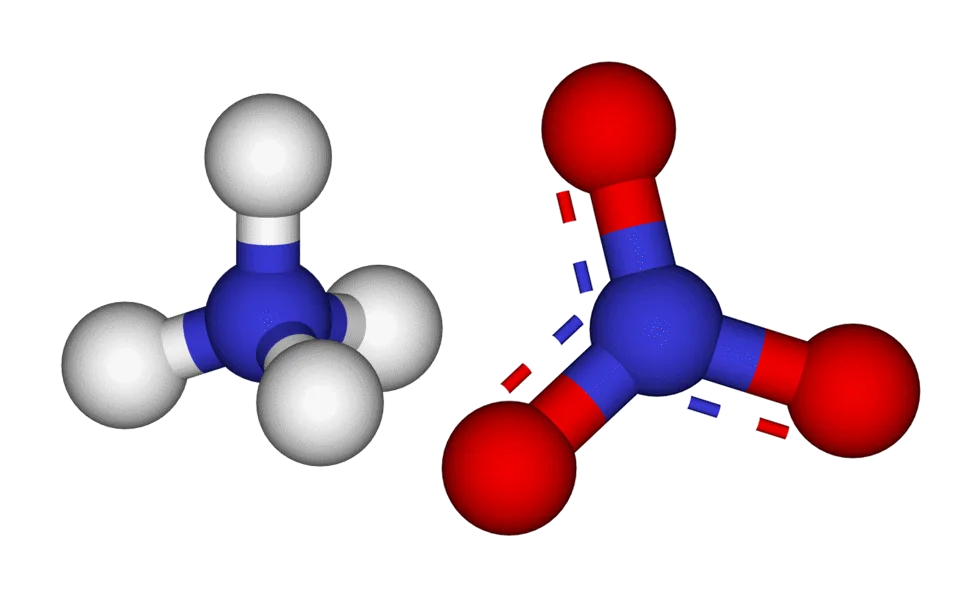
Ammophos NH4H2PO4 is ammonium dihydrogen phosphate. The ions constituting this salt (ammonium and the anion of phosphoric acid) are necessary for all crops and are easily absorbed by plants in all types of soil. Ammophos contains 11–12% N and 46–60% P2O5. It contains no ballast. The production technology for ammophos is simple: ammonia is neutralized with phosphoric acid:
NH3 + H3PO4 = NH4H2PO4
Ammophos is primarily composed of ammonium dihydrogen phosphate – NH4H2PO4 – and partially of ammonium hydrogen phosphate – (NH4)2HPO4. Their ratio is approximately 4:1. In addition to ammonium phosphates, ammophos may contain iron and aluminum phosphates, fluoride compounds, magnesium, and other impurities that transfer into the ammophos from the source phosphoric acid.
The total P2O5 content in ammophos is similar to or 1–1.5% higher than the available P2O5 content. Ammophos derived from apatite concentrate is almost completely water-soluble. Ammophos derived from phosphorites contains about 20% of the total phosphorus (P2O5) in a form that is water-insoluble but soluble in weak organic acids.
Ammophos can be used as a primary fertilizer for grain crops, sugar beet, and potatoes; it is particularly effective when applied in rows. It is advisable to use ammophos on all soils, as well as in arid regions where nitrogen fertilizers are required in much smaller quantities than phosphorus fertilizers. It is promising for soybean cultivation. The phosphorus contained in ammophos is more mobile in the soil than the phosphorus in superphosphate, so it can also be used for plant top dressing if phosphate fertilizer was not applied in a timely manner.
The optimal granule size for ammophos depends on many factors: soil and climatic conditions, methods of fertilizer application, and requirements for dry bulk blending. In carbonate soils (serozems), when using primary application, ammophos with finer particles is more effective; in sod-podzolic soil, no differences were found in the effectiveness of fertilizers with 1–4 mm granules. When applying ammophos in rows at low rates, the presence of large granules (3–4 mm) in amounts exceeding 25% is undesirable. In granulated ammophos, the quantity of granules sized 1–4 mm should be at least 90%.
This fertilizer contains 4 times more phosphorus than nitrogen; therefore, in most cases, ammophos must be mixed with nitrogen fertilizers and sometimes with potassium fertilizers. It serves as a good component for fertilizer blends.
Diammonium phosphate [(NH4)2HPO4] is ammonium hydrogen phosphate. The production of diammonium phosphate is based on the saturation of free phosphoric acid with ammonia. If this process is continued, diammonium phosphate is obtained, in which the ratio of nitrogen to phosphorus is approximately 1:2.5:
2NH3 + H3PO4 = (NH4)2HPO4.
It contains 18% N and 46% P2O5. This is the most concentrated of all compound fertilizers. Diammonium phosphate is a ballast-free fertilizer; 1 centner of it replaces 2.5–3 centners of ordinary superphosphate and 0.7 centners of ammonium nitrate; it possesses good physical properties. It is used as a primary or pre-sowing fertilizer on all soil types, including deep ordinary chernozems, for grain crops, cotton, sugar beet, vegetables, ornamentals, and fruit/berry crops.
Diammonium phosphate is highly soluble in water, and therefore, it can be used for plant top dressing. When applying it in rows, furrows, or holes, direct contact between the fertilizer and seeds or plants must be avoided to prevent potential negative effects from the high concentration of ammonium nitrogen in the diammonium phosphate on the plants' root system.
Ammophos and diammonium phosphate have an advantage over superphosphate because their phosphate ions are less firmly chemically bound in the soil and are therefore more available. In addition, ammonium phosphates are ballast-free and do not create high concentrations that could be harmful to sprouts and seeds. The N:P ratio in these fertilizers corresponds to the needs of plants in the very first periods of their development, when phosphorus is especially necessary.
Potassium metaphosphate (KPO3)n is a complex, highly concentrated phosphorus-potassium fertilizer that contains no ballast impurities. It contains 60% P2O5 and 40% K2O. Its production is based on the interaction of potassium chloride with phosphoric acid at high temperatures. The reaction for producing potassium metaphosphate from potassium chloride and orthophosphoric acid occurs at a temperature of 350–450°C. Initially, potassium monophosphate and hydrochloric acid are formed, and subsequently (during dehydration), potassium metaphosphate is produced:
KCl + Н3РО4 = КН2РО4 КН2РО4 = (КРO3)n + nН2O.
Use of potassium metaphosphate and potassium nitrate for chloride-sensitive crops
Potassium metaphosphate is a chlorine-free polymeric compound that is perfectly suited for crops sensitive to chlorine. The rate at which it converts into an available form depends on the degree of polymerization: modern technologies allow for the production of a short-chain product with 15 to 50 phosphorus atoms. Such fertilizer quickly hydrolyzes in the soil into orthophosphate and trimetaphosphate. Furthermore, the lower the degree of polymerization, the more orthophosphate is formed at the initial stage of hydrolysis.
The fertilizer is resistant to leaching from the root zone, so it is effective to apply it during autumn ploughing. Potassium metaphosphate has good flowability, does not cake, and absorbs almost no moisture from the air at average humidity. It is recommended to use it on soils that are already sufficiently supplied with nitrogen. Depending on the raw materials used, forms of potassium metaphosphate containing 54% P2O5 (water-soluble form) and 35–40% K2O, or 60% P2O5 (citrate-soluble form) and 40% K2O are produced.
- Potassium content in potassium nitrate — 46% K2O
- Nitrogen content in potassium nitrate — 13% N
- Phosphorus in water-soluble metaphosphate — 54% P2O5
- Phosphorus in citrate-soluble metaphosphate — 60% P2O5
Potassium nitrate is a concentrated, physiologically alkaline fertilizer. Under field conditions, every centner of this fertilizer effectively replaces more than 1 centner of potassium salt and about 0.4 centners of ammonium nitrate. Due to the absence of chlorine and the broad ratio of potassium to nitrogen, potassium nitrate is indispensable for late top dressing of potatoes and root crops. During this growing season, plants require increased potassium nutrition with minimal nitrogen consumption.
The use of potassium nitrate is extremely promising in greenhouse conditions. Its application allows for a reduction in the total concentration of salts in the nutrient substrate, particularly sulfates and chlorides, which are harmful to greenhouses. Industrial potassium nitrate is obtained via a conversion process from concentrated solutions of sodium nitrate and standard potassium chloride. The fertilizer is supplied as a white crystalline powder with a slight yellowish-gray tint, which dissolves easily in water and attracts moisture weakly.
Potassium nitrate requires strict adherence to storage conditions. To avoid caking, the fertilizer should be transported and stored only with protection from moisture, in water-resistant bags, and in dry, closed warehouse facilities.
Metaphosphate and ammonium polyphosphates for optimizing plant nutrition
Ammonium metaphosphate is a highly concentrated source of phosphorus and nitrogen, which is obtained by the reaction of ammonia with phosphorus anhydride. About 40–60% of the nitrogen and phosphorus in this fertilizer is initially poorly soluble in water. However, after application to the soil, they gradually hydrolyze and convert into available water-soluble compounds. The speed of this process depends directly on the acidity of the environment: in acidic sod-podzolic soils, the transformation of metaphosphates into orthophosphates occurs significantly faster than in chernozems. This fertilizer is suitable as a base fertilizer for any agricultural crops.
- Phosphorus in ammonium metaphosphate — 80% P2O5
- Nitrogen in ammonium metaphosphate — 17% N
- Phosphorus in polyphosphoric acid — 74.5–76% P2O5
Ammonium polyphosphates are salts obtained by neutralizing polyphosphoric acids with gaseous ammonia under pressure. The starting material is orthophosphoric acid of extraction or thermal origin. During the heating process under vacuum, molecular condensation occurs with the release of water — for example, according to the scheme H5P3O10 → 3HPO3 + H2O. The superphosphoric acid obtained in this way contains from 74.5 to 76% P2O5, ensuring a high concentration of elements in the final fertilizer.
| Name of polyphosphoric acid | Molecular formula | Number of phosphorus atoms (n) in the formula Hn+2PnO3n+1 |
|---|---|---|
| Orthophosphoric acid | H3PO4 | 1 |
| Pyrophosphoric acid | H4P2O7 | 2 |
| Tripolyphosphoric acid | H5P3O10 | 3 |
| Tetrapolyphosphoric acid | H6P4O13 | 4 |
The phosphate part of ammonium polyphosphates consists of PO43– anion tetrahedra linked by P–O–P pyrophosphate bridges into long chains. Depending on the configuration of these chains, the compounds can be linear polyphosphates, cyclic metaphosphates, or branched ultraphosphates.
Specific features of using ammonium polyphosphates
For practical use, tri- and tetraammonium pyrophosphates are the most valuable. They are distinguished by a high total concentration of nitrogen and phosphorus, as well as an optimal ratio of these elements. Due to their good solubility, they are used in dry form or introduced as a base component in liquid and suspension fertilizers.
| Fertilizer | Formula | Nitrogen (N), % | Phosphorus (P₂O₅), % | Total nutrients, % |
|---|---|---|---|---|
| Diammonium phosphate | (NH₄)₂H₂P₂O₇ | 13.2 | 66.7 | 79.9 |
| Triammonium pyrophosphate | (NH₄)₃HP₂O₇ | 18.3 | 62.0 | 80.3 |
| Tetraammonium pyrophosphate | (NH₄)₄P₂O₇ | 22.7 | 57.7 | 80.4 |
| Pentaammonium tripolyphosphate dihydrate | (NH₄)₅P₃O₁₀·2H₂O | 18.4 | 56.2 | 74.6 |
| Hexaammonium tetrapolyphosphate hexahydrate | (NH₄)₆P₄O₁₃·6H₂O | 15.4 | 26.1 | 41.5 |
Once in the soil, polyphosphates gradually hydrolyze into orthophosphates (for example, following the scheme H₆P₄O₁₃ + 3H₂O → 4H₃PO₄). The rate of this process depends on soil and climatic conditions:
- Acidity: in an acidic environment, hydrolysis occurs faster than in a neutral or alkaline one.
- Temperature: warming the soil from 20 to 30 °C accelerates hydrolysis twofold. In humid tropical and subtropical regions, the process is faster than in temperate latitudes due to high biological activity.
- Biota and enzymes: decomposition is accelerated by soil enzymes (e.g., phosphatase), root exudates of plants, and microflora.
- Soil type: particle-size distribution and mineralogical composition influence the transformation of compounds. Polyphosphates bind to soil minerals more strongly than orthophosphates.
Since the hydrolysis of polyphosphates in the soil is slow and stepwise (taking 1–2 weeks), the risk of phosphorus retrogradation is minimal. The released phosphorus is immediately absorbed by roots before it can bind with aluminum and iron cations.
Ammonium polyphosphate is produced in durable granules with a size of 1.4–2.8 mm with good physical properties. The fertilizer mixes perfectly with ammonium nitrate, urea, ammonium sulfate, and potassium chloride without degrading the physical properties of the mixture. It can be applied directly for any crops on all soil types, especially when a wide nitrogen-to-phosphorus ratio is required. In terms of field efficiency, this fertilizer is equivalent to standard ammonium phosphates.
Phosphoammomagnesia and iron ammonium phosphate: specialized forms
Phosphoammomagnesia (magnesium ammonium phosphate) exists in two forms. The monohydrate variety (MgNH₄PO₄·H₂O) is of practical interest. It is obtained from magnesium salts—chloride, sulfate, or oxide. The salt precipitation reaction occurs at a temperature of 80–100 °C, and the finished product is stable during storage and heat-resistant up to 230 °C. Magnesite is also used for production: it is decomposed with extraction phosphoric acid (43.5–49.5% P₂O₅) at 100 °C, and then the slurry is ammoniated with a 25% aqueous ammonia solution until pH 10 is reached.
- Nitrogen (N) content — 9%
- Phosphorus (P₂O₅) content — 45.7%
- Magnesium (MgO) content — 25.9%
- Synthesis temperature — 80–100 °C
- Product thermal stability — up to 230 °C
This is a slow-release fertilizer, slightly soluble in water. When applied at the phosphorus rate, it fully meets the magnesium demand in poor soils. However, the nitrogen content is unbalanced, so it must be supplemented with other nitrogen fertilizers. Monohydrate magnesium ammonium phosphate is suitable for preparing magnesium-containing fertilizer mixtures with urea, potassium chloride, or potassium sulfate.
During base application on phosphorus-deficient soils, the fertilizer is as effective as superphosphate with ammonium nitrate. If the soil lacks both phosphorus and magnesium, phosphoammomagnesia outperforms magnesium-free phosphates. The preparation can be applied for all crops at high rates without the risk of plant burn. It is highly effective for vegetable growing in greenhouses, and due to its water-insoluble nitrogen, it is indispensable on irrigated lands.
It is inadvisable to use hexahydrate magnesium ammonium phosphate (MgNH₄PO₄·6H₂O). It contains 35% fewer nutrients (28.9% P₂O₅, 5.75% N, 16.4% MgO) and is unstable during storage. The fertilizer begins to lose ammonia at room temperature, and at 30–35 °C, losses become significant. Furthermore, in 50 days under conditions of absolute humidity, it absorbs 44.6% water.
Iron ammonium phosphate (FeNH₄PO₄·H₂O) contains 38% P₂O₅, 29% Fe, and 9.64% NH₄. The fertilizer is recommended to be used strictly for pre-sowing treatment of seeds and foliar top dressing in cases of iron deficiency. It cannot serve as a primary source of nitrogen or phosphorus: calculating the rate based on phosphorus will lead to a toxic excess of iron for plants, and calculating based on iron will provide negligible doses of nitrogen and phosphorus.
Potassium-phosphorus concentrated fertilizers
Monopotassium orthophosphate (KH2PO4) is a concentrated water-soluble fertilizer containing 52.2% P2O5 and 34.6% K2O. Due to its high purity and excellent physical properties, the salt is actively used to prepare nutrient solutions in protected ground. In open fields, the fertilizer is suitable for any soil types for vegetable and fruit crops. It can be applied both in dry form and as part of liquid complex mixtures.
Despite its high agronomic value, the widespread use of monopotassium orthophosphate in field conditions is limited by its high cost compared to standard potash fertilizers — potassium chloride and potassium sulfate.
Ammonium potassium phosphate (NH4KHPO4) contains 5% nitrogen, 50% phosphorus, and 23% potassium. All elements are in a form easily accessible to plants; however, their ratio (N:P2O5:K2O = 1:10:5) is not balanced for most crops. When using it, an agronomist must additionally apply simple nitrogen and potassium fertilizers. For this reason, and also due to economic infeasibility, this fertilizer is currently not commercially produced.
Potassium polyphosphate is obtained by the reaction of potassium chloride with polyphosphoric acids. The standard technological process includes several sequential stages:
- Dosing of initial components.
- Mixing and carrying out the chemical reaction.
- Granulation of the finished melt and its cooling.
- Sifting, crushing of large fractions, and conditioning.
An alternative production method is based on the interaction of a solution of potassium carbonate (K2CO3) or potassium hydroxide (KOH) with phosphorus pentoxide (P2O5) vapors in bubbling columns, followed by processing of the solutions.
- Phosphorus (P2O5) — 48–51%
- Potassium (K2O) — 26–32%
- Chlorine (Cl) — about 4%
- Water-soluble phosphorus — 68%
- Citrate-soluble phosphorus — 9%
The low chlorine content makes potassium polyphosphate a valuable fertilizer for potatoes, tobacco, grapes, and other chlorine-sensitive crops. The physical properties of the fertilizer allow it to be stored and applied using standard machinery without any issues. At the same time, the chemical composition of potassium polyphosphates can vary depending on the raw materials used.
| Chemical compound | P2O5 content, % | K2O content, % | H2O content, % |
|---|---|---|---|
| KH3P2O7·H2O | 60.5 | 20.3 | 19.2 |
| K3H5(P2O7)2 | 58.2 | 30.1 | 11.7 |
| K2H2P2O7·0.5H2O | 53.5 | 35.9 | 10.6 |
| K2H2P2O7 | 55.0 | 37.1 | 7.9 |
| K4H2P2O7·3H2O | 37.1 | 48.9 | 14.0 |
| K4P2O7 | 43.1 | 57.1 | — |
Nitrogen-phosphorus compounds based on urea and amides
Urea phosphate is synthesized from thermal phosphoric acid and urea. The finished fertilizer contains 16–19.6% nitrogen and 41–45% phosphorus. It possesses good physicochemical properties and is resistant to caking. An important advantage of this form is reduced nitrogen losses compared to pure urea. Furthermore, phosphorus from this compound is less strongly bound by the soil than from superphosphate, remaining in a form available to roots for a longer period.
Urea phosphate and urea polyphosphates are not suitable for surface application on meadows and pastures. Upon contact with air on the surface of the turf, nitrogen volatilizes rapidly, which reduces the overall efficiency of the top dressing.
According to the results of field experiments on sod-podzolic soils, chernozems, and sierozems, urea phosphate has shown high efficiency. During basal and pre-sowing application for various agricultural crops, it was not inferior to nitrophoska. The fertilizer also performed at the level of an equivalent mixture of simple fertilizers — urea, double superphosphate, and potassium chloride.
Urea polyphosphates are obtained through the ammoniation of the reaction product of concentrated thermal phosphoric acid with urea. The finished fertilizer contains 31–35% nitrogen and 24–31% P2O5. By adjusting the proportions of raw materials, the manufacturer can change the nitrogen-to-phosphorus ratio in the finished grade, and the addition of potassium salts allows for the production of triple fertilizers (e.g., 20–20–20 grades). These formulations are advisable to use on light soils for flax, potatoes, and wheat.
Phosphorus amides belong to ultra-concentrated fertilizers, where the total content of nutrients (nitrogen and phosphorus) reaches 120–147%. The use of phosphorus pentoxide allows for the production of amides and imides of phosphoric acids, as well as dehydrated ammonium phosphates. These compounds dissolve slowly in water, are not leached from the root zone by precipitation, and are not fixed by soil colloids.
The interaction of P2O5 with ammonia forms a mixture of compounds of different composition:
- diamidopyrophosphoric acid;
- dibasic ammonium salt of monoamidopyrophosphoric acid;
- ammonium salt of polyphosphoric acid containing amide groups (NH2) in the phosphorus atom chain.
Among pure amide forms, phosphonitrile amide (54% nitrogen and 93% P2O5) and orthophosphoric acid triamide (44% nitrogen and 75% P2O5) are of high value. In terms of impact on crop yield, the efficiency of orthophosphoric acid triamide is comparable to the joint application of ammonium nitrate and monoammonium phosphate.
Read next
Agrochemistry For students
Technology and rules for the mixing of mineral fertilizers in agricultural production
Agrochemistry For students
Production and properties of single superphosphate as a mineral fertilizer
Agrochemistry For students