
Organization of phytotechnics and rules for tying grapevine bushes
17 min read
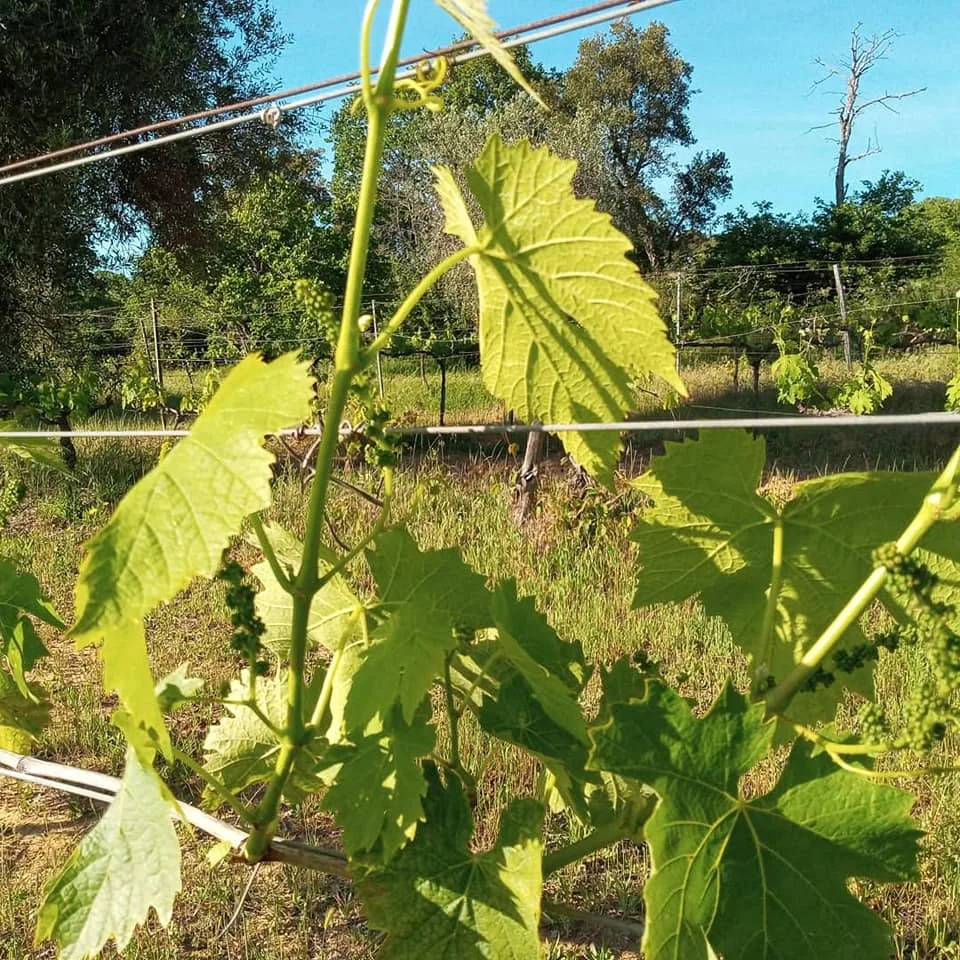
To obtain a high-quality grape harvest, phytotechnology is used — operations involving the green parts of the vine. These optimize the microclimate within the canopy, regulate the polarity of the plant, and control the distribution of nutrients, which directly affects the volume and quality of the grapes.
The list of phyto-operations includes:
- tying of trunks, cordons, fruit-bearing and green shoots;
- breaking out of excess shoots;
- pinching (decapitation) and trimming;
- suckering and use of laterals;
- girdling of the vine;
- defoliation;
- supplemental and artificial pollination;
- thinning of berries in clusters;
- application of physiologically active substances.
Timing and rules for tying perennial cordons and trunks
Tying solves a complex set of practical tasks: it helps to rationally distribute the vine for maximum interception of PAR (photosynthetically active radiation), improves ventilation of the bush, and protects shoots from breakage by wind and tractors. It also keeps clusters from contact with the ground and sunscald, while facilitating mechanized processing of the vineyard.
Trunks, cordons, and fruit-bearing shoots must be tied strictly at the end of the dormancy period or during the sap flow phase, when tissues are saturated with moisture and bend well. The work must be completed strictly before bud burst; otherwise, there is a high risk of breaking off the young shoots.
The fixation method is chosen according to the shape of the bush. For most training systems, the trunk is tied vertically to the first wire, while for high-trunk systems, it is additionally attached to a stake. Cordons of single- and double-sided trellis forms, horizontal cordons (Cazenave, Royat, Moser), and high-trunk fan forms are tied horizontally to the bottom wire of the trellis.
When using the Sylvoz cordon, cordons are attached to the second wire of the trellis. The Merzhanian inclined cordon, the Kipen inclined trellis, and fan forms are tied to the first wire at an angle of 30–60°. On a horizontal trellis, the cordons are distributed radially or fan-like in 2–3 diverging bundles along the tensioned mesh.
Regulation of polarity and tying of fruit-bearing shoots
The spatial orientation of shoots determines the balance between their growth and fruiting. By changing the angle of the vine, the agronomist controls the expression of polarity and apical dominance.
| Tying type | Spatial arrangement of shoots |
|---|---|
| Straight | Shoots are directed in a straight line without bending: vertically up or down, obliquely up or down, or horizontally. |
| Curved | The vine is laid out in an arc, semi-arc (up or down), knee, sickle, or ring. |
| Spiral | Shoots are wrapped around the wire. |
| Hanging | Shoots hang freely under their own weight. |
With vertical tying, longitudinal polarity and apical dominance are most pronounced. Only the 3–4 upper buds start growing and develop powerful shoots — vegetative growth prevails over fruiting here. This technique is used when training the trunk. Horizontal tying, on the contrary, relieves apical dominance: buds sprout evenly along the entire length of the cane, more shoots are formed, they are shorter, but they yield more fruit.
- Angle of inclined cordon tying — 30–60°
- Angle for balance of growth and fruiting — 45°
- Number of active buds during vertical tying — 3–4 pcs.
- Sugar increase at the base of the cane — 2–3%
Inclined tying at a 45° angle allows for a harmonious combination of growth vigor and yield. Free hanging of shoots in high-trunk bushes reduces their length but increases productivity. If a shoot is bent into an arc or semi-arc, this will redirect nutrients to the bend zone, where buds contain the most primordial inflorescences.
Grape cultivars react differently to vine bending. According to experimental data, in Cabernet Sauvignon and Sereksiya Chernaya cultivars, clusters on shoots at the base of the cane accumulate 2–3% more sugar than those at its end. In most other cultivars, the best quality and weight clusters are formed in the middle part of the cane.
Green shoots are tied in rootstock mother plantations, in covered cultivation, and in uncovered cultivation — on low- and medium-trunk bushes. This evens out canopy illumination and simplifies mechanized processing. Green tying is carried out 2–3 times or more during the growing season as the vine grows past the trellis tiers. On low-trunk and trunkless forms, green shoots are directed vertically upwards or at a 45° angle to the second row of wire.
Placement and tying of green shoots
Correct distribution of the bush's growth in space directly affects the yield and quality of the grapes. Placing green shoots at a 45° angle instead of vertical tying improves leaf illumination and optimizes the hydrothermal regime in the canopy. This simple agronomic solution increases photosynthetic efficiency and bud fertility indicators.
- Yield increase at 45° angle — 10–25%
- Additional sugar accumulation — 0.6–2%
- Yield increase on a high trunk — 25–50%
- Labor cost savings on a high trunk — 25–30%
- Spacing of shoots on the wire — 3–6 cm
- Productivity of the ChV-000 tying machine — 0.42 ha/h
To reduce manual labor costs, a trellis with paired wires in the second and third tiers is used. Instead of time-consuming tying, green shoots are simply inserted into the space between the wires. When maintaining a wide-row, high-trunk crop, cordons and spurs are attached to the first wire once every few years. The developing green growth is freely positioned between the paired wires, stretched at a distance of 15–25 cm from each other, or allowed to hang freely into the row spacing under its own weight. With this arrangement, the light exposure of the upper and middle tiers of the canopy increases by 40–80% compared to vertical shoot positioning.
When tying, distribute the shoots evenly, avoiding crowding and twisting. Under shading conditions, leaves stop producing organic substances and begin to consume the resources of the illuminated tier for respiration, causing the overall productivity of the bush to drop by 10–25%.
Bast, polyethylene tapes, or textile waste — cotton cords and tapes — are used as tying material. Abroad, specialized reusable fasteners made of nylon or polyvinyl and thin 0.02 mm wire in paper coating are also used. For mechanization of the process, manual tying tools or the mounted ChV-000 machine are used. In the North Caucasus farms, manual devices with an integrated knife for quick twine cutting are popular.
Regulating green shoots by disbudding
Disbudding of green shoots corrects the winter pruning of bushes and allows for balancing the load of the vineyard. During the formation stage of a young bush, this technique helps manage polarity and correctly distribute skeletal branches in space. In bearing vineyards, disbudding maintains the shape of the bush, regulates the ratio of fruitful and barren shoots, and optimizes the air and light regime of the canopy. Before starting work, it is essential to assess the condition of the bush: the number and age of cordons, the vigor of shoot growth, and their placement.
Work begins when the shoots reach a length of 10–15 cm and inflorescences are clearly visible on them. During this period, fruitfulness indicators are determined to forecast the biological harvest. The calculation of the planned grape yield is carried out using a base formula.
The calculation formula looks as follows: Y = n × N × P × K₂ × M. Here, the variable n means the number of bushes per 1 ha, N — the number of shoots per bush, and P — the share of fruitful shoots as a percentage (in hundredths). The indicator K₂ reflects the fertility coefficient, and M — the average weight of a cluster in kilograms.
Knowing the planned yield and cultivar characteristics, the optimal number of shoots per bush is calculated using the formula N = Y / (n × P × K₂ × M). The obtained calculations must be adjusted for the growth vigor of a specific bush and nutritional area. Meteorological conditions and yields in previous seasons are also taken into account.
The appearance of a large number of water sprouts and overly vigorous shoots indicates underloading of the bush with buds during pruning or freezing of the main buds in winter. Since such shoots are barren in most cultivars, they are used primarily for rejuvenating cordons, and in other cases, they are removed.
To restore damaged or aging cordons, the strongest water sprouts at the very base of the bush are selected. All excess shoots are broken off completely, and to form a renewal spur, the lower strong branch is pruned to 2–3 buds. In vineyards with vigorous cultivars, the disbudding of green growth is carried out repeatedly in 2–3 stages.
Regulating bush load: rules for green shoot disbudding
Incorrect distribution of the load on a grapevine directly affects the yield of the current and next years. If the bush is underloaded with buds, twins and triplets — shoots from secondary buds — actively develop on fruit-bearing shoots. During disbudding, such duplicate shoots must be removed, leaving the most developed shoot from the central bud. An exception is made only when there are no inflorescences on the main shoot or there are too few of them — in this case, the fruitful shoot from the secondary bud is left.
When the bush is overloaded with inflorescences, the tactics change. In this case, shoots with one cluster are removed, leaving those on which two or three clusters have developed. The full development of several inflorescences on one shoot increases its total productivity.
Overloading bushes with harvest impairs berry quality and reduces fruiting in the next season. However, on fertile and irrigated soils, underloading is also dangerous: if disbudding is not carried out on time, the bush will form excessive vegetative mass. As a result, the share of generative organs will drop to 10–12%, which will lead to a decrease in yield.
The decision to keep or remove barren shoots is made taking into account the biological characteristics of the cultivar. The proportion of such shoots on a vine varies significantly depending on the origin of the grapevine and its cultivation technology. It is important for the agronomist to know these varietal characteristics in order to accurately calculate the vine load.
| Ecological-geographical group of cultivars | Proportion of barren shoots on a vine, % |
|---|---|
| Western European | up to 20 |
| Black Sea Basin | up to 40–50 |
| Eastern | up to 60–70 |
The leaves of barren shoots photosynthesize less actively since they do not have grape clusters that stimulate the outflow of plastic substances. Nevertheless, they serve as a nutrient reservoir for the perennial parts of the vine for the coming season. If the vines are pruned optimally and the shoots have reached their normal length, barren shoots are not needed and are completely removed—especially in cultivars with small clusters, such as Aligoté or Riesling. If there are few leaves on the fruit-bearing shoots or the weight of the clusters is too large, the barren shoots are removed only partially, leaving those located closer to the fruit-bearing ones.
It is important to monitor the quality of each individual shoot. Weak and thin shoots form small inflorescences with tendrils, and the berries on them accumulate little sugar. At the same time, it is irrational to grow vines that are too long, as they expend valuable nutrients on building vegetative organs.
- Optimal shoot length — 100–200 cm
- Optimal shoot diameter — 6–8 mm
- Weak shoot length — up to 1 m
- Weak shoot diameter — less than 6 mm
Pinching and trimming: redistribution of nutrients
To manage growth processes and redistribute nutrients in the grapevine, green operations are used — pinching and trimming. Pinching (decapitation) is limited to the removal of the shoot tip (apex). Trimming is a more radical method, where the apex is removed together with the upper part of the shoot, capturing the active leaf growth zones. Both operations allow for the suspension of shoot growth for 15–30 days or more, directing the flow of assimilates towards inflorescences and clusters.
The timing of green operations is critically important for achieving the desired effect. The maximum response of the plant is observed when they are carried out during strictly defined phases of the growing season.
Green operations provide the greatest effect in the following four periods of grapevine development:
- formation of inflorescence primordia;
- start of berry ripening;
- deceleration of shoot growth;
- vine hardening.
Physiological basis of trimming and pinching
The tip of the growing shoot (apex) consumes a large amount of carbohydrates and nutrients for cell division in the apical meristem and the formation of new leaves. Due to apical dominance, the terminal bud inhibits the development of axillary and lateral buds further down the stem. Young grape leaves consume many nutrients for their development but produce few carbohydrates. The most productive are fully developed one-month-old leaves; therefore, timely removal of the shoot tip with underdeveloped leaves reduces non-productive carbohydrate losses and directs their flow to the clusters.
However, excessive reduction of the vine's assimilation surface during the summer-autumn period is harmful. A deficiency of mature leaves limits the intake of assimilates into the clusters and shoots, which hinders vine hardening and the differentiation of generative organs in the buds. The leaf apparatus remaining after phytotechnical operations must fully ensure the ripening of the harvest, the hardening of the shoots, the setting of fruit buds for the next year, the storage of nutrient reserves in the perennial wood, and the growth of the root system.
After the removal of the growing point, photosynthetic activity shifts to the leaves located closest to the cut. Spring pinching stimulates the activity of the lower leaves of the shoot, summer pinching activates the middle tier, and autumn pinching stimulates the upper one. Under favorable conditions, as early as the 15th day after removing apical dominance, side shoots start to grow. Often 3 to 5 or more buds wake up, which causes a compensatory growth process and requires repeated green operations.
Timing and technological efficiency
In vine nurseries, trimming is essential for accelerating shoot hardening in young plants prone to prolonged growth. In fruit-bearing vineyards in northern zones, this operation is performed strictly before mid-August, as a later cut will not have the necessary influence on vine hardening. When growing grapes in greenhouses, shoots are trimmed above the fourth or fifth leaf above the cluster, limiting the growth of the vine in conditions of space scarcity.
On shattering-prone grape cultivars, pinching stops shoot growth during the flowering phase and redirects the nutrient flow towards flowers and fruit set. In case of vineyard damage by spring frosts, manual pinching helps to regulate the optimal number of fruit-bearing shoots. Carrying out trimming at the start of berry ripening improves canopy aeration and light penetration, which allows leaves to use photosynthetically active radiation (PAR) more efficiently. This method significantly increases the final productivity of the plants.
The timing of field operations is determined by development phases: pinching is performed manually 5–6 days before the start of flowering or in its very first days, and shoot trimming is started when there is a noticeable decrease in shoot growth energy.
It is forbidden to pinch or trim weak shoots with unfolded tips, as well as vines intended for layering or located on renewal spurs.
- Acceleration of harvest ripening — by 7–15 days
- Increase in berry juice sugar content — by 1–3%
- Productivity of the ChVL–3 trimmer — 1.26 ha/h
| Green operations efficiency indicator | Value of change |
|---|---|
| Increase in the yield of bushes prone to shedding flowers and fruit set | 10–25% or more |
Read next
Viticulture For agronomists
Management of polarity and productivity of grapevine bushes using pruning methods
Viticulture For agronomists
Selecting the grapevine training system for different climatic zones
Viticulture For agronomists