
Agrotechnology for growing leaf lettuce, spinach, and chard
9 min read
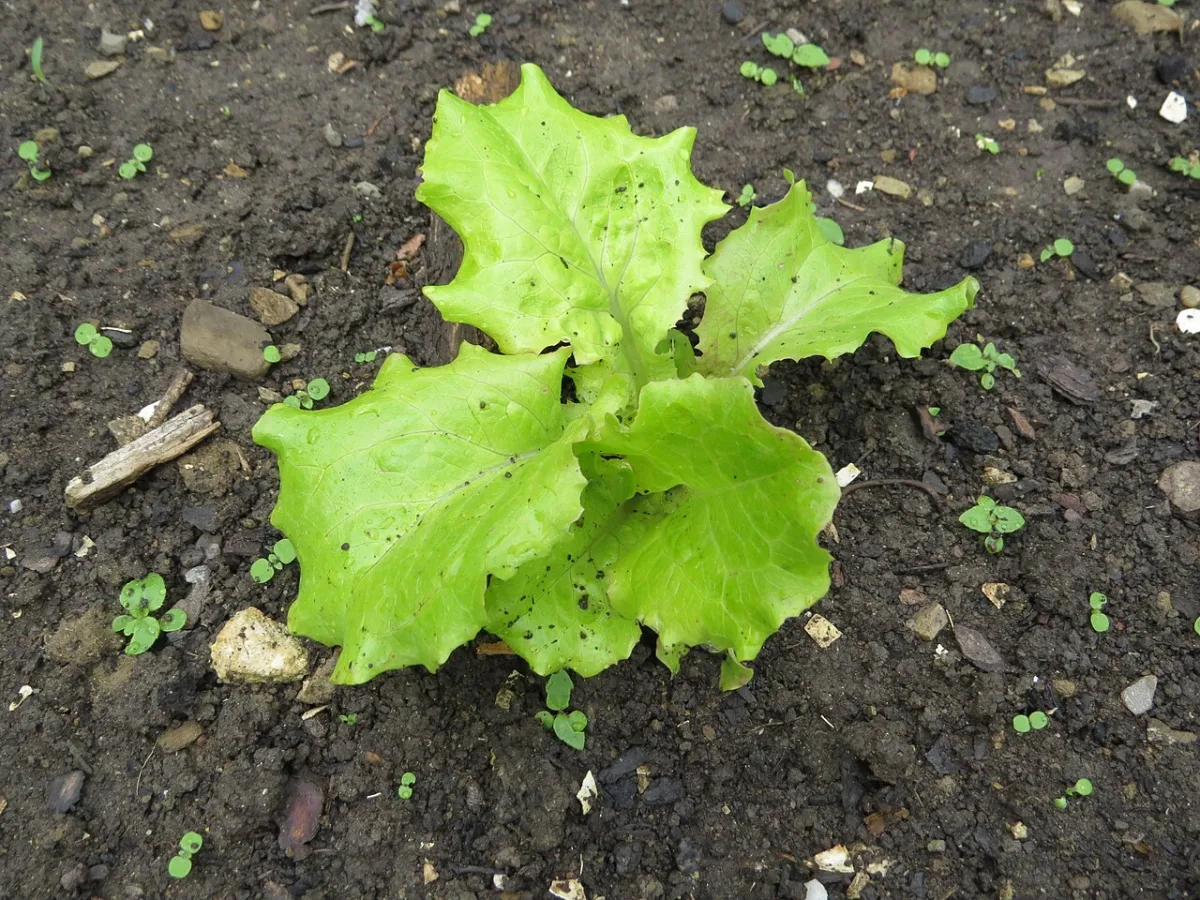
of the fourth or fifth leaf, thinning every other plant for food. Later thinning damages the root system of neighboring plants; they wilt, and early maturity is lost. Late-maturing cultivars—Krupnokochanny, Ledyanaya Gora, Khrustalny—are grown with a feeding area of 30 X 30 cm. These cultivars ripen in 60—80 days, forming heads weighing up to 300—500 g. After the first thinning, lettuce should be top dressed with a urea solution, and after the second—with potassium nitrate (2 tablespoons per bucket of water). The head is cut with a rosette of leaves and a stalk of at least 1 cm. Heads can be kept fresh for three to four days at a temperature of 18° C, and significantly longer in a refrigerator. Spinach is a dioecious plant; there is an approximately equal number of male and female plants in a sowing, but male plants develop more weakly and bolt earlier, forming flowering shoots, especially at temperatures above 20° C, and they produce fewer leaves than female plants and die off after flowering. Spinach leaves are best when they are firm and crisp. Spinach seeds, or rather, nut-like fruits, germinate at 4—6° C; the optimal temperature for growth is 12—14° C. In the rosette phase, they tolerate frosts down to —8° C, and under snow—down to —15° C. Seedlings appear five to seven days after sowing with soaked seeds; they are thinned to a distance of 8—10 cm. With the beginning of flowering, the leaves become soft, and at the same time, oxalic acid accumulates in them. The largest rosette of leaves is produced by spinach cultivars Zhirnolistny and Ispolinsky, followed by Victoria and Viroflé. Spinach can be harvested in 30—35 days. Swiss chard, or leaf beet, is divided into two groups of cultivars: leaf—with large leaves, and stalk—with fleshy, broad leaf stalks. In the first year of life, a powerful rosette of leaves and a branched root are formed; in the second year—a flowering stem. In chard, just like in root beet, the seed clusters, which contain two to three seeds, cause several seedlings to appear from one seed cluster 10—12 days after sowing, but it is not necessary to thin them. It is better to space the pre-soaked seeds every 10 cm when sowing, and then thin the growing plants every other one and use them for food. The distance between rows is 30 cm. Stalk chard is placed with a feeding area of 30 X 30 cm. Chard leaves can be cut several times as young leaves grow. It should be taken into account that chard, like root beet, grows poorly on acidic soils, so liming is mandatory; it is best to apply lime or chalk into the rows before sowing. Borage (starflower) is a plant with a bristly-hairy surface of leaves, so only young leaves without hairiness are used for food, along with thick and succulent cotyledons. They have the taste and aroma of cucumber. Borage is a cold-hardy plant: with early spring sowing, seedlings appear in 10—12 days, and when sown in well-warmed soil—in five to six days. The seeds, or more precisely the fruits, are large and need to be soaked before sowing. To avoid thinning the seedlings, it is better to place sprouted seeds 5 cm apart from each other at a depth of 3 cm. Sowing should be carried out every two weeks. Several plants should be left until flowering to attract bees. Dill, parsley, coriander, and celery belong to the Apiaceae (umbelliferous) family and are characterized by slow seed germination due to the presence of essential oils in them, which prevent swelling. The first three crops are cold-hardy; celery is demanding of heat in the seedling stage. Dill seeds begin to germinate at +3° C, and plant growth—at 5—8° C. The optimal temperature for growth is 16—17° C; on hot days, plant growth slows down, but the greens become more aromatic. With early spring sowing of dry seeds, seedlings appear only on the 14th—18th day, so it is better to soak the seeds for two days before sowing, changing the water daily. If it is possible to get to the plot while the ice has not yet melted, dill seeds can be sown dry on the ice crust ("on the crust") without covering them with soil. The sowing should be done broadcast or in strips with an application rate of 3 g per 1 m^2; there is no need to thin the seedlings when growing dill for greens. During repeat sowings—and it is better to carry them out every two weeks to obtain tender greens—to destroy weed seedlings that appear before the dill seedlings and to better conserve soil moisture, it is useful to mulch the sowing area after spreading the seeds. Three to four weeks after the emergence of seedlings, the dill greens are already ready for use; the height of the plants reaches 10—15 cm by this time. With an autumn sowing, dill greens can be harvested two weeks earlier than with standard early spring sowing. At these times, sowings, as well as repeat ones, should be done in rows with 15 cm between rows. Parsley for greens can be grown as both leaf and root types; seeds are sown before winter, in early spring, and in summer; the last sowing date will provide the earliest spring greens after overwintering, before the plants begin to bolt. Parsley seedlings appear in two to three weeks with early spring sowing; when sown with soaked seeds, seedlings are obtained earlier, and with summer sowing—in a week. To obtain tender greens, leaf parsley should be sown repeatedly every three weeks, just like dill. Coriander (cilantro). Young coriander leaves are used as a seasoning, like parsley greens, but they have a sharper, unique aroma, which not everyone likes, but to which one quickly becomes accustomed and can no longer do without this seasoning. Coriander is grown in the same way as parsley. Celery is a plant demanding of soil fertility, responds gratefully to organic fertilizers, and is also demanding of soil moisture, but does not tolerate waterlogging and acidic soils. Due to its slow growth, celery is grown for both greens and root crops using the seedling method. Its seeds are very small. A few days before sowing, they are soaked at room temperature and germinated between two damp cloths on moistened cotton pads until they begin to sprout, then they are lightly dried, mixed with dry sand (1:10), and sown in mid-March. A mixture of turf soil and humus in equal parts with the addition of sand is prepared for sowing; the seedling box is filled with it, and the seeds are sown with 6 cm between rows, then covered with a 0.5 cm layer of humus. The temperature is maintained within 20—25° C before emergence, then reduced to 18° C. It should be noted that seedlings from dry seeds appear in three weeks, and from sprouted ones—in a week. In the phase of two to three true leaves, the seedlings should be thinned to 5 cm or pricked out so that the feeding area is 6 X 5 cm. A decade before planting out the transplants, the plants should be top dressed with a nitrophoska solution (two tablespoons per bucket of water). Two-month-old transplants are planted in open ground in mid-May with a feeding area of 30 X 15 cm. By this time, the transplants should have four to five leaves. As soon as the transplants establish and the plants begin to grow, they should be top dressed with nitrogen-potassium fertilizers (one tablespoon per bucket of water). Two weeks later, root celery plants are top dressed a second time with nitrophoska (three tablespoons per bucket of water). Cutting of leaves can begin at the end of May. The root crops are stored in a cellar, and in the spring, they are planted in a greenhouse for forcing greens. The best cultivar of root celery is Yablochny, of leaf—Listovoy Sryvnoy, and of stalk—Zolotoye Pero. Basil and savory are spicy-aromatic plants belonging to the Lamiaceae (mint) family. They will further diversify your table, and in their flowering state, they will decorate the garden and rooms. Basil flowers for a long time with pink or light-purple racemose inflorescences; the leaves are green-purple or purple. The aroma of basil leaves has various shades: clove-mint (cv. Bakinsky), clove-laurel (Lozhkovidny), allspice and tea (Erevansky), etc. In addition to being used as a seasoning for various dishes, basil is also used in medicine as a stimulant and stomachic, as well as for diseases of the kidneys and gallbladder. Basil retains its aroma in a sunlit area. Basil is a heat-demanding plant: its seeds germinate at a temperature of 20—22° C, 9—11 days after sowing; at 10° C, the seeds rot without germinating.
Cultivation specifics of basil and savory
However, shattered seed (self-seeding), having undergone winter hardening, produces emergence in spring. Care for basil crops consists of the following:
- thinning the seedlings twice;
- irrigation with sun-warmed water followed by soil loosening.
Young shoots with basil leaves are harvested at the beginning of flowering, when the leaves are most aromatic, or earlier, depending on needs. Regrown shoots are harvested again after a month. Basil is also used for plant protection against aphids, spider mites, and insects in indoor floriculture, by spreading even dried branches.
Parsley. Savory can be perennial or annual; the latter is most often grown by sowing seed in open soil. The aromatic leaves of savory resemble the taste of hot pepper. In addition to being a seasoning for meat and fish dishes, as well as for mixed salads, savory is used in medicine as a pain reliever and an astringent for gastrointestinal diseases.
Savory seed, or more precisely, nutlets, are sown in mid-May mixed with sand. Emergence occurs in two to three weeks, and seedlings are thinned to 15 cm. Young shoots with leaves are used for food three weeks after emergence, and flowering plants are used when pickling cucumbers and tomatoes. Care for the plants is standard. Self-seeding provides emergence in the spring of the following year.
Read next
Greenhouses and covers For gardeners
Specifics of growing leafy greens and cucumbers in greenhouses
Greenhouses and covers For gardeners
Cultivation technology for leaf and head lettuce in a greenhouse and soil
Greenhouses and covers For gardeners