
Specifics of growing leafy greens and cucumbers in greenhouses
4 min read
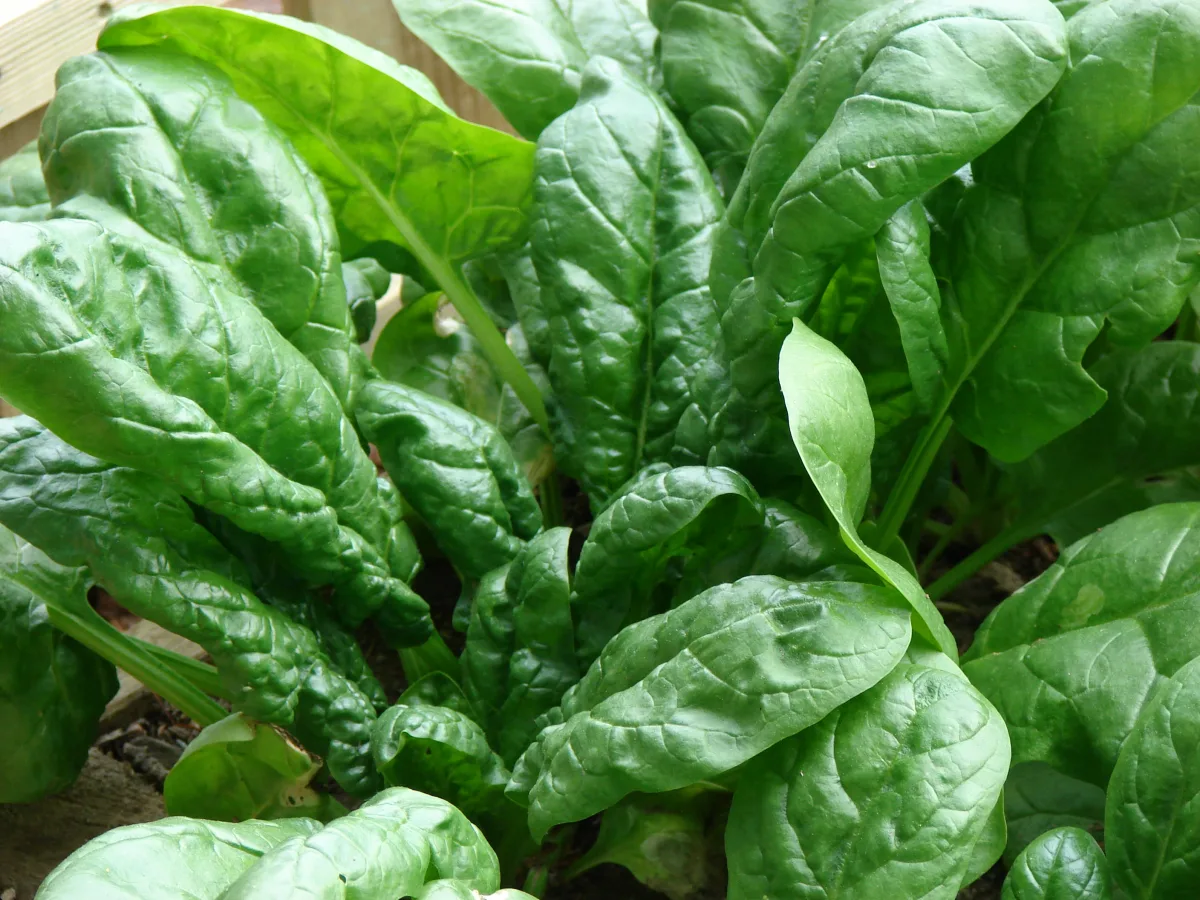
Approximate readiness period for "greens": lettuce in 18—22 days, green onions — 17—20 days, dill and spinach — 30—45 days, celery — 40—45 days.
The crop management of vegetables in the same types of greenhouses, but with other heating systems (water, steam, etc.), is generally similar, but with other types of heating, block greenhouses can be used almost year-round.
Vegetable crops in winter greenhouses
This type of greenhouses is the most common in suburban collective farms and is the most accessible and practical for small-scale operations. One of the disadvantages of such greenhouses is their significantly lower natural light during the winter. However, this drawback can be eliminated by using additional electric lighting.
Growing cucumbers in rack greenhouses
Cucumber cultivation is carried out using transplants, the crop management of which is described above. Cucumbers are grown both in gable greenhouses and in Klin-type greenhouses.
The best soil is clean sod soil. In case of a shortage of sod soil, greenhouse experts successfully use the following mixtures:
1) humus is placed at the bottom, in a 7 cm layer, and covered with a 7 cm layer of sod soil on top;
2) 2/3 of sod soil is mixed with 1/3 of humus for a total layer of 14 cm;
3) sod soil mixed with horse manure;
Cucumber transplants are planted in their permanent location at the 2—3 leaf stage. Using the trellis method, many high-achieving workers hold the transplants until they have 5 leaves and then plant them at a distance of 40—50 cm.
Temperature and air regimes, air humidity, irrigation techniques, loosening, pollination, etc., are applied the same as in the cultivation of cucumbers in ground-based greenhouses.
In all cases, high-achieving greenhouse workers use increased rates of plant top dressing in rack greenhouses compared to the average recommended in agricultural guidelines.
Moscow greenhouse growers practice the following top dressing for cucumbers:
A solution of poultry manure with the addition of mineral fertilizers (per one watering can of solution): nitrogenous — 5 g, superphosphate — 30 g, potassium salt — 10 g.
During the fruit set period, the amount of nitrogenous fertilizers was increased to 15 g.
With this composition, one watering can is used to irrigate an area of 2 m². Before each top dressing, the soil is watered with clean water.
Cow manure solution. The first top dressing is after the first "smoking" of cucumbers, subsequent ones — every 6—8 days in an amount of 3 watering cans per 2 m².
A solution of only mineral fertilizers. Plants are top-dressed with them until the beginning of harvesting. In one watering can of water, dissolve: 12 g of nitrogenous fertilizers, 15 g of superphosphate, and 8 g of potassium salt. With the onset of fruiting, an increased dose of nitrogenous fertilizers is used — up to 26 g.
High doses of top dressing are also used by high-achieving vegetable growers on Leningrad collective and state farms.
The "smoking" technique to stimulate cucumber fruiting
One of the interesting techniques in the cultivation of cucumbers in greenhouses with flue heating, including the Klin type, is the "smoking" of cucumbers, which in the past was a "secret" of Klin cucumber growers. Now, under the Soviet system, this "secret" is available to all vegetable growers.
When plants have formed 10—12 leaves, the following operations are performed:
- After heating the furnace at night, an aspen or birch log without bark is placed inside.
- The log is covered with coal and ash.
- The furnace and the chimney are closed, and gaps are sealed with clay.
The log begins to smolder, emitting carbon monoxide and other gases that pass through the pores of the brick flue into the greenhouse. Under the influence of these gases, the emergence of female (fruit-bearing) flowers is accelerated. This technique is repeated over 2—3 nights.
After closing the chimney, all workers in the greenhouses must leave the premises. By morning, the gases will dissipate, and the room is slightly ventilated during the day without, however, cooling the greenhouse.
Effect of gases and treatment risks
Externally, smoking affects the plant as follows: leaves turn pale, become coarser and tougher, tendrils curl, and male flowers fall off. After 10—12 days, many female flowers appear in the axils of the apical leaves, and fruiting increases (provided, of course, that pollination occurs).
Regime during the treatment period:
| Air temperature | 30—32° |
| Air humidity | Reduced |
This technique is now widely practiced and has already been included in agricultural guidelines. But caution is needed here as well. In practice, gross errors are sometimes made. For example, the chimney is closed prematurely and, without any justification, the duration of smoking is increased, thereby allowing a high concentration of escaping gases. As a result, all male flowers on the plant fall off, and female flowers remain without pollination, failing to form fruit set.
Read next
Greenhouses and covers For gardeners
Organization of vegetable growing in protected soil and hotbeds

Greenhouses and covers For gardeners
Classification of greenhouses and structural features of vegetable-growing facilities
Greenhouses and covers For gardeners