
Efficiency of fungicide application against ear diseases of spring wheat
12 min read
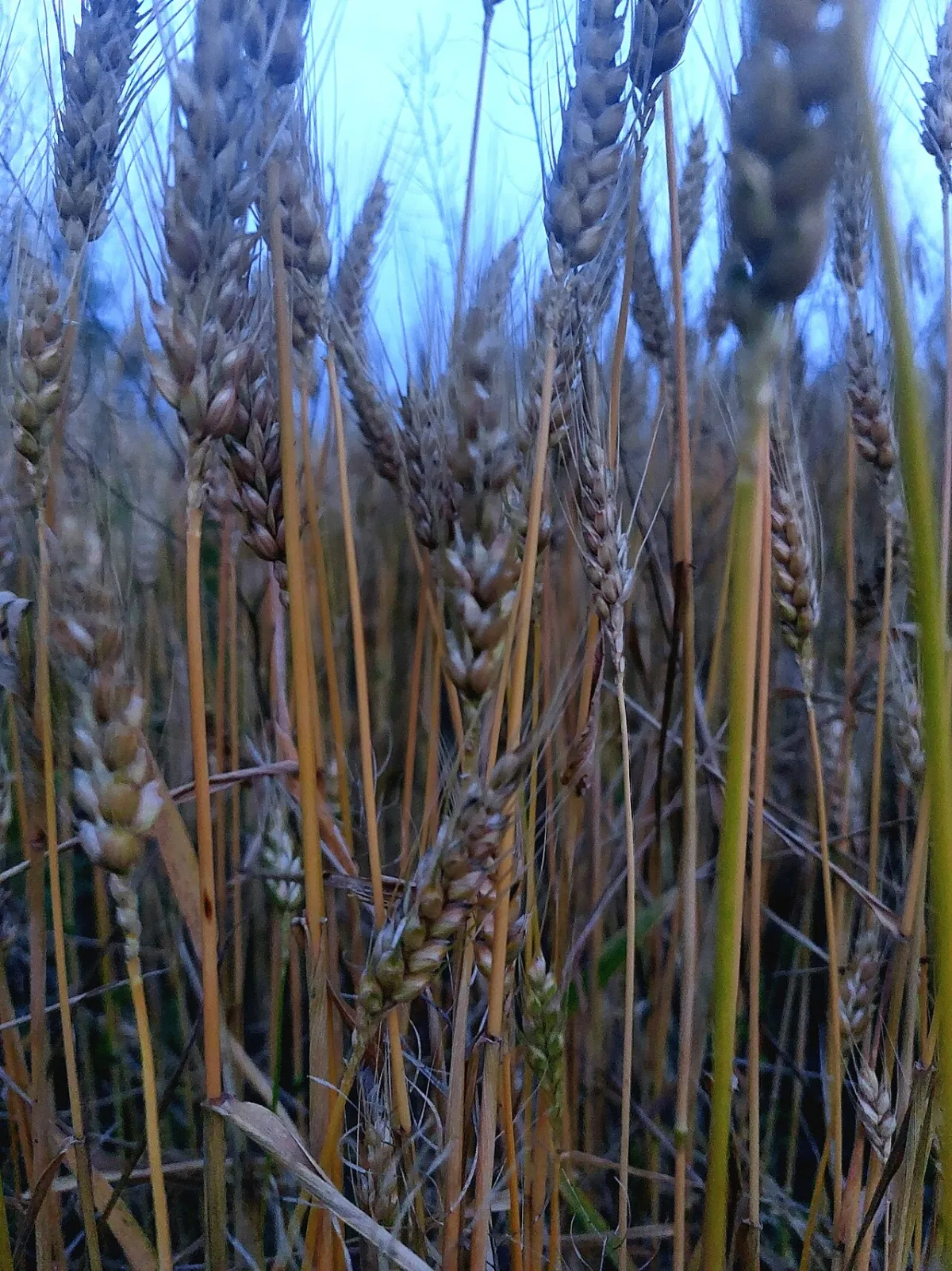
Introduction. In the context of the modern agricultural produce market, spring wheat">spring wheat is a valuable grain crop, the importance of which lies in the high technological quality of the grain, most commonly used for the production of bakery products.
The potential yield of some cultivars of this crop is presented in the table:
| Indicator type | Value, centners/ha |
| Potential yield | 80.0 |
| Average yield in cultivar trials | 50.0 |
| Average yield on farms | 34.0 |
Despite advances in global agriculture, the problem of pathogenic fungal infection in grain crop production remains relevant. Spring wheat crops are annually affected by a complex of diseases, among which septoria blotch and fusarium head blight have high harmfulness.
Moreover, head diseases negatively affect the following factors:
- the volume of the harvested yield;
- the quality characteristics of the grain.
In this regard, head treatment is an important element in the crop protection system and a benchmark for good yield with stable high quality.
Materials and methods of research. The research was carried out in 2010–2023 at the experimental field of the RUE "Institute for Plant Protection". The soils of the experimental plot are sod-podzolic, medium-loamy. The agricultural practices are standard for the cultivation of spring wheat in the central agro-climatic zone of Belarus. Phenological stages of plant development were recorded using the decimal code according to the BBCH scale. Disease development was determined according to methods developed by S. S. Sanin et al. Field experiments were set up and conducted according to the "Methodological guidelines for registration trials of fungicides in agriculture". Evaluation of the biological efficacy of fungicides in protection against head diseases was carried out under conditions of artificial infectious backgrounds. To produce infectious material of the fungal pathogens, the experience accumulated in the phytopathology laboratory was used. To create an infectious background for septoria head blotch, the fungus inoculum was multiplied on an agar nutrient medium for 2–3 weeks. The production of fungal infectious material was carried out on a liquid nutrient medium using a shaker. Inoculation of heads with a spore-mycelial suspension of the fungus was carried out at GS 51–55, of the fungus at GS 61–65, with a suspension consumption of 50 ml/m2. Plants were infected in the evening using a "1500" sprayer. Fungicide treatment was carried out on the third day after inoculation with pathogens. The first assessment of the development of septoria and fusarium head blight was carried out upon the appearance of the first symptoms, subsequent ones – at intervals of 7–10 days. The area of the experimental plot was 1 m2, with four-fold replication of experiments. Statistical processing of the results obtained was carried out using the descriptive statistics package. The research on studying the biological efficacy of fungicides in the protection against septoria and fusarium head blight included 10 preparations differing in the number of active ingredients and their combinations, among which 1 was a single-component preparation, 8 were two-component, and 1 was three-component. According to the generally accepted classification of the Fungicide Resistance Action Committee, the composition of the evaluated fungicides is represented by active ingredients belonging to 3 classes: methylbenzimidazole carbamates, strobilurins, and azoles. Azoles, represented by 7 active ingredients, are the most extensive class and are part of all the studied preparations.
Table 1 – Trade names and composition of fungicides included in the research (RUE "Institute for Plant Protection", 2010–2023) Trade name, Application Active ingredients, quantity Years of formulation rate, in preparation, g/l research l/ha
Single-component Abarontsa, SC 0.5 flutriafol, 250 2010–2011
Two-component flutriafol, 75 + Abarontsa Super, SC 0.9 2012–2013 tebuconazole, 225 propiconazole, 250 + 2010, Alto Super, EC 0.4 cyproconazole, 80 2013–2014 cyproconazole, 160 + 2013, 2016, Alto Turbo, EC 0.5 propiconazole, 250 2019–2022
2010, azoxystrobin, 200 + Amistar Extra, SC 0.75 2012–2014, cyproconazole, 80
2022–2023 prochloraz, 267 + Zamir, EW 1.5 2015–2016 tebuconazole, 133
2013–2017, prothioconazole, 125 + Prosaro, EC 1.0 2019–2020, tebuconazole, 125
2022–2023 epoxiconazole, 187 + 2010–2011, Rex Duo, SC 0.6 thiophanate-methyl, 310 2013–2014 azoxystrobin, 200 + Chugur, SC 0.75 2012–2013 cyproconazole, 80
Three-component tebuconazole, 160 + propiconazole, 80 + Titul Trio, CR 0.6 2019–2020 cyproconazole, 80
Table 2 – Classification of active ingredients of fungicides included in the research
Class Chemical group Active ingredient Methylbenzimidazole thiophanates thiophanate-methyl carbamates (MBC fungicides) imidazoles prochloraz propiconazole tebuconazole Azoles (DMI fungicides, triazoles flutriafol demethylation inhibitors) cyproconazole epoxiconazole triazolinthiones prothioconazole Strobilurins (QoI fungicides, methoxy-acrylates azoxystrobin inhibitors of electron transfer to the outer mitochondrial membrane)
Results and discussion. The use of artificial infectious backgrounds in the research process is primarily due to the fact that in this way it is possible to obtain high disease development annually, which allows for a high-quality study of the efficacy of the preparations. At the same time, the success of the infection process, the dynamics and the final level of disease development vary somewhat by year. In general, over 14 years of research by the late milk – full ripeness stage, the development of septoria and fusarium head blight in variants without fungicide application averaged over 40.0%. Moreover, the intensity of septoria head blotch infection was already at the level of 21.8% and fusarium head blight at 27.8% by GS 71–83. Table 3 – Development of spring wheat head diseases under conditions of artificial infectious backgrounds (RUE "Institute for Plant Protection", 2010–2023)
1st assessment* 2nd assessment** 1st assessment* 2nd assessment**
2010 75.0 84.3 67.5 70.0
2011 32.0 53.0 29.0 55.3
2012 18.0 49.0 44.7 73.3
2013 7.2 40.8 22.3 54.7
2014 16.0 60.5 10.2 12.2
2015 10.7 17.3 29.3 39.0
2016 18.3 30.0 18.3 30.0
2017 21.0 65.7 21.0 65.7
2019 10.7 16.7 15.0 32.7
2020 23.7 45.3 30.7 53.7
2021 25.7 47.7 25.7 47.7
2022 16.5 23.3 25.0 55.7
2023 9.0 18.7 22.3 40.3
Average 21.8±17.5*** 42.5±20.8*** 27.8±14.6*** 48.5±17.3***
7.2–75.0 16.7–84.3 10.2–67.5 12.2–73.3 Note – "*" – GS 71–83 (first grains have reached half their final size. Grain content is watery – early dough stage) GS 77–89 (late milk – full maturity, standard deviation.
In protection against spike septoria biological efficacy of a single-component fungicide was 46.2%, two-component fungicides – on average, depending on the assessment stage, from 55.1 to 94.6%, and three-component fungicide – from 57.4 to 88.3%, respectively.
Table 4 – Biological efficacy of fungicides in limiting the development of spike septoria under artificial infection backgrounds (RUE "Institute of Plant Protection", 2010–2023)
Class Preparation 1st assessment 2nd assessment average average
Single-component Azoles Abarontsa, SC 46.2±18.7 32.9–59.4 46.2±22.8 30.0–62.3
Abarontsa Super, CS 75.0±19.7 61.1–88.9 88.6±6.9 83.7–93.4
Alto Super, EC 58.8±16.9 46.3–77.8 55.1±29.3 22.1–77.9
Alto Turbo, EC 72.6±6.4 63.3–80.6 68.8±15.8 41.9–87.0 Azoles
Zamir, EW 94.6±7.7 89.1–100 85.9±3.6 83.3–88.4
Prosaro, EC 84.3±9.7 66.9–100 77.7±12.0 53.9–92.6
Average 77.0±13.5 58.5–94.6 75.2±13.6 55.1–88.6 Azoles + MBC Rex Duo, CS 66.3±16.0 45.2–79.2 71.0±24.0 38.2–92.6
Amistar Extra, SC 70.2±15.7 57.5–91.7 73.7±12.2 61.0–93.4 Azoles + strobilurins
Chugur, SC 76.5±27.3 57.2–95.8 84.4±5.9 80.2–88.5
Average 73.4±4.5 70.2–76.5 79.1±7.6 73.7–84.4
Three-component Azoles Titul Trio, ME 88.3±0.5 87.9–88.6 57.4±4.9 53.9–60.9 Note – Average values ± standard deviation are provided.
During the second assessment (GS 77–89), the efficacy of limiting spike septoria in the studied two-component preparations on average (71.0–79.1%) was higher than that of the single-component (46.2%) and three-component (57.4%) preparations.
The efficacy in limiting the development of spike fusarium in spring wheat was on average, depending on the assessment date, for the single-component preparation – 46.0–72.4%, two-component – 62.9–76.5%, and three-component – 75.4–79.4%, respectively.
Azoles included in the composition of the studied preparations belong to triazoles and triazolinthiones, whose mechanism of action is based on blocking ergosterol biosynthesis in pathogen cells, providing both preventive and curative effects. Analysis of the obtained data allowed us to note a trend of increasing biological efficacy of azole-containing preparations in protecting spring wheat against spike fusarium in proportion to the increase in the number of components. Thus, by the late milk – full maturity stage, the indicator was 46.0% (single-component), 69.9% (average for two-component), and 79.4% (three-component). However, to confirm the identified pattern, the research needs to be continued.
Table 5 – Biological efficacy of fungicides in limiting the development of spike fusarium under artificial infection backgrounds (RUE "Institute of Plant Protection", 2010–2023)
Biological efficacy, % Class Preparation 1st assessment 2nd assessment average average
Single-component Azoles Abarontsa, SC 72.4±3.4 70.0–74.8 46.0±9.9 39.0–53.0
Abarontsa Super, CS 67.6±20.6 53.0–82.1 72.7±18.0 60.0–85.4
Alto Super, EC 59.4±3.1 56.6–62.8 58.2±18.1 39.0–75.0 Azoles Alto Turbo, EC 67.5±11.0 51.7–85.2 70.3±8.0 59.0–80.3
Prosaro, EC 77.8±7.2 69.6–89.7 78.4±7.8 64.1–88.7
Average 68.1±7.5 59.4–77.8 69.9±8.5 58.2–78.4 Azoles +
Rex Duo, CS 76.5±12.6 63.7–92.4 67.9±14.8 49.3–85.4 MBC Azoles + Amistar Extra, SC 66.1±11.1 56.3–86.5 60.6±15.7 37.6–80.4 strobilurins Chugur, SC 63.1±20.6 48.5–77.6 65.2±11.2 57.3–73.1 Average 64.6±2.1 63.1–66.1 62.9±3.3 60.6–65.2
Three-component Azoles Titul Trio, ME 75.4±5.8 71.3–79.5 79.4±1.1 78.6–80.1 Note – Average values ± standard deviation are provided.
Prothioconazole, which is a demethylase inhibitor, is the "newest" azole from the triazolinthione chemical group, which appeared on the market of Plant protection products">plant protection products in 2002. Among all triazoles, prothioconazole compares favorably due to its high biological efficacy in protection against spike fusarium. In studies by foreign authors, alongside high efficacy in limiting disease development, prothioconazole has shown high efficacy in reducing deoxynivalenol content in grain.
Protection of spring wheat spikes from diseases is a matter not only of total harvest but also of the safety of the obtained crop. Spike septoria and fusarium can significantly reduce grain quality and cause contamination. Fungi of the Fusarium genus are dangerous because they produce mycotoxins — biologically active substances that pose a direct threat to the health of humans and livestock animals when using grain for food or feed purposes. In this regard, fungicidal treatment of the spike is a fully justified method in the crop management technology.
The emergence of strobilurins was an important step in plant protection: they are environmentally low-risk and cope with a wide range of pathogens. However, their main drawback is the rapid development of resistance in fungi. A reliable way to reduce the risk of resistance is to use strobilurins in a mixture with triazoles.
Fungicides for spike protection and their efficacy
The combination of two active ingredients — azoxystrobin and cyproconazole — ensures high and long-lasting protection of the spring wheat spike from a complex of infections. The combination of strobilurins with triazoles allows for reliably suppressing pathogens without the risk of pathogens rapidly developing resistance to the protective active ingredients. On the market, this concept is implemented in the composition of the following mixed fungicides:
- Amistar Extra, SC;
- Chugur, SC.
Long-term trials confirm the high biological efficacy of fungicides in limiting the development of spike septoria and fusarium. The use of these preparations allows keeping the infection under control for a long time. Specific disease suppression rates vary depending on the preparation used and the stage of the assessments.
| Disease | Biological efficacy, % |
|---|---|
| Spike septoria | from 46.2 to 88.3 |
| Spike fusarium | from 46.0 to 79.4 |
Read next
Plant protection For agronomists
Strategies for managing pathogen resistance to fungicides in agronomy
Plant protection For agronomists
Dynamics of disease development in soybean cultivar Pripyat in Belarus
Plant protection For agronomists