
Diseases of lettuce and celery in a greenhouse and methods of control
6 min read
Annual soil replacement in greenhouses or steaming it for 1—2 hours at 100°. Disinfection or replacement of the nutrient substrate and nutrient solution in hydroponics. 4. Cultivation of resistant cultivars. Control of vectors and weeds serving as infection reservoirs Fig. 169. DOWNY MILDEW ON LETTUCE LEAVES. U -: v. % « vx 2 5 y k % 7 u „ » $ 17 a:. 2.6.2. Bacterioses 2.6.2.1. Lettuce soft rot
Pathogen — Erwinia carotovora sp. carotovora (Lopez) Bergey, Harrison.
Harmfulness. A dangerous disease of lettuce in plastic and glass greenhouses. During epiphytotic development, a large part of the harvest may quickly perish.
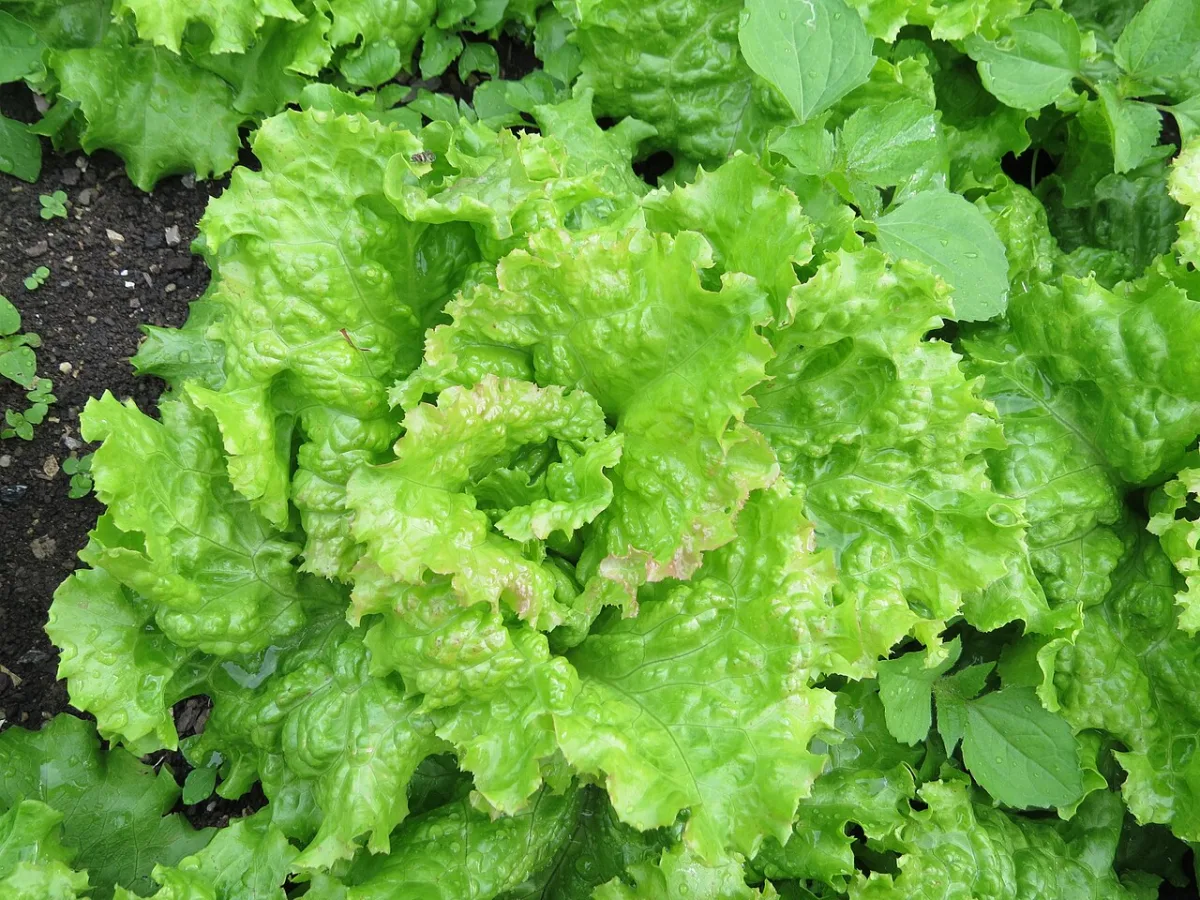
Symptoms. When growing on non-steamed soil, the first symptoms of the disease become noticeable by plant wilting due to root rotting. In infected adult plants, symptoms appear on the leaves as dark brown soft rot on the upper leaves or the entire head. Biology. The disease most often occurs after prolonged wet weather or after excessive overhead irrigation against a background of high air temperature (above 25°). Infection occurs through damaged tissue. A water film covering the plant's surface tissues for several days is a favorable environment for active infection by bacteria of the genus Pseudomonas sp. A secondary pathogen is often the bacteria Erwinia carotovora. Slimy bacteriosis most often affects plants that are weakened, damaged by pests or diseases, or grown with excessive nitrogen nutrition. Disease pathogens are particularly activated at temperatures of 20-25° and high relative humidity of the air.. ee. 168. SOFT ROT OF HEAD LETTUCE Ъ 3. E s v ^. r № | } u r o t A, = m Fe. ” s M ‚ ykh -% ‹ 2.6.3.2. Celery acremonium
Pathogen — Acremonium apii (Sm.et Ramsey) Gams, [syn.: Cercosporidium apii Sm.et Ramsey].
Symptoms: Causes brown spotting on stems and leaves.
Biology. Tightly packed simple conidiophores with globose slimy heads, containing unicellular (sometimes septate) conidia, protrude from the affected tissue. Conidiophores 25-31 x 2-3 µm, tapered at the top to 0.5-1.5 µm. Conidia are oblong-cylindrical with narrowed ends, varying in size from 3.5-12 x 1.1-2.3 µm. Individual hyphal cells densify into grayish-brown chlamydospores. On nutrient media, colonies are finely fibrous, white with a grayish tint. 2.6.3.3. Alternaria blight
Harmfulness. Found on celery, dill, parsley, and sometimes on other crops. During storage, it causes black rot, softening and blackening of root tissue, as well as damping-off of seedlings.
Symptoms: brown or black spots of various sizes form on petioles and stems. The bark peels off on seedling roots.
Pathogen biology. Hyphae are colorless or olive-gray. Conidiophores are usually solitary, simple, sometimes branched, straight or sinuous, septate, 200 x 3-9 µm. Conidia are solitary or in chains of 2-3, often elliptical, obclavate or obpyriform, olive-brown, smooth, with 3-7 transverse and one or more longitudinal or oblique septa, 27-57 x 9-27 µm.
Colonies are effuse, velvety or felt-like, gray, brown, olive, or black.
Pathogen — Alternaria consortiale (Thümen) Hughes [syn.: Macrosporium consortiale Thümen].
Harmfulness and symptoms. Frequently found on dead plant parts, but rarely causes spotting on leaves of celery and tomatoes.
Pathogen biology. Conidiophores are simple, sometimes branched, variable in length, not swollen at the base, brown. They form apical conidia that shift to the side as the conidiophore grows, causing it to become geniculate, and the accumulation of conidia begins to resemble a bunch. Conidia vary in shape: globose, quadrangular, oblong-ovoid, initially smooth, later coarsely verrucose, with up to 13 transverse and 12 longitudinal septa, 18-25 x
Septoria blight of parsley and celery
Pathogen — Septoria petroselini Desm. on parsley, and S. apii Chester on celery.
Harmfulness and symptoms. The lower, older leaves become infected and gradually die, showing round or angular light spots with a brown border. Gradually, black dots—pycnidia—appear in the center of the spots.
Pathogen biology. The pathogen persists via pycnidia on crop residues and planting material, as well as via seed (both on the surface and inside the seed). Pycnidia are spherical, dark, and single-chambered. Pycnospores are filiform, colorless, 3-4 septate, measuring 30-50 x 1.5-2 µm. 2.6.3.5. Cercospora leaf spot, or early blight of celery
Harmfulness and symptoms. Spots of round or irregular shape appear on both sides of the leaves, ochre or brownish in color, often lighter in the center. In wet weather, a gray-colored bloom appears on the spots. Heavily infected leaves turn yellow and die.
Pathogen biology. The pathogen persists in the form of conidia and mycelium on infected plant debris. Conidiophores can be straight or geniculate; conidia are hyaline, multicellular, 35-130 µm. 2.6.3.6. Powdery mildew of dill. The pathogen is Erysiphe umbelliferarum f. dillii Lasse.
Harmfulness. The disease reduces the succulence of the greens, as well as the taste qualities and appearance of the dill. It can lead to the wilting of the plant.
Symptoms. The disease manifests as a white cobweb-like or powdery coating on the leaves, petioles, and stems. At the end of the growing season, numerous black dots of cleistothecia appear on the surface of the powdery coating.
When growing dill in the autumn period after the main crop, there is a high risk of developing a fungal disease. The pathogen persists on plant debris in the form of the ascomycete stage — it forms spherical dark cleistothecia with numerous short mycelial appendages and many asci. During the growing season, the infection spreads via unicellular hyaline conidia. Infection occurs when the pathogen is introduced from the area surrounding the greenhouse, and the epiphytotic itself begins due to disturbances in the hygrothermal regime on the periphery of the greenhouse.
Do not allow deviations from the temperature and humidity regime, especially in the peripheral zones of the greenhouse. Disturbance of the microclimate on the periphery, combined with poor phytosanitary conditions around the greenhouse, is the main trigger for a disease outbreak.
To prevent the development of the infection and protect dill plantings, it is necessary to strictly observe a complex of preventive measures:
- Ensure uniform irrigation of plants throughout the entire area of the greenhouse.
- Maintain an optimal temperature regime in accordance with the technology.
- Organize strict isolation of greenhouse premises from the external environment.
- Constantly maintain cleanliness and phytosanitary order in the territory surrounding the greenhouse.
- Length of pathogen conidia — 20–25 µm
- Width of pathogen conidia — 11–13 µm
- Growing period of lettuce — 1–2 months
Root-knot nematodes and non-parasitic lesions of leafy crops
Meloidogynosis is a dangerous disease caused by root-knot nematodes. Its causative agents are the southern (Meloidogyne incognita), Javanese (Meloidogyne javanica), and peanut (Meloidogyne arenaria) nematodes. Due to the short growing period of lettuce, external signs of damage on its leaves do not have time to manifest. However, when growing parsley and celery, by the end of the growing season, large fused galls — syngalls — manage to form on the roots.
With repeated or continuous cultivation of greens on infested soil, plant losses increase sharply. Against a high invasion background, this leads to mass death of seedlings and outbreaks of accompanying diseases.
For timely detection of the pest, regularly inspect the root system of the plants. Round, usually small-sized galls form on the roots of affected specimens. Under microscopic examination, female root-knot nematodes with egg sacs can be found inside these thickenings.
In addition to parasitic diseases, yellowish or white achlorophyllous zones may appear on the leaves of leafy crops. This is a genetic disorder that negatively affects the leaf parenchyma cells. The disease is not transmitted to neighboring plants, but it significantly impairs the appearance of the greens and reduces their marketability.
Read next
Plant protection For agronomists
Methods of tomato protection against powdery mildew and fungal diseases
Plant protection For agronomists
Plant protection of cabbage crops against black rot and bacterial soft rot
Plant protection For agronomists