
Technical maintenance and adjustment of seed drill sowing units
4 min read
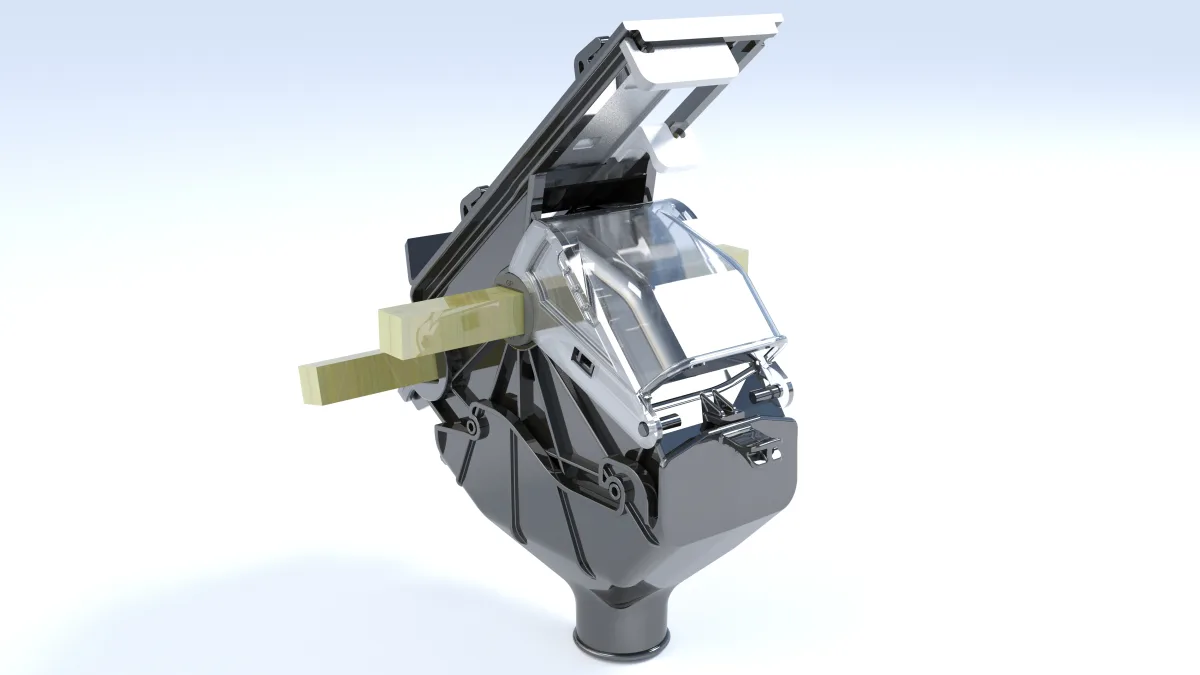
Setting up seed metering units: how to avoid seed damage and uneven sowing
The seed metering unit must deliver seed to the seed tubes evenly and steadily, without damaging them. Before heading out to the field, be sure to check the technical condition of the components and perform adjustments. The housing of the units should not have any dents, damage, or noticeable wear on the walls or lugs at the points of contact with the rotating rosettes. Chipping on the working surface of the fluted rollers is not permitted.
To accurately set up seed metering units, follow these steps:
- Eliminate the axial play of the fluted rollers. The clearance between the rollers and the sleeves must not exceed 0.7 mm. Adjust it using compensators (castle washers).
- Check the sowing rate adjustment lever. Its free play should not exceed 0.5 mm. Eliminate excessive gaps in the lever mechanism, including by using a compensator. In the closed position of the units, the lever indicator must point to "0" on the scale with a deviation of no more than 0.5 mm. Adjust this position by shifting the sector on the seed box using the oblong holes at its mounting point.
- Align the fluted rollers. In the closed position of the units, the ends of the rollers must be flush with the plane of the rosettes with a deviation of no more than 0.5 mm. Adjust the coaxiality by shifting the housing of the metering unit on the seed box.
- Adjust the seed flaps. With the empty lever raised, the flaps must fit tightly against the edge of the sleeves with a clearance of no more than 1 mm. Adjust the clearance by changing the compression of the pressure spring. For sowing grain crops, set the working clearance between the flaps and the edges of the sleeves to 1–2 mm, and for grain legumes — 8–10 mm.
Set the gears in the seed metering unit gearbox so that the target application rate is achieved with the length of the working part of the rollers 5–7 mm less than their maximum length. This is necessary for higher lateral sowing uniformity and to protect seeds from damage.
Similar requirements for uniformity and stability of sowing apply to fluted-pin fertilizer metering units. When preparing for operation, raise the empty lever: the flaps must fit tightly against the pins of the rollers with a clearance of no more than 1 mm. If the fit is not tight enough, loosen the mounting on the empty shaft, raise the flap until it touches the pins, and tighten the locking bolt until it stops. Set the gears in the gearbox to the position that provides the target fertilizer application rate.
Do not reduce the clearance between the flaps and the pins of the fertilizer metering unit to less than 8–10 mm when applying well-prepared fertilizer. With a smaller clearance, the fertilizer granules are destroyed, and with a larger one, the uniformity of their application worsens.
Adjust the height of the discharge opening on the rear wall of the fertilizer section of the box using the gate. When applying well-prepared fertilizer, the height of the opening should be equal to the size of the largest granules. If the fertilizer is poorly flowable, raise the gate until the portioned discharge of fertilizer stops.
Preparation of openers and running gear: placement accuracy and seeding depth
Disc openers must place all seeds on the bottom of the furrow, cover them with a moist layer of soil, and stably maintain the seeding depth. Before heading out to the field, check the geometry of the discs: their working surface must be smooth and free of cracks. When checking on a reference plate, the permissible gap between the plate plane and individual points of the disc is no more than 3 mm. There should be no burrs on the edge of the disc.
For high-quality performance of the openers and the running gear, observe the following technical parameters:
- Disc opener edge thickness — 0.1–0.5 mm
- Axial disc runout — up to 1–2 mm
- Transport ground clearance of openers — 19 cm
- Axial clearance in hub bearings — 0.1–0.35 mm
- Tire pressure — 0.3–0.35 MPa (3–3.5 atm)
When assembling the openers, strictly monitor the clearances. The clearance between the opener housing and each disc as it rotates must be at least 2 mm. Maintain the clearance between the opener scrapers and the discs within 0.2–1 mm — this will ensure the discs are cleaned of adhered soil without hindering their rotation.
Pay attention to the position of the seed guides in the opener housing: they must not be bent backward, otherwise the seeding depth">seeding depth in the soil will be uneven. For the same reason, all opener suspension levers on the square shaft must be strictly in the same plane. The ground clearance of the openers in the transport position is adjusted by changing the length of the turnbuckles.
When preparing the wheels, check the radial runout of the rim surface along the outer diameter — it should not exceed 5 mm. Adjust the axial clearance in the tapered wheel hub bearings within the established limits. Bring the tire operating pressure to the standard value before heading out into the field.
Read next
Farm machinery For agronomists
Structure and operating principles of the SZP-3.6 grain drill in agriculture
Farm machinery For agronomists
Design and operating principle of the SUPN-8 pneumatic seed drill
Farm machinery For agronomists