
Technological features of cultivating button mushrooms in greenhouse conditions
18 min read
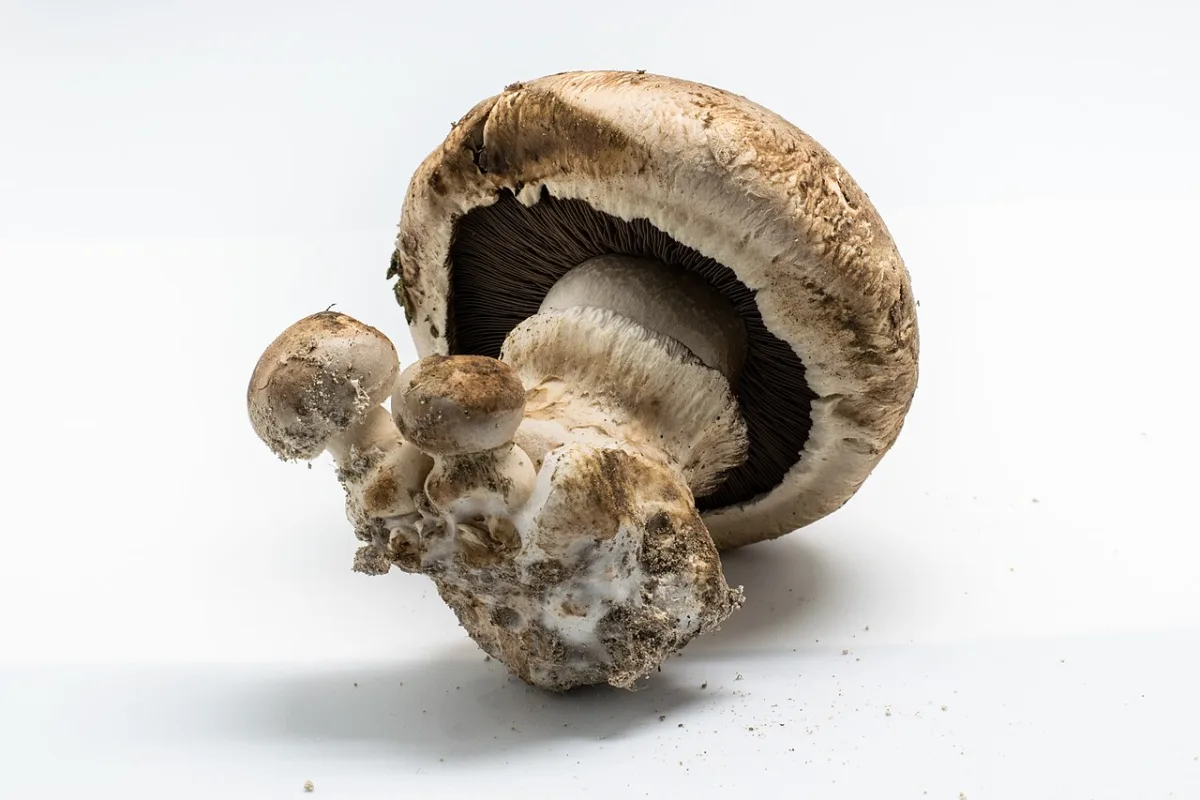
Microclimate and mushroom growing stages
The yield of the button mushroom (Agaricus bisporus) depends directly on strict adherence to the temperature regime at every stage of mycelium development. Any deviations from the standard lead to a loss of fruiting body quality or growth retardation. To control the process, an agronomist must divide the growing season into critical periods and regulate the temperature of both the substrate and the air.
- Yield of white race — up to 30 kg/m² per 1 cycle
- Air humidity during mycelium growth — 90–95%
- Air humidity during fruiting — 85–90%
- Substrate moisture during planting — 65–70%
- Substrate moisture during the growing season — 60–65%
Optimal temperature parameters have been developed for each stage of mushroom growth. The table below shows the target indicators for the three main periods of mycelium development. Compliance with these values guarantees the proper transition of the crop to fruiting.
| Development period | Substrate temperature, °C | Air temperature, °C | Period duration, days |
|---|---|---|---|
| Mycelium germination | 25–27 | 22–24 | — |
| Active mycelium growth | 20–25 | 20–22 | 10–14 |
| Transition of web-like mycelium to rhizomorphic | 16–18 | 15–16 | 7–12 |
- Substrate preparation and mycelium planting at 65–70% moisture content.
- Mycelium germination at a substrate temperature of 25–27 °C and air temperature of 22–24 °C.
- Active mycelium growth for 10–14 days at an air temperature of 20–22 °C.
- Rapid cooling of the air to 15–16 °C for the transition of mycelium to the rhizomorphic state (takes 7–12 days).
- Fruiting at relative air humidity of 85–90% and substrate moisture of 60–65%.
Do not allow the air temperature to rise above 16–17 °C during the formation of fruiting bodies. In such conditions, mushrooms grow too quickly, forming small caps and elongated stems, which reduces product marketability. Also, protect the crop from excessively bright direct light.
The room where mushrooms grow requires regular ventilation. During the vital activity of the mycelium, ammonia and carbon dioxide are released, the excess of which inhibits the development of the mycelium. Illumination is not required for growth; diffused light is sufficient, and bright rays harm the quality of the mushrooms.
The choice of mushroom race determines the requirements for greenhouse automation. The white race provides the maximum harvest but is extremely sensitive to substrate quality, temperature fluctuations, humidity, and aeration. The cream and brown races are more hardy, resistant to temperature changes, and less susceptible to diseases and pests.
Substrate preparation and selection of the technological system
The productivity of a mushroom farm is 90% determined by the quality of the nutrient medium. One-, two-, or three-zone growing systems are used for cultivation. The choice of system directly affects the greenhouse turnover and the organization of work processes.
- One-zone system (3–4 cycles per year): all stages — compost pasteurization, mycelium development, and mushroom harvesting — take place in one room.
- Two-zone system (5–7 cycles per year): pasteurization is carried out in one chamber, while incubation and fruiting occur in another.
- Three-zone system (4–7 cycles per year): each process (pasteurization, mycelium growth, fruiting) is localized in a separate room.
High-quality compost must have high water- and air-holding capacity, a slightly alkaline reaction, and contain no free ammonia. The optimal parameters of the nutrient medium for mycelium inoculation must be strictly controlled. Below are the requirements for the nutrient content in the dry matter of the substrate.
- Nitrogen (N): 2–2.5%.
- Phosphorus (P): 1.3–1.5%.
- Potassium (K): 1.0–1.5%.
- Calcium (Ca): up to 4%.
- Substrate moisture: 65–70%.
- pH level: 7.3–7.5.
Use only fresh strawy manure as a substrate base. Old, fully decomposed manure is completely unsuitable for mushroom cultivation.
Modern mushroom farming allows for the use of semi-synthetic substrates, where the share of manure is reduced to 10–20%. Synthetic composts based on winter cereal straw are also used. To compensate for the nitrogen deficit, organic and mineral nitrogen-containing additives are introduced into the straw, and gypsum, chalk, or lime are added to stabilize the buffer capacity of the medium.
Traditional composting leads to a loss of up to 40% of the dry mass of organic matter. To avoid these losses, the short-term composting method is used in practice. The following ratios of components are used as a base for such substrates:
- 50% manure and 50% straw;
- 25% manure and 75% straw.
Formulations and fermentation of nutrient substrates
The correct selection of components and adherence to fermentation technology determine the future yield of mushrooms. The substrate base consists of straw combined with organic and mineral additives that provide the mycelium with accessible nutrients. The spontaneous fermentation process allows for the breakdown of complex carbohydrates into simpler compounds and prepares an optimal nutrient medium.
- Compost yield from 1 t of straw — 3–3.5 t
- Finished substrate moisture — 60–65 %
- Optimal pH level — 7.5
- Yield on corn substrate — 26–30 kg/m²
For a classic substrate, a mixture of 25 % poultry manure and 75 % straw or a mixture of cattle manure and straw in a 50 % to 50 % ratio is used. In practice, the most common composition is based on 1 t of straw (wheat or oat), 800–900 kg of poultry manure, 60–70 kg of gypsum, and 5000 l of water. As an alternative, a substrate based on corn cobs (30 %), cattle manure (60 %), and poultry manure (10 %) is used. For every ton of this mixture, 80–100 kg of malt sprouts, 60 kg of gypsum, and 3.5 kg of ammonium nitrate or urea are added.
Corncob cores make the substrate looser, improving mycelium aeration, while malt sprouts enrich it with enzymes. Gypsum lowers the pH, increases the buffer capacity of the medium, helps bind ammonia, and prevents nitrogen losses.
Spontaneous fermentation leads to the mass self-heating to 40–70 °C under the influence of microorganisms. During this process, the material is regularly turned and moistened. Below is a standard schedule for substrate preparation based on poultry manure.
| Composting day | Treatment type | Additives per 1 t of dry straw |
|---|---|---|
| 1–7 | Laying straw in a flat pile 3–3.5 m wide and 1.2 m high, moistening, trampling, application of poultry manure | Water, poultry manure (0.7–0.9 t) |
| 7–12 | Mixing components, forming a ridge 2 m wide and 1.8 m high | Water (as needed), gypsum (60 kg) |
| 12–15 | Turning and forming a ridge 1.6–1.65 m wide and no more than 1.6 m high | Water (as needed) |
| 22–23 | Turning the ridge | Water (as needed) |
| 24–25 | Loading and pasteurization of the substrate | Water (as needed) |
For substrates made from corncobs, fermentation lasts 15–16 days with three turnings. Before laying, the cob cores are ground to a fraction of 1.5–5 cm and soaked in water for 4–5 days. The ridge is formed in layers, alternately placing crushed cores, poultry manure, cattle manure, malt sprouts, and mineral additives.
Bulk pasteurization of the substrate in tunnels
After spontaneous fermentation is complete, the compost undergoes thermal treatment. In modern mushroom farming, the most effective method is bulk pasteurization in tunnels. This method allows for the destruction of pathogens and pests, complete removal of free ammonia, and the completion of microbiological processes in a controlled environment.
- Filling the tunnel. The compost is loaded onto a slatted floor in a layer 1.8–2 m deep.
- Temperature equalization. Ventilation is turned on to equalize the substrate temperature using recirculated air.
- Mass heating. Using steam, the substrate temperature is raised to 56–58 °C over 3–4 hours.
- Pasteurization. The 56–58 °C temperature is maintained for 6–8 hours while supplying only 5–10% of fresh air relative to the total ventilation volume.
- Initial cooling. By increasing the supply of cold fresh air over 24 hours, the mass temperature is reduced to 52–54 °C.
- Conditioning. The process lasts 4–6 days, during which the substrate temperature is gradually lowered by 1–1.5 °C per day.
- Final cooling. The substrate is cooled to 25–27 °C by supplying fresh air, after which it is ready for inoculation with mycelium.
Do not allow mycelium inoculation until the smell of ammonia has completely disappeared. Its absence is the main criterion for the compost's readiness for use.
Manual compost preparation and substrate laying
To obtain the maximum mushroom yield, it is recommended to carry out substrate preparation manually. The quality of the compost directly depends on following the proportions, correct ridge construction, and timely aeration. If the technology is violated, the straw will not soften, and an excess of ammonia will remain in the substrate, which is lethal to the mycelium.
- Soak the straw for 36–42 hours to bring its humidity to 72%.
- Form a layered ridge 1.4–1.7 m high, 1 m long, and about 2 m wide. The ridge must consist of at least 4 layers, with the bottom layer formed exclusively of straw.
- Perform the first turning after 3–4 days. Mix the ridge so that the outer layers are inside and the inner ones are outside the new ridge. During the turning process, add gypsum at a rate of 6 kg per 100 kg of straw and moisten any dry areas.
- Perform another 3–4 turnings at intervals of 3–5 days (there should be 4–5 turnings in total).
Ready-made quality compost has a humidity of about 72% (it does not stick to the hands and does not release excess moisture when squeezed), the straw in it is soft, and the smell of ammonia is completely absent.
If the compost is over-moistened and has become too sticky, dry it out: add gypsum at a rate of 1.5 kg per 100 kg of straw and perform 1–2 additional turnings at intervals of 24–42 hours.
- Yield of finished compost — up to 300 kg (from 100 kg of straw and 100 kg of manure)
- Compost ripening period — 22–28 days
- Steam consumption for substrate heat treatment — 6–7 kg
- Area for laying 1 t of substrate — 1.3–1.4 m²
When preparing the substrate in tunnels, consider the following parameters: the building height should be 3.8 m and the length at least 10 m. The floor is made of wooden or reinforced concrete slabs. For uniform air distribution, the total area of the slots in the floor should be 25–30% of its total area.
Mushrooms are grown on racks, in bags, in crates, or on beds. The height of the compost layer is chosen depending on the temperature regime in the growing room.
| Room temperature | Compost layer height |
|---|---|
| 12–18 °С (on the floor) | 30–40 cm |
| Above 18 °С | About 20 cm |
When floor growing (12–18 °C), a thicker layer of compost provides self-heating of the substrate, causing its temperature to be several degrees higher than room temperature. If the air temperature in the greenhouse exceeds 18 °C, the layer is made thinner (about 20 cm) to prevent the substrate from overheating above 30 °C, which leads to the death of the mycelium.
Planting mycelium and growth control
Modern specialized farms can purchase ready-made pasteurized compost, which is already inoculated with mycelium and packaged in airtight polyethylene film bricks. When planting on your own, it is important to wait until the substrate temperature drops to 24–28 °C after the second phase of composting. If the mycelium was stored in a refrigerator, it must be kept at room temperature for 24 hours before planting.
To plant compost mycelium, it is divided into pieces weighing 15–20 g (walnut-sized). They are planted in a checkerboard pattern at a distance of 20–25 cm from each other. Planting depth is regulated within 3–7 cm (5 cm as a baseline) depending on humidity: in humid rooms, it is planted shallower; in dry ones, deeper. Planting sites are compacted with wooden tampers for better contact between the mycelium and the substrate.
Before applying grain mycelium, it is rubbed by hand to break up fused grains into a homogeneous mass. The planting pattern is as follows:
- Mix 80–90% of the total volume of mycelium with the entire volume of substrate throughout its thickness.
- Evenly scatter the remaining part of the mycelium on the surface for visual growth monitoring.
- Level and compact the surface, cover with moisture-absorbing paper (e.g., newspapers), and carefully moisten it with a watering can.
- Mycelium application rate — 350–450 g per 1 m² of compost
- Layer height for the specified rate — 20–28 cm
- Optimal temperature for growth — 24–27 °C
- Optimal air humidity — 90–95%
Mushroom development is divided into the vegetative phase (mycelium growth) and the generative phase (fruiting). Under favorable conditions, the growth of the mycelium begins 3–4 days after planting. On the 4th–5th day, establishment is assessed: for this, the substrate is lifted in several places above the planting points. If a dense network of filaments longer than 6–8 cm has formed around the mycelium, the establishment is good; if the filaments are less than 6 cm long, it is poor.
When the substrate temperature drops to 20 °C, the mycelium growth period extends to 3–4 weeks. A further drop in temperature to 15 °C or below or waterlogging of the compost can completely stop the development of the mycelium.
After 12–15 days, when the mycelium has grown well, remove the protective paper and cover the substrate with a layer of casing soil 2–4 cm thick. The exact thickness is selected taking into account the growing conditions, mushroom race, and soil texture.
Casing soil: requirements, preparation, and disinfection
Casing soil is a key element in the growing technology for mushrooms. It is where fruit bodies are formed, and without it, mushrooms do not develop. The layer retains moisture, maintaining optimal soil moisture of the compost, and ensures gas exchange. Quality casing soil should have the following properties:
- high water-holding capacity (55–65 %);
- loose, fine-crumb structure;
- ability to ensure gas exchange between the substrate and the environment;
- no crust formation after irrigation;
- no excess of organic nitrogen;
- pH 7.2–7.8;
- free from pests and pathogens of disease.
To create high-quality soil, it is necessary to properly select its components. It is best to use peat, coarse sand, chalk, limestone, loam, or sandy loam in various proportions. At the same time, high-moor peat has a more acidic reaction, so when using it, the amount of neutralizing additives is increased. Sandy loam and loam are used both in pure form and in a mixture with lowland peat in a 2:1 ratio with chalk (3–5 %). Limy soil is also used alone or in various mixtures.
Mixed soil is cleaned and disinfected using high temperatures before use. To do this, the finished mixture is treated with steam under a strictly defined regime.
Treat the casing soil with steam at a temperature of 55–65 °C for 6–12 hours. Exceeding this temperature limit will destroy beneficial microorganisms, which risks rapid re-contamination of the soil by pathogens.
After applying the casing layer, active vegetative growth of the mycelium continues for another 7–8 days. Irrigation of the beds begins on the 2nd–3rd day, guided by the impression of the mycelium on the sole of the casing layer. During irrigation, it is important to prevent waterlogging or overdrying of the interface between the compost and the soil.
Transition to fruiting and harvesting technology
For high yield, the soil structure should change depending on the development phase of the fungus. During the vegetative growth period of the mycelium, the casing layer should be dense, and during the formation of carpophores (mushrooms before the cap opens) — looser. When the mycelium grows through 2/3 of the depth of the casing layer (usually after 3 weeks), loosening is performed. For this, a rake with tooth length corresponding to the depth of the layer is used to evenly distribute the torn fungal hyphae.
After the complete restoration of the ruptured mycelium, the transition of the crop to fruiting is initiated. To achieve this, microclimate parameters are switched to a new technological regime. Changes in the microclimate stimulate the formation of fruit bodies.
- Lower the ambient air temperature to 15–16 °С, and the compost temperature to 17–19 °С.
- Ensure intensive ventilation 7–8 days after covering the beds, when the mycelium begins to emerge on the surface. This will remove carbon dioxide and lower the temperature.
- Maintain relative air humidity at 85–90% through irrigation, and soil moisture of the casing layer within 60–65%.
It is necessary to water the beds carefully, using a fine spray so that the droplets fall on the surface at an angle and do not damage the delicate mushroom tissues. The irrigation rate is calculated based on the yield: 1 liter of water is applied for every kilogram of mushrooms harvested from 1 m². Maintaining this balance allows for the preservation of optimal substrate moisture.
- Water-holding capacity of the casing soil — 55–65 %
- Soil acidity (pH) — 7.2–7.8
- Air temperature during fruiting — 15–16 °С
- Compost temperature during fruiting — 17–19 °С
- Relative air humidity — 85–90 %
- Irrigation rate per 1 kg of mushrooms from 1 m² — 1 l of water
The pattern of mushroom emergence depends on the type of planting material used. When sowing grain spawn, mushrooms appear scattered from the very beginning. With vigorous growth of other mycelium, fruit bodies first emerge in clusters of 20–30 pieces; as nutrients are depleted, they shift in rings from the center, and by the end of fruiting, they transition to a scattered pattern.
Mushrooms fruit in flushes: a period of active fruiting is followed by a brief decline. Throughout a cycle lasting 50–60 days, the crop undergoes 5–7 flushes. To activate fruiting and slow down the cooling of the soil, the air temperature in the chamber is briefly increased by 2–3 °С between flushes. The highest mushroom yields are recorded during the second and third flushes.
The harvest is collected daily or every other day. Mushrooms in the carpophore stage are not cut, but carefully twisted out of the casing soil. The resulting hollows are immediately filled with soil of the same temperature, watered, and subjected to intensive ventilation, briefly increasing the air temperature by a few degrees to ensure quick drying of the mushroom surface.
During dense group growth of mushrooms at the beginning of fruiting, it is advisable to remove the entire cluster. Harvesting only large mushrooms from a group will cause the smaller ones to stop growing and spoil. The harvested produce is placed cap-down in rigid containers — baskets, sieves, or shallow boxes. Under optimal conditions, harvesting lasts 38–42 days, while at lower temperatures it can stretch to 60–90 days or more. In advanced farms, the yield of mushrooms reaches 30 kg per 1 m² per crop rotation.
Sorting and sale Mushrooms should be sorted in accordance with standard requirements. Standard mushrooms are considered to be whole, clean, dry (not washed), healthy, firm, with trimmed stalks, not frost-bitten, without significant mechanical damage and visible traces of chemical substances from spraying. The surface color of the mushrooms is white, cream, or brown with various shades characteristic of botanical strains or races. Caps are closed or open, but not flat, and the color of the gills on the underside is soft pink. The taste and smell are characteristic of mushrooms. The mushroom cap diameter is at least 15 mm, and there is no limit on stalk size. The content of mushrooms in the total mass is allowed: with a cap diameter of less than 15 cm — no more than 5%; with mechanical damage up to 1/4 of the cap surface, with slight darkening of the skin... [text truncated in source].
Read next
Greenhouses and covers For gardeners
Cultivation technologies for sorrel and mushroom growing in greenhouses
Greenhouses and covers For agronomists
Mushroom cultivation technologies in greenhouses and product storage
Plant protection For agronomists