
Integrated sanitary preparation and disinfection of greenhouse structures
6 min read
Sanitary preparation of the greenhouse and substrate disinfection
The conditions of protected ground are ideal not only for vegetables, but also for their pests and diseases. Restricting their spread requires a comprehensive approach: from maintaining strict quarantine on the premises to total disinfection before the start of the season. Any shortcomings in sanitation lead to a rapid loss of harvest during the growing season.
It is strictly forbidden to purchase transplants from farms where outbreaks of diseases or pests have been detected. Before planting, carefully cull all suspicious plants. Throughout the entire growing season, a mat thoroughly soaked in a concentrated solution of bleaching powder or table salt must be placed before the entrance to the greenhouse.
The area around greenhouses must be completely cleared of weeds and debris. It is forbidden to plant cucurbit crops near greenhouses — they serve as a natural reservoir for powdery mildew, greenhouse whitefly, and spider mites. It is also undesirable to place potato plantings nearby, as they carry late blight to tomatoes. It is forbidden to grow vegetables together with flower crops inside the structures.
Autumn-winter disinfection is an mandatory stage of protection, which is carried out immediately after harvesting. At this time, structures, containers, tools, and soil are disinfected.
- Clean the greenhouse of plant residues, prune and burn the twine.
- Disinfect the twine wire with a gas burner flame. If the greenhouse area is small, the burner flame can also be used to treat the soil surface.
- Wash the glass and support pipes with clean water.
- Disinfect the structures and soil with a 5% formalin solution at a rate of 3–5 L per 1 m² of area. After treatment, close the greenhouse for two days, and then ventilate thoroughly.
- Treat greenhouse frames, structural elements of hotbeds, and tools with a solution of bleaching powder at a rate of 400 g of lime per 10 L of water.
Root crops for planting, such as parsley, celery, onion bulbs, and flowers, must be dusted with slaked lime for disinfection before planting.
- Soil temperature during steaming at a depth of 30 cm — 70 °C
- Duration of thermal treatment of the soil with steam — 10 hours
- Consumption of formalin solution for disinfection of structures — 3–5 L/m²
- Exposure time of formalin on the hydroponic substrate — 3 days
- Time for chemical treatment of the soil before planting crops — 5 days
For soil disinfection in greenhouse complexes, a thermal method is used. In the tent method, steam is supplied to the ploughed soil under a hermetic heat-resistant film. If steaming is impossible, solarization is carried out in August: the soil is covered with a polyethylene film and ploughed every 2–3 days so that pathogens die on the surface from overheating.
Chemical soil preparation is carried out in the spring: 5 days before planting the crops, it is watered with a potassium permanganate solution (1 g) and copper sulfate (1 tablespoon) per 10 L of water. The hydroponic substrate is disinfected with a 5% formalin solution for 3 days, after which it is washed with water.
Before sowing, the seed must be disinfected using a thermal or chemical method. Summary parameters of the treatments are given in the table below. To restore germination energy after thermal treatment, the seed is soaked in water or solutions of macro- and micro-fertilizers.
| Crop | Target pathogen | Treatment method and regime |
|---|---|---|
| Cucumber, tomato | Viral diseases | Heating dry seed: 3 days at 50–52 °C, then 1 day at 78–80 °C |
| Tomato | Viral diseases | Soaking in a 1% potassium permanganate solution for 15–20 minutes or in 20% hydrochloric acid followed by rinsing with water |
| Cabbage | Downy mildew, vascular bacteriosis, phomosis | Heating seed in water at 48–50 °C for 20 minutes followed by cooling and drying |
Agrotechnical protection measures and microclimate management
Disease prevention during the growing season is based on hygiene and strict control of environmental parameters. All maintenance work in the greenhouse should always begin with healthy plants. If viral diseases are detected on the plantation, pruning and pinching tools must be disinfected after each contact in a 5% potassium permanganate solution.
A lack of sunlight sharply reduces the natural resistance of plants to diseases. During cloudy periods, the agronomist must monitor the temperature regime with special attention and prevent excessive humidity.
Balanced nutrition and the mechanical composition of the soil directly influence the immunity of the crops. Growing on heavy soils and excessive organic top dressing provoke the development of root rots. White and gray rots, late blight, and bacteriosis of tomatoes develop where drainage is not established. An excess of nitrogen fertilizers leads to bacterial stem rot in tomatoes and also causes outbreaks of aphids and mites. Nutrient deficiency during the fruiting of cucumbers increases their susceptibility to ascochytosis.
Air humidity is a key tool for managing the infectious background in a greenhouse. An increase in air humidity above 75–80% activates the development of leaf mold, septoria, bacterial stem rot, late blight, and gray mold of tomatoes. Upon the appearance of these diseases, it is necessary to reduce irrigation rates, improve ventilation, perform pruning, and remove dying leaves to improve air exchange.
To prevent ascochyta blight, anthracnose, olive spot, and white rot of cucumbers, relative humidity of the air is purposefully reduced to 70% . It is important to remember that dry air accelerates the reproduction of spider mites. Root rot development is also facilitated by irrigation with cold water and fluctuations in soil moisture during extreme air temperatures.
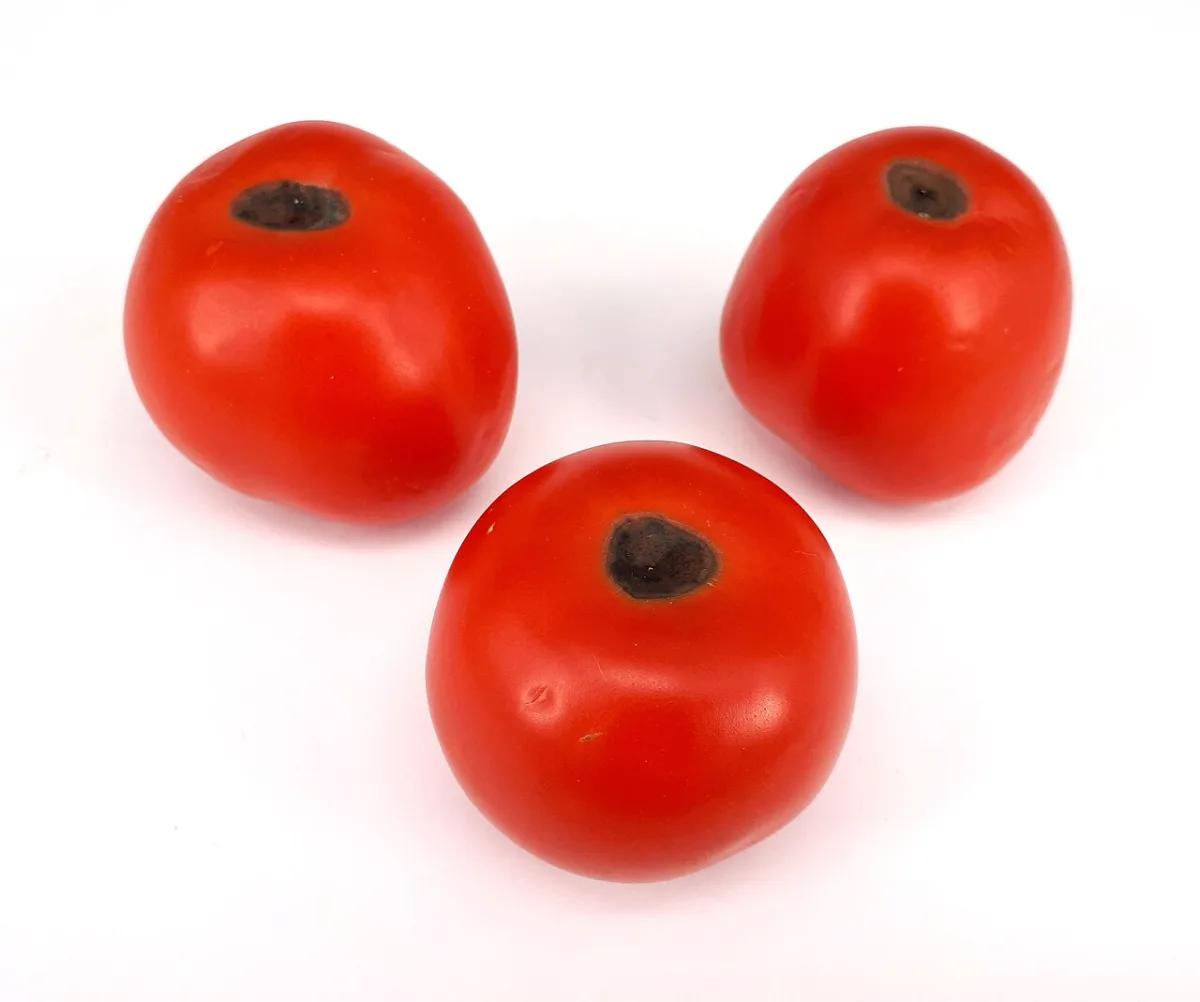
Plant resistance to diseases is increased by micronutrients. Copper reduces the likelihood of tomato late blight, while zinc reduces cucumber bacteriosis and tomato blossom-end rot. Adequate calcium and moisture prevent the appearance of blossom-end rot. Foliar top dressing of peppers with phosphorus and potassium reduces aphid infestation.
The biological method consists of using natural enemies of pests and diseases. In laboratory greenhouses of industrial complexes, predatory insects and mites (entomophages) are propagated and released into greenhouses; biological preparations made on the basis of cultures of pathogenic microorganisms are also used. This is done based on special recommendations.
To control spider mites, the predatory mite Phytoseiulus is used. To control aphids, the predatory gall midge Aphidoletes and lacewings are used; for whiteflies, entomopathogenic fungi such as Verticillium and Aschersonia, and the parasite Encarsia are used.
Against a complex of diseases of cucumbers, tomatoes, and peppers, the biological preparation Trichodermin is used by seed treatment and application into the nutrient substrate for seedlings.
For individual farms, an accessible biological method is the use of phytoncidal plants: black elderberry, onion, garlic, chamomile, wormwood, etc., whose decoctions, infusions, or mere presence (marigolds) destroy or repel pests. It is very beneficial for improving soil health in the greenhouse after the end of the crop to grow and incorporate into the soil green manure crops such as marigolds, leaf mustard, oilseed radish, and rye.
Agrotechnical and biological methods, together with the immunological method, which is based on the use of resistant cultivars, can be an alternative to the chemical method, but at present, the chemical method is still used.
Chemical method. The use of pesticides (fungicides to control diseases, insecto-fungicides and acaricides to control pests) must be in strict accordance with the list of pesticides and agrochemicals approved for use.
Basically, the following preparations are approved for protected soil: against whitefly on cucumber and tomato — Applaud, Warrant, Vital, Image; against whitefly and thrips — Leader; against whitefly and aphids — Confidor, Mospilan; against aphids and mites — Talstar. The waiting period from treatment to harvesting is 3 days, the number of treatments is no more than one, and for Talstar, two treatments are allowed during the growing season.
Against powdery mildew on cucumber — Bayleton, the waiting period is 5 days, applied twice. Against root rot and downy mildew on cucumber — Previcur, applied once. On seedlings of most vegetable crops against root and stem rots — Previcur, applied twice with an interval of 3–4 weeks.
After the film cover is removed, warm beds are considered equivalent to open ground in terms of using insecto-fungicides.
On leafy crops, the use of pesticides is prohibited. There is a practice of using pesticides together with foliar top dressing with micronutrients and humic substances, which, by suppressing the action of pathogens, mitigates the effect of the preparations on the plant.
CULTIVATION OF VEGETABLE SEEDLINGS AND MELON CROPS IN COVERS FOR OPEN GROUND
Many vegetable crops — tomatoes, peppers, eggplants, early white cabbage, and cauliflower , etc. — are grown using the transplant method to accelerate the arrival of produce. For planting in protected soil structures, cucumbers and tomatoes are grown only using the transplant method.
Read next
Greenhouses and covers For gardeners
Biological methods of greenhouse soil remediation in autumn
Greenhouses and covers For gardeners
Combating blossom-end rot and agrotechnical methods of plant protection for tomatoes
Plant protection For agronomists