
Intensification of carp farming and requirements for the quality of artificial feed
18 min read
Intensification of cultivation: planting density and feed requirements
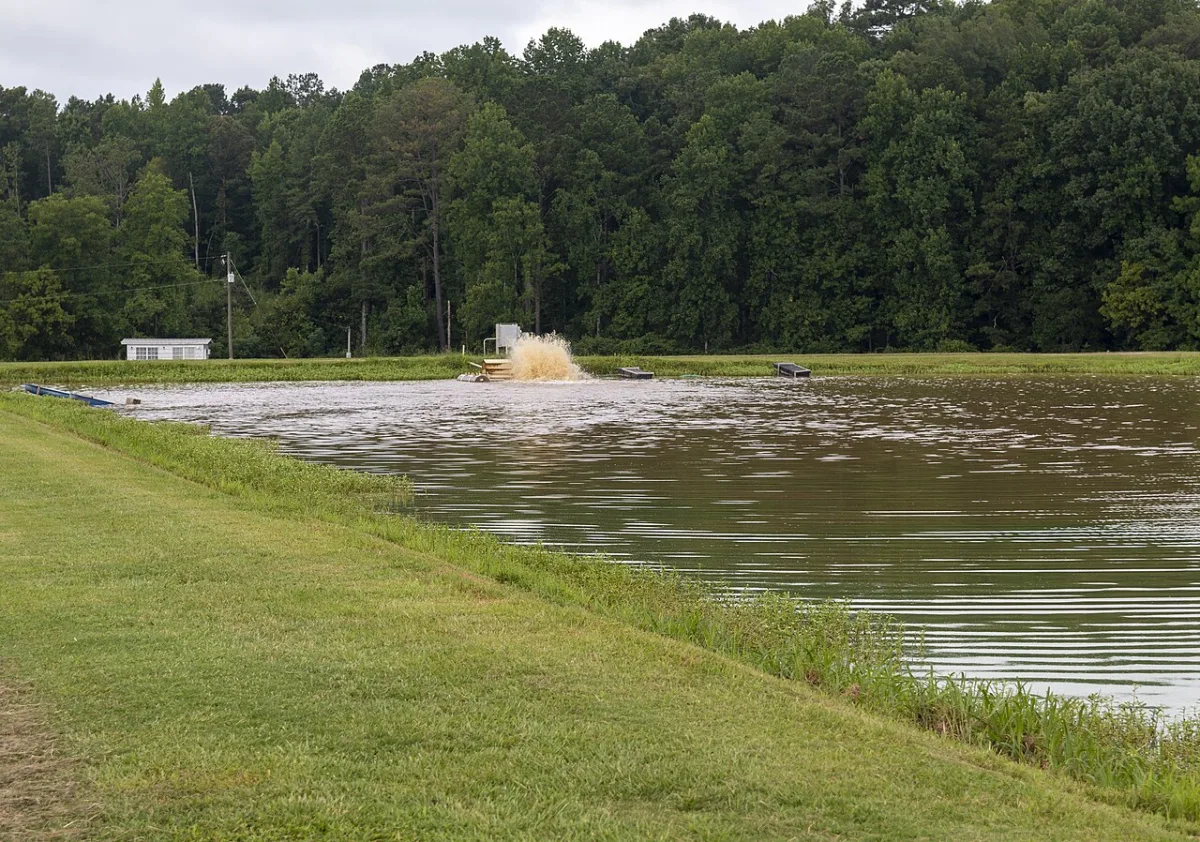
Transitioning pond farming to artificial feed allows for a tenfold increase in marketable fish output. In extensive farming based on natural food sources, the productivity of a water body is low. The use of high-quality compound feed and an increase in planting density shift production to an intensive mode.
- Productivity on natural feed — up to 300 kg/ha
- Productivity under intensification — from 3000 kg/ha
- Optimal planting density for yearlings — 500 pcs/ha
- Individual weight of yearlings at planting — 25 g
Planting density is calculated as a multiple of the normal rate (N), which is designed only for natural food. By increasing the planting density two, three, or five times (2N, 3N, 5N, and more), it is necessary to proportionally increase the supply of artificial feed as well. When calculating the ration, be sure to consider external factors: water temperature and salinity, light levels, and oxygen content.
Strict technical requirements are imposed on the quality of compound feed for pond carp:
- manufacture only from purified and ground raw materials according to approved recipes;
- mandatory pelleting of feed for fingerlings, breeding juveniles, as well as two-year-old and three-year-old breeders;
- use of fresh, high-quality raw materials and storage of finished feed in dry premises.
A deficiency or absence of essential amino acids in the feed mixture disrupts metabolism in fish. This leads to stunted growth and a drop in blood hemoglobin levels.
Plant components: cereals, legumes, oilseed cakes and meals in the ration
The basis of a carp's ration consists of carbohydrate-rich plant feeds and high-protein additives. The more diverse the composition of the compound feed, the higher its overall nutritional value. In recipes, it is important to combine components so that they compensate for each other's deficiencies.
Cereal crops are valuable as a source of energy and B-group vitamins. They contain up to 70% carbohydrates, and the protein level in the grain ranges from 8 to 12% (up to 22% in certain wheat cultivars). Cereal fats are represented primarily by linoleic and oleic acids. The mineral composition of the grain is characterized by a calcium deficiency with a high content of phosphorus, potassium, and magnesium.
| Grain component | Share of total carbohydrates, % |
|---|---|
| Starch | 49–86 |
| Sugar | 3–5 |
| Fiber | 2–30 |
Among cereals, wheat is the most nutritious and economical. From 1 kg of this grain, a carp assimilates more than 500 g of nutrients, and its proteins are digested very well. The limiting amino acid for wheat and other cereals is lysine. Corn, by contrast, contains a lot of starch but is low in protein.
Ground grain or bran is introduced into compound feeds. With the exception of oat bran, bran is richer in protein and fat than whole grain. Wheat bran, in addition, is distinguished by a high phosphorus content.
Among legumes in aquaculture, soybean, peas, lupin, and vetch are used. Their seeds contain 25–35% protein and enzymes that improve digestion. Legume protein is assimilated by carp at 70–80%, with soy leading in nutritional value. In formulations, legumes are best combined with wheat, barley, and sunflower meal.
Oilseed cakes and meals are valued for their high protein content. Cakes are obtained by pressing seeds, leaving 2–5% more oil in them. Meals are produced by extraction, so they contain 2–5% more protein than cakes.
Soybean meal has the maximum nutritional value. Replacing more than half of the fish meal in a carp's ration with it does not disrupt the balance of essential amino acids.
Sunflower meal contains a lot of poorly digestible fiber (up to 15–20%), which is why it is valued less than soy. Despite this, it remains a popular component in pond aquaculture. Sunflower meal can be introduced into carp compound feeds in amounts ranging from 20 to 30%.
Animal proteins in compound feeds: nutritional value and limitations
To balance carp rations regarding amino acid composition, feeds of animal origin are used. The main component is traditionally fish meal: the higher the protein concentration in it, the more valuable the raw material. Its protein contains a full spectrum of essential amino acids, including lysine, methionine, tryptophan, and valine, while unsaturated fatty acids in the fat composition provide the fish with easily accessible energy.
Other animal components have technological and physiological limitations. Meat and bone meal is rich in arginine and histidine; however, a high percentage of saturated fatty acids limits the rates of its inclusion in compound feeds. Blood meal is less digestible and unbalanced in methionine and arginine, so its nutritional value is low. Krill meal is used as a source of carotenoids and unsaturated fatty acids, and for feeding juveniles, dairy products are indispensable — dry skim milk and dry buttermilk, providing easily digestible protein, carbohydrates, and B-group vitamins.
Artificial compound feed is effective only in combination with natural food. Living organisms in the pond stimulate carp appetite, activate digestion, improve the absorption of dry mixtures, and reduce their consumption per unit of growth.
The natural food base of carp in ponds consists of the following components:
- Zoobenthos — bottom organisms living in the soil;
- Zooplankton — organisms inhabiting the water column;
- Periphyton — attached fauna colonizing the underwater parts of plants;
- Detritus, as well as remnants and seeds of higher aquatic vegetation.
Seasonal dynamics of live feed and compound feed application rates
In spring-filled ponds, the development of natural food directly depends on water temperature. Warming to 14–15 °C triggers rapid reproduction of algae and zooplankton and the awakening of overwintered insect larvae in the soil. The biomass peak occurs in June, but already in July, the growing fish begin to actively consume the supplies. By August, the proportion of living organisms in the carp diet drops to hundredths of a percent, forcing it to switch to low-nutrient detritus, and in September, as the water cools, the search activity of the fish decreases, and the supplies of live feed increase slightly again.
In late-filled nursery ponds, all biological processes are accelerated due to high temperatures. The peak development of living organisms occurs as early as the 10th–15th day after flooding, but by the end of July, supplies are depleted. Without regular fertilizer application, a food deficit occurs in mid-August, which stops fish growth. During this period, the deficit is compensated by concentrated compound feeds, with rates calculated based on fish weight and water temperature.
At low temperatures, the development of feed organisms slows down, and the generation cycle extends over weeks. In late-filled nursery ponds, without systematic fertilization, an acute deficit of natural food arises by mid-August, which stops fish growth.
- Temperature of feed base development activation — 14–15 °C
- Biomass peak in late-flooded ponds — 10th–15th day
- Optimal feeding temperature for fingerlings — 22–26 °C
- Daily ration at a body weight of 1–5 g — 10–12% of fish weight
As carp fingerlings grow, feed consumption naturally decreases. Standard daily ration guidelines are used for feeding planning.
| Growing period | Daily ration, % of fish weight |
|---|---|
| June – first half of July | 8–6 % |
| Second half of July | 4–2 % |
| August – September | 3–1 % |
The dynamics trend for two-year-olds is different. In the spring period after overwintering, rations make up 1–3% of fish weight, then in the first half of the summer (end of June – July) they increase to a maximum of 6–8%, and then decrease in the second half of August to 4–2%, and in September to 2–1%.
The seasonal dynamics of the ratio between compound feed and natural food in diets has a stable character. For fingerlings at the beginning of feeding (from one to three decades), the share of natural food is 80–60%, and compound feed fluctuates from 20 to 40%. In the subsequent four to five decades (second half of July and August), as natural food is depleted, the amount of compound feed increases to 60–80%, and in the autumn period, it decreases again to 50–60%.
Changes also occur in the composition of natural food:
- Initially, animal organisms predominate.
- From the second half of July, detritus begins to occupy a noticeable place in the diets.
- In September, zooplankton and benthos appear again in small quantities.
For two-year-olds in the initial feeding period (usually in May – early June), the specific weight of compound feed in rations can reach 50%, in the second half of June – August – 70–90%, and in the autumn period – 60–70%. Starting from the second half of July, detritus firmly predominates in the composition of natural food.
As can be seen, as fingerlings and two-year-olds grow and their weight increases towards the end of the growing season, the relative amount of food they consume decreases. This is due to a more intense metabolism in young organisms, accompanied by an increased growth rate, which requires a relatively higher supply of nutrients to the organism.
Simultaneously, a number of other factors capable of changing the intensity of metabolic processes in the organism affect the growing juveniles in the ponds. These include, first of all, water temperature, the increase or decrease of which causes the intensification or inhibition of metabolism, appetite, and fish growth.
It should be noted that an increase in temperature causes an increase in the intensity of fish feeding up to a certain limit, above which inhibition occurs. In carp juveniles in ponds, the amount of food consumed usually increases up to 27–28%, and in older age groups – up to 26–27%. The latter is mainly associated with a decrease in the oxygen saturation of pond water with the increasing oxygen demand of the fish.
It is known that oxygen is necessary for an organism to carry out metabolism, utilize ingested food, and ensure growth processes.
Oxygen consumption in carp weighing 50 g at a temperature of 23°C increases sharply when the ration is increased to only 5–6% of the fish's body weight per day, while the growth rate increases up to a 5% ration. This leads to the conclusion that food is used efficiently in the fish's body if its intake does not exceed 5% of its body weight. Beyond this, energy and building material are used only for processing the ingested excess food.
During the period of using compound feed, the amount of food consumed by carp has a direct correlation with the dynamics of oxygen content in the water.
The maximum feeding activity of carp is usually observed from 10:00 to 16:00, i.e., during the period of maximum increase in oxygen concentration in the water as a result of the photosynthetic activity of phytoplankton; the minimum is from 21:00 to 08:00, when oxygen is intensively consumed by microorganisms for the decomposition of organic sediments and for respiration of all hydrobionts.
In pond fish farming conditions, given the existing water deficit and the lack of flow in reservoirs, the oxygen regime is largely determined by the rationality of the feeding technology used. Oxygen deficiency in mid-summer usually occurs when more than 100–120 kg of compound feed per 1 hectare of area is introduced into the pond due to the following factors:
- accumulation of uneaten feed residues;
- formation of fish excrement;
- decomposition of dead phyto- and zooplankton;
- inhibition of the self-purification processes of water bodies as a result of the accumulation of excess organic matter.
The common practice in fish farming to stimulate fish growth by increasing feeding rates leads to the opposite results: a lack of oxygen inhibits metabolic processes and leads to a loss of appetite, the fish's feeding activity drops even further, their physiological state deteriorates, and the productive effect of compound feed decreases sharply.
The application of an excessive amount of compound feed into ponds does not lead to an adequate increase in its consumption, while an insufficient amount somewhat limits it. Increasing the frequency of distribution contributes to better consumption of compound feed, but only in the variants of minimal and optimal rates during the first half of the growing season.
It has been established that an increase in compound feed consumption with an increase in feeding rates stimulates fish growth only within certain limits.
In fingerlings during the initial growing period, when the oxygen regime of the ponds is usually normal, the natural food base is well developed, and compound feed is introduced in small quantities, the daily feeding rhythm is relatively uniform.
As the growing fish consume the natural food and the share of compound feed in the rations increases, the feeding rhythm begins to depend to a certain extent on the time of food availability and the frequency of its distribution. The oxygen regime also begins to exert its influence, the fluctuations of which are determined by the photosynthetic activity of phytoplankton and accumulating organic matter.
As a rule, maximum gut fullness in fish is observed 3–4 hours after the first feeding, followed by a slight decline, and upon the second application, a new rise is noted, though smaller in magnitude. At night and towards morning, gut fullness decreases sharply. During daylight hours, compound feed prevails in the diet, while at night and in the morning, natural food dominates. compound feed
Oxygen regime and feeding frequency of carp
In late July and August, when fish weight increases and feed volumes grow, carp appetite begins to depend directly on the level of oxygen in the water. Throughout the day, oxygen concentration fluctuates from an excess during daylight hours to an acute deficit in the morning. Since natural food in the pond is scarce during this period and the fish's gut is filled primarily with compound feed, it is important to correctly distribute the feed supply throughout the day.
The time taken to consume a single portion and the fluctuations in fish satiety depend on the feeding frequency. The adaptability of carp allows it to maintain a stable daily ration to cover energy expenditures; however, feed not consumed in time quickly spoils due to the breakdown of pellets, silting, and wind mixing.
| Feeding frequency per day | Time of active portion consumption, h | Features of gut fullness peaks |
|---|---|---|
| Once | 2–4 | Sharply defined, large in magnitude |
| Twice | 6–8 | — |
| Three times | 10–16 | Peaks decrease by 30–40 % |
With the onset of autumn, in September and October, the water temperature drops, daily oxygen fluctuations smooth out, and the doses of introduced feed decrease. The carp's feeding rhythm becomes relatively uniform. At this time, the fish's gut is almost completely filled with compound feed.
In two-year-olds, the seasonal dynamics of feeding are similar to those of fingerlings, but shifted in time. The period of stable uniform feeding lasts for them from April to the end of June, a strong dependence on the oxygen regime and feeding frequency appears in July and August, and in September and October, this dependence weakens sharply.
Preparation of ponds and organization of feeding sites
Efficient use of artificial feed is possible only if fish farming and land reclamation measures are fully observed. Ponds must be easily drainable and moderately overgrown. Every autumn and spring, it is necessary to carry out land reclamation of the pond bed to decompose the accumulated organic matter, as well as perform liming to disinfect the soil. The development of the natural food base is stimulated by regular application of fertilizer and the introduction of planktonic and benthic crustaceans.
Feeding sites are arranged in areas with firm soil. Well-warmed zones along the slopes of dams and in flooded areas, where zooplankton that attracts fish concentrates, are highly suitable.
- Depth of feeding sites for fingerlings — 0.5–0.8 m
- Depth of feeding sites for two-year-olds — 0.6–2.0 m
- Stocking density per one feeding site (fingerlings) — 10–20 thousand fish
- Stocking density per one feeding site (two-year-olds) — 1–2 thousand fish
- Maximum portion per point (fingerlings) — up to 30–40 kg
- Maximum portion per point (two-year-olds) — up to 60 kg
- Deliver feed strictly at the same time to develop a stable conditioned reflex in the fish regarding the location and time of feeding.
- Apply feed in portions and concentrated on prepared spots using a feed dispenser or manually. In high-intensity ponds during peak periods, the distribution of pellets in a broken feeding line is permitted.
- Regularly check the feed consumption at the spots. If feed remains uneaten in certain areas, mark them with stakes and skip the next feeding or significantly reduce the dose.
- In case of soil acidification and the appearance of an unpleasant odor, perform liming of this area and move the feeding spot to a new location.
The application of dry loose compound feed increases feed consumption per unit of fish weight gain by 20–30%, worsens the hydrochemical regime of the pond, and provokes disease. Loose feed must be mixed with water before application. If a batch of pelleted feed contains more than 40% crumbles, sieve it out or feed it as a moist mixture.
In autumn, the feeding of carp fingerlings must continue until the ponds begin to drain. Premature cessation of feed distribution will lead to the exhaustion of fish before wintering.
Correct rationing of feeding should ensure that the carp's food needs are met, their standard growth is achieved with economical use of compound feed, and it should contribute to maintaining normal hydrochemical conditions in the ponds.
When calculating rates, it is first necessary to determine the total mass of the feeding fish. For this, the average mass of the fish before the start of feeding is determined based on the results of control fishing.
Table 5 – Estimated average daily gain and mass of carp fingerlings and two-year-olds when raised under conditions of high stocking density and feeding.
Months Decades mass at mass at gain, g beginning gain, g beginning
1 2 3 4 5 6
July I 0.2 1 4 125
1 2 3 4 5 6
II 0.3 3 5 165
III 0.4 6 6 205
I 0.5 10 5 265
August II 0.5 15 5 315
III 0.4 20 3 365
September I 0.1 24 1 395
After the control fishing, the fish mass is adjusted and planned again for the next decade. The number of feeding fish is determined based on the number of fish stocked in the pond, minus the standard and recorded mortality before the start of each feeding decade.
An increase in water temperature in ponds to 26 °C causes an increase in the intensity of metabolic processes, appetite, and growth rate in carp. A further increase in temperature, especially above 28–30 °C, causes depression of the physiological state and appetite in fish, which is mainly due to the deterioration of the hydrochemical regime of the ponds.
An idea of the average daily water temperature is provided by the results of its measurements at 12–13 hours at the water outlet at a depth of 0.5–0.8 m, which are entered into the logbook. These indicators serve as the basis for calculating feeding rates.
Adjustment of planned rates. Refinement of the feeding rates planned for the decade is carried out daily in accordance with the actual water temperature, oxygen concentration, consumption of compound feed, and manufacturing quality.
Table 6 – Daily feeding rate* of carp (percentage of body mass) with production compound feeds
10 – 15 15 – 20 20 – 25 25 – 30
1–5 8 12 15 18
5–20 6 8 10 13
20–50 4.5 5.5 7 8.5
50–100 3.3 4.5 6.2 7.5
100–200 2.3 3.7 5.0 6.3
200–500 1.8 2.7 3.5 4.5
500–1000 1.5 1.9 2.2 2.4
Read next
Livestock For students
Feeding standards and amino acid composition of diets for livestock animals and poultry
Poultry For agronomists
Characteristics and application features of grain feed in poultry diets
Fish farming For students