
The impact of fisheries on food security and the use of agricultural soil
7 min read
Fish resources and feed base: limits to growth
The shortage of animal protein in agriculture is directly linked to the state of global fisheries. Fish and crustaceans provide on average 4% of animal protein in the human diet directly, and another 5% indirectly, through the feeding of fish meal and feed to livestock animals. In terms of protein value, this source is richer than beef, twice as rich as eggs, and three times as rich as poultry. In coastal countries of Asia, fish and crustaceans account for 30% to 90% of all animal protein consumed by the population.
- Direct consumption of fish protein — 4%
- Indirect consumption via livestock feed — 5%
- Share of marine catch in the world — 87%
- Peak catch volume in 1970 — 70 million tons
- Maximum sustainable yield — 100 million tons per year
- Depleted species by 1980 — 42 species
The main volume of fisheries production comes from seas and oceans — about 87% of the annual commercial harvest. The rest is supplied from freshwater sources. Nearly half of the world's commercial marine fish harvest is concentrated in the hands of five leading countries.
| Country / Region | Share in global commercial marine fish harvest |
|---|---|
| Japan | 16% |
| CIS | 13% |
| China | 7% |
| USA | 6% |
| Chile | 6% |
Between 1950 and 1970, global harvests tripled and reached a record high of 70 million tons, outpacing the growth rates of any other food products. This fostered expectations that the global catch would soon increase to 100 million tons per year, which was estimated as the maximum sustainable yield. However, due to population growth, ocean pollution, and overfishing, the average per capita harvest decreased between 1970 and 1986, despite a slight increase in annual volumes. By 2000, the per capita catch indicator had dropped to the 1960 level (~ 40 million tons).
Overfishing means that so much fish is caught that there is hardly any left to restore the population size. By the beginning of 1980, due to overfishing, the stocks of 42 valuable species of fish were depleted. These included cod and herring in the North Atlantic, salmon and Alaskan king crab in the northwestern Pacific, as well as Peruvian anchovies in the southeastern Pacific.
Soil protection from erosion and surface tillage technologies
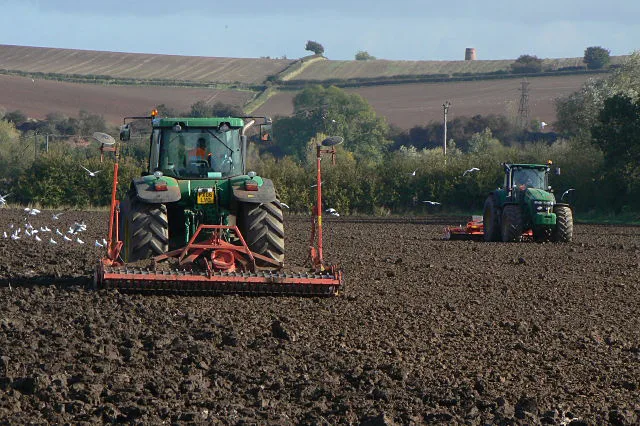
Limitations in marine fishing increase the requirements for the rational use of agricultural lands. Measures for soil protection include a complex of methods aimed at reducing erosion, preventing the loss of nutrients, and restoring soil fertility lost as a result of erosion, leaching, and excessive exploitation of cropland. In conventional tillage, the soil is ploughed, processed with a disk cultivator, and leveled. If ploughing for spring sowing is done in autumn, the land remains bare throughout the winter and the first spring months, which makes it extremely vulnerable to erosion.
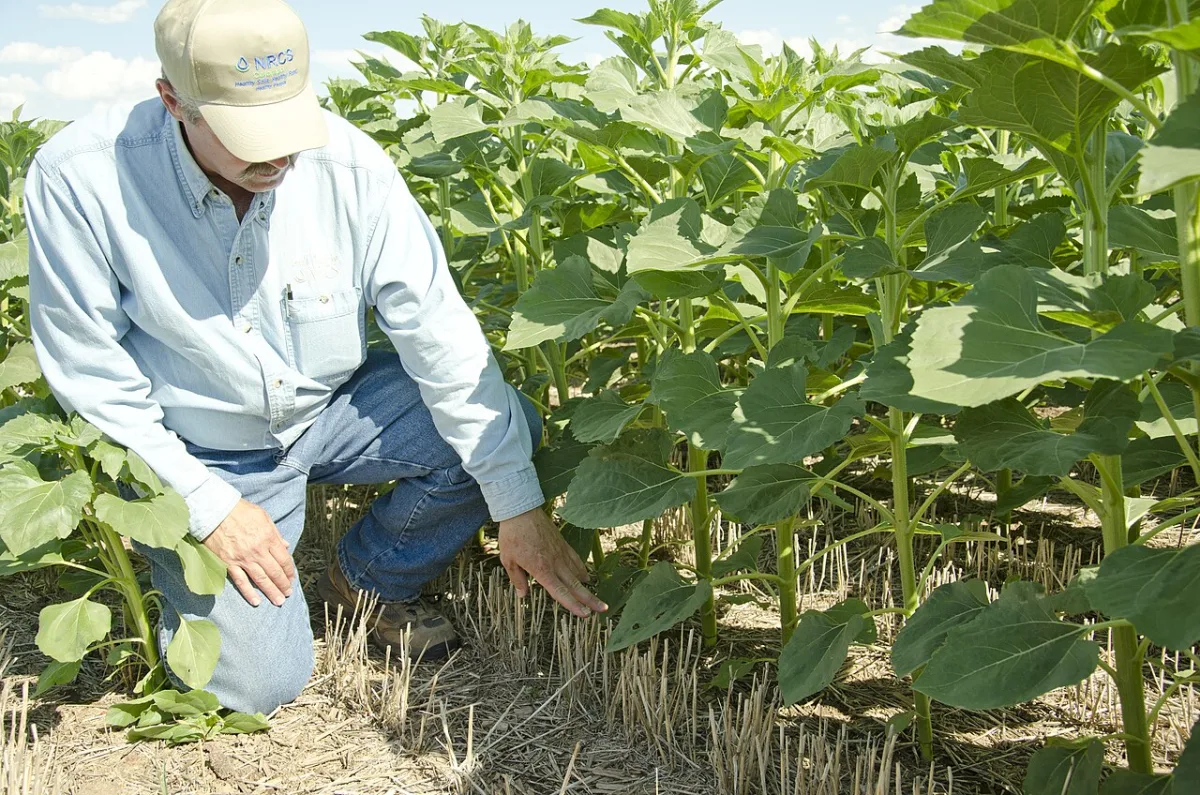
To protect cropland, conservation tillage methods are used — non-mouldboard and no-till (minimum) tillage. In our country, non-mouldboard tillage was first implemented in practice under field conditions. With the non-mouldboard method, the traditional mouldboard plough is replaced by wedge-shaped or flat-cutting implements, which loosen the soil deep down without turning the furrow slice and leave the fields surface-stabilized by plant root residues. With no-till (minimum) tillage, seeds, fertilizers, and herbicides are applied by special machines directly into the furrows without ploughing.
With conservation tillage, land is better preserved, accumulates more soil moisture, freezes to a lesser depth, and is less damaged by meltwater. The yield, in this case, remains at the level of traditional cultivation or exceeds it. However, these methods can only be used for three to seven years, after which intensive ploughing is necessary to maintain high yields. A disadvantage of surface tillage is the mandatory use of herbicides for weed control.
According to experts in the USA, using surface tillage on 80% of the area would reduce soil erosion by at least half. Currently, the technology of reduced tillage is common on nearly a third of US agricultural land. In our country, reduced tillage is applied on a fifth of the cropland.
Soil erosion rates on gentle slopes can be reduced by approximately 30–50% through the use of contour farming — ploughing across, rather than along, the slope. Each row of plants, planted at a right angle to the slope, serves as a small dam that helps retain soil and slows down water runoff. On steeper slopes, terracing is used, where the slope is transformed into a series of wide, nearly level terraces with a small vertical distance between them. In areas with high rainfall, diversion ditches are built behind each terrace to ensure necessary drainage.
In strip tillage, one wide strip of cultivated land is allocated for a crop, such as corn, and the next strip is sown with a cover crop, such as alfalfa, which completely covers the soil and reduces erosion. Strip cropping on mountain slopes combined with terracing and contour farming can reduce soil losses by up to 75 %. Erosion reduction is also achieved through alley cropping, where crops are sown in alleys between hedges of fruit trees and shrubs that provide fruits and firewood. On mountain slopes without vegetation, gullies form rapidly under the influence of runoff, so such lands are restored by gully stabilization.
- Small gullies are planted with fast-growing crops such as oats, barley, and wheat to reduce erosion.
- In deep gullies, small dams are built to retain sediment and gradually fill the gully itself.
- Fast-growing shrubs and trees are planted to stabilize the soil.
Wind erosion of arable land can be reduced by windbreaks or shelterbelts. Shelterbelts are especially effective if the uncultivated land is covered with vegetation. Trees also provide a habitat for birds that eat pests and insects that pollinate plants.
To partially restore nutrients lost by the soil due to erosion and harvesting, organic fertilizers can be applied to the soil as an alternative to mineral ones. The three main types of organic fertilizers include livestock manure, plant-based humus, and compost. Livestock manure is an organic fertilizer consisting of solid and partially liquid excrement from cattle, horses, poultry, and other livestock animals. The application of livestock manure improves soil structure, increases its nitrogen content, and stimulates the growth and reproduction of soil microorganisms.
Plant-based humus is formed from natural or cultivated green plants that are ploughed into the soil to increase its organic matter and humus content to improve yield the following year. It can consist of weeds on uncultivated land, grasses and clover in fields previously used as pasture, and legume plants grown for use as fertilizers to increase nitrogen stocks in the soil.
Compost is a rich natural fertilizer. It is prepared by accumulating alternating layers of carbohydrate-rich plant residues (leaves and tree prunings), livestock manure, and soil. This mixture is teeming with microorganisms that facilitate the decomposition of manure and plant residues.
Another method designed to prevent nutrient depletion in the soil is crop rotation. This method helps restore nutrients in the soil, reduces erosion by maintaining vegetative cover, and also reduces the number of pests and plant diseases.
Humanity cannot yet abandon the use of pesticides, but strict control over their application, as well as adherence to safety, storage, and transportation requirements, is necessary.
Biological methods of pest control are known — the use of insects, microorganisms, and plants. For example, the trichogramma is an insect whose female lays eggs in the clutches of other insects. The larva, developing inside the host egg, destroys it. The trichogramma is capable of destroying about 200 species of leaf-eating pests over many millions of hectares. Its use is 4-5 times more cost-effective than toxic chemicals, which, unfortunately, cannot be said for other biological preparations. On average, the costs for treating 1 hectare with them are three times higher than for chemical protection.
Read next
Ecology For students
Mineral resources of the World Ocean as a source of plant nutrients
Soil and tillage For students