
Biological characteristics and agrotechnical practices for cultivating winter grain crops
14 min read
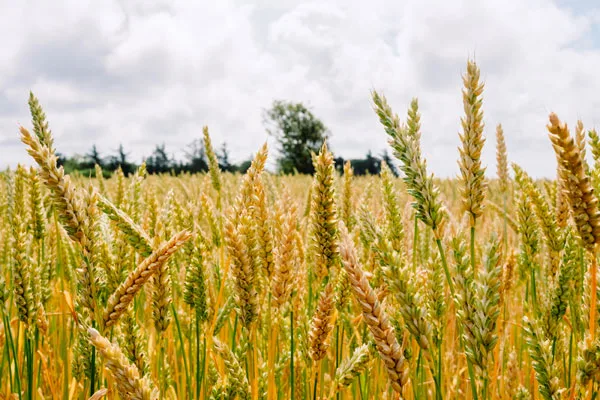
Biological characteristics of winter, spring, and facultative crops
Classifying grain crops into spring, winter, and facultative types allows an agronomist to efficiently distribute the workload for machinery and personnel during sowing and harvesting. Winter crops are traditionally more productive as they make maximum use of moisture and nutrient reserves accumulated during the autumn and spring. However, to transition to fruiting, each biological form requires specific temperature conditions and vernalization periods.
- Sowing of spring crops (air temperature) — 5–7 °C
- Vernalization of spring crops — 7–20 days at 5–20 °C
- Vernalization of winter crops — 20–50 days at -1 to +10 °C
- Sowing of winter crops — 50–60 days before persistent frosts
- Vernalization of facultative crops — 3–15 days at 3–15 °C
If winter crops are sown in the spring, they will not be able to enter the generative phase — the plants will tiller but will not form a stem or an ear. Facultative crops are more flexible in this regard: in southern regions, their cultivars produce a full harvest with both autumn and spring sowing. Among winter crops, winter rye and wheat are the most common in production, while winter barley is sown primarily in the south and in limited areas in regions with milder climates.
Winter hardiness, hardening, and lodging resistance
In autumn, sown winter crops actively form a root system and a tillering node, where all future plant organs are initiated. The depth of the tillering node directly affects crop survival. The deeper it is located, the higher the resistance of the plants to adverse winter-spring temperatures and subsequent lodging.
The optimal depth of the tillering node for winter crops is 2–3 cm. This is a critical indicator for plant protection against freezing.
Lodging resistance also depends on the strength of the stem, especially in the lower internode. In grain crops, the lower and upper internodes are usually the thinnest, while the middle ones are the thickest. This natural structure of the stem does not provide resistance to strong winds and precipitation, so it is important for an agronomist to monitor the factors affecting the strength of the straw.
An excess of nitrogen nutrition and soil moisture, combined with high temperatures and long daylight hours in the autumn, lead to overly rapid cell growth. This hinders quality hardening and reduces the cold resistance of winter crops.
For successful overwintering, plants must undergo hardening, which occurs in two phases in the autumn. The ability to harden is acquired during the vernalization process and depends directly on a balanced supply of phosphorus and potassium. Most winter crops complete vernalization under field conditions during December and January, with this process for winter wheat and rye finishing at temperatures of -6 °C and below.
If the vernalization stage is completed early in the autumn and the plants continue to grow in warmth for a long time, their hardening ability drops sharply, which leads to freezing. Upon completion of vernalization, winter crops accumulate 1.5–2 times less sugar and become extremely sensitive to spring thaws.
It is important to distinguish between winter hardiness and the genetic cold resistance of crops. Winter rye is hereditarily more cold-resistant than wheat; however, when grown in conditions without frost, this trait is gradually lost. Plants acquire maximum cold resistance only with a gradual decrease in autumn temperatures.
Physiology of hardening: how plants prepare for frosts
To successfully survive the winter, winter crops must undergo two consecutive stages of hardening. During this period, sugars accumulate in the tillering nodes, and cells partially dehydrate. This prevents ice formation inside the cells and protects the tissues from dying.
- Time for the first phase of hardening — 12–14 days
- Time for full hardening — 21–24 days
- Sugar content before entering winter — 20–25 %
- Temperature limit for barley — down to -12 °C
- Temperature limit for wheat and triticale — down to -18...-20 °C
- Temperature limit for rye — down to -37 °C
The first phase of hardening occurs under bright sunlight and lowered temperatures: about 8–10 °C during the day and about 0 °C at night. In such conditions, respiration and growth slow down, and plants actively accumulate plastic substances. Winter crops that have passed this stage are able to withstand frosts down to -12 °C.
The second phase occurs at temperatures from 0 to -5 °C. Water moves from the cytoplasm to the intercellular spaces, the concentration of cell sap in the tillering nodes and leaf sheaths increases, and complex proteins break down into simpler, stable forms. Accumulated sugars act as cryoprotectants, protecting cell membranes from denaturation.
The highest level of hardiness is acquired only by young, poorly differentiated tissues of the tillering node and leaf sheaths. Older cells are less resistant to frost; therefore, conditions that preserve the young tissue structure are important for overwintering. The rate of passing the second phase depends on the crop: winter rye completes hardening the fastest, wheat and triticale slower, and winter barley adapts to frost the worst.
The snow cover acts as an effective thermal insulator and protects the tillering node from freezing. Its low thermal conductivity smoothens critical temperature drops. The effectiveness of such protection directly depends on the snow depth in the field.
| Snow cover depth, cm | Air temperature, °C | Soil temperature at the tillering node depth (2 cm), °C |
|---|---|---|
| No snow | -32...-33 | -20...-22 |
| 15 | -32...-33 | -7...-11 |
| 50 | -32...-33 | -2...-3 |
Causes of winter crop loss and crop protection methods
During the winter and early spring periods, crops are exposed to a complex of adverse factors. In addition to direct freezing, plants may die from smothering, waterlogging, or mechanical soil damage. The winter hardiness of crops increases if they managed to undergo full hardening in the autumn and accumulated sufficient carbohydrates. At the same time, winter rye traditionally shows higher endurance compared to winter wheat.
Freezing occurs due to sharp temperature drops during snowless periods. Ice crystals forming in the tissues rupture the protoplasm. Frost-damaged plants are easy to identify in the spring: their leaves turn yellow, and the tillering node and roots turn brown, lose turgor, and become flaccid.
Smothering begins when heavy snow falls on thawed soil after a long, warm autumn. Plants under snowdrifts continue to respire and consume carbohydrates, but cannot photosynthesize. As a result, they become exhausted and die. Rye and triticale on heavy loams with poor water permeability are most susceptible to smothering.
Plants weakened by smothering are affected by snow mold (Fusarium nivale Ces.) and sclerotinia snow rot (Sclerotinia graminearum Elenev.). If the soil dries slowly in the spring, pathogens quickly spread to healthy areas of the crops.
Waterlogging is localized in low-lying areas where meltwater or rainwater stagnates. Due to the lack of oxygen in waterlogged soil, the lower leaves of winter crops die off first, and then the entire plant perishes. Heaving occurs during sharp temperature fluctuations when the soil freezes and thaws, forming ice lenses. The ice lifts the top layer of the soil, exposing the tillering node and tearing the root system.
- Before sowing, treat seed with granosan to protect against snow mold and sclerotinia snow rot.
- Choose cultivars with deep-seated tillering nodes for sowing and treat seed with retardants to avoid heaving.
- Use snow retention on fields to protect crops from critical frost and accumulate soil moisture.
- Create conditions for rapid drainage of meltwater, preventing smothering and waterlogging.
- Immediately after the snow melts, rake and remove dead plants from the field to reduce the infectious load.
Winter cereals have a distinct advantage over spring crops due to the efficient use of early spring soil moisture and increased solar radiation. By the time spring crops are just beginning to be sown, winter crops have already managed to form significant vegetative mass. A developed root system allows the plants to tolerate summer drought by consuming moisture from the sub-plough horizon. As a result, winter crops consistently outperform spring crops in yield under equal growing conditions.
Early ripening also reduces the farm's workload during harvesting and subsequent field preparation. Winter wheat is harvested 8–10 days earlier, and winter barley 10–12 days earlier than spring forms. This allows shifting part of the field operations to the autumn, lightening the spring sowing schedule, and preparing the soil for subsequent crops in the crop rotation with high quality.
Overwintering monitoring and viability assessment
To plan spring operations in a timely manner, the condition of winter crops is assessed before the start of the growing season. In practice, two main methods of rapid diagnosis of plant viability are used. They allow for accurate prediction of crop density and timely decision-making regarding reseeding or repair.
With the growing point staining method, the plant density per 1 m² and the proportion of survived specimens are first determined. Then, sections of the growing point are made and treated with acid fuchsin. Dead tissues stain magenta, while live ones remain unstained. This method helps to identify death from freezing, smothering, waterlogging, or infection by snow mold or sclerotinia.
The accelerated tillering node regrowth method provides a quantitative assessment of viability. Stems are cut from plants at a distance of 1.0–1.5 cm from the tillering node, and the roots are completely removed. The samples are placed in a humid environment (gauze, cotton wool, or filter paper), covered with a lid, and kept for 12–24 hours at a temperature of 24–26 °C. Viability is determined by the intensity of stem growth.
- Temperature during node regrowth — 24–26 °C
- Sample exposure time — 12–24 hours
- Stem growth in healthy plants — up to 10 mm
- Stem growth in weakened plants — 3–5 mm
Based on the counts of living, weakened, and dead plants, the actual seeding density per square meter is determined. Using these data, the agronomist makes a decision on the feasibility of maintaining or reseeding the field. The classification of crop conditions and recommended measures are presented in the table.
| Crop condition | Density and plant mortality indicators | Management decision |
|---|---|---|
| Highly thinned | No more than 100–120 healthy plants per 1 m² | Complete reseeding with spring crops in the spring |
| Moderately thinned | From 130 to 200 healthy plants per 1 m² | Repair of crops (undersowing with barley or wheat) |
| Slightly thinned | Plant loss does not exceed 15–20 % | Maintain crop for further cultivation |
Predecessors, soil tillage, and fertilizer system
In the conditions of Belarus, winter crops are mainly placed on occupied fallows. Winter wheat, which is demanding regarding soil fertility, is best sown after legumes and legume-cereal mixtures, early potatoes, or fodder lupine. Loamy and sandy loam soils with low acidity are suitable for it, whereas on sands its yield drops to an unprofitable level. Winter rye is less demanding: it is cultivated on all types of sod-podzolic soils, except for loose sands. On peat-bog soils, rye is sown after perennial grasses, barley, or corn for silage.
Pre-sowing soil preparation depends on its particle-size distribution. Before sowing, loamy soils are cultivated with simultaneous harrowing. Light sandy loam and sandy soils should be treated with double-track harrowing to avoid excessive drying.
The nutrition system is based on a combination of organic and mineral fertilizers. Directly for winter crops, 15–20 t/ha of manure, peat-manure mixtures, or composts are applied. The main phosphorus-potassium fertilizer is incorporated during ploughing or cultivation, and nitrogen — during pre-sowing harrowing. Additionally, rock phosphate can be applied during ploughing.
- Application rate of organic fertilizers — 15–20 t/ha
- Superphosphate for cultivation — 2–3 c/ha
- Potassium salt for cultivation — 1–1.5 c/ha
- Ammonium nitrate for harrowing — 0.5–1 c/ha
- Row-applied superphosphate during sowing — 0.5–0.6 c/ha
Autumn top dressing with phosphorus and potassium fertilizers is especially effective when sowing after stubble predecessors without row fertilizer application. It increases winter hardiness, resistance to diseases and lodging, providing a yield increase of up to 3 c/ha.
The effectiveness of micronutrient fertilizers drops sharply on acidic soils. Such plots must be limed during fallowing or before sowing. In this case, the liming application rate for winter wheat should be 20–25 % higher than for rye.
In autumn, in case of winter crop overgrowth, mowing is carried out to prevent damping off under the snow. Mowing with mowers is carried out 2–3 weeks before the soil freezes. Grazing livestock on the crops is prohibited.
Spring crop maintenance consists of the following operations:
- draining surface stagnant water along the furrows;
- top dressing with ammonium nitrate (0.6–1.0 c/ha).
If phosphorus-potassium fertilizers were not applied in the autumn, they are applied together with nitrogen ones:
| Superphosphate | 1–1.5 c/ha |
| Potassium salt | 0.6–0.8 c/ha |
Top dressing is performed on frozen-thawed soil. Delaying the top dressing reduces its effectiveness.
In years with an early and dry spring, harrowing of winter crops with "zigzag" harrows with sharp teeth is mandatory once the soil "matures." On sandy soils and sandy loams, winter crop harrowing is not carried out.
In early spring, winter crops are top-dressed on frozen-thawed soil with fertilizers. Types and doses of fertilizers are applied depending on the state of the winter crops and local conditions. Weak winter crops are top-dressed with an organic-mineral mixture at 7–8 c/ha or a complete mineral fertilizer at 2–3 c/ha of each nutrient, or only nitrogen fertilizers are applied — 2.5–3.5 c/ha of active ingredient. Winter crops that have developed well in the autumn and survived the winter are top-dressed in the spring only with phosphorus and potassium fertilizers at 2.5–3.0 c/ha of nutrients or ash — 3–4 c/ha, which somewhat increases the resistance of plants against lodging.
Mineral fertilizers during top dressing are applied with broadcast fertilizer spreaders, but it is even better to distribute them using airplanes and helicopters. Aerial top dressing achieves uniform fertilizer distribution and high productivity (up to 100–125 ha per shift).
In winter wheat crops, chemical weeding with herbicide preparations is carried out, as well as treatment with insecticides.
Winter crops are harvested by the swathing method in the wax ripeness phase or by direct combining in the full ripeness phase.
Read next
Soil and tillage For agronomists
Effective tillage after harvesting cereal crops in the Kuban region
Agrochemistry For students
Fertilizer application system in field crop rotations of the Krasnodar Territory
Crop production For students