
Fertilizer application system in field crop rotations of the Krasnodar Territory
8 min read
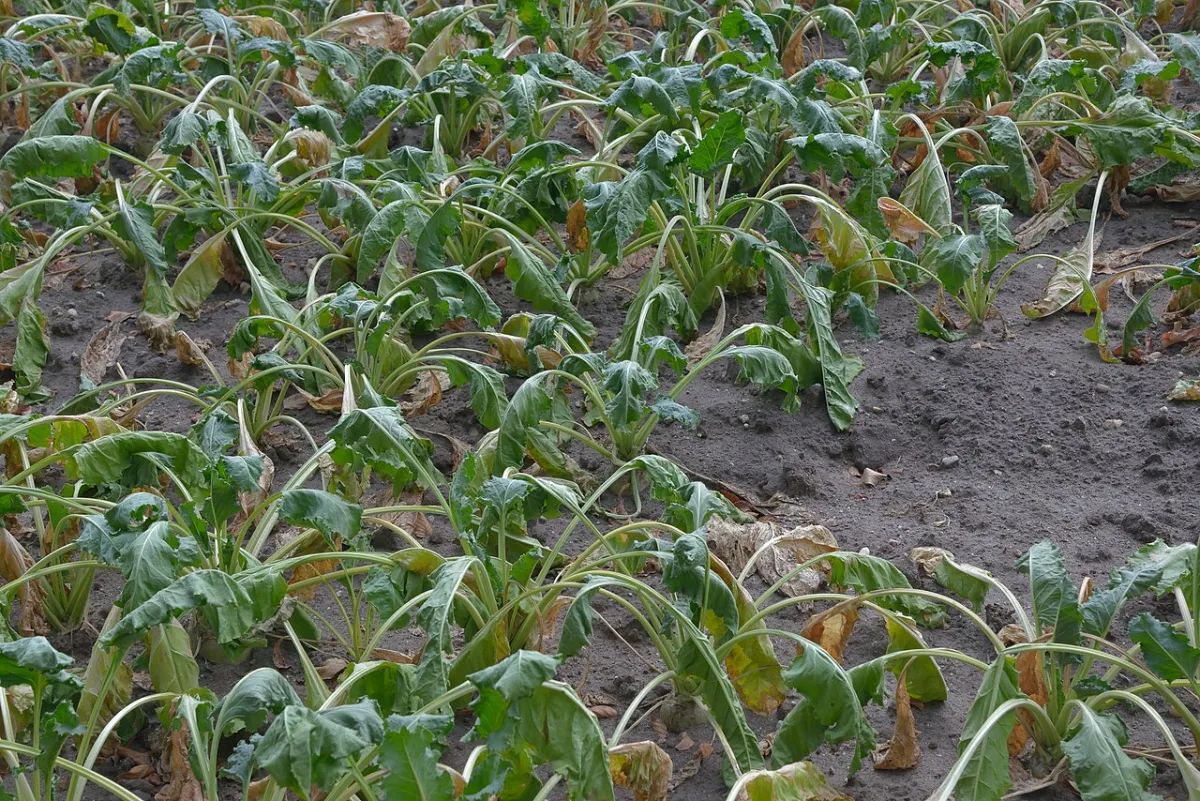
The fundamentals of fertilizer systems in the Krasnodar Territory were developed by A.I. Simakin. The fertilizer systems in field crop rotations (Table 184–186; Farming system in the Krasnodar Territory for 1990-1995...., 1990) show the specifics of crop fertilization depending on their rotation and the residual effect of fertilizers applied for the predecessor. The presented fertilizer systems are indicative and should be adjusted based on the set objectives and results obtained.
Table 184 – Indicative fertilizer system in a 12-course field crop rotation in the northern zone of the Krasnodar Territory on ordinary chernozem Fertilizer application methods No. Crop top dressing Total a.i. per field starter basic sowing 1st 2nd 3rd
1 Alfalfa – –– N30P30K30 – P30K30 N30P60К60 2 Alfalfa – – N30P30K30 – P30K30 N30Р60К60 3 Winter wheat N40P80K60 Р20 N40 N0– 60 N30 N110–170P120K60 4 Winter wheat N60P100K40 Р20 N40 N0– 60 N30 N130– 190P120K40 5 Sunflower N40P60 – – – – N40P60 6 Black fallow Manure – – – – Manure 60 t/ha 60 t/ha +P80K40 +Р80К40 7 Winter wheat – Р20 N40 N0– 60 N30 N70– 130P20 8 Winter wheat N60P80K40 Р20 N40 N0– 60 N30 N130– 190P100K40 9 Sugar beet N130P140K130 Р20 – – – N130P160K130 10 Grain corn Manure 40 Р20 N30 – – Manure 40 t/ha t/ha +N30Р20 Silage corn Manure 40 Р20 – – N40 Manure 40 t/ha t/ha +N40Р20 11 Winter wheat N40P80K40 Р20 N40 N0–60 N30 N110– 170P100K40 12 Spring barley with N60P60K60 – – – – N60P60K60 alfalfa undersowing
Table 185 – Indicative fertilizer system in an 11-course field crop rotation in the central zone of the Krasnodar Territory on typical and leached chernozem Fertilizer application methods No. Crop top dressing Total a.i. per field starter basic sowing 1st 2nd 3rd
1 Alfalfa – – N30P30K30 – P30K30 N30P60K60 2 Alfalfa – – N30P30К30 – P30K30 N30P60K60 3 Winter wheat N40P60К60 Р20 N40 N0–60 N30 N100–170P80K60 4 Winter barley N60P60K60 Р20 N40 – – N100P80K60 5 Sunflower Manure 40 t/ha – – – – Manure 40 t/ha 6 Winter wheat N60P60К40 P20 N40 N0–60 N30 N130–190P80K40 7 Silage corn N60P60 K60 Р20 – – N40 N100P80K60 8 Winter wheat N60P60K60 Р20 N40 N0–60 N30 N130–190P80K60 Manure 50 t/ha Manure50 t/ha 9 Sugar beet 90P90K90 + N90P90K90 10 Grain corn N60P60K40 – N30 – – N90P60K40 Winter wheat with 11 N60P60K60 P20 N30 – N30 N120P80K60 alfalfa undersowing
Table 186 – Indicative fertilizer system in an 11-course field crop rotation in the southern foothill zone of the Krasnodar Territory on leached compacted chernozem, grey forest soils, and forest-steppe soils Fertilizer application methods No. Crop top dressing Total a.i. per field starter basic sowing 1st 2nd 3rd
1 Alfalfa N30P60K60 – – – – N30P60K60 2 Alfalfa – – N30P30K30 – P30K30 N30P60K60 3 Winter wheat N40P80K60 Р20 N40 N0–60 N30 N110–170P100K60 4 Winter wheat N40P80K60 Р20 N40 N0–60 N30 N110–170P100K60 5 Vegetable crops Manure 40 t/ha N30P20K20 N30P20K20 N30P10K10 – Manure 40 t/ha + P40K10 +N90P90K90 6 Peas N40P40K40 – – – – N40P40K40 7 Winter wheat N40P80K60 Р20 N40 N0–60 N30 N110–170P100K60 8 Sunflower Manure 50 t/ha – – – – Manure 50 t/ha 9 Winter wheat N60P60K40 Р20 N40 N0–60 N30 N130–190P80K40 10 Silage corn N60P60K60 Р20 N40 N40 N140P80K60 Grain corn N60P80K60 Р20 N40 – – N100P80K60 11 Winter wheat N60P80K60 Р20 N40 N0–60 N30 N130–190P100K60
Rice is the most important cereal crop, demanding in terms of the soil nutrient regime. The main areas of its cultivation in the Russian Federation are concentrated in the Kuban. To produce 1 ton of grain and the corresponding amount of straw, rice plants consume 20.8 kg of nitrogen, 12.4 kg of phosphorus, 21.5 kg of potassium, 3.3 magnesium, 2.6 kg of calcium, 0.4 kg of iron, 159.2 g of manganese, 39.6 g of zinc, 7.8 g of copper, 3.8 g of boron, 0.8 g of molybdenum, and 0.7 g of cobalt. Rice absorbs these nutrients throughout the entire growing season, although their uptake by plants is uneven. During the period from seed germination to the formation of 3–4 leaves, a very insignificant amount of nutrients is absorbed. At this time, the root system is still poorly developed, and young plants are very demanding regarding the presence of easily assimilable forms of nutrients in the soil. A deficiency of these leads to an irreversible disruption of biochemical processes in the plant, which negatively affects their development and yield formation. In this regard, the period from emergence to the beginning of the tillering phase is considered a critical period for rice in relation to mineral nutrition elements.
With the onset of the tillering phase, the rice plant's demand for nutrients increases sharply. Their maximum uptake by plants occurs during the tillering-heading period. Upon reaching the milky-wax ripeness stage of the grain, the uptake of nutrients by plants from the soil practically ceases.
To create optimal conditions for the growth and development of plants, it is necessary to ensure balanced nutrition for rice with all nutrients. This is achieved by the application of macro- and micro-fertilizers, taking into account cultivar characteristics, the preceding crop, growing technology, and soil and climatic conditions.
Nitrogen fertilizers. Among mineral fertilizers applied for rice, the leading role in increasing crop yield belongs to nitrogen fertilizers. They provide 80–90% of the yield increase obtained from fertilizer application.
Nitrogen from fertilizers enters plants within a few hours and is incorporated into proteins. The effective action of nitrogen fertilizers lasts for 10–15 days, which is why they are applied to rice fractionally. 2–3 days before sowing, 25% of the application rate is applied. This is sufficient to create a dominance of phosphorus over nitrogen in the soil, which creates favorable conditions for the nutrition of rice seedlings. As a result, favorable conditions are created for obtaining uniform emergence. In addition, nitrogen losses due to denitrification during soil drying and leaching with discharge and filtration waters are reduced. The demand of rice for nitrogen increases sharply when plants transition to tillering, which coincides with the appearance of the 3rd–4th leaf. To stimulate the tillering process and improve conditions for the initiation of the apical meristem, it is necessary to apply 50% of the nitrogen fertilizer rate during this period. Earlier application of nitrogen is ineffective, as the basal fertilizer is sufficient until this time. If top dressing is delayed, a significant number of unproductive shoots appear. To form a productive stand, and to increase grain set and filling of caryopses at the stage of 7–9 leaves, i.e., by the beginning of the jointing phase, it is necessary to apply the remaining 25% of the nitrogen rate. This nitrogen fertilizer application scheme most fully corresponds to the physiological needs of rice and significantly reduces non-productive nitrogen losses and environmental pollution with nitrates and nitrites. The best fertilizer forms are ammonium sulfate and urea.
The nitrogen rate is calculated taking into account the planned yield, the standard nitrogen consumption for the formation of 1 centner of grain, and a correction factor for the agrochemical properties of the soil according to the formula
ОN УП Н К, where: ОN – nitrogen rate, kg/ha;
УП – planned yield, centner/ha;
Н – standard nitrogen consumption for the formation of 1 centner of grain (constitutes
2.08 kg under Kuban conditions);
К – correction factor for the preceding crop: perennial grass sod – 1.1, rotation of sod of perennial grasses – 1.3; fallow – 1.2.
Phosphorus fertilizers. Phosphorus promotes good development of the root system, enhances the plant's use of mineral nutrition elements from the soil and fertilizers, and accelerates the initiation of reproductive organs. When applying phosphorus fertilizers for rice, it is necessary to consider not only the plants' phosphorus demand and the specifics of phosphorus compound transformations in paddy field soils but also the amount of applied nitrogen. In well-aerated soil, the content of mobile phosphates is generally low. After flooding, as a result of increasing reduction processes, phosphates of poorly soluble ferric iron transition into the form of highly soluble ferrous iron, and the content of mobile phosphorus in the soil increases significantly, which improves rice's supply with this element. The different content of mobile phosphates in the soil before and after flooding determines the quite high efficiency of phosphorus fertilizers when applied before rice sowing, and low efficiency when applied as top dressing during the tillering and jointing phases of plants, although maximum phosphorus uptake occurs exactly during this period.
The soils of the Kuban rice-growing zone are divided into four groups according to their mobile phosphorus content (Table 187; Sheudzhen A.Kh., 1996). On soils with low and medium levels of mobile phosphorus, the response of rice to phosphorus fertilizers is high, and with high levels, it is weak.
Table 187 – Grouping of soils in the Kuban rice-growing zone by content of mobile phosphorus forms, mg/kg of soil Phosphorus content in soil by Correction method: factor for Determination by: fertilizer rates for Truog Chirikov Machigin Arrhenius accounting of agrochemical soil properties
Low <40 <25 <15 <75 1.50 Medium 40–80 25–50 15–30 75–150 1.00 High 81–120 51–75 31–45 151–175 0.50 Very high >120 >75 >45 >175 0.00
The rate of phosphorus fertilizers is calculated according to the formula proposed by us:
P = 2/3 Nrate K, where: P — phosphorus application rate, kg/ha;
Nrate — nitrogen application rate, kg/ha;
K — correction coefficient reflecting the content of available phosphorus in the soil (provided in Table 185).
It is advisable to apply phosphorus fertilizers for rice in one application before sowing, either broadcast or locally with the seed; in the latter case, it is recommended to reduce the phosphorus dose by 50%.
Potassium fertilizers. Potassium is the third most important nutrient element for rice, the content of which in the soil must be regulated by the application of potassium fertilizers. Potassium is absorbed by plants continuously throughout the entire growing season. It promotes active oxygen uptake by young plants, participates in the formation of the apical meristem, and consequently increases the grain filling of the panicle.
Potassium applied as a top dressing before flowering promotes the redistribution of nutrients in plant organs and their intensive flow into the panicle, which determines its influence on the mass of rice grains. The application rate of potassium fertilizers for rice depends on the content of exchangeable potassium in the soil and the amount of nitrogen applied.
Soils in the Kuban rice-growing zone are divided into four groups according to their exchangeable potassium content: low, medium, increased, and high supply (Table 188; Sheudzhen A.Kh., 1996).
Table 188 – Classification of soils in the Kuban rice-growing zone by exchangeable potassium content, mg/kg of soil
The calculation of rates and timing of potassium application for rice depends on the soil's supply of its exchangeable forms. On soils with low and medium potassium supply, the crop gives a high yield response; on soils with increased supply, the response is weak; and at high supply, potassium fertilizers provide no yield increase.
The rate of potassium fertilizer is calculated using the formula: Krate = ½ × Nrate × K, where Krate — potassium application rate (kg/ha), Nrate — nitrogen application rate (kg/ha), and K — correction coefficient reflecting the content of exchangeable potassium in the soil.
| Soil supply | By Chirikov, mg/kg | By Maslova, mg/kg | By Machigin, mg/kg | Correction coefficient (K) |
|---|---|---|---|---|
| Low | <100 | <150 | <300 | 1,50 |
| Medium | 100–150 | 150–250 | 300–500 | 1,00 |
| Increased | 151–200 | 251–300 | 501–600 | 0,75 |
| High | >200 | >300 | >600 | 0,00 |
Potassium fertilizers are most effective when applied in fractions: one half of the calculated rate should be applied before sowing, and the second half as a top dressing during the jointing phase.
To plan the fertilization system in an eight-field crop rotation for rice, the soil type and the previous crop are taken into account:
- On meadow-chernozem, meadow, and alluvial-meadow soils:
- Alfalfa — N40P90K40 – N40P90K40
- Alfalfa — N40P60K60 N40P60K40
- Rice — N60P90K60 N30P30 N90P90K90
- Rice — N90P90K60 N30P30 N120P90K90
- Rice — N100P120K90 N50 N150P120K90
- Occupied fallow — N90P90K60 N30 N120P90K60
- Rice — N100P120K90 N50 N150P120K90
- Rice — N120P120K60 N60K30 N180P120K90
- On meadow-bog soils:
- Alfalfa — N45P60 – N45P60
- Alfalfa — N45P60K30 N45P60K30
- Rice — N90P90K60 N30 N120P90K60
- Rice — N100P90K60 N50 N150P90690
- Rice — N120P90K60 N60К30 N180P90K90
- Occupied fallow — N60P60K60 N30 N90P60K60
- Rice — N100P120 N50 N150P120K90
- Rice — N120P120K60 N60K30 N180P120K90
Application of micronutrients to rice crops
Micronutrients help rice more effectively absorb main mineral fertilizers, increase plant resistance to pathogens, pests, soil salinity, and spring frosts. The effectiveness of their use depends on the initial content of available forms of micronutrients in the soil, which is divided into three supply groups: low, medium, and high.
In practice, three main methods of micronutrient application are used:
- application directly to the soil;
- pre-sowing seed treatment;
- foliar top dressing of plants.
Soil application of micronutrients is most advisable when the soil has a low supply of available forms. Soil application is performed before rice sowing simultaneously with the main application of mineral fertilizers. On soils with a medium supply of micronutrients, these rates are reduced by 50%.
- Boron, cobalt, and molybdenum application rate to soil — 2 kg/ha
- Copper application rate to soil — 3 kg/ha
- Manganese and zinc application rate to soil — 4 kg/ha
Seed treatment is the most effective way to apply micronutrients for rice. Seed treatment is carried out when the micronutrient content is below threshold values: boron < 1.9 mg/kg, cobalt < 0.3 mg/kg, molybdenum < 0.5 mg/kg, zinc < 28.6 mg/kg, manganese < 36.4 mg/kg, copper < 5.5 mg/kg. Seeds are treated using a semi-dry method with 0.5% aqueous solutions of boron, cobalt, molybdenum, copper, and 1% solutions of manganese and zinc, simultaneously with pesticide seed treatment.
Seed treatment is carried out using only one microelement that is in the greatest deficit. Treatment with a mixture of microelements is less effective.
| Seed nutrient status | B, mg/kg | Co, mg/kg | Mo, mg/kg | Zn, mg/kg | Mn, mg/kg | Cu, mg/kg | Expected effectiveness |
|---|---|---|---|---|---|---|---|
| Low | <1.9 | <0.2 | <0.3 | <19 | <2.6 | <3.3 | High |
| Average | 1.9–2.6 | 0.2–0.3 | 0.3–0.5 | 19–28 | 26–42 | 3.3–5.6 | Average |
| High | >2.6 | >0.3 | >0.5 | >28 | >42 | >5.6 | Low |
For foliar top dressing, preliminary plant diagnostics are a mandatory condition. Top dressing prescription is performed in the following order:
- Conduct plant diagnostics of rice leaves strictly during the tillering phase.
- Record a deficit if the element content in the leaf dry mass is below the norm: boron < 3.45 mg/kg, cobalt < 1.1 mg/kg, molybdenum < 0.65 mg/kg, zinc < 36 mg/kg, manganese < 270 mg/kg, copper < 8 mg/kg.
- Perform spraying of crops with a 0.1% aqueous solution of the microelement that is at a minimum, with a working fluid application rate of 300 l/ha when using ground-based equipment.
Read next
Agrochemistry For students
Placement of perennial grasses and the fertilizer system for alfalfa in crop rotation
Agrochemistry For students
The influence of crop residues and root residues on soil fertility
Agrochemistry For students