
Placement of perennial grasses and the fertilizer system for alfalfa in crop rotation
5 min read
Placement of perennial grasses and choice of preceding crops
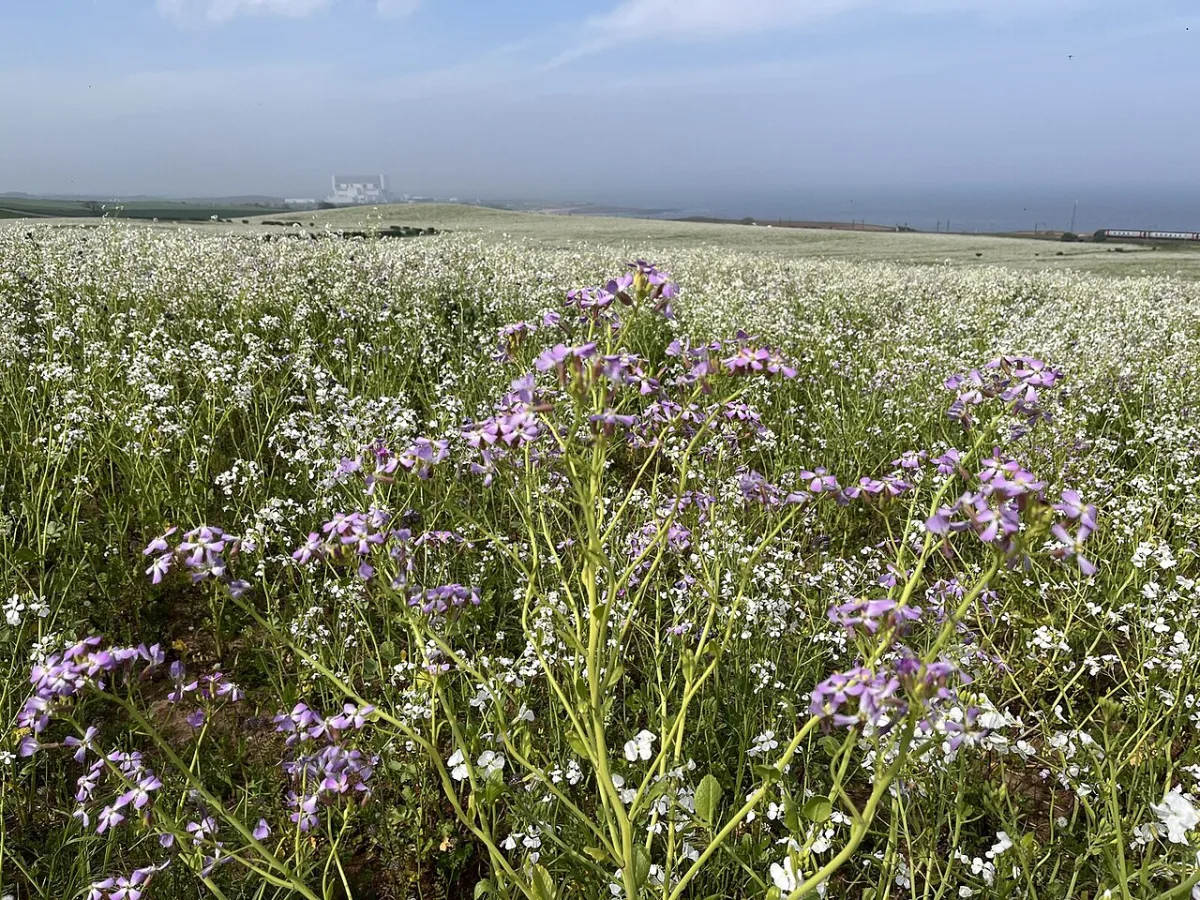
Proper allocation of land for forage crops is the first step toward stable yield. Silage and grain corn, peas, and the majority of perennial grasses are placed in field crop rotation. Grasses also perform excellently in vegetable and rice crop rotation, improving soil structure. Areas near the farm are traditionally allocated for green conveyor crops.
Alfalfa thrives in well-aerated, permeable, loose chernozems, chestnut and brown soils, serozems, as well as dark-gray forest-steppe loams and sandy loams with a rich subsoil layer. In arid regions, it is advisable to place alfalfa sowings in output wedges, where high soil fertility is combined with a high water table. The best preceding crops for it are row crops — potatoes, corn, melons and gourds, as well as winter wheat after fallow.
Sainfoin produces high yields on loose carbonate soils. It is sown after winter cereals after fallow or after row crops. In field crop rotation, sainfoin can be used for one year as a fallow-occupying crop without intersowing with a cereal component. Clover performs well on sod-podzolic, gray forest, and chestnut soils after cereal, grain legume, and row crop predecessors. Clover itself serves as a valuable preceding crop for most crops, especially for flax.
Acidic soils are detrimental to leguminous grasses. If the pH is below 4.5, clover disappears completely, and in alfalfa, nodule bacteria stop fixing nitrogen at pH 5. Alfalfa also does not tolerate high water tables, waterlogging, or stony and gravelly soils. Sainfoin is unsuitable for saline and excessively wet sites, and clover is unstable on sandy loams with sandy subsoil.
Observe the crop return intervals in crop rotation. Clover must not be sown in the same place for several consecutive years — this leads to clover soil fatigue.
Fertilization systems for leguminous grasses and nutrient calculation
Leguminous grasses consume a significant amount of nutrients, but they are capable of providing some of the nitrogen themselves through symbiosis with nodule bacteria. In addition, the deep root system of alfalfa and sainfoin allows them to absorb hard-to-dissolve phosphorus compounds from the lower soil horizons.
Alfalfa's need for nutrients for yield formation is high. To create one ton of dry matter, the sowings consume a complex of macro- and mesoelements.
- Nitrogen (N) uptake — 26 kg/t
- Potassium (K) uptake — 16 kg/t
- Calcium (Ca) uptake — 15 kg/t
- Phosphorus (P) uptake — 6.5 kg/t
- Sulfur (S) uptake — 3 kg/t
The volumes of biological nitrogen that alfalfa binds from the air annually depend directly on the type of soil in the field.
| Soil type | Amount of fixed nitrogen, kg/ha per year |
|---|---|
| Leached chernozem | 220–270 |
| Gray forest soil | 150–250 |
| Ordinary chernozem | 140–170 |
To realize the yield potential of alfalfa, a split system of fertilizer application is used, tied to the stages of development and tillage.
- Before ploughing: apply the main phosphorus-potassium fertilizer. In zones with insufficient or unstable humidity, the application rate is P60K60; in zones with sufficient humidity — P90K60. Under irrigation in field crop rotations, the rates are increased by 1.5–2 times.
- Before pre-sowing cultivation and during sowing: apply a starter nitrogen dose of N30–40 under the cultivator, as well as superphosphate at a rate of P10 directly into the rows.
- After harvesting the cover crop: perform top dressing with nitrogen at a dose of N30 to stimulate regrowth.
- In the spring of the second year of life: provide top dressing to the sowings at the beginning of the growing season with nitrogen at a dose of N30 or apply 200 kg/ha of liquid complex fertilizer followed by mandatory harrowing.
Sainfoin also forms a powerful root system, penetrating to a depth of up to 1.5–2 meters, and accumulates 100–200 kg/ha of nitrogen in the soil. Before sowing, sainfoin seeds must be treated with Nitragin or a 0.5% aqueous solution of molybdenum.
For planning sainfoin hay yield, its nutrient removal from the soil is taken into account.
| Nutrient | Removal per 1 ton of hay, kg |
|---|---|
| Potassium | 18–20 |
| Calcium | 11–12 |
| Phosphorus | 6–7 |
| Magnesium | 1.5–1.7 |
Mineral nutrition for sainfoin is organized according to the following scheme:
- Under the preceding crop: application of organic fertilizers (manure) at a rate of 40–60 t/ha.
- During main application: a full dose of N60P60K60 is applied directly for the sainfoin.
- During sowing: row application of superphosphate at a rate of P10–15.
Clover actively consumes nutrients from the soil during growth. At the same time, the crop is provided with nitrogen by nodule bacteria, which fix it from the air. However, the overall productivity of clover strongly depends on the natural soil fertility of the field and the residual effect of fertilizers applied for preceding crops. To obtain a high hay yield, it is necessary to provide the crop with phosphorus, potassium, and mesoelements.
Nutrient removal for the formation of 1 t of clover hay:
- Phosphorus (P) — 5–6 kg
- Potassium (K) — 16–17 kg
- Calcium (Ca) — 15–17 kg
- Magnesium (Mg) — 5.0–5.5 kg
- Sulfur (S) — 1.5 kg
The effectiveness of nitrogen-fixing bacteria is directly related to the level of mineral nutrition in the soil. If the plant lacks phosphorus or potassium, symbiosis is less effective, and the yield of above-ground mass decreases.
It is recommended to apply mineral fertilizer to clover in split doses, focusing on the plant growth stages. Basal application of phosphorus and potassium is performed in the autumn during soil preparation. Starter doses of nitrogen are applied in the spring, and in the second year of growth, the stand is supported with additional top dressing.
| Timing and method of application | Fertilizer application rate (by active ingredient), kg/ha |
|---|---|
| Before ploughing or cultivation of winter fallow | Р60–90К60–90 |
| In spring for cover crop | N30–45 |
| Top dressing in the second year of clover growth | N25–30P40K40 |
Specifics of fertilizing corn for silage and green fodder
When growing corn for silage and green fodder, the same fertilizer system is used as for grain cultivation. The only difference is in the nitrogen dosage — to increase vegetative mass, the application rate can be slightly increased. At the same time, it is important to monitor the potassium balance in the soil after harvesting harvesting.
When harvesting corn for silage, the soil is depleted of potassium much faster than when harvesting for grain. This is because the mowing of green mass is carried out at the phase of maximum potassium content in plants. Take this removal into account when planning the nutrition of subsequent crops in the crop rotation.
Read next
Agrochemistry For students
Fertilizer system and cultivation practices for forage crops
Agrochemistry For students
The application of bacterial fertilizers to increase the soil fertility of agricultural soils
Crop production For students