
Fertilizer system and cultivation practices for forage crops
4 min read
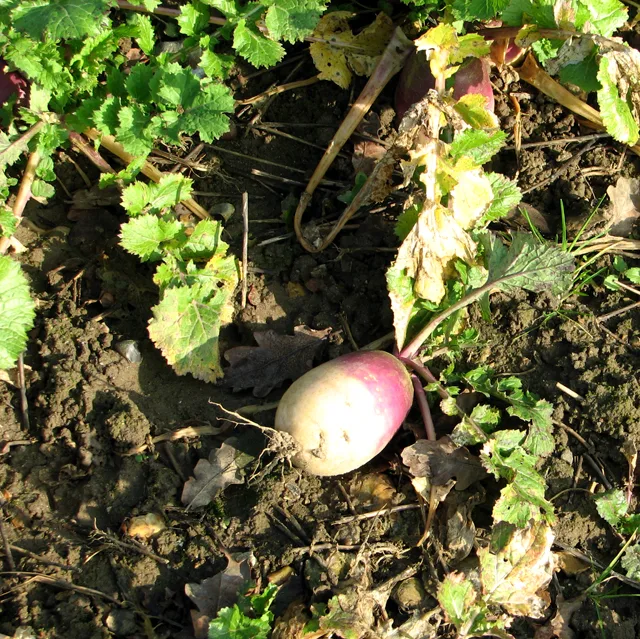
Fertilizer application in livestock farm crop rotations follows the same principles as those in field crop rotations. The primary tools for increasing soil fertility here remain the cultivation of perennial legumes and intensive use of organic matter. This allows maintaining a nutrient balance without excessive costs.
It is economically more efficient to apply manure specifically on fields near the farm. This solution significantly reduces the farm's transportation costs for hauling organic fertilizers.
Sudan grass is undemanding regarding soil types. It develops consistently on dark chestnut soils, any chernozem, in river floodplains, and on drained peatlands. The crop provides satisfactory yields on slightly acidic soils and tolerates moderate salinity. Sudan grass performs worst on compacted, highly alkaline, solonetzic, and organic-poor lands.
The best predecessors for sudan grass are considered to be:
- cereal crops;
- grain legumes;
- winter crops;
- row crops.
It is advisable to place sudan grass in the final field of the crop rotation. By itself, it is a poor predecessor for subsequent crops.
Winter rapeseed is extremely responsive to the level of soil nutrition. If the planned yield of green mass exceeds 200 ц/га, application of fertilizers becomes a mandatory requirement. To form every 100 ц of green mass, rapeseed consumes significant soil resources.
- Nitrogen per 100 ц of rapeseed green mass — 40–50 kg
- Phosphorus per 100 ц of rapeseed green mass — 15–20 kg
- Potassium per 100 ц of rapeseed green mass — 60–70 kg
- Calcium per 100 ц of rapeseed green mass — 20–30 kg
Nutritional features of fodder beet, pumpkin, and annual mixtures
Fodder beet leads among forage crops in terms of nutrient removal from the soil. With a root harvest of 400 ц/га and 100 ц/га of tops, the plants absorb 106 kg of nitrogen, 36 kg of phosphorus, 193 kg of potassium, and 28 kg of calcium. Compared to cereal crops, beets require 1.5 times more nitrogen and almost 3 times more potassium, while differences in phosphorus removal are minimal.
Consumption of elements occurs unevenly throughout the growing season. Nitrogen is necessary for beets from the first days until harvesting, but the peak demand occurs in the first half of the season — the period of active leaf and root growth (in the Kuban region, this is late June – July). Phosphorus is absorbed throughout the entire season with a peak in the second half of the growing season. Potassium also enters continuously, but is absorbed most intensively in the second half of the summer.
Avoid one-sided application of high rates of nitrogen fertilizers for fodder beet. This leads to excessive accumulation of dangerous nitrates in the root crops.
Fodder pumpkin is a valuable milk-producing feed, rich in carotene and ascorbic acid. In terms of nutritional value, its fresh fruits are practically equal to root crops. Pumpkin tops in pure form are difficult to ensile, but they can be used in mixtures with other plant biomass. 100 kg of fodder pumpkin contains 10 feed units and 700 g of digestible protein.
Recommended application rates of organic and mineral fertilizers for forage crops are presented in the table:
| Crop or mixture | Organic fertilizers (manure) | Mineral fertilizers (active ingredient, kg/ha) | Timing and application features |
|---|---|---|---|
| Winter rapeseed | — | N90–120, P60–90, K60 | Phosphorus-potassium (P60–90K60) and part of the nitrogen (N30–40) are applied in autumn before sowing. The remaining nitrogen (N60–80) is applied in spring as top dressing. |
| Fodder beet | 40–60 t/ha | N60–120, P60–120, K60–120 | The main dose (N40–80P50–110K60–120) is applied under autumn ploughing. At sowing, P10 is added into the rows; during cultivation, N40 is added as top dressing. |
| Fodder pumpkin | 40–60 t/ha | N40–60, P40–60, K40–60 | Applied under main tillage. |
| Winter rye | 45 t/ha (or without manure) | N45, P45 (for the scheme without manure) | Applied under ploughing. |
| Vetch-wheat mixtures | — | N50, P50, K50 | In autumn, P50K50 is applied under tillage; in spring, N50 is applied as top dressing during the growing season. |
| Vetch-oat and pea-oat mixtures | — | N60, P60 | Applied in autumn under main tillage. |
| Secondary crops | — | N30–50, P30–50 | Applied under pre-sowing preparation or at sowing. |
| Multi-component mixture (sudan grass, sweet sorghum, sunflower, corn, soybean) | 80–100 t/ha under predecessor or 30–40 t/ha directly under the mixture | N60, P60 (+ N30 under irrigation) | The entire mineral dose of N60P60 and manure (30–40 t/ha) are applied during soil preparation. On irrigated fields, 1–2 additional nitrogen top dressings of N30 are applied during the growing season. |
Read next
Agrochemistry For students
Optimal soil conditions and nutrient application rates for sugar beet
Agrochemistry For students
Specifics of the mineral nutrition system for vegetable crops in greenhouses and during seed production

Agrochemistry For students