
The application of bacterial fertilizers to increase the soil fertility of agricultural soils
10 min read
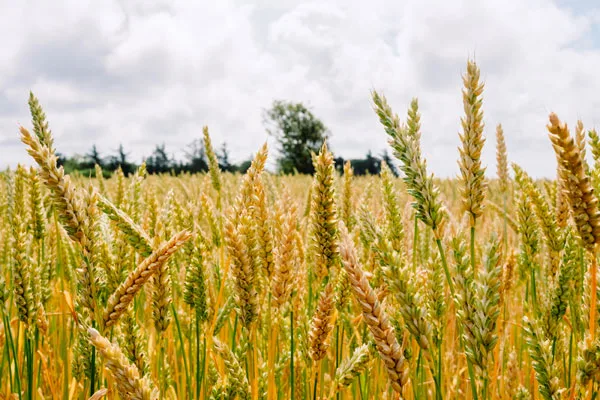
Living soil functions as a natural bioreactor. Beneficial microorganisms decompose plant residues, synthesize humus, improve the phytosanitary condition of the field, and accumulate biologically active substances. The application of bacterial fertilizers allows for the creation of hotspots of active microflora in the root zone, which sharply intensifies biochemical processes and directly improves root plant nutrition.
- Microbial mass in the 0–20 cm layer — about 10 t/ha
- Shelf life of preparations — at least 9–12 months
- Size of Bacterium radicicola bacteria — 0.5–0.9 × 1.2–3.0 μm
To enrich the arable land, preparations containing target species of beneficial bacteria are used. A high-quality bacterial fertilizer must contain the maximum amount of viable cells and be produced using a simple, cost-effective technology. In practice, several main types of biological products are used to improve soil nutrition.
- nitragin;
- azotobacterin;
- phosphobacterin;
- silicate bacteria;
- AMB;
- cyanobacterin (blue-green algae).
Nitragin: strain selection and seed inoculation
Nitragin is a specialized preparation based on nodule bacteria Bacterium radicicola. These Gram-negative aerobic rods live on the roots of grain legumes, assimilate nitrogen from the air, and supply it to the plants in exchange for carbohydrates. The seed treatment with the preparation is called inoculation. Upon seed germination, the bacteria penetrate through the root hairs into the root and begin to form nitrogen-fixing nodules.
The effectiveness of nitragin depends on the virulence (the ability to penetrate the root) and the activity of the strain (the ability to fix nitrogen). Bacteria are strictly specific, so the preparation must be selected strictly for a particular crop.
When planning treatments, it is necessary to refer to the compatibility groups of bacteria with grain legumes. Errors in strain selection will render inoculation ineffective, as the bacteria will not be able to form nodules. In production, a classification based on ten main groups is used.
| Bacterial group | Compatible crops |
|---|---|
| 1st | clover |
| 2nd | pea, vetch, grass pea, lentil, faba bean |
| 3rd | alfalfa, sweet clover, fenugreek |
| 4th | lupin, serradella |
| 5th | soybean |
| 6th | bean |
| 7th | mung bean |
| 8th | peanut, cowpea |
| 9th | chickpea |
| 10th | sainfoin |
Forms of nitragin and seed treatment rules
For the inoculation of legumes, three industrial forms of nitragin are used: soil-based, dry (rhizobin), and peat-based (rhizotorfin). It is also permissible to prepare a local product directly on the farm. The effectiveness of the treatment directly depends on compliance with the application technology and the maintenance of the titer of viable Rhizobium genus bacterial cells.
| Form of preparation | Composition and production features | Humidity, % | Minimum titer (cells per 1 g) |
|---|---|---|---|
| Soil-based | Bacterial culture in sterile garden soil. Grown in an incubator at 28 °C. | — | at least 300 million |
| Dry (rhizobin) | Powder of dried cells on a carrier (kaolin, bentonite, chalk). The initial culture is grown on agar medium (pea broth — 100 g/l, sucrose — 15 g/l, agar — 20 g/l, pH 6.8–7.0). | 5–7 | at least 10 billion |
| Peat-based (rhizotorfin) | Milled peat (particles up to 0.1 mm), dried to 25–30%, limed with CaCO3 to pH 6.8–7.0, and packaged in 100–500 g portions. Packages are sterilized by gamma radiation. Inoculated with liquid culture (80 ml per every 250 g of peat). | 50–60 (initial 35–40) | about 1 billion (at inoculation), not lower than 3–4 billion (after 6 months) |
| Local (farm-made) | Powder from dried and ground legume roots from areas with the highest harvest. For perennials, roots of 2–3-year-old plants with a large number of nodules are taken. | — | up to 20 million |
For high-quality inoculation, it is necessary to accurately calculate the volume of working solution and follow the mixing regulations. Nitragin is diluted with clean water separately for each crop group. For large seeds (pea, bean, lupin), 1 liter of water is required per every 140–180 kg of seed material. For small seeds (clover, alfalfa), the same volume of water is used for 40–50 kg.
- Dilute the per-hectare rate of the preparation with clean water according to the standards for your crop.
- Thoroughly stir the mixture until a homogeneous soil slurry is obtained.
- Spray the seeds with the resulting solution, constantly stirring them to avoid sedimentation.
- Dry the seeds for 10–15 minutes before sowing.
- Yield increase from nitragin — 10–15 %
- Storage temperature of the preparation — 0–10 °C
- Seed drying time — 10–15 min
- Humidity of dry nitragin — 5–7 %
Inoculation is performed strictly on the day of sowing in a shaded place. Chemical seed treatment must be completed at least a month before treatment with the biological product. If the treated seed material is not sown on the same day, it will have to be dried and treated with nitragin again the next day. Nitragin is strictly specific: use it only for the crop for which it is intended.
Azotobacterin and phosphobacterin: nitrogen fixation and phosphorus mobilization
Azotobacterin contains a culture of the free-living soil bacterium Azotobacter chroococcum, which assimilates atmospheric nitrogen. In addition to nitrogen fixation, the preparation releases vitamins and growth stimulants, and also suppresses the development of phytopathogenic fungi. It is used on all crops to improve nutrition and protect seedlings. The preparation is produced in two forms: humus-soil (or peat) and agar.
| Preparation type | Crop | Application rate per 1 ha | Method of application |
|---|---|---|---|
| Humus-soil (peat) | Cereals, industrial, forage, vegetables | 3 kg | Moisten seeds with water before sowing or planting, sprinkle with the preparation, and mix thoroughly. |
| Potato | 6 kg | ||
| Agar (in bottles) | Potato | 2–3 bottles | One day before sowing, pour 150–200 ml of water into the bottle and shake at least 5–6 times over 24 hours. Before application, dilute the per-hectare rate in 10 l of water. |
| Other crops | 1 bottle |
When applied correctly, azotobacterin consistently increases crop yield by 10–13 %.
Phosphobacterin contains spores of the bacteria Bacillus megaterium var. phosphaticum, which convert organic phosphorus compounds into a form available to plants. The preparation is produced in dry (spores on kaolin) and liquid forms. Use 250 g of dry powder to treat the per-hectare rate of seeds. To activate the spores, the preparation must be prepared in advance.
- Dilute the per-hectare rate of the dry preparation (250 g) in 2.5–3.0 l of warm water.
- Shake the solution and let it sit for 2–3 hours at room temperature.
- Stir the mixture periodically while it is steeping.
The resulting solution is used to treat 150–200 kg of seeds of cereal crops. When treating seeds of other crops, adjust the volume of water so that 250 g of the dissolved preparation is fully applied to the per-hectare rate of seed material.
- Yield increase from azotobacterin — 10–13 %
- Dry phosphobacterin application rate — 250 g/ha
- Phosphobacterin spore activation time — 2–3 h
- Water per bottle of agar preparation — 150–200 ml
- Water consumption per hectare rate of agar preparation — 10 l
| Liquid phosphobacterin | Application rate |
| For potato | 40 ml/ha |
| For cereal crops | 20 ml/ha |
In the soil, the bacteria migrate to the developing root system of the plants. Here, their reproduction and biochemical activity cause the decomposition of organic phosphorus compounds, which improves plant nutrition. Phosphobacterin enhances plant growth by 8–10 % and increases yield. The preparation is most effective on chernozems and cultivated soils in zones with sufficient soil moisture.
AMB preparation gets its name from the first letters of the group name – autochthonous microflora B. In the soil, there are two main communities of microorganisms, the vital activity of which is of great importance in increasing soil fertility:
- The first community decomposes plant residues, forming humus. It includes fungi and a number of aerobic and anaerobic bacteria, including butyric acid bacteria. This community of microorganisms was named autochthonous microflora A (AMB). Autochthonous means indigenous, i.e., in this case, closely linked to the conditions of the soil environment and inherent to the soil.
- The second community includes microorganisms that decompose humus, forming plant mineral nutrients. The name of this group of microorganisms
The AMB preparation contains microorganisms that decompose organic matter and cellulose with the release of ammonia, carry out the process of nitrification, fix atmospheric nitrogen, and mobilize phosphoric acid. This group of microorganisms contributes to plant nutrition with nitrogen and ash elements.
The preparation is produced at the site of use from crushed low-lying peat or peat soil. Composition per 1 ton of peat:
- 100 kg of finely crushed limestone;
- 2 kg of phosphate rock;
- 1 kg of stock culture, which is prepared at the All-Russian Research Institute of Agricultural Microbiology.
The components are mixed, moistened, and kept for three weeks at a temperature of about 20 °C, stirring periodically. The prepared product is applied during pre-sowing soil treatment at a rate of 0.5 t/ha. The preparation is recommended primarily for use in protected ground (greenhouse). The complexity of producing the preparation limits its widespread use.
Preparations of "silicate" bacteria – bacterial preparation made of "silicate" bacteria, which is a spore-forming culture – Bacillus mucilaginosus siliceus. Silicate bacteria are capable of breaking down aluminosilicates and converting soil potassium into a form available for plant nutrition. The destruction of aluminosilicates occurs under the influence of acids released by the microorganisms.
"Silicate" bacteria reproduce best under conditions of sufficient humidity, aeration, and a near-neutral soil reaction. Acidic soils are not favorable for their development.
The preparation is applied by bacterizing seeds just like other bacterial fertilizers. As a bacterial fertilizer, one prepares:
- dry spore preparation of "silicate" bacteria;
- agar preparation of "silicate" bacteria.
Azolla is an aquatic fern that lives in symbiosis with the blue-green alga Anabaena azollae and is capable of fixing atmospheric nitrogen. Azolla reproduces rapidly and enriches rice fields with nitrogen. It was first used by a Vietnamese peasant woman named Ba-Hen. The effect of using azolla was so significant that after her death, she was deified, and a pagoda was built in the village where she lived in honor of the "Goddess of Azolla."
For practical application, azolla is propagated in small water bodies, from where it is transferred to flooded rice fields. With the onset of hot weather, approximately during the tillering phase of rice, the green carpet of multiplied fern dies off and the plant biomass mineralizes. Azolla accumulates about 120 kg/ha of nitrogen during the growing season, a portion of which is utilized in the current year. In addition, it produces a large amount of organic matter that fertilizes the soil. During the growing season, azolla creates favorable conditions for the development and growth of rice. Currently, the All-Russian Rice Research Institute is studying the possibility of its cultivation in the rice fields of the Kuban region.
In Southeast Asian countries, azolla is sometimes cultivated for three weeks in plots flooded to a depth of 3-5 cm before sowing rice.
| Indicator | Value |
| Azolla mass after three weeks | 10 t/ha |
| Nitrogen content in the mass | 20-25 kg |
The fern is ploughed into the soil and then rice sowing is performed.
Read next
Agrochemistry For students
Placement of perennial grasses and the fertilizer system for alfalfa in crop rotation
Agrochemistry For students
Fertilizer system and agrotechnics of peas and grain legumes for high yields
Agrochemistry For students