
Application of zinc fertilizers and effective methods of application to increase crop yield
6 min read
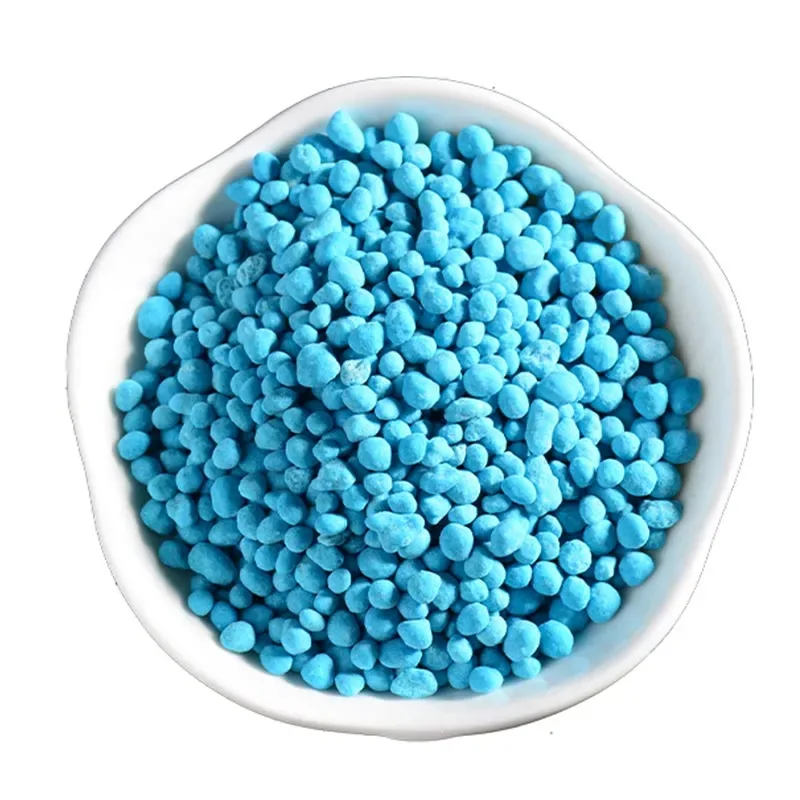
Zinc deficiency in fields directly limits crop productivity. Most often, this problem arises in carbonate soils with a neutral or slightly alkaline reaction when growing fruit and citrus crops. A deficiency of this element also manifests in acidic, heavily podzolized, and highly humic soils. The situation is exacerbated by high application rates of phosphorus fertilizers and the ploughing of subsoil into the arable horizon. Corn, rice, beans, soybeans, potatoes, and vegetable crops are most sensitive to zinc deficiency.
- Zinc removal with harvest — 50–250 g/ha
- Application rate to soil — 4–6 kg/ha
- Solution consumption for seed treatment — 10 l/t
- Solution consumption for foliar top dressing — 300–400 l/ha
The need for zinc fertilizer application is determined by the content of the mobile form of the element in the soil. Refer to the threshold values for your zone:
| Soil-climatic zone | Critical level of mobile zinc, mg/kg of soil |
|---|---|
| Non-chernozem zone | Less than 0.2–1.0 |
| Chernozem zone | Less than 0.3–2.0 |
| Zone of grey desert soils and chestnut soils | Less than 1.4–1.8 |
As zinc fertilizers, zinc sulfate, double granulated superphosphate with zinc, and zinc polymicrofertilizers (PMU-7) — waste products from zinc white production — are used. PMU-7 contains 19.6% zinc oxide and 17.4% zinc silicate.
Since the soil fixes zinc quickly and firmly, conventional broadcasting is ineffective. The best application methods are pre-sowing treatment of seeds and foliar top dressing of plants. Seed treatment of cereals is carried out using a semi-dry method with a 1.0% aqueous solution. Foliar top dressing is performed with a 0.1% solution of the preparation. Most crops are sprayed before flowering, and fruit trees — in the spring on opened leaves.
To avoid leaf burns during foliar top dressing, be sure to add slaked lime to the working solution in a 1:1 ratio to the zinc.
If zinc fertilizers are applied directly to the soil, do it locally during sowing. This will prevent zinc from transitioning into a form that is difficult for plants to assimilate.
The effectiveness of zinc application is confirmed by harvest increases in key crops:
| Crop | Yield increase, c/ha |
|---|---|
| Corn (grain) | 5–7 |
| Rice | 4–6 |
| Wheat | 1.5–3.5 |
| Pea | 1.5–2.0 |
Advantages of complex fertilizers and selection requirements
The use of complex fertilizers saves farms from the labor-intensive mixing of components during the height of field work and reduces preparation costs. The costs for preparation and application of single-nutrient fertilizers when applied separately are 1.5–2 times higher compared to complex ones. With a 10% increase in the concentration of active ingredients, the volume of national transport logistics decreases by 5 million t·km per year. The agronomic efficiency of complex fertilizers and fertilizer mixtures at equal nutrient doses is practically the same, but complex forms provide an advantage due to more uniform distribution in the soil and accessibility to the root system.
An effective complex fertilizer must meet three key requirements:
- The composition and form of nutrient compounds must correspond to the needs of a specific crop and soil type.
- High physical-mechanical and physical-chemical properties. Fertilizers must not cake or separate into fractions (segregate) during transport and storage, and must pass unobstructed through all types of fertilizer spreaders. Granulated forms best meet these conditions.
- The highest possible total concentration of nutrients.
The ratio of nutrients is selected for specific cultivation conditions. Taking into account soil-climatic zones and cultivar characteristics of crops, 8 to 10 brands of complex fertilizers with different nutrient contents are produced.
| N:P2O5:K2O ratio | Recommended for which soils and crops |
| 1:1:1 | For most crops and soils with similar nitrogen, phosphorus, and potassium efficiency |
| 1:0.7:1.2 | For primary fertilization of cereal crops, hemp, sugar beet, and potatoes on grey forest soils |
| 1:1:1.5 | For soils poor in potassium and for potassium-loving crops (potatoes, beet) |
| 1:1.5:1.5 | For primary fertilization of vegetable crops and other row crops (including silage crops) with nitrogen top dressing in summer |
| 1:1.5:1 | For local application for cereals and sugar beet during sowing and for potatoes during planting on various soils |
| 1:1:0 | For soils with high potassium availability and crops that respond poorly to potassium nutrition |
| 1:2:0 | For southern regions with good soil potassium availability |
| 1:2.5:0 | For primary application for cotton on grey desert soils that do not require potassium fertilizers |
| 1:4:0 | For at-sowing fertilization of cotton |
| 0:1:1 | For legumes and plants on peaty soils |
Plant requirements for the ratio of main nutrients in a fertilizer also depend on its application rate. At high rates, the share of nitrogen in the fertilizer composition increases significantly. Thus, while the optimal N:P2O5:K2O ratio in a complete fertilizer at average rates is 1:1:1, at high rates, it may be close to 1:0.7:1 or 1:0.5:1.
With long-term and systematic fertilizer application, it is advisable to adjust the nutrient ratio in favor of nitrogen because plants consume on average 3 times more nitrogen than phosphorus to form a harvest, and also due to the accumulation of available phosphorus in the soil.
The plant demand for nitrogen largely depends on their moisture availability. During precipitation, it is advisable to apply additional one-sided nitrogen fertilizer. Fractional nitrogen application is also necessary under irrigation conditions.
Furthermore, in a number of regions, certain crops, such as winter wheat, generally require fractional nitrogen application:
- before sowing;
- as top dressing.
In all these and other cases, only a portion of the nitrogen can be applied as part of a complex fertilizer. The expediency of including a significant amount of nitrogen in complex fertilizer also decreases when using the cheapest nitrogen fertilizer in agriculture – anhydrous ammonia.
Unlike nitrogen, phosphorus and potassium, which are recommended for application before sowing, can be included in complex fertilizer at the full application rate. The proportion of nitrogen in complex (or compound-mixed) fertilizers is, as a rule, significantly lower than the proportion of phosphorus and potassium. With sufficiently long-term use of nitrogen and phosphorus fertilizers, the demand for potassium increases noticeably.
Complex fertilizers may differ in the form of their nitrogen and potassium components. During the production of complex fertilizers, the source of phosphorus can be either orthophosphates or condensed phosphates. The latter are obtained based on superphosphoric acid, the composition of which depends on its concentration:
| Indicator name | Value |
| Table 85 | Composition of superphosphoric acid |
Superphosphoric acid is produced either by evaporation of orthophosphoric acid or by capturing P2O5 vapors with it after burning yellow phosphorus. Among condensed phosphates, two main groups can be distinguished:
- polyphosphates – linear compounds with a relatively short chain (the simplest representative of polyphosphates is pyrophosphate);
- metaphosphates – cyclic compounds, for example, trimetaphosphate.
By using condensed phosphates as a phosphorus source, it is possible to obtain highly concentrated complex fertilizers: ammonium polyphosphates, potassium polyphosphates, potassium metaphosphates, in which the nutrient content is higher than in orthophosphates.
In complex fertilizers applied on sandy soils, it is advisable to use potassium sulfate or potassium-magnesium sulfate as a source of potassium instead of potassium chloride sulfate.
Read next
Agrochemistry For students
Specifics of the mineral nutrition system for vegetable crops in greenhouses and during seed production
Agrochemistry For students
Application of copper micronutrient fertilizers to increase crop productivity
Agrochemistry For students