
Application of copper micronutrient fertilizers to increase crop productivity
4 min read
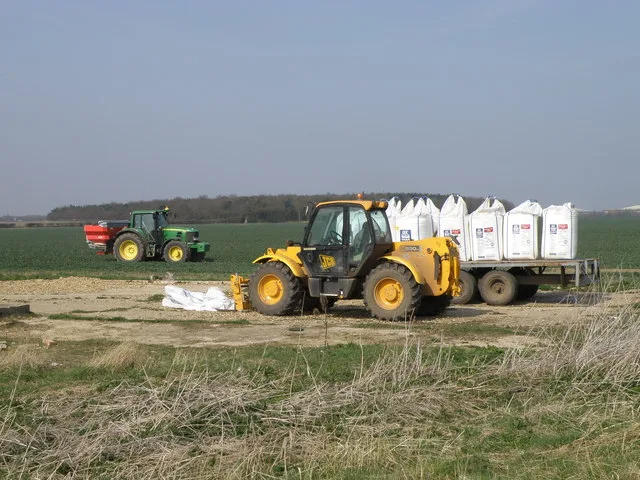
Copper deficiency sharply reduces crop productivity, limiting the absorption of other nutrients. The need for copper micro-fertilizers can be determined by the results of soil analysis. Fields are considered poor in this element if the content of readily soluble forms falls below critical values.
| Natural climatic zone | Readily soluble copper content in soil, mg/kg |
|---|---|
| Non-chernozem zone | less than 1.5–2.0 |
| Chernozem zone | less than 2.0–5.0 |
| Grey desert and chestnut soil zone | less than 1.5–4.0 |
Sugar beet, cotton, peas, sunflower, fruit crops, rice, and cereals are particularly sensitive to copper deficiency. With the harvest, they remove from 10 to 350 g/ha of this element. The application of copper fertilizers is most effective on peat, sod-gley, waterlogged, and light-textured soils, as well as on flooded soils used for rice cultivation.
To compensate for the deficiency, copper sulfate and a urea-ammonium mixture enriched with copper are used. Pyrite cinders — a waste product of sulfuric acid and pulp-and-paper production — are used as local fertilizers. Slags from copper smelting and zinc-electrolytic plants (0.2–0.5% copper) and low-grade oxidized copper ores (about 0.9% copper) are also suitable.
- Application of water-soluble forms to the soil — 3–8 kg/ha active ingredient
- Application of pyrite cinders — 0.5–0.6 t/ha
- Consumption of 0.5% solution for seed treatment of cereals — 10 l/t
- Consumption of 0.1% solution for foliar top dressing — 300–400 l/ha
The main technique is pre-sowing application of water-soluble forms into the soil. Pyrite cinders and other local fertilizers are incorporated once every 4–5 years in the autumn during tillage or in the spring before pre-sowing cultivation. In cases of low to medium soil nutrient supply of copper, one can limit treatment to semi-dry seed treatment or foliar top dressing during the growing season.
The effectiveness of copper directly depends on the NPK balance. If plants are deficient in nitrogen, phosphorus, or potassium, the positive effect of copper fertilizers is sharply reduced or does not manifest at all.
The need for copper manifests in the very early stages of plant development. In cases of acute element deficiency in the soil, foliar top dressing is ineffective — in this case, only pre-sowing fertilizer application directly into the soil will help.
Molybdenum fertilizers: rules of application and safety measures
This element is required by plants in smaller quantities than other microelements, but normal nitrogen metabolism is impossible without it. Alfalfa, clover, peas, beans, rice, cabbage, lettuce, spinach, soy, and wheat are most sensitive to molybdenum deficiency. With the harvest of these crops, 10 to 300 g/ha of the element is removed. All of them respond positively to the application of molybdenum fertilizers with increased productivity.
Molybdenum overdose is dangerous. Exceeding the rates is toxic to plants, and an excess of the element in produce is harmful to health. When molybdenum content is 20 mg/kg of raw mass or higher, endemic gout develops in humans, and molybdenum toxicosis occurs in livestock animals.
Ammonium, sodium, and calcium molybdates are used as molybdenum sources. Complex forms with an easily digestible element — molybdenum superphosphate and molybdenum-enriched urea — show good effectiveness. Industrial waste (slags and sludges from metallurgical production) containing 0.2 to 1% molybdenum is also used in fields. Molybdenum fertilizers can be applied in various ways.
| Fertilizer | Molybdenum content, % | Form | Appearance |
|---|---|---|---|
| Ammonium molybdate, (NH4)6Mo7O24·4H2O | 52 | Water-soluble | Fine-crystalline white powder |
| Molybdenum simple superphosphate | 0.1 | Water-soluble | Light-grey granular fertilizer |
| Molybdenum-enriched urea | 0.5–0.8 | Water-soluble | White granular fertilizer |
| Ammonium sodium molybdate | 35 | Water-soluble | Fine-crystalline powder with a yellowish tint |
| Molybion | 8 | Water-soluble | Transparent liquid |
- Pre-sowing seed treatment: the most economically profitable and common. It is carried out with a 0.5% aqueous solution of molybdenum within a unified technology along with seed treatment using pesticides.
- Foliar top dressing: used if seeds were not treated with molybdenum. It is carried out no later than the flowering phase with a 0.1% solution of the microelement. Consumption of the working solution using ground equipment is 300–400 l/ha.
- Soil application: to eliminate molybdenum deficiency, it is applied once every 3–5 years at a rate of 2–3 kg/ha. It is most appropriate to use molybdenum superphosphate, molybdenum-enriched urea, and molybdenum-containing waste from the metallurgical industry.
Read next

Agrochemistry For students
The use of micro-fertilizers to increase the productivity of crops in intensive farming
Agrochemistry For students
The use of boron fertilizers in modern crop production and application techniques.
Agrochemistry For students