
Application and agrochemical efficiency of manganese fertilizers in crop production
4 min read

Application of manganese fertilizers in agrotechnologies
A deficiency of manganese in the soil manifests itself primarily in humus and carbonate soils, as well as after liming of podzolized sandy soils. An increase in the content of manganese antagonists in the soil solution, such as iron, calcium, magnesium, and ammonium, can also reduce the availability of this element to plants.
The following crops are sensitive to manganese deficiency:
- rice, maize, wheat, barley, oats;
- root crops, alfalfa, potato, sunflower;
- fruit and vegetable crops.
In cases of manganese starvation in plants, complete failure of fruiting has been noted in radish, cabbage, tomatoes, and peas. The harvest of various crops removes between 1.0 and 4.5 kg/ha of manganese.
The application of manganese fertilizers is promising when the content of mobile manganese in the soils of the Non-Chernozem zone is less than 25–55 mg/kg, in the Chernozem zone – 40–60 mg/kg, and in sierozems – 10–50 mg/kg of soil. Primarily, manganese fertilizers are applied to grey forest soils, slightly leached chernozems, solonetzic and chestnut soils. For rice crops, application is recommended when the content of mobile manganese in the soil is 35–40 mg/kg.
Manganese sulfate, manganized superphosphate, and manganese sludge are used as manganese fertilizers.
Table 79 – Manganese fertilizers and their agrochemical properties
| Fertilizer | Manganese content, % | Form | Appearance |
|---|---|---|---|
| Manganese sulfate, MnSO4·5H2O | 21-22 | Water-soluble | Crystalline powder of white or pale pink color |
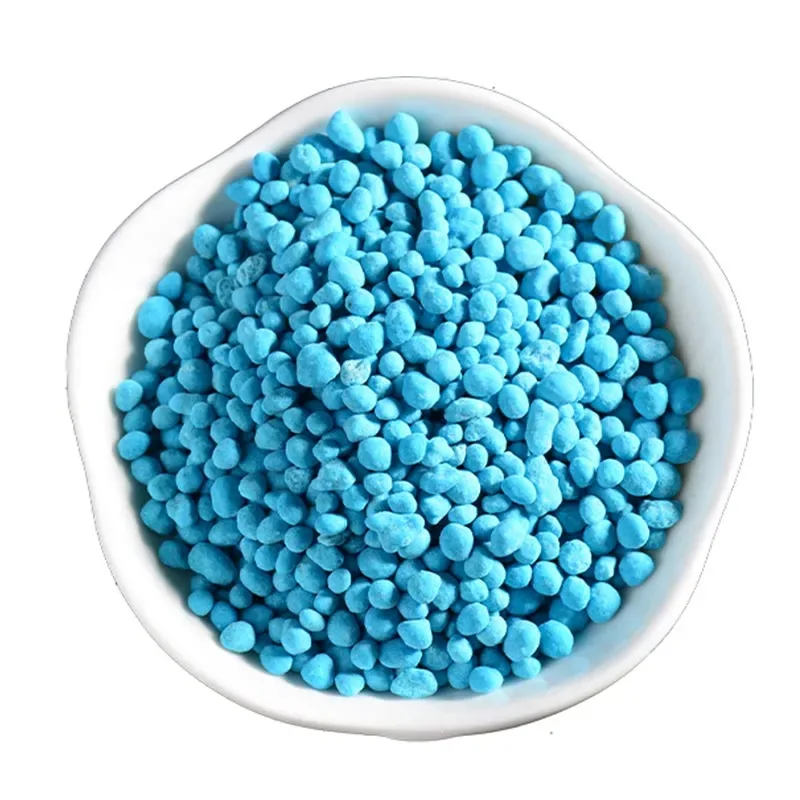
| Manganized superphosphate | 1.5-2.0 | Water-soluble | Granular fertilizer of greyish-bluish color |
| Manganized nitrophoska | 0.9 | Water-soluble | Granular fertilizer of light pink color |
| Manganese sludges | 0.8–1.1 | Readily soluble | Loose powder of grey color |
Application methods and effectiveness of fertilizers
All manganese fertilizers are suitable for correcting manganese deficiency. Application methods:
- Application to the soil for primary tillage or pre-sowing cultivation at a rate of 3–5 kg/ha. These application methods are most justified on soils poor in mobile forms of manganese.
- In case of the risk of increased manganese fixation, it is recommended to perform foliar top dressing of plants with a 0.1% aqueous solution at a rate of 300 l/ha of the working solution.
- Good results are obtained by treating planting material with a 1.0% aqueous solution of manganese using the semi-dry method.
The application of manganese fertilizers increases the yield of sugar beet by 10–30 c/ha, potato by 25-35 c/ha, tomatoes by 30–40 c/ha, rice by 3–4 c/ha, and wheat by 1.5–3.5 c/ha.
Cobalt fertilizers
Effectiveness and application of cobalt fertilizers
The positive effect of cobalt fertilizers is manifested in soils that are well-supplied with all other deficient nutrients with a soil solution reaction soil solution close to neutral. This includes chernozems, cultivated sod-podzolic soil, as well as sierozems and chestnut soils. In soils with a neutral or near-neutral reaction, cobalt is in a low-mobility form, inaccessible to plants.
Cobalt fertilizers are effective in soils with the following levels of mobile cobalt content:
- Non-Chernozem zone: 1.0–1.1 mg/kg;
- Chernozem zone: 0.6–2.0 mg/kg;
- Sierozem and chestnut soil zone: 1.0–1.5 mg/kg;
- Flooded soils of Kuban rice fields: 0.8–1.2 mg/kg.
Leguminous crops, sugar beet, wheat, rice, and grapes are most sensitive to cobalt deficiency. Its deficiency weakens physiological and biochemical processes and plant growth; productivity decreases and harvest quality deteriorates. The harvest of various agricultural crops removes from 5 to 50 g/ha of cobalt.
When deciding to use cobalt fertilizers, it is necessary to remember that plants are equally sensitive to both the deficiency and the excess of this element in the soil. A high content of it in the soil can cause cobalt toxicosis. Such a phenomenon, for example, has been observed repeatedly in rice when the content of the trace element in the soil exceeds 25 mg/kg.
Assortment and methods of fertilizer application
Cobalt sulfate, nitrate, and chloride, as well as industrial waste containing cobalt, are used as cobalt fertilizers. The agrochemical characteristics of cobalt fertilizers are shown in Table 80.
Table 80 – Cobalt fertilizers and their agrochemical properties
Fertilizer Cobalt content, % Form Appearance Cobalt sulfate, 20–21 Water- Finely crystalline CoSO4·7H2O soluble pink powder Cobalt chloride, 24.8 Water- Crystalline substance with CoCl2·6H2O soluble reddish hue Cobalt nitrate, 20.3 Water- Finely crystalline Co(NO3)2·6H2O soluble red powder
Cobalt fertilizers containing water-soluble forms of cobalt are suitable for seed treatment, foliar top dressing of plants, and soil application. Industrial cobalt-containing waste can only be applied to the soil.
When working with fertilizers, the following rates and application methods should be observed:
- To the soil: 0.5–2 kg/ha in terms of the element;
- For seed treatment: 0.5% aqueous solutions of cobalt;
- For foliar top dressing: 0.1% aqueous solutions of cobalt.
Foliar top dressing is carried out no later than the flowering stage of plants at a consumption rate of working solution of 300 l/ha; seed treatment of grain crops is best performed using the semi-dry method (10 l/t).
Yield increase of lupine on sod-podzolic soils from the application of cobalt fertilizers amounts to 1.2 centners/ha of seeds, 65 centners/ha of green mass; on meadow-chernozem soils of the Krasnodar Territory and the Republic of Adygea, depending on the method and application rates, rice grain yield increased by 3.0–5.2 centners/ha. The application of cobalt fertilizers is effective for potatoes, peas, and sugar beet. Yield increases of these crops from their application are 23–35 centners/ha, 2.8–3.0 centners/ha, and 31–38 centners/ha, respectively.
Read next
Agrochemistry For students
Application of zinc fertilizers and effective methods of application to increase crop yield

Agrochemistry For students
The use of micro-fertilizers to increase the productivity of crops in intensive farming
Agrochemistry For students