
Application of nitrification inhibitors to increase the efficiency of nitrogen fertilizer
9 min read
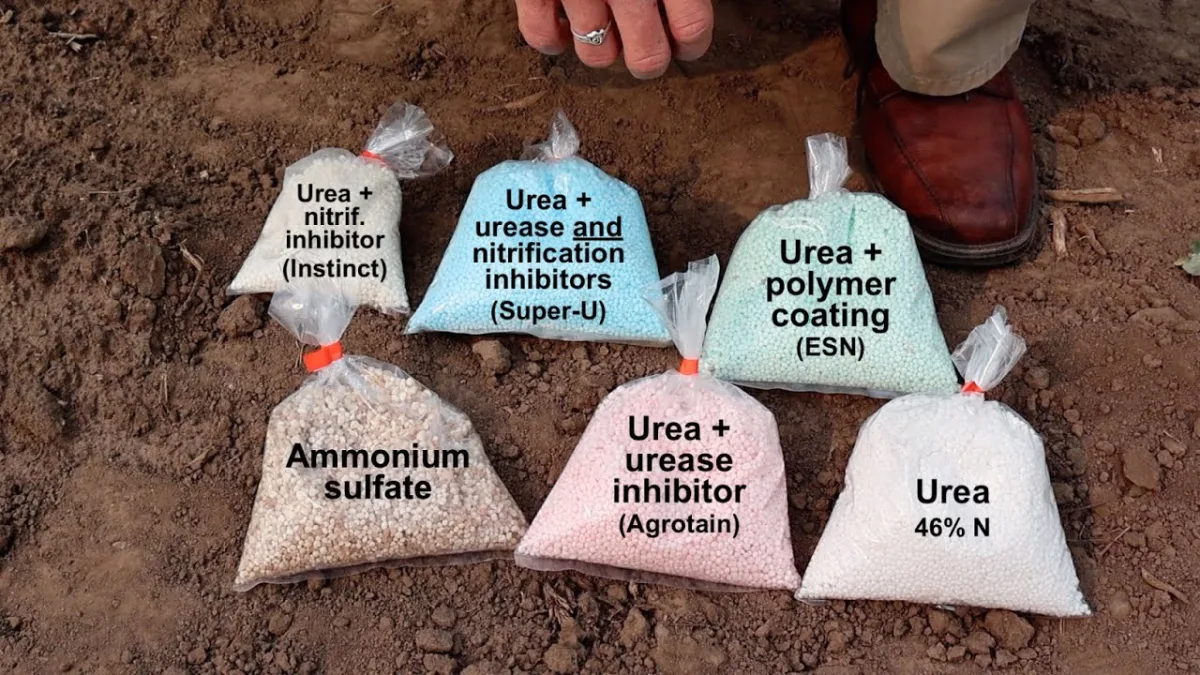
To reduce nitrogen losses and eliminate the risk of nitrate contamination of crops and the environment, new forms of nitrogen fertilizer are being developed – slow-release, encapsulated with controlled nitrogen release rates, and modified with nitrification inhibitors. When applied to the soil together with ammonium, ammonia fertilizers, and urea, the latter compounds inhibit nitrification for 1.5–2.0 months and preserve the mineral nitrogen of the soil and fertilizers in the ammonium form.
P.M. Smirnov, E.A. Muravin, 1991
In increasing the productivity of agricultural crops, a leading role belongs to mineral fertilizers, among which nitrogen fertilizers are of primary importance. As a rule, they account for more than 80% of the total yield increase obtained from the application of industrial fertilizers. Nevertheless, the potential of nitrogen fertilizers is still far from being fully realized by crop plants.
One of the reasons for the insufficient efficiency of nitrogen fertilizers is their high non-productive losses, reaching 40-60% of the applied dose. These include:
- Nitrification
- Denitrification
- Immobilization
- Leaching from the root zone of the soil
Given such large nitrogen losses, deliberately excessive doses of fertilizer are applied to agricultural crops, which, in turn, negatively affects the sanitary state of the environment, polluting it with toxic residues. In this regard, satisfying the nitrogen needs of agricultural crops by increasing the efficiency of applied fertilizers, rather than by increasing their doses, is an essential task of agricultural chemistry that has great national economic and environmental significance.
One environmentally safe way to increase the efficiency of nitrogen fertilizers and increase the productivity of agricultural crops is the use of nitrification inhibitors. These are chemical agents that, when applied in an amount of 0.5-2.0% of the fertilizer nitrogen, suppress the activity of nitrifying microorganisms for 1-2 months, thereby promoting the retention of nitrogen in the soil in the ammonium form. By slowing down the nitrification process, they reduce nitrogen losses, both in gaseous form and from the leaching of nitrates from the root zone of the soil, thereby eliminating the danger of water source contamination with these compounds and reducing their content in crop products.
Nitrification inhibitors must meet a number of requirements:
- suppress the activity of nitrifying microorganisms that carry out only the first stage of nitrification;
- not be toxic to plants, livestock animals, and humans;
- inhibit nitrification for a strictly defined period;
- possess selectivity of action on soil microflora;
- move easily in the soil with fertilizers to cover the zone of action of the applied nitrogen;
- be inexpensive.
They must ensure a reduction in the frequency of fractional nitrogen fertilizer applications, a decrease in nitrogen losses, and the prevention of nitrite and nitrate accumulation in human and animal food products.
Currently, about 300 chemical compounds with nitrification-inhibiting action are known in the world. The most widely used and studied are nitrapyrin, dicyandiamide, aminomethylpyrimidine derivatives, pyrazoles, thiazoles, and triazines. Carbon disulfide, ammonium thiosulfate, potassium azide, sodium azide, anilides, urea and acetylene derivatives, as well as microelements also possess nitrification-inhibiting action. Small doses of these compounds selectively suppress nitrification without inhibiting other microbiological processes in the soil.
Nitrapyrin. The active ingredient of this nitrification inhibitor is 2-chloro-6-(trichloromethyl)pyridine. The empirical formula is C6H3NCl4; molecular mass is 230.9; melting point is about 63 °C. Nitrapyrin is a white crystalline substance with a pungent odor, possessing high volatility and corrosive activity. This preparation is practically insoluble in water, but is readily soluble in acetone, methylene chloride, xylene, and anhydrous ammonia. Nitrapyrin is classified as a low-toxicity compound, and its cumulative properties are weakly expressed. The preparation possesses specific teratogenic, gonado-toxic, and embryo-toxic effects. The LD50 of nitrapyrin for rats is 3500-3850 mg/kg. The preparation is unstable and decomposes rapidly in the air, therefore it requires immediate incorporation.
DCDA – dicyandiamide (cyanoguanidine). The empirical formula is C2H4N4; molecular mass is 84.1; melting point is 210 °C. This is a white, non-hygroscopic, non-volatile crystalline powder that has an unlimited shelf life. The preparation is readily soluble in water and anhydrous ammonia. DCDA contains 66.7% nitrogen in its composition, which, after mineralization to ammonium, serves as a nutrient source for plants.
AM – 2-amino-4-chloro-6-methylpyrimidine. The empirical formula is C5H6N3Cl; molecular mass is 143.6; melting point is 182 °C. AM is a yellow-brown powder with low water solubility. In recommended doses, it is non-toxic to warm-blooded animals.
CP – 2-cyanoamino-4-hydroxy-6-methylpyrimidine. The empirical formula is C6H6N4O; molecular mass is 150; melting point is 196 °C. CP is a white crystalline powder with low water solubility and no odor. In recommended doses, it is completely non-toxic to warm-blooded animals.
ATC. The chemical name of the active ingredient of this nitrification inhibitor is 4-amino-1,2,4-triazole. The empirical formula is C2H4N4; molecular weight 84.1; melting point about 150 °C. It possesses a selective ability to inhibit nitrification at the first stage of the process. It is produced in the form of an aqueous solution or introduced as crystalline hydrochloride into the composition of nitrogenous and complex fertilizers. It is non-volatile and odorless. It is highly soluble in water, poorly soluble in low-molecular-weight alcohols and acetone, and insoluble in benzene, xylene, and ether. The LD50 for mice is 6000 mg/kg.
ATG is a domestic analogue of the Japanese nitrification inhibitor ATC. The Dzerzhinsk branch of GIAP has developed a new production technology for 4-amino-1,2,4-triazole, which, unlike the known technology, allows for obtaining the product in a crystalline form. ATG is a white crystalline powder with a melting point of more than 80 °C. Since an inhibitor of this type does not decompose in the urea melt, ATG can be introduced into urea or its mixtures with ammonium nitrate at any stage of their production.
Etridiazole (terrazole) is 5-ethoxy-3-trichloromethyl-1,2,4-thiadiazole. The empirical formula is C5H8ON2; molecular weight 106.2. It is produced in the form of a wettable powder or liquid with an active ingredient content of 35% and 95%, respectively. Terrazole possesses high volatility, therefore it requires immediate incorporation into the soil after application. In recommended doses, it is non-toxic to warm-blooded animals.
KMP (GMMP – a domestic analogue) is 1-carbamoyl-3(5)-methylpyrazole. The empirical formula is C2H7N2O; molecular weight 125.1; melting point about 130 °C. KMP is a colorless or light-gray finely crystalline powder with a faint non-specific odor. It is highly soluble in acetone, ethanol, and diethyl ether, and poorly soluble in water and gasoline. This preparation belongs to the group of moderately hazardous substances. The LD50 of KMP for rats is 5000 mg/kg. Numerous studies conducted in our country and abroad have established the high efficiency of using nitrification inhibitors with nitrogen fertilizers in rice cultivation.
Out of a large number of inhibitors, nitrapyrin has been studied most comprehensively. The inhibition of nitrogen nitrification from ammonium and amide fertilizers using this preparation during rice cultivation, and the resulting sharp decrease in the intensity of denitrification and nitrate leaching, has been confirmed in many countries. In our country, large-scale studies of nitrification inhibitors, including nitrapyrin as a means to reduce nitrogen fertilizer losses and increase their efficiency, were started in 1964 under the guidance of TSHA Professor P.M. Smirnov. During this time, he and his students and followers have tested over 60 different preparations and established the expediency of their application for potatoes, rice, grain, and vegetable crops.
The use of inhibitors is most expedient under conditions of irrigated agriculture, particularly in rice cultivation. According to our data, when nitrification inhibitors were applied under rice, nitrogen fertilizers were conserved in the ammonium form for 6-8 weeks, i.e., until the establishment of a constant water layer on the rice field, and the nitrogen plant nutrition improved from the very beginning of the growing season. At the same time, under the influence of nitrification inhibitors, the utilization rate of nitrogen fertilizers by rice increased by 1.5-5.8%, and the grain yield increased by 2.1-3.3 centners/ha compared to the production control (Table 172; Sheudzhen A.Kh., 2005).
Table 172 – Efficiency of using nitrification inhibitors for rice Fertilizer Nitrogen utilization rate Yield Increase, centners/ha Grain yield, centners/ha
P60K30 – background — 29.6 — Background + N90 14.1 36.7 7.1 Background + N60 + N30 17.6 44.4 14.8 Background + N90 + ATG 19.1 46.5 16.9 Background + N90 + DCDA 20.2 47.2 17.6 Background + N60 + ATG 22.3 46.6 17.0 Background + N60 + DCDA 23.4 47.7 18.1
The comparative efficiency of dicyandiamide (DCDA) and triazole (ATG) applied under rice as nitrification inhibitors indicates that DCDA is preferable. This preparation ensured the most complete utilization of nitrogen fertilizers and a greater increase in rice grain yield.
Judging by the data we obtained, the use of nitrification inhibitors allows not only for reducing the nitrogen dose but also for excluding nitrogen top dressing during the growing season of rice, i.e., it makes it possible to apply nitrogen fertilizers in a single dose before sowing rice without fearing significant losses of this nutrient element.
The technology for using nitrification inhibitors on crops is determined by their state – whether they are included in the composition of nitrogen fertilizer or are in a specific formulation.
If the inhibitor is introduced into the composition of a nitrogen fertilizer produced at a chemical plant, then the technology of its use corresponds to the generally accepted technology for the given crop for fertilizer application. Only nitrogen fertilizers modified with a nitrification inhibitor are applied in a single dose before or simultaneously with sowing by broadcasting or using a localized method.
| Application method | Nitrogen dose reduction |
| Broadcasting | 25-30 % |
| Banding (local) | 40-50 % |
Local application of such fertilizers enhances the inhibitory effect on nitrification and increases their efficiency to a greater extent.
The use of nitrification inhibitors allows for a significant increase in the efficiency of nitrogen nutrition of plants. The application of these preparations makes it possible to reduce the initial dose of nitrogen fertilizers by 25–30 % without compromising the future harvest. The main thing is to strictly follow the application technology and timely incorporate the active ingredients into the soil.
- Apply nitrogen fertilizers before sowing by broadcasting at a dose reduced by 25–30 %.
- Apply an aqueous solution of the nitrification inhibitor to the soil surface using a sprayer.
- Incorporate the preparation to a depth of 10–12 cm using heavy disc harrows in two passes.
For surface application of the working solution, OVT-1A, OVT-1V, OP450, POU sprayers, or other equipment available on the farm are suitable. The concentration of the preparation is determined based on the technical specifications of a specific sprayer. The required dose of the inhibitor is dissolved in the amount of water that will provide the necessary volume of working liquid.
Preparation features and dosages
Incorporation times for inhibitors depend on their volatility. Highly volatile preparations such as nitrapyrin require immediate incorporation into the soil. Non-volatile inhibitors, such as ATG and DCDA, can be incorporated within 1–2 days. It is also permissible to apply them directly onto fertilizer granules as a coating.
- Reduction of nitrogen fertilizer dose — by 25–30 %
- Incorporation depth of the preparation — 10–12 cm
- Permissible incorporation time for ATG and DCDA — 1–2 days
- Dose of dicyandiamide — 10–15 % of the nitrogen dose
- Dose of nitrapyrin and its analogs — 2–3 % of the nitrogen dose
- Duration of the preparation's effect — 6–8 weeks
The duration of the preparations' effect depends on soil and climatic conditions and soil moisture. In most cases, their inhibitory effect lasts for 6–8 weeks, and significantly longer when applied in autumn. Experimental data show that nitrogen fertilizers can be applied together with nitrification inhibitors in autumn without fear of significant nitrogen losses.
Application of a nitrification inhibitor together with nitrogen fertilizer as top dressing for growing plants without incorporation into the soil is absolutely unacceptable. Also, remember that uneven distribution of the preparation in the soil may lead to local depression of microbiological processes.
Read next
Agrochemistry For students
Application and storage specifics of the nitrogen-calcium fertilizer calcium cyanamide
Agrochemistry For students
Characteristics and application features of amide nitrogen fertilizers based on urea
Agrochemistry For students