
Technological methods and organization of the grape harvesting process
13 min read
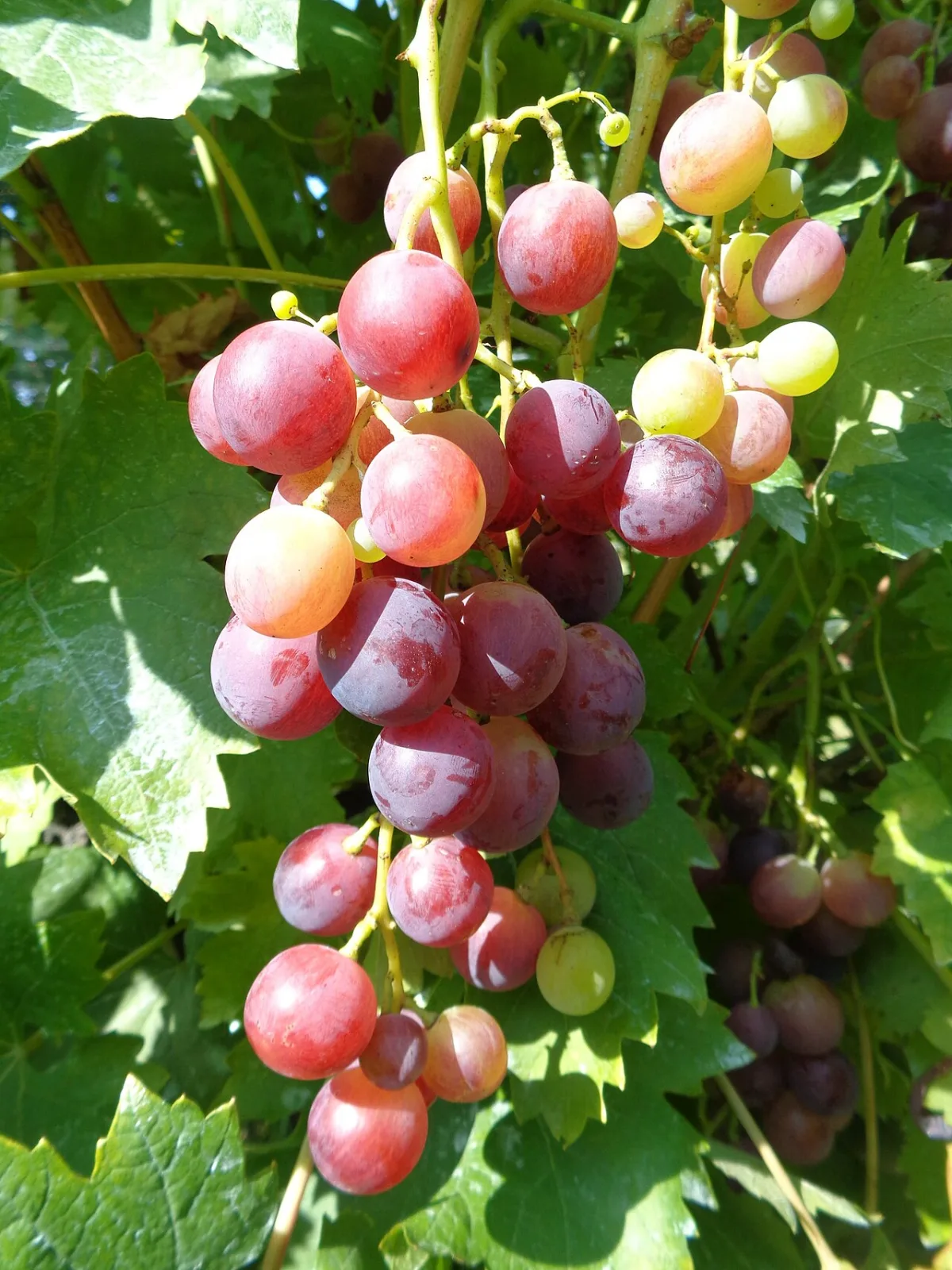
The process of harvesting grapes includes the following operations: 1—locating the bunch within the vine canopy; 2—detaching the bunch from the plant; 3—placing the grapes into containers (baskets, buckets, crates, bins); 4—moving the grapes within the plot to transport vehicles and loading them; 5—transporting the grapes from the plot to the site of processing, storage, or sale.
Depending on the method used to perform these operations, the name of the grape harvesting method is determined.
Grape harvesting is called manual if the first 4 operations are performed by hand. However, it is understood that special tools (pruning shears, knives) are used during their execution.
Grape harvesting is called semi-mechanized, or carried out with the help of partial mechanization, when the locating, detaching, and placing (operations 1–3) are performed manually, while the subsequent operations—moving, loading, and transporting—are performed by auxiliary mechanisms or transport vehicles.
Grape harvesting is called mechanized, or machine-harvested, when all 5 operations are performed by machines and personnel are engaged only in their operation.
Manual harvesting is performed using pruning shears or a knife. The average norm for this method of grape harvesting is 400 kg per worker per 1 working day. Monetary costs for manual harvesting reach 30% of all annual costs, while labor costs for wine cultivars account for 20–30%, and for table cultivars—up to 40%. Labor productivity during manual berry picking depends mainly on the skill and stamina of the picker, the yield of the plants in the plot, and the characteristics of the cultivar (bunch weight, peduncle strength).
To reduce mechanical effort when cutting bunches, pneumatic pruning shears are used in some cases. However, the problem of their widespread application has not yet been fully resolved.
In all grape-growing farms of the country, harvesting is carried out according to three main technological schemes: 1—all operations are performed manually; 2—picking and carrying out the grapes are performed manually, loading is performed by mechanized means; 3—picking grapes from the vine is done manually, while extraction from between the rows and loading are carried out by mechanized means.
To reduce the carrying distance of the harvested yield to the inter-block road, it is advisable to start harvesting grapes from the center of the row and move towards the road. In this case, each picker is assigned half a row, and the carrying distance of the harvested yield is halved. Verification of this labor organization principle, carried out at the "Vinogradny," "Kachinsky," and "Plodovoye" state farms of the Crimean region, showed that labor productivity in this case, compared to the organization of harvesting from the beginning of the rows, increases by 39.9%, and labor costs per 1 ton decrease by 26.7%. At the V. I. Lenin, "Mirny," and "Abrau-Durso" wine state farms of the Krasnodar Territory, and the "Rekonstruktor" state farm of the Rostov region, this scheme was improved: 2 pickers began to work in one row, which further increased labor productivity. However, a significant drawback of this scheme remains the manual carrying out of the harvest.
Fig. 64. TVS–2 self-unloading vineyard trailer.
In farm practice, organizational and technological schemes using the AVN–0.5 tractor unit, which successfully solves the problems of mechanizing the loading and removal of the harvested yield from between the rows, are becoming increasingly common. There are many different schemes for organizing labor in this regard.
The contract method of harvesting is the most widespread. Its optimal organizational form is the creation of a mechanized squad consisting of 65–70 people, to which the AVN–0.5 unit and 3 trucks with mounted "boat" bodies are assigned. The number of boats is determined by the volume of the harvest and the distance of its transport. Pickers work in teams of 4 people, collecting grapes into buckets placed in the inter-row spaces. At the same time, the team picks the yield from two rows simultaneously.
| Indicator | Standard |
| Optimal norm per picker | 1 bucket |
| Productivity per unit | 25 tons |
| Labor productivity (shift) | 800—1000 kg |
Another option for labor organization is the use of the TVS–2 self-unloading vineyard trailer with a load capacity of 2 tons. This unit is serviced by 16 pickers working simultaneously on four rows, and 1 loader who receives the filled buckets and pours them into the trailer. The unit moves along the middle row synchronously with the pickers, making necessary stops. The trailer is hitched to T-40M tractors, MTZ of all modifications, and T-54V tractors. Its use allows for a significant (up to 30%) increase in labor productivity. Machine downtime during loading is reduced by 4–6 times in this case compared to using the AVN-0.5.
For bulk transport of the harvest, a dump truck with a specially treated body or BKV container "boats" with a capacity of 3 tons, which are mounted on trucks, are used. Due to the fact that there are significant differences in the organization and technology of harvesting table and wine cultivars, the issues of their harvesting are considered separately.
Currently, there are 3 clearly defined main principles used in the development and creation of grape harvesters:
- vibrational;
- pneumatic;
- cutting.
Mechanized harvesting of wine grape cultivars makes it possible to eliminate mass manual labor during the harvest season. The shaking method has become the most widespread, where vibration from the harvester's working tool is transmitted to the trellis system and the vine. For the technology to work efficiently, a comprehensive approach is required: from a special planting pattern to rapid delivery of raw materials for processing.
- Labor productivity growth — by 20 times or more
- Reduction in labor costs — by 2–3 times
- Optimal run length — 800 m
- Harvester ground clearance — at least 2.1 m
- Maximum height of trellis posts — 1.8 m
- Row spacing — from 3 m
Vineyard parameters for machine harvesting
Grape harvesters straddle the row, so their dimensions dictate the rules for site layout. The ground clearance of the harvesters is at least 2.1 m, which limits the height of the trellis posts in the vineyard to 1.8 m. The posts themselves must be sturdy and installed to a depth of at least 80 cm to withstand strong mechanical vibration. It is recommended to use wooden, metal, or reinforced concrete supports without sharp edges, fragments of which could break off upon impact from the working tools and end up in the hopper with the harvest.
The run length directly affects the machinery's productivity in the field. The optimal distance for a continuous pass of the harvester is 800 m, with a minimum limit of 100 m. When establishing new vineyards, one cultivar should be placed in blocks, the total length of which corresponds to these indicators. In this case, row spacing must be 3 m or more.
Vine training must also be adapted for machine harvesting. The trunk form is the most convenient, where the vine elements are located in a single plane at a height of at least 50 cm. The placement zone of the clusters along the entire length of the row must be made as uniform as possible in height and width. This is achieved through directional pruning of the vines and the correct design of the trellis.
Choice of equipment and cultivar suitability
Both domestic and foreign harvesters are used in vineyards. The KVR-1 harvester is designed for work on plains. On slopes and areas with complex terrain, universal harvesters "Don"-1M (KVU-1 "Don") and SVK-3M are effective, as they have low requirements for the agro-background. In global practice, American "Chisholm-Ryder" machines, French "Vecteur", "Calvet", "Braud", "Coq", "Howard M–4125", and Italian "MTV" are also common.
Most of these machines operate on the principle of horizontal vine shaking. They are suitable exclusively for harvesting wine grape cultivars. The average performance indicators of such machines in field conditions are shown in the table below.
| Harvester performance indicator | Value |
|---|---|
| Completeness of harvest removal from the vine | 91–99.7% |
| Completeness of berry collection | 72–98% |
| Proportion of whole clusters and berries in the harvested mass | 56–77% |
| Work productivity | 0.4–0.6 ha/h |
| Excess of productivity over manual harvesting | 45 times |
The success of harvesting largely depends on the physical properties of the berries of a specific grape cultivar. Some cultivars release the harvest easily under vibration, while others hold firmly to the pedicel or are damaged too severely by shaking. It is important for the agronomist to consider these specifics before the start of the harvest season.
- Easily harvested: Sylvaner, Sauvignon, Saperavi, Bastardo Magarachsky, Fioletovy Ranny, Pervomaysky, Saperavi Severny, Stepnyak.
- Satisfactory results: Aligoté, Rkatsiteli, Cabernet, Riesling Rhine, Merlot, Muscat Blanc, Muscat Hungarian, Pinot Blanc.
- Unsuitable for machine harvesting: Fetească Albă, Pinot Noir, Traminer Rosé.
The hopper mass in machine harvesting differs significantly in quality from manual harvesting. It contains many crushed berries and 15 to 20% free juice. Such raw material requires immediate transport and the fastest possible processing at wineries to avoid juice oxidation.
Must fractions during machine harvesting and their processing
During mechanized harvesting, damage to the berries and contact of the juice with the external environment is inevitable. To obtain high-quality juices and wine materials from the hopper mass collected by the harvester, the technological processing scheme requires the separation of the must into three fractions. Each of them is processed and used separately.
During mechanized harvesting, the juice actively contacts atmospheric oxygen, which accelerates oxidation. Furthermore, microorganisms (fungi and bacteria), as well as iron and copper salts and pesticide residues, enter it from dust and plant surfaces.
The mass obtained during machine harvesting is divided into the following fractions:
- press-container must;
- free-run must;
- press must.
Press-container must can be used for the production of high-quality juice materials only after special preparation. It must be demetallized, cleared of suspended solids, and freed from a portion of microorganisms and oxidative enzymes. Compliance with these technological requirements allows for the production of high-quality products even with fully mechanized harvesting.
Organization of Table Grape Harvesting
Unlike processing cultivars, table grapes are harvested selectively — in 2 or 3 passes as the clusters ripen. If the harvest is intended for long-distance transport or cold storage, harvesting is combined with sorting and the removal of diseased berries. Due to this, the labor costs for harvesting table cultivars are almost twice as high as for processing ones.
To optimize the process, the pallet-unit method is used. Before harvesting begins, pallets with empty crates are delivered to the site. Each pallet holds 60 to 72 crates, stacked in 10–12 rows with 6 crates per row. A tractor operator with two workers can distribute up to 600 crates per hour, providing a work front for a team of 24 pickers.
| Pallet parameter | Size, mm |
|---|---|
| Length | 1060 |
| Width | 940 |
| Height | 140 |
Empty crates are distributed in the open inter-row spaces (between the 2nd and 3rd, 4th and 5th, 6th and 7th rows). The number of crates left must correspond to the planned yield from these rows. The harvesting itself is conducted according to a strict algorithm.
- A group of four pickers enters two adjacent rows and works from the center outwards.
- Healthy grapes are cut into the main container, while diseased and rotten clusters are collected separately.
- As they progress toward the inter-cell road, the pickers move the empty crates, leaving only filled ones behind them.
- Filled crates are placed close to the vines to clear a passage for machinery.
- Crates are placed onto pallets, after which a tractor unit transports them to the road.
The main rule when harvesting table grapes is to preserve the pruinose (waxy) bloom that protects the berries from rotting. To do this, the worker must hold the cut cluster only by the peduncle and avoid touching the berries with their hands.
For packaging, wooden crates No. 1.5–1.5–2 according to GOST 13359—73 or polymer crates No. 1 according to GOST 20463–V75 are used. Each container is labeled with the farm name, ampelographic and commercial cultivar, packing date, and packer code.
- Reduction of transport downtime during loading — 35–40%
- Productivity of empty crate layout — 600 units/h
- Increase in loading productivity using the pallet-unit method — 9-fold
- Grape transport temperature — 2–5 °C
- Peduncle length for mechanical cutting — no less than 80–100 mm
The technology for mechanical harvesting of table grapes is still in the development stage, as only the cutting principle of removal is applicable here. The first such machine was created in the USA in 1954 for work in high-trunk vineyards with inter-row spacing of 4.5–5.5 m on trellis systems with canopies. Later, similar designs were developed in France, Italy, and the USSR.
These machines require trellises with a horizontal or inclined (up to 30°) plane, from which the clusters hang at a single level. In this case, the length of the peduncle must be at least 80–100 mm. The disadvantages of this technology include the high labor intensity of vine training, the complexity of trellis preparation, and the low completeness of the harvest.
For mechanized grape harvesting, cutting-type harvesters can be used. Experience from testing the first domestic models developed in the 1960s (such as "Dagestan" and "VUS-0.7") showed that they are applicable for harvesting both table and processing cultivars. However, their practical implementation is limited by two factors: the high labor intensity of preparing support structures in the vineyard and a shortage of industrial cultivars with long, elastic peduncles.
Cutting implements require strict adherence to trellis parameters: inter-row spacing must be at least 2.5 m, and vines must be trained on highly elevated horizontal or inclined planes.
Reconstruction of Plantings and Changing Cultivars
If an existing vineyard has two-meter inter-row spacing, it can be adapted for mechanical harvesting without complete replanting. To do this, every other row of vines is uprooted, expanding the spacing to 4 meters, and the plants themselves are converted from a non-trunk form to a trunk form. This re-training improves conditions for growth and fruiting, simplifies vine care, and reduces the share of manual labor, which lowers the production cost.
During trials on reconstructed plots with an area of 20 hectares, the yield was higher than in control plantings with less nutritional area. Due to the improvement in light and nutrient regimes, the remaining vines produced a larger volume of berries with increased sugar accumulation. The results of comparing the two planting schemes are given below.
| Planting scheme | Yield, t/ha | Average sugar content of berries, % |
|---|---|---|
| 4 × 2 m (after grubbing every other row) | 17.7 | 21.4 |
| 2 × 1.5 m (without reconstruction) | 16.4 | 19.5 |
When switching to mechanical harvesting, it is often necessary to replace the grape cultivar. This can be done by complete grubbing and replanting or by top-grafting. In young plantings with low thinning, it is advisable to use top-grafting by various methods to shorten the recovery period.
Complete grubbing of plantings for cultivar replacement should be carried out only in extreme cases — if the vineyard is old, diseased, and severely thinned.
Read next
Viticulture For agronomists
Planting technology for grapes using a hydraulic drill in commercial viticulture
Viticulture For agronomists
Renewal of soil tillage by deep loosening of vineyard inter-rows
Viticulture For agronomists