
Planting technology for grapes using a hydraulic drill in commercial viticulture
4 min read
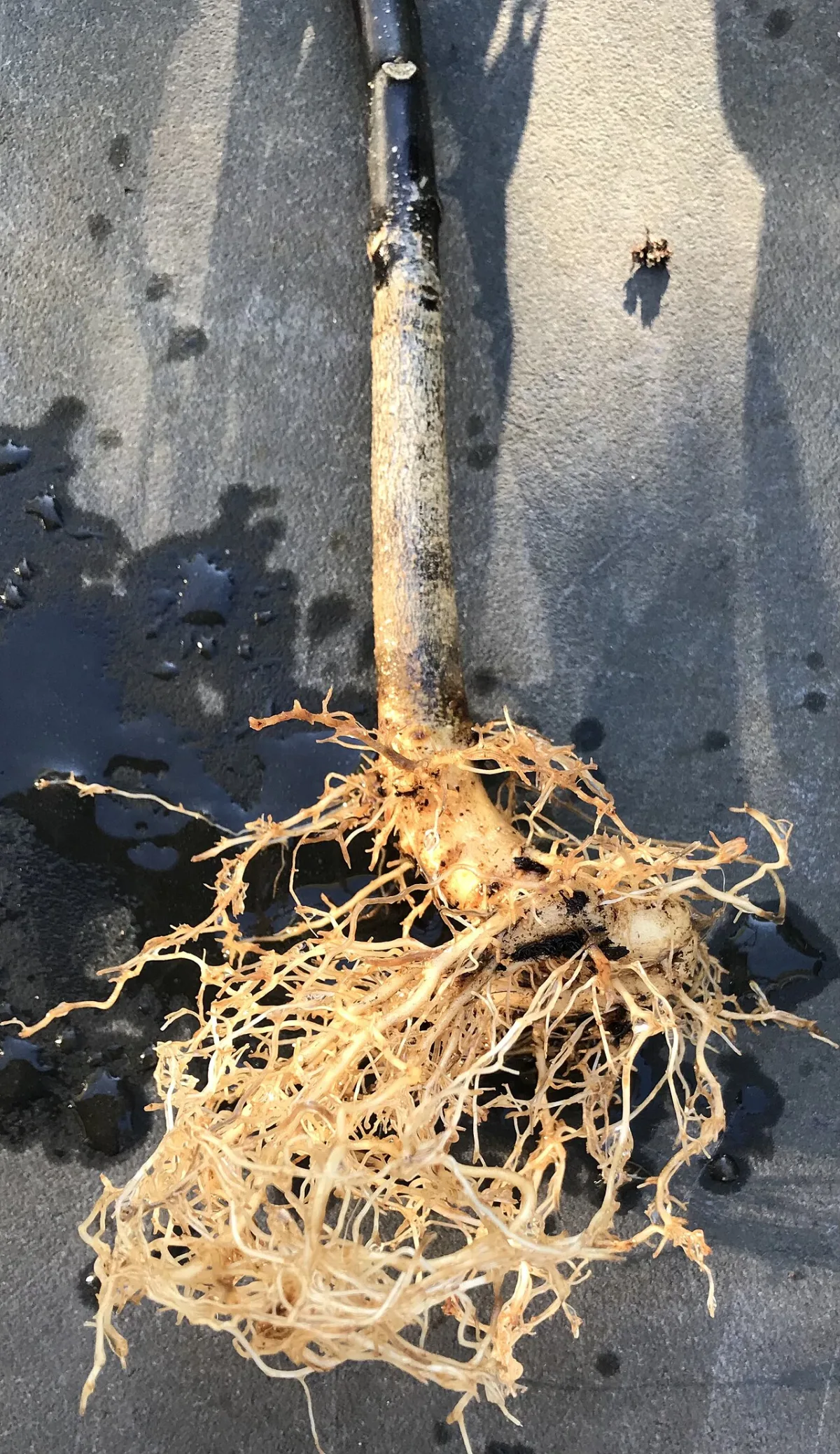
Planting with a hydraulic drill: resource saving and rapid establishment
The efficiency of establishing a vineyard is evaluated by two main criteria: creating optimal conditions for the development of nursery plants and maximizing the mechanization of processes to reduce costs. Planting with a hydraulic drill successfully solves both these tasks. Washing the soil with water ensures close contact between the soil and the roots, and labor productivity increases several times compared to manual digging.
- Operating water pressure — 147–196 kPa (1.5–2 atm.)
- Water consumption per borehole — 3 L
- Diameter of the hydraulic drill pipe — 2.5–3 cm
- Length of the hydraulic drill rod — 1 m
- Shift productivity of the unit — 2.5–5 ha
A typical planting unit GB–35 consists of a tank, a pump, and several hydraulic drills with pistol valves and cone-shaped tips. The design allows simultaneous operation on 4–8 rows. During the drilling process, a jet of water washes away the soil, creating a liquid mud mass that reliably envelops the root system of the nursery plant after it is set.
To combine planting with top dressing and accelerate bush development, use a liquid nutrient solution instead of plain water.
- Apply pressure to the hydraulic drill 3–4 times at the planting site to puncture the soil.
- Perform several rotational movements with the drill inside the borehole to form a cream-like pulp at the required depth.
- Lower the nursery plant into the pulp-filled borehole slightly below the target mark, and then pull it upwards to straighten the root system.
In coarse, stony soils, there may not be enough natural earth to form a slurry. In this case, it is necessary to add topsoil into the borehole during drilling.
To further reduce manual labor costs, mechanized hydraulic drills or units based on the PRVN–2.5A cultivator are used. A hopper for nursery plants, a seat for the operator, a front furrow opener, and a rear backfiller are installed on such a frame. After the unit passes over the pre-marked area, abundant irrigation is performed. A specialized vineyard planting machine, VPM–2A, has also been developed for serial production.
| Grape planting method | Labor input per 1 ha (man-days) |
|---|---|
| Manual method into pits | over 40 |
| Planting with a hydraulic drill | 13.5 |
Planting into pits: classic technology for difficult sites
Manual pit digging remains the most labor-intensive method of establishing a vineyard. However, this method is indispensable in highly stony soils where using a hydraulic drill is impossible or ineffective. With this type of planting, it is important to properly prepare the planting site and amend it with fertilizers for the long-term nutrition of the bush.
| Planting site parameter | Standard value |
|---|---|
| Pit width | 50 cm |
| Pit depth | 15–20 cm more than the length of the underground trunk |
Pits are prepared using a tractor-mounted auger. It is mandatory to pour a layer of fertile soil from the top horizon 10–25 cm thick into the bottom. Additionally, organic and mineral fertilizers are added to this layer, which creates a starting reserve of nutrients in the zone of active root system growth.
- Place the nursery plant on the prepared bed and fill the pit halfway with soil.
- Thoroughly firm the soil around the trunk and pour 8–10 L of water into the pit.
- After the moisture has been absorbed, fill the pit with dry soil up to the soil surface level.
The final planting depth depends on the cultivation technology of grapes in a specific region. In the zone of covered viticulture, the nursery plant is set deeper so that after the soil settles, the pruned shoots are 1–2 cm below the soil level. This is necessary to form a trunkless bush shape, the arms of which are easy to bend to the ground before winter. In the non-cover zone, the head of the nursery plant is left above the surface level.
To protect the buds from drying out, a mound of soil 3–4 cm high is heaped over the shoots. This measure is mandatory for regular planting material in any climatic zone. When using paraffin-coated nursery plants, creating a protective earthen mound is not required.
Read next
Viticulture For agronomists
Technology of soil preparation and planting of nursery plants in a grapevine nursery
Viticulture For agronomists
Excavation, sorting, storage and marketing of grafted grape nursery plants
Viticulture For agronomists