
Fundamentals and benefits of proper crop rotation in vegetable production
14 min read
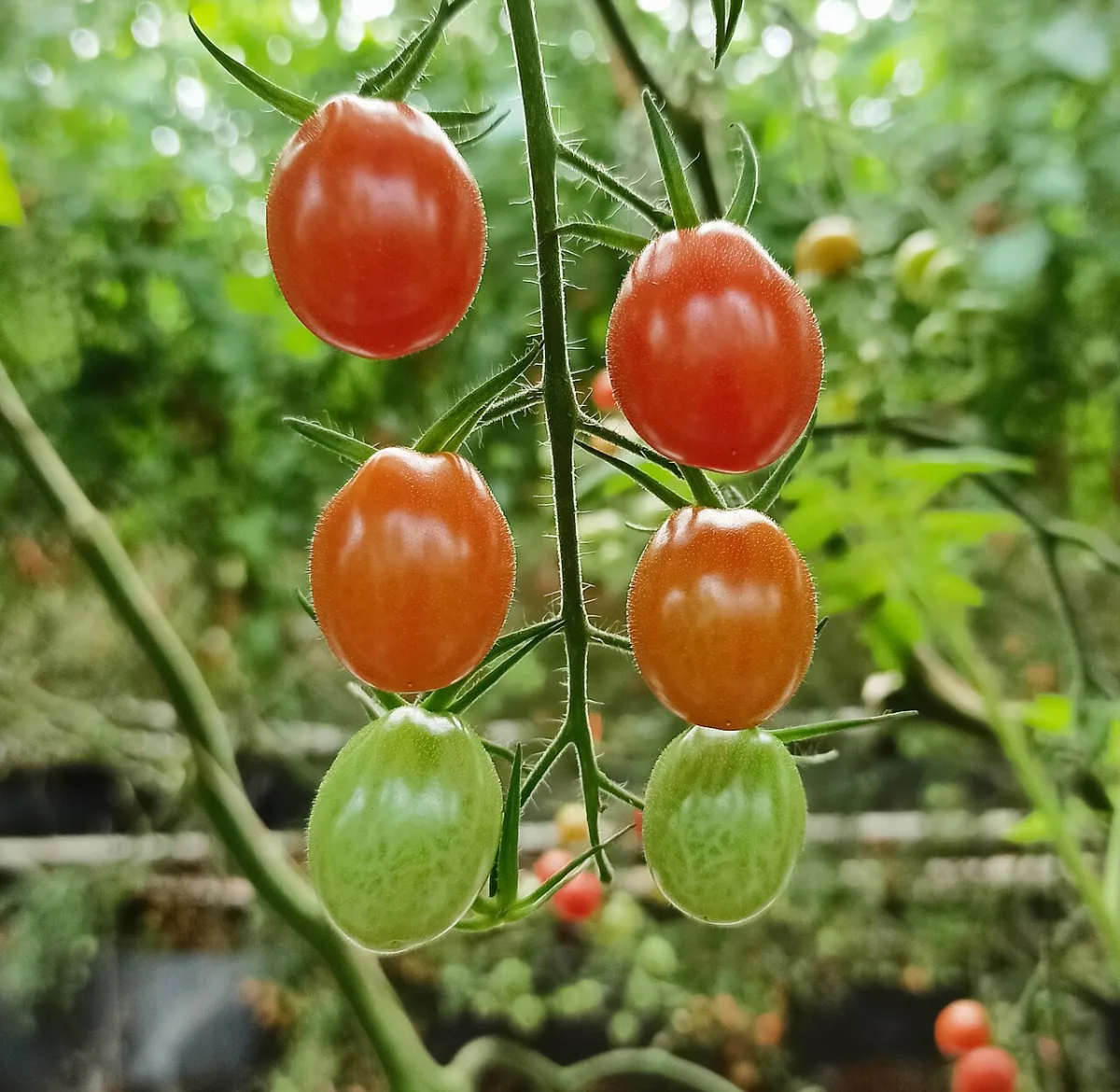
Crop rotation is a scientifically grounded (economically and agrotechnically) alternation of crops by years on the fields where they are grown, which is necessary for the constant maintenance of soil fertility and increasing the yield of agricultural crops. The use of crop rotations is explained by the many advantages of such a farming system.
First of all, crop rotation provides, without expenditure of labor and resources, the prevention of the accumulation of diseases and pests. When returning to the same place of cultivation of the same crop or related plants after three to four years, the risk of plant infection and damage by specific pathogens is eliminated.
By rotating plants with different root penetration depths, it is possible to more evenly utilize the reserves of mineral nutrition elements both in the topsoil and in the underlying soil horizons.
Vegetable plants compete with weeds in different ways. Therefore, by changing the cultivation of crops by year, one can achieve a reduction in the costs of weed control with a simultaneous increase in the effectiveness of this work:
- crops that, with modern agrotechnology, partially clean the field of weeds: cabbage, transplanted tomato, potato, to a lesser extent transplanted pepper and eggplant;
- crops that suffer heavily from weed infestation: onion, root crops, direct-seeded tomatoes, leafy greens.
By placing vegetable crops according to the time they occupy the field, one can thoroughly prepare the soil for sowing or planting and timely clear the fields of weeds:
- early-season crops (root crops, onion, cabbage) — follow predecessors that vacate the land early (early cabbage, early potato, pea, cucumber, bulb onion, garlic, etc.);
- late-season crops (solanaceous fruit crops, cucurbits, etc.) — follow late-harvested crops (root crops, late cabbage, etc.).
Rotating the species of plants grown in a field allows, without additional costs, to avoid the undesirable and frequently occurring soil fatigue in relation to individual crops.
By following a proper crop rotation, one can achieve the most effective use of organic fertilizer. To this end, in the year of application of fresh manure, late cabbage and cucurbits are planted, which yield significant harvest increases, and after them, plants that effectively utilize the residual effect of this fertilizer (solanaceous and other early-ripening crops) are grown.
In regions where acidic soils occur, the difference in plant response to the reaction of the soil solution must be taken into account. By placing crops that react negatively to acidic soils shortly after liming, and those that easily tolerate such conditions in more distant years, it is possible to significantly increase total vegetable yields.
The arguments described above in favor of crop rotation are not exhaustive, but they are quite sufficient to be convinced of the high effectiveness of reasoned crop alternation for improving the level of farming and soil fertility in vegetable production.
Crop rotation is established in accordance with the features of crop rotations described above, based on the characteristics of the predecessors. Below is an assessment of vegetable plants as predecessors, provided by V. P. Matveev, which allows for the correct determination of the place of each crop in the crop rotation.
Fruit plants of the Solanaceae family. In transplanted culture, they occupy the field late; in direct-seeded cultivation, they occupy it in the mid-season. The final harvests take place late (until frosts), except for early-ripening tomato cultivars, which in the south finish harvesting in September. Nutrient removal is average or increased compared to other vegetable crops. They effectively use the residual effect of fresh manure applied for previous crops. Late-ripening tomato cultivars, under conditions of a long growing season, give substantial yield increases when small application rates of fresh manure are applied during autumn primary tillage. The root system of these plants, when grown by the transplant method, is located in the topsoil horizon and only occasionally reaches a depth of 0.8–1.0 m; in direct-seeded culture, tomato roots can penetrate to a depth of up to 1.5 m, while those of pepper and eggplant are much shallower.
Potato is planted in the mid-season. Early cultivars are harvested in mid-summer (in the south — early summer), and late ones — in autumn (in the south — early autumn or mid-season). This crop facilitates field cleaning from weeds better than other plants and is one of the best predecessors for onion and root crops.
All plants of the Solanaceae family are affected by late blight, fusarium, and verticillium wilt. The pathogens of these diseases persist in the soil for up to three years.
Plants of the Brassicaceae family. Cabbage and swede respond better than other crops with yield increases to the application of large doses of organic fertilizers. Early cabbage does not have time to utilize fresh manure, therefore, humus is applied for it. Early-ripening cabbage cultivars occupy the field early and vacate it early, while late-ripening ones in transplanted culture occupy it in late spring, and in direct-seeded cultivation — in the mid-season, vacating the field at the very end of autumn. The roots of late- and mid-ripening cabbage penetrate deep into the subsoil horizon — up to 1.5 m, early ones — no more than 1 m. Cabbage and swede belong to plants that suppress weeds. Root crops of this family suffer from weeds less than carrot, but they need clean fields. Radish and turnip have a short growing season, therefore, they are grown in the spring-summer or summer-autumn (late) periods. To prevent the accumulation of brassica disease pathogens in the soil, they should be returned to their former place no sooner than three to five years later.
Cucurbitaceous plants. They respond very well to the application of organic fertilizers and utilize their residual effect quite well. Crops of this family occupy the field late and vacate it early. The liana-like structure of the stem, which covers the inter-rows, makes weeding difficult, but due to the early harvesting, it is possible to clean the field of weeds during the autumn period. The roots of melons and gourds extract water and nutrients from deep soil layers, while cucumber — mainly from the tilled horizon. Cucurbitaceous plants are susceptible to powdery mildew and anthracnose, and melons and gourds are also affected by wilt. The pathogens of these diseases persist in the soil for two to three years.
Root crops of the celery family. Plants respond poorly to the application of fresh organic fertilizers and to an excess of humus. The root system penetrates deep below the tilled horizon. A late harvesting of root crops occurs only with summer sowing. Young plants are severely suppressed by weeds. The pathogens of beet phomosis and carrot alternaria persist in the soil for two to three years.
Onion. Under the influence of fresh organic fertilizer, it enters dormancy poorly and therefore stores unsatisfactorily, but it utilizes its residual effect very well. The crop requires soils cleared of weeds. Onion occupies the field in early spring and vacates it early (at the end of summer). The root system is weak and located in the tilled horizon. The total nutrient uptake from the soil is small. The pathogens of onion smut and nematode live in the soil for up to six years.
Leguminous plants. Among these plants, only pea is widely grown under production conditions; vegetable bean and fava bean are also found in small areas. Pea occupies the field early and vacates it early. Vegetable bean is sown late and harvested by autumn, and under favorable conditions, its growing season extends until frost. Leguminous crops are an excellent predecessor for any plant.
Radish and leafy green crops. They are mainly grown as early crops before planting medium-term transplants or after harvesting early-ripening vegetable crops in the summer-autumn period. Sometimes they are used as a catch crop. There is no need to allocate a special field for them.
Winter wheat (well-fertilized) is used in the crop rotation of vegetable farms as a cover crop for grasses and as a predecessor for melons, onions, and tomatoes.
Annual forage grasses and their mixtures, when used for green feed, silage, and as green manure, are similar in their favorable effect on soil fertility to perennial grasses of one year of use. Annual grasses are often used as green manure, and in this case, their effect on the subsequent crop is particularly favorable. Annual grasses are good predecessors for cabbage, carrot, beet, tomato, and onion.
In Russia, there are many agroclimatic zones, and for each of them, there are established schemes for crop rotation. This determines the existence of a multitude of crop rotations by type, number of fields, and length of rotation. Even a single large farm can have several crop rotations due to the different specialization of departments and the unequal structure of sown areas.
Vegetables are grown in special vegetable, vegetable-forage, and field crop rotations.
Special vegetable crop rotations are introduced on farms with a large assortment of cultivated crops. With a limited assortment (one to three crops), creating special crop rotations is impractical. There is no need for them on small areas occupied by vegetable plants, even if they are diverse. To maintain soil fertility in such crop rotations, large quantities of organic and mineral fertilizers are applied, and annual and perennial grasses are included with the application of fertilizers in moderate amounts, taking into account the nutrient uptake by vegetable plants.
Special crop rotations must include two fields of perennial grasses, mainly alfalfa. The structural characteristics of such crop rotations are:
| Share of vegetable crops | 50-60 % of sown areas |
| Number of fields (without grasses) | 4-6 |
| Number of fields (with grasses) | 8-9 |
In addition, one or two fields are occupied by forage plants as suitable predecessors for cleaning fields of weeds.
- Minimum number of fields in crop rotation — 4
- Return period of a crop to the same place — no earlier than 3 years
- Vegetable saturation in vegetable-forage schemes — less than 50%
- Rotation period of vegetable crops in the Kuban — 8 years
Any vegetable crop rotation must consist of at least four fields. A crop should not be returned to the same growing site until at least three years have passed to avoid the accumulation of soil pathogens and pests.
Vegetable crop rotation schemes for open ground
In the south of the country, vegetable farms most often use long 8- and 9-field crop rotations with the sowing of perennial grasses. In the raw material zones for canning factories, vegetable crops are included in 10–12-field schemes, where 2–3 fields are allocated for vegetables (mainly tomato and green pea). For suburban enterprises that combine vegetable growing with dairy livestock, vegetable-forage schemes with a low share of vegetable crops are optimal. Proven rotation schemes for open ground are collected below.
| Crop rotation type and conditions of use | Crop rotation scheme by years (fields) |
|---|---|
| Specialized vegetable for the south (option 1) | 1–2: perennial legumes; 3: tomato; 4: onion, garlic; 5: cabbage; 6: root crops; 7: tomato, pepper, eggplant; 8: cucumber, summer squash, pattypan squash + summer sowing of perennial grasses. |
| Specialized vegetable for the south (option 2) | 1–2: perennial legumes; 3: cabbage; 4: tomato, pepper, eggplant; 5: onion, garlic; 6: cucumber, summer squash, pattypan squash; 7: tomato; 8: root crops; 9: early cabbage, leafy greens + summer sowing of perennial grasses. |
| Raw material for the canning industry | 1–2: perennial legumes; 3: tomato; 4: summer squash, pattypan squash, cucumber; 5: table root crops; 6: vegetable pea; 7: pepper, eggplant, tomato; 8: annual grasses for green feed + summer sowing of perennial grasses. |
| Vegetable-forage for suburban farms (vegetable share less than 50%) | 1–2: perennial grasses; 3: tomato; 4: cucumber, summer squash (table and forage); 5: corn for silage; 6: table and forage root crops; 7: annual grasses for green feed + summer sowing of perennial grasses. |
| Grain-vegetable for Kuban conditions (alfalfa is sown in spring) | 1–2: perennial grasses; 3: tomato, pepper, eggplant; 4: winter wheat; 5: bulb onion; 6: winter rapeseed for grain + summer sowing of rapeseed for green manure; 7: root crops; 8: winter wheat; 9: cabbage. |
Farms with a low volume of vegetable production can use short four-field crop rotations. They allow for the effective rotation of major crop groups in a limited area. The following rotation options are suitable for such farms:
- Tomato, pepper, eggplant, potato.
- Cucumber, summer squash, pattypan squash, leafy greens.
- Early, mid-season, and late cabbage.
- Onion, garlic, root crops.
Planning crop cycles in protected ground
In greenhouses, hotbeds, and on forced soil, the rotation of crops within one year is called a crop cycle (culturo-rotation). In hotbeds, it is also referred to as a frame rotation, and in greenhouses and forced soil — as a meter rotation. The entire annual cycle consists of several sequential turns, i.e., periods of growing one specific crop.
Based on their intended use, crop cycles are divided into three types depending on the share of vegetables and transplants:
- Vegetable: up to 70–80% of the protected ground area is allocated for growing commercial vegetables.
- Transplant-vegetable: transplants are grown at the beginning of the season, and vegetable crops are grown before and after them.
- Transplant: only transplants are grown during one or several turns.
To increase the return from each square meter of greenhouse area, companion crops are used — for example, lettuce, dill, or spinach are sown between the rows of root crops. Techniques such as seed germination, treatment with growth stimulants, pre-sprouting of bulbs and root crops, autumn vegetable maturation, and forcing during the winter period are also used. In winter, free greenhouse areas can be occupied by flower crops or mushrooms. When designing a scheme, one must always consider the biological characteristics of the crops, the microclimate, and the economic efficiency.
When drawing up an annual plan, it is important to follow a strict sequence of actions. This helps to prepare planting material on time and avoid greenhouse downtime. The scheme design is performed using the following algorithm:
- Place transplants for open ground with the expectation that they will be ready by a strictly specified date.
- Distribute the main vegetable crops across the vacated areas, taking into account their biological characteristics and demand.
- Select the most economically viable form of protected ground for each crop.
Use resources rationally: do not occupy expensive heated spring transplant greenhouses with seedlings of mid-season cabbage cultivars. Its biological characteristics allow for successful production of high-quality planting material in simple open seedbeds.
A crop cycle is a scheme of turn rotations for various vegetable crops compiled for one operational period (a year), which provides not only for planting dates and yield output but also for the time required for greenhouse preparation and maintenance. Crop cycles are compiled separately for hotbeds and greenhouses. In the south of Russia, after being cleared of transplants, hotbeds and greenhouses can be used to obtain early cucumbers, tomatoes, peppers, and eggplants. The quantity of transplants for growing them in the second turn depends on the area of the vacated hotbeds and greenhouses.
The age of transplants at the time of planting for tomato, pepper, and eggplant should be 60-65 days, and for cucumber 25-30 days. The demand for transplants for the second rotation is calculated based on optimal growing areas, as well as planting schemes for specific vegetable crops. However, it is impossible to create a crop rotation plan without determining the expected harvest dates. We became familiar with the clearing dates for hotbeds and greenhouses in the previous lesson.
Knowing the "head start" in transplant development (cucumber - 25, tomato - 60 days) and the length of the growing season for these crops (early-ripening cucumber cultivars 45-50, early-ripening tomato cultivars 105-115 days), one can calculate that fruiting in the second rotation for cucumber begins in the first ten days of May, and for tomato in the first days of June; the end of fruiting for cucumber is June 15-20, and for tomato, it is late July - early August (S.S. Avdeenko, T.P. Mitchenko, V.V. Ognev, 2008).
Tables 7 and 8 show that hotbeds used for early cabbage transplants in the 1st rotation are cleared in the first ten days of April, and greenhouses used for early tomato transplants are cleared in the first ten days of May.
Out of 215 hotbed frames, 115 frames will be occupied by cucumber and 100 frames by tomato in the second rotation. In the second rotation of spring film greenhouses, the entire area will be occupied by tomato. Table 7 – Exemplary crop rotation for early hotbeds
Harvesting Gross
Number Sowing/ Yield output Crop of hotbed planting Product (thous. units, frames dates (units, kg) kg/t)
1st rotation Transplants
20-25 10 107500 of early 215 January April units cabbage
5-10 5-10 15-20 Cucumber 115 April May June (slicing) 15 kg 1725 kg
5-10 1-5 20-30 Tomato 110 April June July 12 kg 1320 kg Disinfection and repair
August 1 - January 31 of hotbeds and frames Table 8 – Exemplary crop rotation for spring film greenhouses
Harvesting Gross
Area, Output Crop (m2) Sowing/ planting dates Product per 1 m2 (thous. units, (units, kg) kg/t)
1st rotation Transplants
26 20-30 1-10 1.4 mln. of early 5000 February April May units tomatoes
2nd rotation Tomato 20-30 15-25 1-6
5000 for April June August 7 kg 35000 kg produce Disinfection and
August 6 - January 31 greenhouse preparation
Read next
Agrochemistry For students
Systems of mineral and organic fertilizer application in vegetable crop rotations
Vegetable growing For students
Significance and advantages of the transplant method in modern vegetable growing
Agrochemistry For students