
Intensification of vegetable production through double cropping and intercropping
4 min read
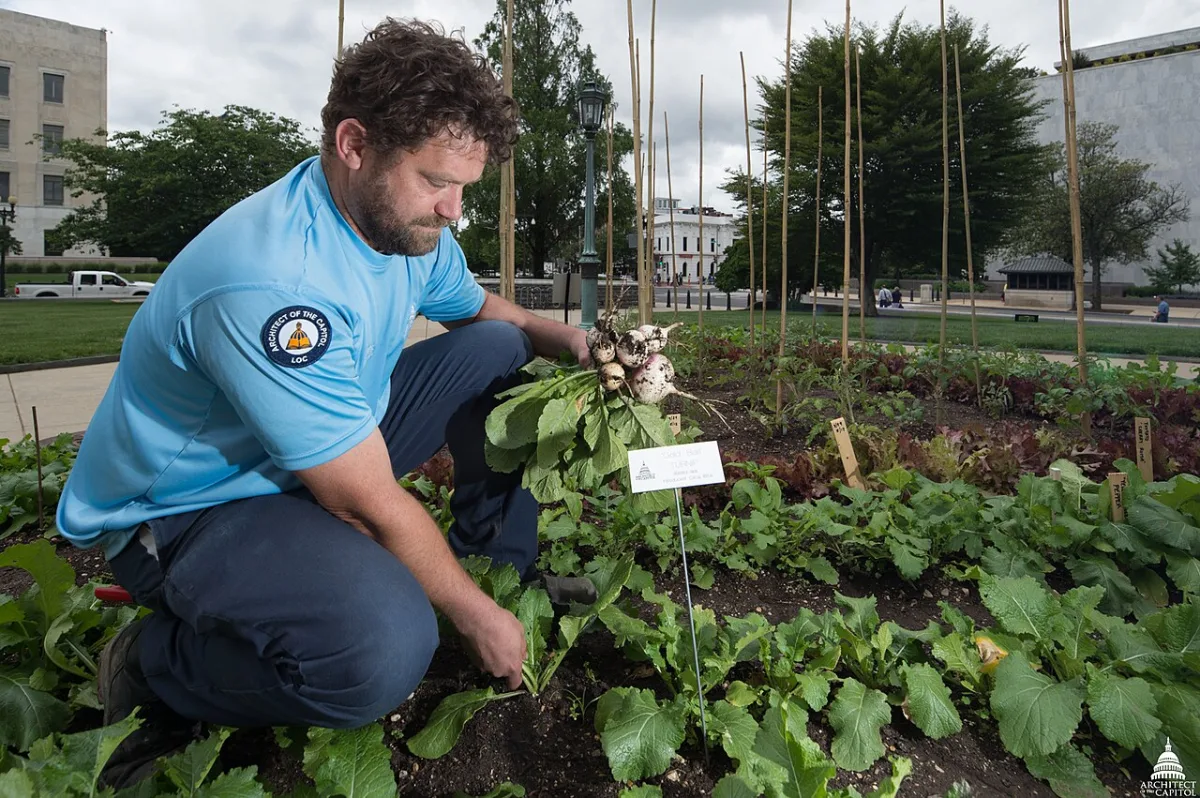
Vacant arable land at the start of the season or after the harvesting of early-maturing vegetables is a lost profit for a farm. This problem is particularly acute in southern regions with a long growing season. At the start of the season, many vegetable crops grow slowly, which is why the field area is used to only half its capacity for a long time. Successive and intercropped sowings help to solve this problem and increase the return from each hectare.
- Number of harvests per year — 2 (in the south — up to 3)
- Density of intercrop relative to sole crop — 30–50 %
Biological compatibility and choice of crops
When growing together in the same area, the main (intercropped) crop and the additional (intercrop) are present simultaneously. Successive crops, however, are sown sequentially — before planting or after harvesting the main plant. This makes it possible to obtain two, or in the south three, harvests per year from a single field. For this, it is important to correctly select pairs of plants, taking into account their growth rates and requirements for external conditions.
Before planting heat-loving vegetables (tomato, pepper, eggplant, cucumber, late cabbage), one can always harvest early-maturing cold-resistant leafy greens — radish, lettuce, green onion, or watercress. After harvesting early white cabbage, early potato, or cauliflower, the vacated area is occupied by table root crops, potato, or late cabbage. Such rotation is mandatory to consider when calculating the fertilizer application, tillage, and plant protection.
When planning sowings, take into account the biological incompatibility of plants. Tomatoes have a depressing effect on cucumber, potato, and cabbage. Onion and garlic suppress the growth of beans and peas, while turnip inhibits the development of tomato.
Mixed sowings yield excellent results with the correct combination of crops. Agronomic practice shows a stable positive interaction in the following pairs:
- beans, peas, and carrot;
- onion and beet;
- lettuce and cabbage;
- beans, peas, and corn;
- onion and chicory.
Placement rules and sowing density
The main requirement for an intercrop is that it must mature quickly and not interfere with the development of the main crop. This is why, among root crops, only radish or summer radish with a small root are used as intercrops. The harvesting of the additional crop must be completed before the main crop begins to actively increase its vegetative mass. In commercial production, intercropping is more often used in a greenhouse, as in field conditions it can complicate mechanized tillage.
The plant density of the main crop in intercropped sowings must remain exactly the same as in a sole crop. The planting density of the main plant must not be reduced.
The table shows the rates for calculating the planting density of intercrop plants in combined sowings:
| Planting parameter | Recommended rate |
|---|---|
| Number of intercrop plants | 30–50 % of the density in a sole crop |
The intercrop and the main crop are usually placed in the same rows. In fields without weeds, sowing in row spacings or every other row is permitted, but in such a way as not to block the technological tracks for tractor passage. Below are the most common and practice-tested plant combinations:
- late cabbage with onion, greens, beans, or early cabbage;
- table root crops with bulb onion;
- tomato, pepper, eggplant, or potato with greens, onion, or beans;
- vegetable corn with beans, peas, zucchini, or pumpkin;
- direct-seeded tomato with radish, lettuce, or spinach.
Read next
Vegetable growing For students
Fundamentals and benefits of proper crop rotation in vegetable production
Agrochemistry For students
Systems of mineral and organic fertilizer application in vegetable crop rotations
Vegetable growing For students