
Syrian rue seed description and dangerous toxic properties of the weed
2 min read
Syrian rue (family Zygophyllaceae) poses a serious threat to agriculture. This weed not only infests crops, reducing harvest quality, but also carries a lethal risk to livestock and humans. The high toxicity of all parts of the plant makes it an extremely dangerous object in pastures and arable lands.
Caution, lethal poison! The leaves and seed of Syrian rue are the most toxic. They contain dangerous alkaloids: harmaline, harmine, and peganine. If the weed enters forage or hay, it causes severe poisoning in cattle, horses, sheep, and rabbits.
Syrian rue alkaloids have a powerful muscle relaxant effect on smooth and striated muscles, including the heart. Peganine has an anticholinesterase effect, while harmine affects the psyche: it causes euphoria, hallucinations, and coordination disorders, which create a sensation of body vibration and swaying of surrounding objects. Harmine also provokes a sharp decrease in blood pressure, slowing of the pulse (bradycardia), tremors, nausea, and vomiting.
In toxic doses, harmine and peganine cause severe convulsions, clonic muscle twitching, and pronounced motor and mental agitation. In cases of severe poisoning, animals experience elevated blood pressure, and respiration is suppressed up to complete arrest.
In pastures, livestock animals eat Syrian rue only in the absence of other feed. It should be noted that other representatives of the genus Zygophyllum in this family also possess poisonous properties, as they contain the alkaloids harmine, harman, and harmol.
Description of weed seed and its distribution areas
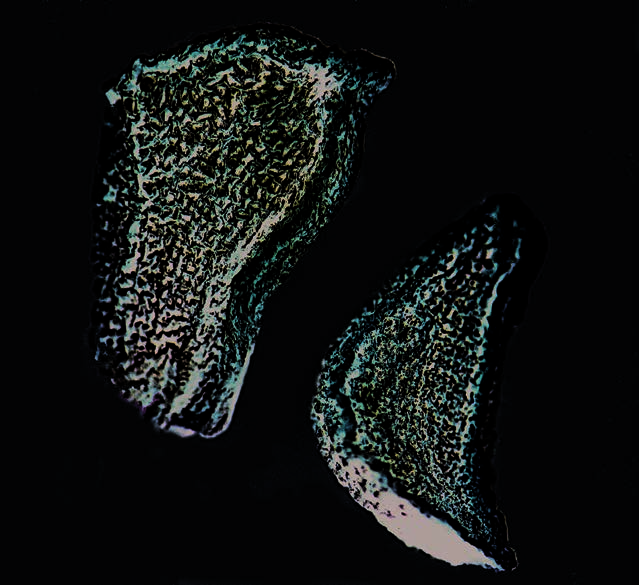
The weed infests plant products with its fruits—trihedral-trilobate multi-seeded capsules, nutlets, and seed. Syrian rue seed has a wedge-oval shape, widening at the apex and curved inward. On the dorsal side, there is a wide oval facet, and on the ventral side, there are two narrower facets diverging at an angle. The edges of the seed are folded, sharply protruding, and slightly curved inward; the seed suture appears as a fold, and the matte surface is characterized by a loop-like depressed, slightly spongy structure of grayish-brown or brown color.
| Parameter | Dimensions, mm |
|---|---|
| Length | 23 |
| Width | 1,752 |
| Thickness | 1,251,5 |
Syrian rue actively infests the following crops:
- irrigated cotton crops;
- maize, barley, and wheat crops;
- alfalfa;
- gourd crops.
The weed is distributed in Central Asia, the Caucasus, Crimea, as well as in the southern and southeastern regions of the European part.
Read next
Seeds and varieties For agronomists
Lobelia inflata: morphological characteristics and toxic properties of the plant
Seeds and varieties For agronomists
Morphological characteristics and toxic properties of Colchicum autumnale seeds
Seeds and varieties For agronomists