
Morphological characteristics and toxic properties of Colchicum autumnale seeds
2 min read
Members of the lily family (LILIACEAE Juss.) contaminate plant products with their bulbs, capsule fruits, berries, or seed. Among them, the autumn crocus (Colchicum autumnale) holds a special place as a dangerous weed of moist meadows. The presence of its parts in feed is highly undesirable due to the plant's high toxicity to humans and livestock animals.
The entire plant and its seed are poisonous. The active ingredient consists of the alkaloids colchicine, colchamine, and other compounds that cause severe damage to internal organs.
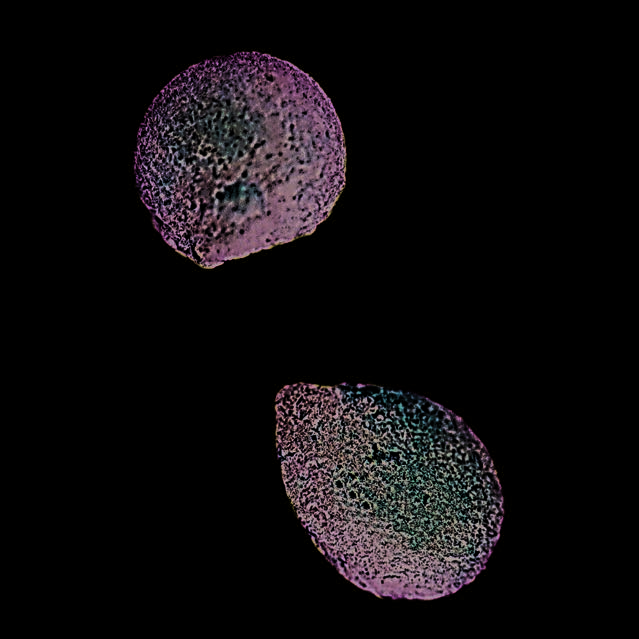
Morphology of Colchicum fruits and seeds
To detect the weed in a mowed mass or pile in time, it is necessary to know the morphological features of its fruits and seeds. Colchicum fruits are oblong-ovoid capsules. The seeds are spherical or oval in shape with a rounded apex, slightly elongated toward the base.
- Length of the capsule fruit — 5–6 cm
- Seed length — 2.753 mm
- Seed width and thickness — 22.25 mm
Freshly harvested seeds have a small fleshy appendage, which becomes light yellowish-brown when dried. The oblong-oval seed hilum is located on the elongated part of the seed base. The surface of the dark brown seed itself has a loose, spongy, loop-like folded structure.
The toxin colchicine has a suppressive effect on leukopoiesis and lymphopoiesis, and also causes severe hyperemia of the gastrointestinal tract mucosa due to capillary paralysis. It increases intestinal peristalsis and affects the kidneys and the central nervous system. By interfering with the process of cell division, this alkaloid possesses anti-tumor activity.
Poisoning by Colchicum is characterized by a latent period lasting 36 hours. When toxins enter the body, the following symptoms develop:
- nausea and vomiting;
- cholera-like (watery or bloody) diarrhea;
- impact on blood pressure;
- oliguria;
- weak, arrhythmic pulse;
- weakening of muscle tone and possible convulsions;
- lowered body temperature and difficulty breathing up to complete respiratory arrest.
The autumn crocus is widespread in the European part of the Russian Federation, occurring in some places along its western border.
It is important for an agronomist to note that all wild-growing Colchicum species are poisonous within the territory of the Russian Federation. For example, Colchicum laetum (C. laetum Stev.) grows in the southeast of the European part of the country and in the Ciscaucasus, while Colchicum speciosum (C. speciosum Stev.) is found in the Caucasus. Colchicine-like compounds are also contained in related members of the genus Merendera from the lily family, which are found in the Caucasus and Central Asia.
Read next
Seeds and varieties For agronomists
Morphological characteristics and toxic properties of European wild ginger seed
Seeds and varieties For agronomists
Lobelia inflata: morphological characteristics and toxic properties of the plant
Seeds and varieties For agronomists